
How to store a washing machine
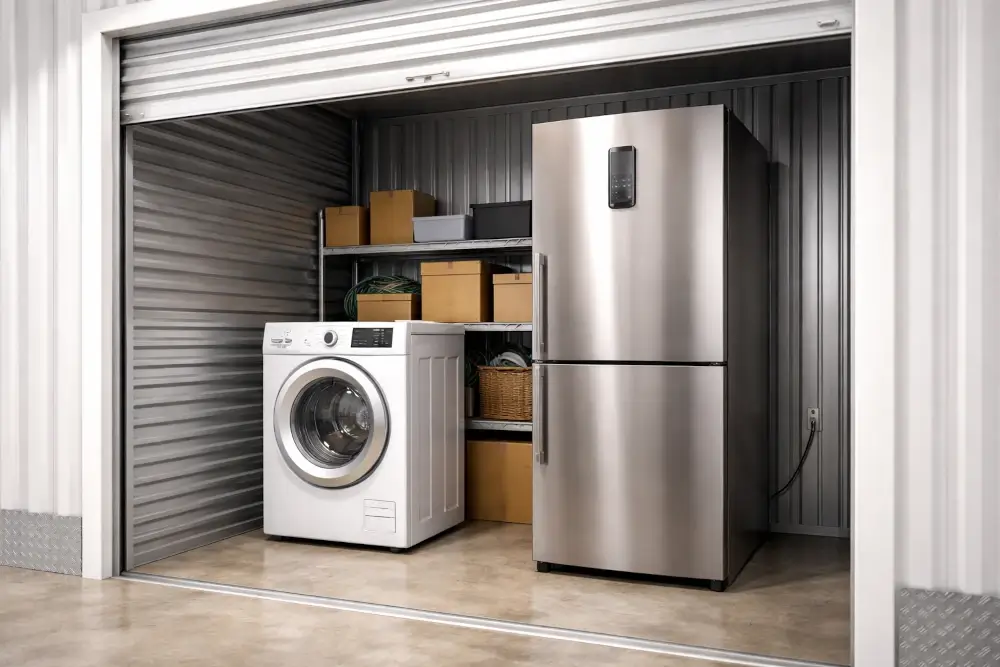

Before storing a washing machine, drain as much water as possible from the sump hose and pump, clean the soap drawer and door seal thoroughly, and apply petroleum jelly to the door seal flange to prevent it sticking. Store in a dry, covered location away from direct sunlight, damp, and frost. Never store with water left inside in freezing conditions – the sump hose can split.
Why You Need to Drain the Water First
A washing machine always retains a small amount of water in the sump hose at the base of the machine – typically a cup or two – even after a spin or drain cycle completes. During normal use this water is constantly refreshed. In storage it sits stagnant and can cause several problems:
 What happens if water is left inside during storage
- The water turns stale and smells, which is difficult to remove later
- As it slowly evaporates it leaves behind limescale deposits inside the sump hose
- In cold or freezing storage conditions the water does not evaporate – it can rot or split the rubber hose
- In freezing conditions water expands as it freezes and can crack the pump or split the sump hose
There are two methods depending on the machine’s configuration:
How to Drain the Remaining Water
Most modern washing machines have a pump filter accessible behind a small panel at the front base of the machine. Place towels on the floor to absorb the water. Pull the machine out slightly if needed and slowly unscrew the pump filter cap. Water will begin to run out. When the flow stops, tilt the machine gently forward and back to encourage the last drops out of the sump. See our guide on where to find and how to clean the pump filter for the location on different machines.
If no pump filter is accessible, lay the drain hose on the floor so the open end is lower than the water level in the pump. Gravity will draw the water down and out. Gently tilt the machine forward and back to help encourage all the water through. Note that some machines (Bosch in particular) route the drain hose out of the back at a high point rather than at floor level, which prevents gravity draining this way. In that case, use Method 1 if available or accept the small amount of water remaining.
Preparing the Machine for Storage
-

Clean the soap dispenser drawer completely. Remove the drawer and clean all compartments. Undissolved detergent and fabric softener residue left to dry out sets very hard and can be extremely difficult to remove later. Dry the drawer before replacing it or remove it entirely for storage. -
Clean the door seal thoroughly. Pay particular attention to the fold at the front of the seal and the area where the door glass presses against it. Remove any grit, detergent residue, or grime – these can harden and become abrasive over time. -
Apply petroleum jelly to the door seal flange. A thin smear of petroleum jelly (such as Vaseline) around the front flange of the door seal – the area that contacts the door when closed – prevents the rubber bonding to the door glass during long storage, particularly in warm conditions. Without this the door can stick firmly to the seal and pulling it open can tear the seal. -
Leave the door slightly ajar if possible. This allows any remaining internal moisture to escape rather than becoming trapped, preventing mould growth on the drum and door seal.
Storage Conditions

Avoid frost and freezing temperatures
Any water remaining in the pump or hoses will expand when frozen and can crack the pump body or split the sump hose. If storage in a cold garage or outbuilding is unavoidable in winter, ensure the machine is as thoroughly drained as possible before storing.

Avoid damp conditions
Persistent damp causes rust on metal components and can cause electrical parts to track to earth – meaning the machine may trip the fuse when first switched on after storage, or fail to work at all. Stand the machine on cardboard or a wooden pallet to keep it off a damp concrete floor.

Avoid direct sunlight
UV exposure fades control panel graphics and paintwork and degrades the rubber of the door seal over time, causing it to become brittle and crack. Store in a shaded position or cover the machine.

Protect from pests
Garages, sheds, and outbuildings can have rodent activity. Mice and rats can nest inside appliances and chew wiring and rubber components. Cover the machine with old blankets or sheets and if possible block the drum opening. Check for signs of rodent activity before bringing the machine back into use.
Moving or Returning to Use?
Related Guides
 Transporting a Washing Machine
How to move a washing machine safely – transit bolts, hose securing, and avoiding drum damage.
 Using a Washing Machine After Storage
What to check before running a machine that has been stored – including transit bolt removal and hose checks.
 Washing Machine Pump Filter
Where to find the pump filter and how to drain and clean it – the easiest route for draining before storage.
Won’t Drain After Being MovedWhy a washing machine may fail to drain after being stored or transported – and how to fix it.
Frequently Asked Questions
Do I need to drain a washing machine before storage?
It is strongly recommended. Even after a spin or drain cycle there is always a small amount of water remaining in the sump hose. In storage this stagnant water turns smelly, deposits limescale as it evaporates, and can rot or freeze-split the rubber hose in cold conditions. Draining via the pump filter or by lowering the drain hose removes most of this residual water.
Can I store a washing machine in a garage?
Yes, provided it is properly prepared and the conditions are managed. The main risks are frost (which can crack a pump or split hoses if water remains inside), damp (which causes rust and electrical tracking), and rodents. Drain the machine thoroughly before storage, stand it off the floor on cardboard, cover it with old sheets or blankets, and ensure it is away from direct sunlight.
How long can a washing machine be stored?
A properly prepared machine – drained, cleaned, door seal protected, and covered in a dry environment – can be stored for several years without significant deterioration. The rubber components (door seal, hoses, pump) are most vulnerable to degradation over time, particularly if exposed to UV, frost, or damp. Check all rubber components and connections before returning the machine to use after extended storage.
20 Comments
Grouped into 10 comment threads.
5 replies Hi A colleague has a washing machine that has been stored under a tarpaulin but outside for two years, not drained as per your advice above, its been moved twice in house moves, & its very mouldy. An engineer has quoted to look at it. Is it worth it? what advice can you give?
1 reply we bought a washer because are old one died or so we thought turns out it wasnt broken so we have stored a new washing machine for about 4 years in a breezeway its still in its box what do you think the odd are it will still work
we bought a washer because are old one died or so we thought turns out it wasnt broken so we have stored a new washing machine for about 4 years in a breezeway its still in its box what do you think the odd are it will still work
Likely replying to jaime
Hello Jaime. I would hope it’s fine, it depends how well packed it is and whether or not cold damp air has been able to get inside. If it were me, I’s be tempted to get it out now and install it, the old one probably won’t last that much longer. That way if it doesn’t work, you can at least put your old one back.
1 reply Hi I am storing my washing machine in my shed should I put it up on some kind of frame, I’m concerned if we hv snow it will seep under the door and go under the washer?
Hi I am storing my washing machine in my shed should I put it up on some kind of frame, I’m concerned if we hv snow it will seep under the door and go under the washer?
1 reply I purchased washing machine recently and all of sudden we moved to abroad so now i packed the washing machine and kept in my house. Will it work if we use after 3 years? Or will the machine stop working?
I purchased washing machine recently and all of sudden we moved to abroad so now i packed the washing machine and kept in my house. Will it work if we use after 3 years? Or will the machine stop working?
Likely replying to Lucky
Hello Lucky. Your question is answered in my article. The last section has a link to this article Using a washing machine from storage
1 reply we would like to store our front load IFB washing machine for 1 year. what are all the procedure to do before keeping it in a store room. like how to clean , etc... your answer would really help us...thanks
we would like to store our front load IFB washing machine for 1 year. what are all the procedure to do before keeping it in a store room. like how to clean , etc…
your answer would really help us…thanks
1 reply Hi, I'm currently storing a front loading washing machine in my garage, and with winter coming up I'm worried about any water left in it freezing. I have drained as much water out of it as possible but am wondering if it will be okay or if I should move it indoors. Any help is appreciated. Thanks.
Hi,
I’m currently storing a front loading washing machine in my garage, and with winter coming up I’m worried about any water left in it freezing. I have drained as much water out of it as possible but am wondering if it will be okay or if I should move it indoors. Any help is appreciated. Thanks.
0 replies Sorry for not replying sooner Celeste. They shouldn't need raising off the floor unless there's damp or water around.
Sorry for not replying sooner Celeste. They shouldn’t need raising off the floor unless there’s damp or water around.
0 replies I will have to store my washer, dryer and stove in my garage. Do I need to stack them on concrete blocks or can I just sit them on the concrete?
I will have to store my washer, dryer and stove in my garage. Do I need to stack them on concrete blocks or can I just sit them on the concrete?
0 replies Sorry I missed this question Karen: The advice would be the same, drain it as much as possible. Take out the filter and make sure there's no water underneath it as it usually holds a fair amount under the filter in the base of the machine under the lower spray arm..
Sorry I missed this question Karen: The advice would be the same, drain it as much as possible. Take out the filter and make sure there’s no water underneath it as it usually holds a fair amount under the filter in the base of the machine under the lower spray arm..
0 replies We are having to store all our white goods in our garage for 6 months - any advice about what to do to a dishwasher to keep it in working order? Your advice about washing machines is very helpful.
We are having to store all our white goods in our garage for 6 months – any advice about what to do to a dishwasher to keep it in working order?
Your advice about washing machines is very helpful.
Hi
A colleague has a washing machine that has been stored under a tarpaulin but outside for two years, not drained as per your advice above, its been moved twice in house moves, & its very mouldy. An engineer has quoted to look at it.
Is it worth it?
what advice can you give?
Likely replying to Julie
Hello Julie. It’s always possible it could be okay. Depends how much damp it’s been exposed to or how much condensation might have been generated. The main thing I would advise is that whoever looks at it needs to make sure it is electrically safe by ensuring that the earth is okay and doing an insulation test with a proper insulation test meter. Any proper appliance engineer should have one of these meters. It would also need keeping a close eye on for the first few washes if it ever gets connected up and tested. The hoses (especially the sump hose) need to be checked for cracks and deterioration.
Likely replying to Andy Trigg (Whitegoodshelp)
Hi Andy
Just wondering about storing a washing machines in a C-container, which has no whirly bird so could get quite hot in summer. Can heat cause damage to the washing machine or any of its parts?
Cheers
Likely replying to Alice
Hello Alice. It would of course depend on how hot it got, but I can’t think of any particular concerns related to it getting hot bearing in mind the washing machine itself will have a wash cycle that heats the water to 90 degrees. The main thing would be to check the state of the door seal in case it’s gone thin and sticky and to carry out all the checks and precautions mentioned in my article above.
Likely replying to Andy Trigg (Whitegoodshelp)
Hi Andy,
I must say I’m so glad I found a site like yours that is still current!
I have a washer that hasn’t been used in some +6 years. I don’t remember properly draining it before storage in the garage. Now I am concerned some components inside may have dried up with lint, calcium, etc…
I thought about pouring in large amount of heavy duty cleaner or a product for removing calcium, lime and rust. (ie CLR). Run a cycle keeping a close eye, fill it up and unplug it mid cycle just as it starts to drain so that the product can get in everywhere, soak for an hour or two and then drain. Expecting it to drain off on its own.
Is this over kill, not advised, better ideas?
Many thanks for your advise and maintaining your site!
Likely replying to Robert
Thanks Robert. I’ve just completely re-written my article to give much more detailed advice on checking a washing machine if it’s not been used for a few years. I wouldn’t pour anything in – especially if it could rot or impair rubber seals.