
How to Remove & Replace Drum Paddle
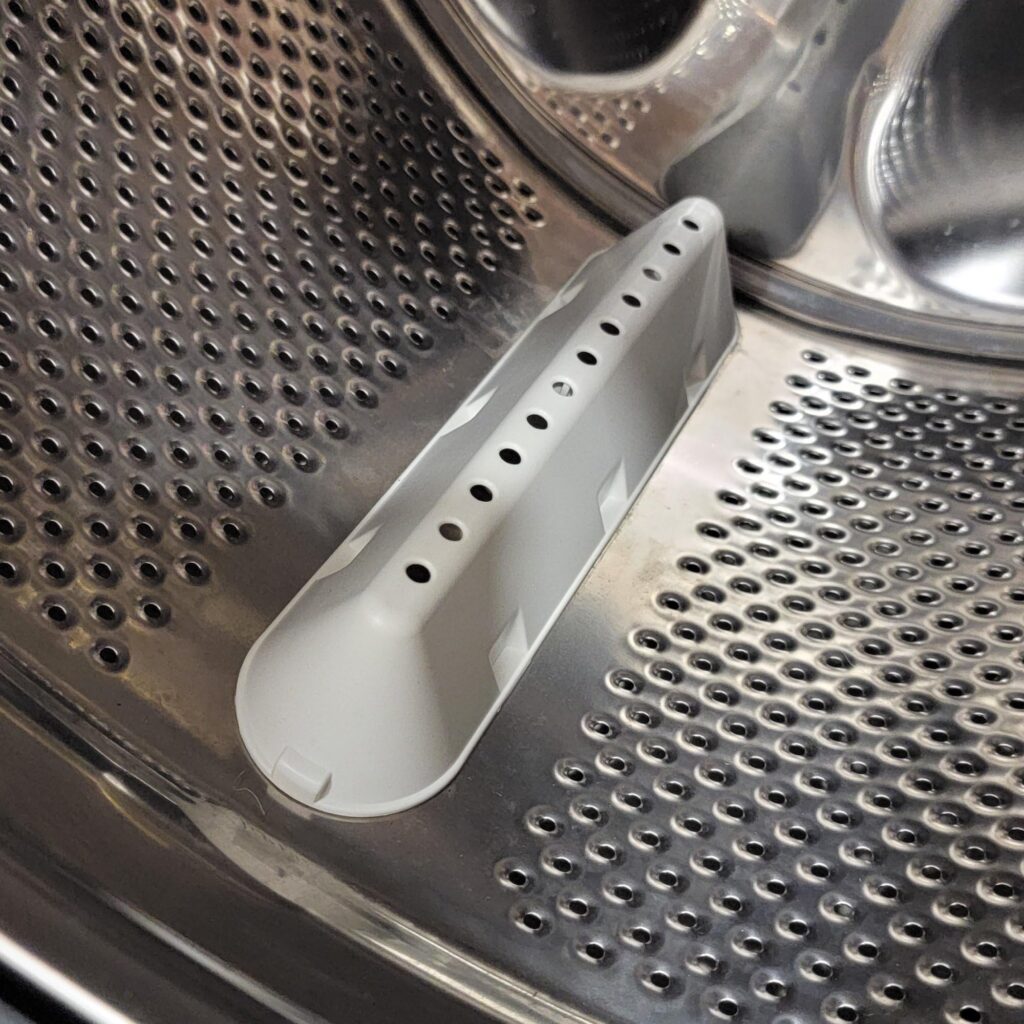

Drum paddles (also called lifters or drum baffles) are the three raised sections inside the washing machine drum. They lift and tumble laundry as the drum rotates. When one breaks or comes loose, the machine should not be used until it is fixed – loose paddles can trap and tear clothing. Many paddles can be replaced cheaply as a DIY job, but some are integral to the drum and are not separately replaceable.

The drum has holes and slots with relatively sharp edges. A loose or damaged paddle can trap laundry underneath and cause clothing to be torn or badly damaged during a wash or spin cycle. Do not run the machine until the paddle has been replaced or secured.
What do drum paddles actually do?
Inside every washing machine drum there are three paddles, sometimes called lifters or baffles. Most are made of plastic, though some premium machines use stainless steel. They serve two important functions.
 Tumbling laundry
As the drum rotates, the paddles lift laundry away from the drum wall and drop it back down. This tumbling action is what agitates clothing through the water and detergent, providing the mechanical cleaning action. Without all three paddles in place, this action becomes uneven and washing performance suffers.
 Distributing water
The paddles also help lift and distribute water over the laundry as the drum turns. This ensures even wetting and rinsing throughout the drum. A missing paddle affects how thoroughly water reaches all the laundry, particularly with heavier items.
Are drum paddles always replaceable?
Not always. Whether a paddle can be replaced, and how easily, depends on the machine’s design.
 Replaceable plastic paddles
Many modern machines have plastic paddles designed as separate, replaceable components. These often clip or slide into fittings in the drum wall and can be swapped without specialist tools or major disassembly. These are the most straightforward DIY repair.
 Paddles requiring drum removal
Some designs use paddle fixings that are only accessible from behind the drum, requiring significant disassembly to reach. While technically replaceable, this is a job for an engineer rather than a DIY repair.
 Integral stainless steel paddles
Some premium machines, notably certain Miele models, have stainless steel paddles that form part of the drum itself rather than being separate fittings. These are not individually replaceable. A broken paddle on this type of drum typically means drum replacement, which is a significant repair.
 Older machines
Older machines are more likely to have non-replaceable or awkwardly fitted paddles than modern designs. Before ordering a part, confirm it is listed for your exact model, not just the brand.
How do you check if a replacement paddle is available for your machine?
The quickest way is to search your full model number on a spare parts website. Look for three things:
- Is the paddle listed as a spare part for your model specifically?
- Does the part photograph match your existing paddle in shape and fittings?
- Are there fitting instructions, customer comments, or video guides for that part?
If the paddle is not listed as a spare part for your model, it is likely integral to the drum. See our spare parts guide for recommended UK suppliers.
How do you replace a drum paddle?
There is no single method – fitting varies considerably between machines. The steps below cover the most common designs.
This applies before working on any part of the appliance. Even with the machine switched off, accessible components can still present a risk if the appliance is connected to power.
Clip or slide-fit paddles
-
Unplug the machine and inspect the paddle. Examine the paddle closely. Look for a small hole or slot on the paddle body, typically towards one end or on the underside.
-
Release the locking clip. Insert a small flat-head screwdriver into the hole to release the locking clip. This disengages the retention mechanism holding the paddle in place.
-
Slide the paddle out. Slide the paddle along the drum wall and lift it out. The direction of travel varies, so try both ways if the first does not work.
-
Fit the new paddle. Align it with the mounting points and slide it into position until it clicks securely. Tug gently to confirm it is properly seated before using the machine.
If the paddle has already come off or is badly damaged
Examine the old paddle and the drum mounting point carefully. Look for:
- Visible clips, locking tabs, or a slot that suggests it slides into place
- Screw holes – if screws are used, check whether they are accessible from inside the drum
- Any damage to the drum fitting that would prevent a new paddle seating correctly
If screws are used to secure the paddle, they are often accessed from underneath the drum, which typically requires removing the outer drum, a major disassembly job. In a small number of machines a single screw may be accessible through the sump hose opening at the base of the outer drum, but this is uncommon.
Many spare parts websites include fitting notes in the product listing, and some have customer comments or video links for specific models. These can be invaluable before you start the job, particularly for less common machines.
What causes drum paddles to break?
A drum paddle should not normally break or come loose during regular use. When it does, there are usually two explanations.
Poor quality materials
Some machines use paddles made from lower-grade plastic that becomes brittle over time, particularly with repeated exposure to hot water and detergent. This is a manufacturing quality issue rather than user error, and in some cases may support a Consumer Rights Act claim if the machine is relatively new. See our guide: Consumer Rights Act and faulty appliances.
Washing heavy or hard items
Washing trainers, shoes, or items with hard components such as buckles, metal fastenings, or rigid soles, creates repeated impact inside the drum that paddles are not designed to absorb. This is one of the most common causes of paddle damage. See our guide: can you wash trainers in a washing machine?
Need a replacement paddle or a repair engineer?
Find the correct drum paddle for your machine through our spare parts guide, or book a qualified engineer if you would prefer not to tackle the job yourself.
Frequently asked questions about washing machine drum paddles
What is a washing machine drum paddle?
Drum paddles, also called lifters or baffles, are the three raised sections inside the washing machine drum. They lift laundry away from the drum wall as the drum rotates, tumbling it through the water and detergent. They also help distribute water evenly through the load. Most are made of plastic, though stainless steel versions exist on premium machines.
Can I use my washing machine with a broken or missing drum paddle?
No, it is best not to. A broken or loose paddle can trap clothing under it during a wash or spin cycle, potentially causing items to be torn or badly damaged. The exposed drum edges around the paddle fitting are relatively sharp. Stop using the machine and fix the paddle before running another cycle.
How do I know if my drum paddle can be replaced?
Search your machine’s full model number on a spare parts website and check whether the paddle is listed as a separate spare part. If it is, and the part photograph matches your existing paddle, it is almost certainly replaceable. If it is not listed as a spare part, it may be integral to the drum. Stainless steel paddles on premium machines are typically not separately replaceable.
How much does a replacement drum paddle cost?
Replacement plastic drum paddles typically cost between £4 and £20 depending on the machine brand and model. They are one of the cheaper washing machine spare parts. The labour cost of fitting one, if you book an engineer, will usually exceed the cost of the part itself, making this a good candidate for a DIY repair on machines with accessible, clip-fit paddles.
Why do drum paddles break?
The two most common causes are poor quality plastic that becomes brittle over time, and physical impact from washing heavy items such as trainers or shoes. Hard objects bouncing around inside the drum during a wash cycle create impacts that plastic paddles are not designed to absorb repeatedly. Using a laundry bag for trainers or other hard items can help reduce the risk.
My drum paddle has different names – is it the same part?
Yes. Drum paddles are also referred to as drum lifters, drum baffles, or drum fins depending on the manufacturer and the spare parts supplier. When searching for a replacement, try all of these terms alongside your model number if the first search does not return a match.
I have washed something heavy and now hear a rattling – could it be a broken paddle?
Possibly, but it is not the only cause. A loose paddle will usually produce a knocking sound rather than a rattle, particularly during the spin cycle when the drum is rotating fast. A rattle is more often caused by a foreign object such as a coin or underwire trapped behind the drum, or between the inner and outer drums. Stop the cycle and check the drum visually before running the machine again. If the paddle is intact but you can hear movement inside the machine, see our guide on washing machine noises for further diagnosis.
Ask the repair forum
Post the make, model and symptoms and get help from the Whitegoods Help community.
0 Comments