
How does drum capacity affect spin efficiency?
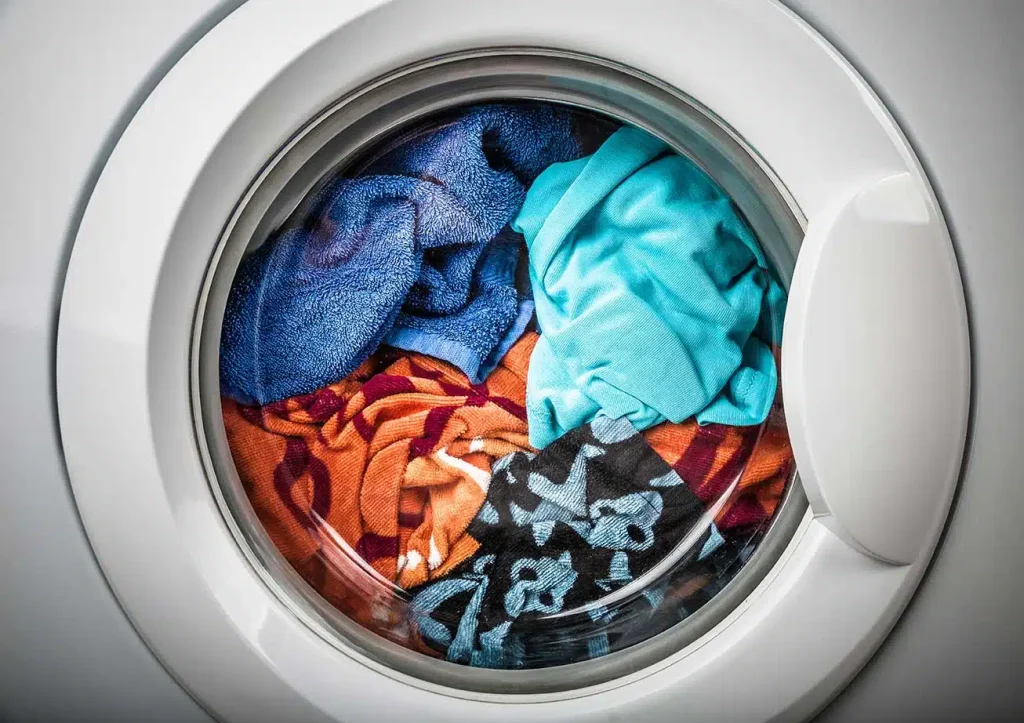

Larger drum washing machines tend to achieve higher spin efficiency ratings than smaller drums at the same spin speed. A larger drum generates more centrifugal force for a given RPM due to basic physics. However, drum design, hole pattern, and spin duration also affect the rating – there are exceptions to the general trend. The practical difference between spin efficiency grades A and B is less significant than most people assume.
Spin efficiency is a rating that indicates how much moisture is removed from laundry during the spin cycle – affecting how long items then need in a tumble dryer or on a line. Drum capacity has a measurable but not exclusive effect on this rating.
Why Drum Size Affects Spin Efficiency
Centrifugal force – the outward force experienced by laundry as the drum spins – increases with the radius of the drum. A larger drum has a greater radius, which means that at the same rotational speed in RPM, laundry in the outer circumference of a large drum experiences more centrifugal force than laundry in a small drum. More centrifugal force extracts more water from the fabric per revolution.
This is the same principle used in industrial gearing: a larger wheel at the same rotational speed has a higher peripheral velocity than a smaller wheel. Applied to washing machine drums, a 9kg drum spinning at 1400rpm is moving the outer edge of the drum faster and generating more force than a 6kg drum at the same 1400rpm.
What the Evidence Suggests
Research into spin efficiency ratings across a range of washing machines at the same spin speed shows a general trend:
| Drum capacity | Spin speed | Typical spin efficiency rating observed |
|---|---|---|
| 6 kg | 1400 rpm | B (most models) |
| 6 kg | 1600 rpm | B (many models) |
| 7 kg | 1400 rpm | A or B (varies by model) |
| 8 kg | 1400 rpm | A (most models) |
| 9 kg | 1400 rpm | A (most models) |
These are general observations rather than a definitive chart – exceptions exist in both directions. A 6kg machine spinning at 1600rpm and a 6kg machine at 1400rpm can achieve the same spin efficiency rating despite the higher speed, which demonstrates that drum design, hole pattern, hole size, and the duration of the spin programme also influence the final result.
What Else Affects Spin Efficiency

Drum design and hole pattern
The number, size, pattern, and distribution of holes in the drum affect how water is extracted during spin. A drum optimised to drain water quickly and efficiently during centrifugal force can outperform a larger drum with a less effective hole pattern.

Spin duration
How long the spin programme maintains full speed affects how much water is removed. A machine that ramps to maximum speed quickly and holds it longer will extract more water than one that spins briefly at the same peak speed. Programme design contributes to the efficiency rating independently of drum size.

Spin speed
Higher RPM does generate more centrifugal force and removes more water. However, the relationship is not directly linear – increasing from 1400 to 1600rpm does not produce proportionally more water extraction, because the laundry is already experiencing significant force at 1400rpm and further gains diminish. See our guide on washing machine spin speeds for the full analysis.
Does Spin Efficiency Grade Actually Matter?
The practical difference between a grade A and grade B spin efficiency rating is less than most people assume. Both grades leave laundry significantly damp compared to drying – neither eliminates the need for further drying. The residual moisture difference between grades translates to a modest difference in tumble drying time or line drying time, not a step-change in how dry laundry feels when taken out of the machine.
For a detailed look at how spin speed affects residual moisture and drying costs, see our guide on washing machine spin speed efficiency and drying costs.
Related Guides
Washing Machine Spin SpeedsWhat RPM ratings mean, which fabrics need which speeds, and whether high spin speeds damage clothes.
 Spin Speed Efficiency and Drying Costs
How much residual moisture different spin speeds leave – and what it costs in tumble drying time.
 Which Is the Best Washing Machine to Buy?
Brand quality, drum sizes, and how to choose the right washing machine for your household.
 Won’t Spin Single Items or Small Loads
Why larger drum machines are more prone to refusing to spin small or lightly loaded loads.
Frequently Asked Questions
Do bigger washing machine drums spin more efficiently?
Generally yes, at the same RPM. A larger drum radius generates more centrifugal force per revolution, which extracts more water from laundry at the same rotational speed. Most 8kg and 9kg machines at 1400rpm achieve a grade A spin efficiency rating, while most 6kg machines at the same speed achieve grade B. However, drum design, hole pattern, and spin duration also affect the rating, and there are exceptions.
Does a higher spin speed make a big difference to spin efficiency?
Higher RPM does extract more water, but the gains diminish at higher speeds. Moving from 800rpm to 1200rpm makes a significant difference to residual moisture. Moving from 1400rpm to 1600rpm makes a much smaller practical difference. A 6kg drum at 1600rpm may achieve the same spin efficiency grade as the same drum at 1400rpm despite the higher speed – because drum design and programme duration also contribute to the rating.
What is the difference between spin efficiency grade A and grade B?
Both grades leave laundry significantly damp. The difference in residual moisture percentage between A and B is real but translates to a modest difference in subsequent drying time – not a dramatic change in how dry laundry feels when removed from the machine. For most households, the practical impact of being grade B rather than grade A is minor compared to other purchasing factors such as drum capacity, brand reliability, and energy efficiency.
Ask the repair forum
Post the make, model and symptoms and get help from the Whitegoods Help community.
7 Comments
Grouped into 6 comment threads.
0 replies Makes sense Sector-9. Those little spinners are amazing. The slower a washing machine spins the longer it's likely to last.
0 replies I've noticed with my newer, larger washing machines that my standalone spin dryer extracts less extra water than it did with the older, smaller ones despite having the same spin speed (both the same brand so little else will have changed much). I've calculated that my spin dryer with a 9in drum spinning at 2800rpm is moving clothes at a distance of 1319in/sec (((rpm*(diameter*PI))/60) - this is the same distance as the new one with an estimated 18in drum diameter spinning at 1400rpm, so the only perceptible benefit I now get from the spinner is being able to spin fabric for as long as I'd like rather than the pre-programmed duration on the washer. With an ever larger drum or higher spin speed on the machine, the spinner would be redundant. My take away from this is that if you've got a relatively slow-spinning washer (i.e. <1400rpm) or one with a narrow drum (diameter, not depth or weight limit is the important factor here), then a separate spinner is probably a worthwhile addition if you use a tumle dryer. Of course, the bearing loads on a large drum machine would be hideous - far higher than that on the spinner, even in the improbable scenario of a perfectly balanced drum, so the spinner would likely outlast them all anyway! Personally I set my washers to a low spin speed just so the clothes aren't dripping on removal, then finish them off in the spinner. That and not cramming the drum of the washer full means I've never had bearings fail yet.
I’ve noticed with my newer, larger washing machines that my standalone spin dryer extracts less extra water than it did with the older, smaller ones despite having the same spin speed (both the same brand so little else will have changed much). I’ve calculated that my spin dryer with a 9in drum spinning at 2800rpm is moving clothes at a distance of 1319in/sec (((rpm*(diameter*PI))/60) – this is the same distance as the new one with an estimated 18in drum diameter spinning at 1400rpm, so the only perceptible benefit I now get from the spinner is being able to spin fabric for as long as I’d like rather than the pre-programmed duration on the washer. With an ever larger drum or higher spin speed on the machine, the spinner would be redundant.
My take away from this is that if you’ve got a relatively slow-spinning washer (i.e. <1400rpm) or one with a narrow drum (diameter, not depth or weight limit is the important factor here), then a separate spinner is probably a worthwhile addition if you use a tumle dryer. Of course, the bearing loads on a large drum machine would be hideous – far higher than that on the spinner, even in the improbable scenario of a perfectly balanced drum, so the spinner would likely outlast them all anyway! Personally I set my washers to a low spin speed just so the clothes aren't dripping on removal, then finish them off in the spinner. That and not cramming the drum of the washer full means I've never had bearings fail yet.
0 replies An "A" rating will always be more desirable to consumers, even if the difference between A and B, in real terms is negligible, or even a decent difference but counteracted by other factors that could even make a B rating the best option (eg. extra stress and wear on the motor and other parts, £50 extra cost, extra creasing in clothes..). Unfortunately most people tend to make purchasing decisions based on emotional impulses rather than cold hard facts. Sales pitches are cleverly homed into that. I wonder how many people when faced with 2 products, one with an A rating and one with a B rating ever ask, what's the actual difference between them? I'm sure most people's thought processes are that A is obviously better than B so that's what I should go for. It's exactly the same with spin speeds, 1600 rpm is faster than 1400 so it must get laundry dryer and it must be better ..
An “A” rating will always be more desirable to consumers, even if the difference between A and B, in real terms is negligible, or even a decent difference but counteracted by other factors that could even make a B rating the best option (eg. extra stress and wear on the motor and other parts, £50 extra cost, extra creasing in clothes..). Unfortunately most people tend to make purchasing decisions based on emotional impulses rather than cold hard facts. Sales pitches are cleverly homed into that.
I wonder how many people when faced with 2 products, one with an A rating and one with a B rating ever ask, what’s the actual difference between them? I’m sure most people’s thought processes are that A is obviously better than B so that’s what I should go for. It’s exactly the same with spin speeds, 1600 rpm is faster than 1400 so it must get laundry dryer and it must be better ..
0 replies "it is also only rated the same B for spin efficiency" I share your suspicion of the spin ratings. As with 'efficency' they don't tell you anything very useful unless you know how they are arrived at. If one machine extends the spin for several minutes, it will presumably get a higher rating, but will leave your clothes more creased! The force involved, as I indicate above, is a straightforward calculation based on diameter and rpm, the more the merrier in both cases. I think A,B,C ratings are generally pretty useless - for instance, A-rated 'low-energy' lightbulbs produce an entirely different quality of light to their D-rated counterparts, and use far more energy in manufacture, are transported from China and create hazardous waste!
“it is also only rated the same B for spin efficiency”
I share your suspicion of the spin ratings. As with ‘efficency’ they don’t tell you anything very useful unless you know how they are arrived at.
If one machine extends the spin for several minutes, it will presumably get a higher rating, but will leave your clothes more creased! The force involved, as I indicate above, is a straightforward calculation based on diameter and rpm, the more the merrier in both cases.
I think A,B,C ratings are generally pretty useless – for instance, A-rated ‘low-energy’ lightbulbs produce an entirely different quality of light to their D-rated counterparts, and use far more energy in manufacture, are transported from China and create hazardous waste!
0 replies "the G-forces go up exponentially" Just linearly, but they do go up, so all other things being equal, the bigger the drum, the better. The centrifugal force (centripetal, if you're being pedantic) does follow a square law, so doubling the speed quadruples the force. This is not trivial - clothes spun at 1200 rpm experience an eye-popping 386G, while 800 rpm gives a more relaxed 171G (these all assume a drum diameter of 48cm). I bought a 1600 spin machine because, nerd that I am, I did the maths and discovered that the extraction force would be nearly 700G, assuming it really did go at the advertised speed. Note that this is nearly twice as much as the force at 1200 rpm, so I maintain that speed is the important thing, although a big drum will help as well.
“the G-forces go up exponentially”
Just linearly, but they do go up, so all other things being equal, the bigger the drum, the better.
The centrifugal force (centripetal, if you’re being pedantic) does follow a square law, so doubling the speed quadruples the force. This is not trivial – clothes spun at 1200 rpm experience an eye-popping 386G, while 800 rpm gives a more relaxed 171G (these all assume a drum diameter of 48cm). I bought a 1600 spin machine because, nerd that I am, I did the maths and discovered that the extraction force would be nearly 700G, assuming it really did go at the advertised speed. Note that this is nearly twice as much as the force at 1200 rpm, so I maintain that speed is the important thing, although a big drum will help as well.
1 reply You do not specifically mention it but it should be obvious that a larger-diameter drum does not need as high an RPM to acheive the same effectivness as a smaller-diamator drum spinning the same speed. If you do some research on commercial washing machines and extractors, you will see that they use a G-force rating. This is a simple algorythim based on RPM and drum-diamator. The sales-folks like to use spin-speed but it would be more realistic if the industry setteled on G-force rating which allows buyers to compare machines of different drum-diamators and spin-speeds with a common numerical factor. As drum-diametors get bigger, the G-forces go up exponentially. I would not be surprised that at some point, the G-forces of 1600 RPM and large drums start to breach some safety-factors. (Not to mention bearing-limits!) I expect that there is not much more to gain from spinning faster than about 1200 RPM with todays larger-diametor drums anyway.
You do not specifically mention it but it should be obvious that a larger-diameter drum does not need as high an RPM to acheive the same effectivness as a smaller-diamator drum spinning the same speed.
If you do some research on commercial washing machines and extractors, you will see that they use a G-force rating. This is a simple algorythim based on RPM and drum-diamator.
The sales-folks like to use spin-speed but it would be more realistic if the industry setteled on G-force rating which allows buyers to compare machines of different drum-diamators and spin-speeds with a common numerical factor.
As drum-diametors get bigger, the G-forces go up exponentially. I would not be surprised that at some point, the G-forces of 1600 RPM and large drums start to breach some safety-factors. (Not to mention bearing-limits!)
I expect that there is not much more to gain from spinning faster than about 1200 RPM with todays larger-diametor drums anyway.
Makes sense Sector-9. Those little spinners are amazing. The slower a washing machine spins the longer it’s likely to last.