
Should you buy a coloured washing machine?
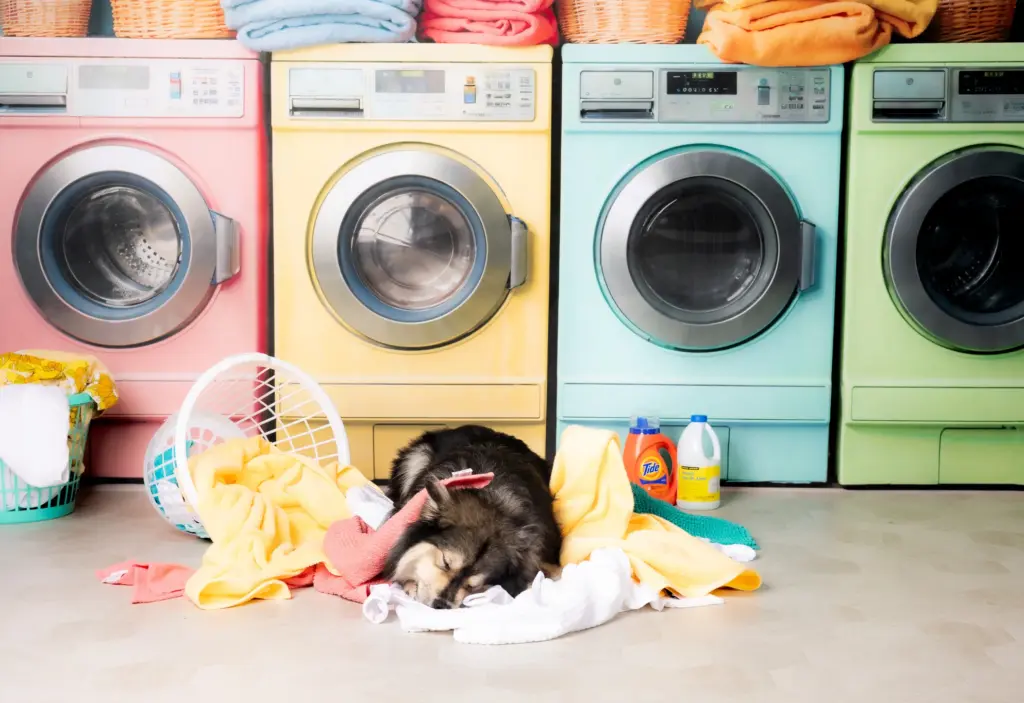

Coloured washing machines look striking but carry two real risks – the colour may be discontinued before the machine needs replacing, and manufacturers often refuse to supply coloured spare parts even for models still in production. White is the safest long-term choice. Silver is a reliable alternative that holds its appeal across kitchen styles and decades.
Are coloured washing machines a good idea?
Coloured washing machines – black, red, navy, grey, anthracite and beyond – have become more common as manufacturers chase kitchen design trends. They can look superb in the right setting, but two practical issues are worth understanding before you spend the extra money.
The first is what happens when the machine itself needs replacing. The second is what happens if it needs a repair that involves replacing a visible panel or part. Both can leave you with a kitchen that no longer matches.

Bold colours follow fashion cycles. The shade you love today may not exist in five years.

Coloured replacement panels and doors are often not stocked – even while the model is still being sold.

Coloured versions of the same machine typically cost more than the white equivalent, sometimes considerably so.
What happens when the colour is discontinued?
Appliance colour ranges follow fashion cycles. A bold colour that’s popular when purchased may no longer be available five to eight years later when the machine needs replacing.
A kitchen designed around a coordinated coloured appliance range can be left without matching options when any one of those appliances fails. With budget washing machines often scrapped after six to eight years, this isn’t a hypothetical concern.
This customer’s kitchen is all blue – blue fridge, freezer, kettle, toaster, the lot. The manufacturer no longer makes a blue machine and the insurer only supplies replacements in white. Fashion – don’t you just love it.
The site’s founding engineer, on a call-out for a coloured machine declared beyond economical repair
Appliances don’t last as long as a fitted kitchen. A machine scrapped after six to eight years – now common at the budget end of the market – leaves the kitchen mid-cycle in terms of colour coordination. Bold or trend-led colours carry the highest discontinuation risk. More neutral options such as silver and stainless steel have far longer commercial lifespans.
Can you get coloured spare parts?
Often not. Even while a coloured model is in current production, manufacturers frequently don’t stock coloured versions of replacement parts. Control panels, door assemblies, door handles and control knobs are the most commonly affected components.
When one of these parts needs replacing, the manufacturer may supply only the white version – citing it as a “suitable replacement” on the basis that it fits and functions correctly, even if it visually clashes with the rest of the machine.
 What this means in practice
- A repaired coloured machine may end up with visibly mismatched components.
- The manufacturer’s legal duty is to supply a part that fits and functions – colour match is not part of that obligation.
- This applies in and out of warranty – a warranty repair may still produce a mismatched finish if the coloured part is unavailable.
- The premium paid for the coloured machine is effectively wasted once it’s been repaired with a white component.
 Why white avoids this entirely
- White spare parts are universally stocked across all brands and models.
- A white replacement part on a white machine is invisible.
- White replacement machines are available from almost every manufacturer and retailer at every price point.
- Resale and insurance replacement values are easier to match when you’re not chasing a specific shade.

Before committing to a coloured model, ask the retailer or manufacturer directly whether coloured spare parts – specifically the door and control panel – are stocked for that machine. Get the answer in writing if you can. This is a fair pre-purchase question and the response often reveals how seriously the brand backs its colour range.
What should you check before buying a coloured washing machine?
Buying a coloured machine isn’t a mistake – many last their full service life without a part being replaced. The point is to go in with eyes open. Run through these checks first.
-
How established is the colour? Trend-led shades are more likely to be dropped than long-standing neutrals. Check how long the colour has been offered and whether multiple models share it – a wider range signals stronger commercial commitment. -
Are coloured spare parts stocked? Ask the retailer or manufacturer whether door assemblies and control panels are available in the colour. Don’t accept “we think so” – get specific confirmation. -
Does the kitchen design depend on it? If other appliances share the colour, consider what happens when any one of them fails. Matching replacements across multiple appliances cannot be guaranteed. -
What’s the price premium? Coloured machines are usually more expensive than their white equivalents. Decide whether the look is worth the extra cost given the long-term risks. -
Consider silver instead. If white feels too plain, silver and stainless finishes have stayed popular across decades, are widely available as replacement appliances and coordinate with both modern and traditional kitchens.
Choosing your next washing machine?
Before you commit to a colour, make sure you’re buying a brand and model worth keeping. Our buying guides cover what actually matters.
Why is silver a safer alternative to bold colours?
Silver and stainless-style finishes have remained popular across more than two decades of kitchen design, while bold colours have come and gone in waves. That commercial staying power matters when you’re buying an appliance that may need to fit your kitchen for the next decade.
Wider availabilitySilver and graphite finishes are offered by almost every major brand at every price point, making like-for-like replacements far easier.
Better coordinationSilver works with both modern kitchens and traditional schemes, and pairs comfortably with stainless ovens and hobs.
Lower discontinuation riskBecause silver is a long-standing standard rather than a trend, manufacturers are far less likely to drop it from their range.
Easier resaleA silver machine appeals to a wider buyer pool if you ever sell it or move house and leave appliances behind.
What about black, red and other strong colours?
Black washing machines have become more widely stocked in recent years and are now a more reliable colour choice than they once were, particularly at the mid and upper end of the market. They’re still a riskier bet than white or silver, but the gap has narrowed.
Red, navy, anthracite and pastel shades remain the highest-risk options. They tend to appear on a single model line, sit on the shelves for a season or two and then quietly disappear from the range. If a brand only offers one machine in a particular colour, treat that as a warning sign.

If you really want a coloured kitchen but worry about appliance matching, an integrated washing machine is hidden behind a matching cupboard door. The appliance itself stays white, and the visible finish is just kitchen cabinetry – which is far easier to match or replace.
Does insurance cover a like-for-like coloured replacement?
Usually not. Most home insurance and extended warranty policies promise a replacement of “equivalent specification” – meaning the same capacity, spin speed and broad feature set. They do not promise the same colour.
If your blue machine fails beyond economical repair, the insurer is well within its rights to send you a white one of similar spec. Worth knowing before you build a colour-matched kitchen on the assumption insurance will protect it. Read our guide on whether washing machine extended warranties are worth it for more on what these policies actually cover.

Washing machines run on mains electricity and connect to mains water – any repair involving the casing, wiring, motor, heater or door interlock should only be carried out by a qualified appliance engineer. Always disconnect the machine from the mains and turn off the water supply before inspecting any component. If you’re unsure whether a repair is safe to attempt yourself, book a qualified engineer.
Related guides
 Which is the best washing machine to buy?
Brand quality, price tiers and what actually matters when choosing a washing machine.
 How long should a washing machine last?
Expected lifespans by price tier – relevant context for how long a coloured machine may stay in service.
 Should I buy an extended warranty?
What extended warranties cover and where the small print catches people out.
Why don’t modern washing machines last?How price competition has reduced build quality – and why machines are scrapped sooner than they used to be.
Frequently asked questions
Are coloured washing machines a good idea?
They can look superb in the right kitchen, but two practical risks deserve thought. The colour may be discontinued before the machine needs replacing, and coloured spare parts are often unavailable even while the model is still being sold. White avoids both problems. Silver is a reliable middle ground that coordinates well across different kitchen styles and decades.
Can I get coloured spare parts for my washing machine?
Often not. Manufacturers stock white spare parts universally but frequently don’t stock coloured versions of panels, doors or handles. When a replacement is needed, they may supply only the white part as a “suitable replacement” – which meets their legal obligation to provide a working component, but does not match the original colour. Read our guide on buying spares for more on how replacement parts work.
What colour washing machine should I buy?
White is the safest practical choice for long-term ownership – parts and replacements are universally available regardless of brand or price point. If white feels too plain, silver and stainless finishes have proved consistently popular for decades and carry a far lower risk of discontinuation than bold or trend-led colours.
Are black washing machines reliable for the long term?
Black has become more widely stocked across mainstream brands in recent years, so it’s now a steadier choice than it used to be. It still carries more risk than white or silver if you need a like-for-like replacement years later, but for a single appliance in a kitchen that isn’t fully colour-coordinated, it’s a reasonable option.
Will my insurance replace a coloured washing machine with the same colour?
Usually not. Most home insurance and extended warranty policies promise a replacement of equivalent specification – same capacity, spin speed and feature set – but not the same colour. If a coloured machine is written off, expect a white replacement unless the policy specifically states otherwise.
Do coloured washing machines cost more than white ones?
Yes, almost always. The same model in a coloured finish typically commands a premium over the white version, sometimes substantially. That premium is in addition to the long-term risks around spare parts and discontinuation, which is worth factoring into the decision.
Need help with your current washing machine?
Whether you’re chasing a fault, ordering spares or weighing up a repair, our guides and booking service can help.
Ask the repair forum
Post the make, model and symptoms and get help from the Whitegoods Help community.
2 Comments
Grouped into 1 comment thread.
I understand the point you are making and the reasons for it but sometimes people don’t have a choice.
We have just moved into a newly built house and as part of the process, had various options and extras to consider. For the kitchen, we were able to select our preference for cabinet doors; cabinet door handles; work surface; flooring; wall paint; decorative paint i.e skirting and even the type of handle on the door..
There was no choice however as to the fitted oven; hob and extractor, ALL OF WHICH ARE STAINLESS STEEL. As a result, when we ordered our new fridge freezer; washing machine; dish-washer and even the microwave, it would have looked odd if we hadn’t ensured that these were similar although we had to settle for metallic / grey in most cases since stainless steel was either too expensive or not available otherwise.
Likely replying to Phil C
Hello Phil. Definitely, and your dilemma really enforces my point that colours are fashion driven and cause many problems when replacing appliances or fitting a kitchen, and that once you decide on non-standard colour it causes problems down the line.
Having said that I think the appliances you mentioned are all stainless steel because that is a finish which should look okay in any kitchen no matter what colour the other appliances are in the same way that a stainless steel kettle or toaster will always look good no matter what colour everything else is. I agree that matching stainless steel appliances would look brilliant but white would have probably looked okay. It’s very much subjective though.
Stainless steel finish is very expensive and it’s rare for a company to produce appliances in stainless steel. Miele are one of the only ones I know that make washing machines and tumble dryers in stainless steel and you have to see them close up to appreciate how beautiful and awesome they look. Photos do not do them justice. However, they are extremely expensive and for the very rich only.
The beauty of white is that it looks okay in any kitchen which is why the overwhelming majority of appliances have always been white and probably always will. The only way I could see this changing is if it becomes just as cheap to produce them in stainless steel finish, in which case I would expect that to become dominant but whilst ever it is cheaper to use normal metals and paint them, white is always going to be best ;)