
Colour Catchers Can Block Washing Machine Pumps
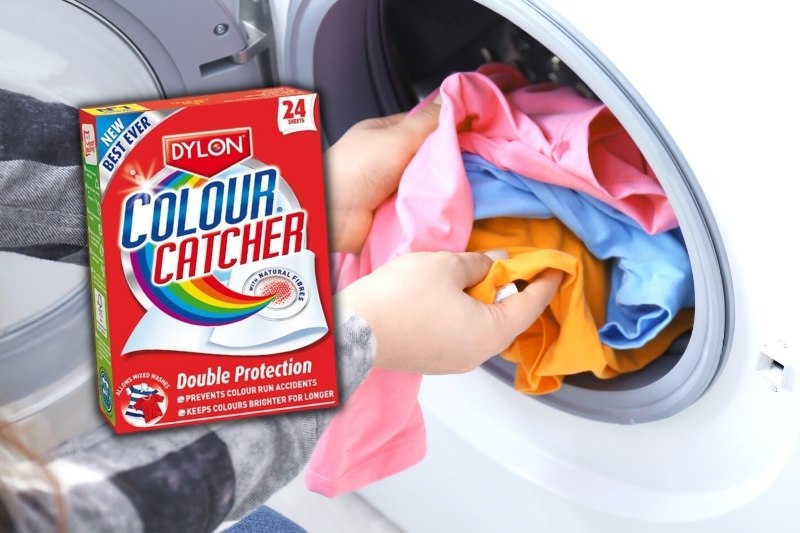

Colour catcher sheets are small enough to slip through the gap between the drum and the door seal during a wash. Once inside, they can jam the drain pump or block the pump filter, stopping the machine from draining. The risk varies by machine – a wider door seal gap significantly increases it. Using a mesh laundry bag to contain the sheet removes most of the risk without affecting how it works.

If a sheet gets pulled through the door seal gap, it can jam the pump or block the pump filter, leaving the machine full of water and unable to drain. This has been confirmed across multiple machine brands and models by our engineers.
What are colour catchers and why is there a problem?
Colour catcher sheets, sometimes called colour and dirt collector sheets, are designed to absorb loose dye released during washing and prevent it from transferring to other items in the load. They are marketed as a way to wash mixed loads of whites and coloureds together safely.
In principle this is useful. In practice, washing whites and coloureds separately remains the recommended approach, not least because the two need different detergents – whites need bleaching agents to stay bright, while colours need a detergent without bleach to prevent fading. Colour catchers do not address the detergent issue.
The practical problem is the sheets themselves. They are very small, typically around the size of a large postage stamp, and made from thin, lightweight fabric. During a wash cycle, water circulation and drum movement create suction in the gap between the drum and the rubber door seal. Small, lightweight items can be pulled into this gap and, from there, dragged into the pump system.
How can a colour catcher sheet break your washing machine?
 Step 1: Sheet pulled into the door seal gap
Water movement during the wash creates suction at the gap between the drum and the door seal. A small, lightweight sheet can be pulled through this gap during the cycle. Whether this happens depends on the size of the gap and the stiffness of the rubber seal.
 Step 2: Sheet enters the pump system
Once through the door seal, the sheet travels down through the drum into the water that collects at the bottom of the machine. From there, water is pumped out via the drain pump. The sheet travels with the water and enters the pump system.
 Step 3: Pump jams or filter blocks
Inside the pump, the sheet can wrap around the impeller and jam it, stopping the pump entirely. Alternatively it may block the pump filter, restricting or stopping drainage. Either way, the machine stops mid-cycle with water remaining in the drum.
 Result: Machine full of water, won’t drain
A jammed pump or blocked filter means the machine cannot drain and may show an error code or simply stop responding. The sheet must be retrieved from the pump or filter before the machine will function again. See our guide: how to clean the pump filter.
Check the pump filter first. The sheet may have collected there rather than fully entering the pump, making retrieval straightforward. See our guide: washing machine won’t drain.
How do you check whether your machine is at risk?
The key variable is the gap between the drum and the door seal. Check it before using colour catcher sheets.
 Lower risk: small, firm gap
If the gap between the drum edge and the rubber seal is very narrow (2 to 3mm or less) and the rubber is firm and close-fitting, a colour catcher sheet is much less likely to be pulled through. The suction effect is reduced and the physical gap is too small for the sheet to pass easily.
 Higher risk: wider or softer gap
If the gap is noticeably wider, some machines have gaps of 10 to 15mm, or if the door seal rubber is soft, flexible, or distorted with age, the risk is significantly higher. A small sheet can be drawn through a gap of this size during normal water circulation in the drum.
To check: with the machine empty and switched off, run a finger around the inside of the door seal and assess how wide the gap is between the rubber and the drum. If you can fit more than the tip of a finger into the gap, consider your machine higher risk for this problem.
How do you use colour catchers safely?
If you want to continue using colour catcher sheets, there are straightforward ways to significantly reduce the risk.
- Place the sheet inside a mesh laundry bag. This is the most effective solution. A laundry bag (also called a wash net) makes the sheet too large to pass through the door seal gap, while still allowing water and dye to pass through the mesh freely. The sheet functions exactly as intended without the risk of being lost in the pump.
- Place the sheet towards the back of the drum. If not using a laundry bag, position the sheet on top of the laundry load, slightly towards the back of the drum rather than near the door. This keeps it further from the door seal gap where suction is strongest.
- Do not overload the machine. An overloaded drum pushes laundry hard against the door seal and can force lightweight items into the gap. Leave enough space that the load moves freely during the wash.
- Avoid laundry pressing directly against the door seal. If clothing bunches up against the door at the start of the cycle, rearrange it before starting. Items jammed against the seal increase the risk of small pieces being drawn through.
- Check the filter if a sheet goes missing. If you cannot account for a colour catcher sheet at the end of a wash, check the pump filter before running another cycle. Better to find it there than after a breakdown. See our washing machine pump filter guide.
Mesh laundry bags cost very little and are widely available. Keeping a dedicated bag solely for colour catcher sheets means you can use them without any additional thought about placement or drum loading.
What should you do if your machine stops with water in the drum?
If the machine has stopped draining after a wash that included a colour catcher sheet, the sheet is likely in the pump filter or the pump itself.
-
Do not run another cycle. Running the machine again with a blocked pump or filter can damage the pump motor and make the situation worse.
-
Drain the machine manually. Access the pump filter at the front bottom of the machine. Place towels and a shallow tray in front of it, then slowly open the filter cap to allow water to drain out gradually. See our full guide: how to access and clean the pump filter.
-
Check the filter for the sheet. With the water drained, unscrew and remove the filter fully. The colour catcher sheet may have collected here. If found, remove it, clean the filter, refit it securely, and test the machine.
-
If the filter is clear, the pump may be jammed. If draining restores function and the filter is clear but the problem returns, the sheet may be inside the pump itself. At this point, booking an engineer is the practical next step. See: book a repair engineer.
Machine stopped draining?
If the pump is blocked or jammed and you cannot clear it through the filter, an engineer can retrieve the obstruction and test the pump for damage.
Frequently asked questions about colour catcher sheets and washing machines
Can colour catcher sheets really break a washing machine?
Yes, this is a confirmed and recurring problem. Our engineers have seen multiple cases across different machine brands where a colour catcher sheet has been pulled into the pump system, jamming the pump or blocking the filter and leaving the machine full of water. The problem is not widely known because it is not mentioned on the product packaging.
How does the sheet get into the pump?
During the wash, water circulation creates suction at the gap between the drum and the rubber door seal. Small, lightweight items can be drawn through this gap. Once through, the sheet falls into the water at the bottom of the machine and is carried into the drain pump when the machine attempts to empty. It can then jam the pump impeller or collect in the pump filter.
How do I know if my machine is at risk?
Check the gap between the drum edge and the door seal rubber when the machine is empty. A gap of more than a few millimetres, particularly if the rubber is soft or distorted, represents a meaningful risk. Some machines have gaps of 10 to 15mm, which is more than wide enough for a colour catcher sheet to pass through.
What is the safest way to use colour catcher sheets?
Place the sheet inside a mesh laundry bag before putting it in the machine. The bag makes it too bulky to pass through the door seal gap while still allowing water and dye to flow freely through the mesh. This eliminates the risk without affecting how the sheet works. Alternatively, avoid overloading the machine and position the sheet towards the back of the drum, away from the door seal.
The sheet has disappeared. Where is it?
If you cannot find the colour catcher sheet at the end of a wash, check the pump filter before running another cycle. Access the filter at the front bottom of the machine – the sheet may have collected there. If the filter is clear and the machine is draining normally, the sheet may have drained away. If the machine is not draining, the sheet has likely jammed the pump. See our washing machine pump filter guide.
Do colour catchers actually work as advertised?
They do absorb loose dye to some extent, which can reduce colour transfer in mixed loads. However, they do not address the underlying reason whites and coloureds should be washed separately, which is that the two require different detergents. Whites need bleaching agents to maintain brightness; coloureds need detergent without bleach to prevent fading. Colour catchers are a practical compromise for convenience rather than a complete solution.
Are there safer alternatives to colour catcher sheets?
Yes. The most reliable alternative is to wash whites and coloureds separately as a matter of routine – this is what the colour catcher product category exists to work around. If separating loads is not practical, look for liquid colour catcher products that are added to the detergent drawer rather than placed loose in the drum. These do not carry the risk of being pulled through the door seal because they dissolve in the wash water. Reusable colour catcher cloths, which are larger and more substantial than disposable sheets, also pose a lower risk if placed in a mesh laundry bag.
Ask the repair forum
Post the make, model and symptoms and get help from the Whitegoods Help community.
6 Comments
Grouped into 6 comment threads.
0 replies My washing machine came up with an EFO error and wasn't draining the water. I checked the filter below and there were about 3x color catchers stuck in it. After removing them I found the water from the washing machine was coming back up into the sink. This wasn't happening until the color catchers got stuck. I cleaned the trap below the sink and then it was fine. If you look at the size of the 'Shout Color Catchers' on Youtube videos that says 9 years ago, they are about 5-6x bigger than the ones used today... How many people get broken down washing machines not realising these are causing it...
0 replies I've been using colour catchers very successfully for a long time now,then recently found the machine wasn't draining properly and the machine stopped. Never even thought about the drain hole, my man where I purchase my electricals explained about the drain hole,so I removed the cover and low and behold there were two color catchers stuck in it.One lesson learned so I'm going to try them in a net laundry bag.
I’ve been using colour catchers very successfully for a long time now,then recently found the machine wasn’t draining properly and the machine stopped. Never even thought about the drain hole, my man where I purchase my electricals explained about the drain hole,so I removed the cover and low and behold there were two color catchers stuck in it.One lesson learned so I’m going to try them in a net laundry bag.
0 replies I use color catchers and when they get into the pump it, I would have to clean it out and it was not a chore that I enjoyed but then I discovered your suggestion on using a Lingerie Bag to hold the catchers in, I have to say that I have not had a problem since. Thank you for that suggestion.
I use color catchers and when they get into the pump it, I would have to clean it out and it was not a chore that I enjoyed but then I discovered your suggestion on using a Lingerie Bag to hold the catchers in, I have to say that I have not had a problem since. Thank you for that suggestion.
0 replies I have just had the same problem this em with a colour catcher stopped my washing from working got stuck in the bottom of machine unless u can get dissolvable ones dont use
I have just had the same problem this em with a colour catcher stopped my washing from working got stuck in the bottom of machine unless u can get dissolvable ones dont use
0 replies It you try to contact company don't bother, email does not work ,the 0845 number does not work. The 0144 number disengages. Good customer services.
It you try to contact company don’t bother, email does not work ,the 0845 number does not work. The 0144 number disengages. Good customer services.
0 replies Spot on. Just had my second entertaining evening of draining the machine and clearing one of these things out of the outlet filter. They are now banned but I also thought one of those mesh laundry bags might make a decent compromise. Not many clothes are pure white these days!
Spot on. Just had my second entertaining evening of draining the machine and clearing one of these things out of the outlet filter. They are now banned but I also thought one of those mesh laundry bags might make a decent compromise. Not many clothes are pure white these days!
My washing machine came up with an EFO error and wasn’t draining the water. I checked the filter below and there were about 3x color catchers stuck in it. After removing them I found the water from the washing machine was coming back up into the sink. This wasn’t happening until the color catchers got stuck. I cleaned the trap below the sink and then it was fine.
If you look at the size of the ‘Shout Color Catchers’ on Youtube videos that says 9 years ago, they are about 5-6x bigger than the ones used today…
How many people get broken down washing machines not realising these are causing it…