
Zanussi Washing Machine Error Codes
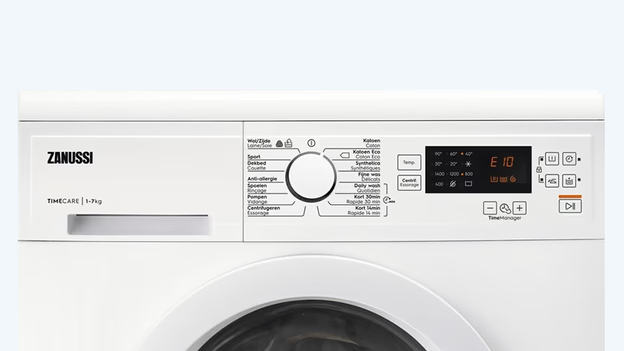

Zanussi washing machines display error codes as E followed by two digits – E10, E20, E40, E50, E60, E90 and so on. The tens digit identifies the fault category – E1x is a fill fault, E2x is a drain fault, E3x is a pressure or door fault, E4x is a door lock fault, E5x is a motor fault, E6x is a heating fault, E7x is an NTC sensor fault, and E9x is a control board or communication fault. Find your code group below and then locate the specific sub-code for the most likely cause.
Code groups covered on this page
E2x – Drain
E3x – Pressure switch
E4x – Door lock
E5x – Motor
E6x – Heating
E7x – NTC sensor
E9x – Control board / comms
EF0 – Anti-flood / foam
How are Zanussi error codes structured?
Understanding the logic of Zanussi’s error code system makes diagnosis faster. The first digit after the E identifies the fault system, and the second digit identifies the specific fault within that system. This means you can narrow down the general area of a fault from the first digit alone, before looking up the full code. For broader brand context see our Zanussi brand hub.
| Code group | System affected | Example codes |
|---|---|---|
| E1x | Water fill system | E10, E11, E12, E13 |
| E2x | Drain system | E20, E21, E22, E23, E24 |
| E3x | Pressure switch and water level system | E33, E34, E35, E36, E37, E39 |
| E4x | Door lock system | E40, E41, E42, E43, E44, E45 |
| E5x | Motor system | E50, E51, E52, E53, E54 |
| E6x | Heating system | E60, E61, E62, E63, E64, E65, E66, E67, E68 |
| E7x | NTC temperature sensor | E70, E71 |
| E9x | Control board and communication | E90, E91, E92, E93, E94 |

Zanussi is owned by Electrolux and its washing machines share manufacturing platforms and control systems with AEG Lavamat and Electrolux branded models. The E code system described in this guide applies equally to equivalent AEG and Electrolux washing machines. If you have an AEG Lavamat displaying an E52 or E61, the diagnosis steps here are directly applicable to your machine – see also our AEG Lavamat washing machine error codes guide.
Which Zanussi codes are seen most often?
Across the field, four code groups account for the majority of Zanussi fault callouts. Knowing which they are helps narrow the diagnosis before you open anything up.
Drain fault – almost always a blocked filter
Motor – usually worn carbon brushes
Door interlock – common at 5-10 years
Fill – tap, hose, or inlet filter
E1x codes – water fill faults
Any code beginning with E1 relates to a problem with water entering the machine. These are among the most common Zanussi error codes and the majority are resolved without replacing any components.
| Code | Fault description | Most likely causes | Check first |
|---|---|---|---|
| E10 | Water fill fault – machine not filling or fill taking too long | Tap closed or partially closed. Kinked or trapped inlet hose. Blocked inlet hose filter. Low mains water pressure. Failed inlet valve solenoid. Aquastop hose triggered or blocked. | Confirm the tap is fully open. Straighten the inlet hose. Unscrew the inlet hose from the back of the machine and clean the small mesh filter inside the inlet port. Check household water pressure. |
| E11 | Slow or incomplete fill – fill taking longer than expected | Partially blocked inlet filter reducing flow. Mains water pressure borderline low. Inlet valve solenoid partially failing and not opening fully. | Same as E10. Clean inlet filter. If pressure and filter are both acceptable, the inlet valve is the likely cause. |
| E12 | Water level sensor not confirming fill has completed | Blocked or kinked pressure switch hose preventing the pressure switch from reading the water level correctly. Failed pressure switch. Soap suds blocking the pressure chamber. | Check and clear the pressure switch hose – a narrow pipe running from the drum to the pressure switch. Run a service wash to clear soap residue from the pressure system – see too much foam in washing machines. |
| E13 | Anti-flood device triggered – water detected in the machine base | Water has entered the base tray, triggering the float switch. Possible sources include a failed door seal, leaking pump, cracked internal hose, or inlet valve fault. | Tilt the machine backward to drain the base tray, then return to upright. Investigate the leak source before using the machine again. Do not use the machine until the leak has been found and resolved. |
| EH0 | Older model equivalent of E10/E11 – water fill problem | Same as E10. Used on earlier Zanussi models with less specific error reporting. | Same checks as E10 – tap, hose, inlet filter, water pressure, inlet valve. |
E2x codes – drain faults
Any code beginning with E2 relates to a problem with water leaving the machine. The E20 drain fault code is one of the most frequently seen Zanussi errors, and in the majority of cases the cause is a blocked pump filter rather than a failed pump.
| Code | Fault description | Most likely causes | Check first |
|---|---|---|---|
| E20 | Drain fault – machine unable to drain within expected time | Blocked pump filter. Kinked or obstructed drain hose. Standpipe too high. Foreign object (coins, buttons, underwire) blocking the pump impeller. Failed drain pump motor. | Clean the pump filter behind the small access panel at the bottom front of the machine. Place towels and a tray in front before opening. Unscrew filter anticlockwise, remove debris, check the pump cavity for foreign objects, and refit firmly. See washing machine not draining and no blockage and still not draining. |
| E21 | Slow drain – machine draining but taking longer than expected | Partially blocked pump filter. Partial blockage in drain hose. Pump impeller sluggish but not failed completely. | Clean the pump filter thoroughly. Check the drain hose for partial kinks or restrictions. |
| E22 | Drain pump monitoring fault – pump running but flow not detected as expected | Partially blocked pump. Pressure switch hose issue causing incorrect water level reading during drain. Pump capacitor beginning to fail. | Clean pump filter. Check pressure switch hose is not blocked. If the machine appears to drain but the code persists, the pump or pressure switch requires testing. |
| E23 | Drain pump fault – pump motor failure | Failed drain pump motor. Failed pump capacitor. Wiring fault to pump. | Test the drain pump for continuity with a multimeter – open circuit confirms motor failure. Genuine Zanussi pump replacements are available through our spare parts section. |
| E24 | Drain pump relay fault – relay on control board controlling the pump | Failed relay on the main PCB that switches power to the drain pump. Board-level fault. | If E23 component tests are clear, the fault is in the pump relay on the control board. Engineer diagnosis recommended before committing to board replacement. |
E3x codes – pressure switch and water level faults
Codes in the E3x range relate to the pressure switch system, which monitors water level inside the drum. Some E30 and E31 codes on certain Zanussi models also relate to door lock faults – refer to your model’s documentation if in doubt.
| Code | Fault description | Most likely causes | Check first |
|---|---|---|---|
| E30 / E31 / E32 | Pressure switch fault or door lock fault (model dependent) | On most models – pressure switch fault. On some models – door lock fault. Failed pressure switch. Blocked pressure switch hose. Door interlock fault on applicable models. | Check the pressure switch hose for blockage or kinks. Run a service wash to clear soap residue. If a door fault is suspected, confirm the door closes correctly and test the interlock. |
| E33 | Incongruency between pressure switch readings – the two pressure monitoring systems are not in agreement | Hydraulic circuit of pressure switches (blocked or leaking). Failed electronic pressure switch. Failed secondary pressure switch. Wiring fault. Main PCB fault. | Check the pressure switch hose is clear and connected. Test the pressure switch. This is a common Zanussi fault that can require engineer diagnosis to pinpoint which of the possible causes applies. |
| E34 | Incongruency between pressure switch and secondary water level sensor | Similar to E33 – disagreement between two water level monitoring components. Pressure switch fault, secondary sensor fault, wiring fault, or PCB fault. | Check pressure hose and connections. Engineer diagnosis required to test individual components. |
| E35 | Water level too high – overfilling detected | Inlet valve not closing fully, allowing water to continue entering. Failed pressure switch reading level incorrectly. Pressure switch hose blocked causing false high reading. | Check whether water is visibly above the door seal. If overfilling is confirmed, the inlet valve is the likely cause. If level appears normal but E35 shows, test the pressure switch. See the equivalent AEG deep-dive – AEG Error E35 (identical platform). |
| E36 | Anti-boiling pressure switch sensing circuit fault | Failed anti-boiling pressure switch. Wiring fault to this switch. Control board fault. | Engineer diagnosis required. |
| E37 | First-level pressure switch sensing circuit fault | Failed primary pressure switch. Wiring fault. Blocked pressure hose. | Check pressure hose. Test pressure switch. Engineer diagnosis if checks are clear. |
| E39 | High-voltage pressure switch or anti-flood device fault | Anti-flood float switch triggered. HV pressure switch fault. Internal leak. | Check for water in the machine base. Tilt machine to drain if necessary. Investigate leak source. |
E4x codes – door lock faults
Any code beginning with E4 relates to the door lock system. E40 is the general group code and the machine will typically also display the more specific sub-code. Door lock codes are among the most common Zanussi error codes after drain and fill faults.
| Code | Fault description | Most likely causes | Check first |
|---|---|---|---|
| E40 | Door lock fault – general group code | See E41 to E45 for specific cause. The underlying fault will be identified by the more specific sub-code if shown. | Open and firmly close the door, ensuring nothing is caught in the door seal. If the code persists, check the sub-code and use the relevant entry below. |
| E41 | Door open – machine not detecting the door is closed | Door not fully latched. Obstruction in door seal. Failed door interlock not registering as closed. Broken door handle or catch. | Open and firmly close the door. Check for clothing trapped in the seal. If the door closes correctly and E41 persists, the door interlock has likely failed and requires replacement. See also washing machine door won’t open. |
| E42 | Door lock mechanism fault – mechanical locking failure | Failed door interlock mechanical component. Door catch worn. Door handle linkage broken. | Test the door interlock for continuity. Replacement interlocks for Zanussi machines are available through our spare parts section. |
| E43 | Door lock control circuit fault – electrical fault in door lock circuit | Wiring fault between door interlock and control board. Faulty control board door lock circuit. | Check wiring to the door interlock. If wiring is intact, engineer diagnosis required for board circuit fault. |
| E44 | Door open signal not received by control board | The interlock is physically locked but the board is not receiving the confirmation signal. Wiring fault. Failed interlock signal circuit. | Test the interlock’s electrical signal output. Wiring check at both interlock and board connectors. |
| E45 | Door lock relay fault – relay on control board that controls door locking | Failed relay on main PCB controlling the door lock mechanism. | Engineer diagnosis required for board relay fault. |
E5x codes – motor faults
Any code beginning with E5 relates to the motor system. E50 is the general group code, and the specific sub-code tells you which aspect of the motor system has faulted. Carbon brush wear is the single most common cause of E5x codes on machines over five years old.
| Code | Fault description | Most likely causes | Check first |
|---|---|---|---|
| E50 | Motor fault – general group code | See E51 to E54 for specific cause. On older machines without sub-code display, E50 most commonly indicates worn carbon brushes. | Check whether the drum rotates freely by hand with the machine unplugged. If it does, inspect the motor carbon brushes – see Zanussi E50 motor fault deep-dive. |
| E51 | Motor power triac short circuit – triac on PCB has failed | The triac component on the main control board that controls motor power has short-circuited. This is a board-level fault and may also cause the machine to trip the RCD. | If E51 appears and the machine trips the electrics, the triac is the likely cause. Engineer diagnosis before committing to board replacement. See our article on appliances tripping the electrics for context on triac faults. |
| E52 | No motor movement detected – tachogenerator or motor fault | Worn motor carbon brushes (most common cause on older machines). Failed tachogenerator. Wiring fault between tachogenerator and board. Motor winding failure. Foreign object jamming the drum. | Check carbon brushes – replace if worn below 10mm – see carbon brushes diagnostics guide. Test tachogenerator resistance (typically 100 to 200 ohms). Full deep-dive – Zanussi E52 error code. |
| E53 | Motor triac sensing circuit fault – PCB sensing circuit failed | Fault in the triac sensing circuit on the main PCB. The board can no longer accurately monitor the motor’s triac state. | Engineer diagnosis required. PCB sensing circuit faults are not DIY repairable. |
| E54 | Motor relay faulty – relay on control board controlling motor power | Failed motor relay on the main PCB. | Engineer diagnosis required. Test the motor directly first to confirm it is functioning before concluding the relay has failed. |
E6x codes – heating faults
Any code beginning with E6 relates to the heating system. E61 (insufficient heating) is the most commonly encountered E6x code and is frequently caused by a failed heating element or NTC thermistor.
| Code | Fault description | Most likely causes | Check first |
|---|---|---|---|
| E60 | Heating fault – general group code | See E61 to E68 for specific cause. | Check whether the machine is actually failing to heat – confirm the water temperature at the end of a hot wash cycle. |
| E61 | Insufficient heating during wash – water not reaching target temperature | Failed heating element (open circuit). Failed NTC thermistor giving incorrect temperature reading. Wiring fault between element or thermistor and control board. Limescale heavily fouling the element. | Test the heating element for continuity with a multimeter (open circuit confirms failure). Test the NTC thermistor resistance (approximately 30,000 ohms at room temperature, falling with temperature). Descale if the machine is in a hard water area – see how to descale a washing machine. |
| E62 | Overheating detected – water temperature exceeding expected level | NTC thermistor reading incorrectly low, causing the board to keep heating. Heating element relay stuck in the closed position, causing the element to continue running. Control board fault. | Test the NTC thermistor. If it reads correctly, the fault is in the relay or control board. |
| E63 | Heating element safety thermostat triggered | The safety thermostat has cut out due to excessive temperature. Can be caused by a failing NTC thermistor allowing overheating, a blocked element heavily scaled, or a relay stuck closed. | Allow the machine to cool fully before attempting a restart. Investigate the cause of the overtemperature event – do not simply reset without identifying why the safety thermostat operated. |
| E64 | Heating element contact fault | Loose or corroded connection at the heating element terminals. Element partially failed with intermittent contact. | Check the element terminals and wiring connectors. Refit any loose connections. Test element resistance. |
| E65 | Anti-flood device triggered during heating phase | Water in the machine base triggering the anti-flood system while the machine was attempting to heat. | Same checks as E13 – tilt machine to drain base tray, investigate leak source. |
| E66 | Heating element relay contacts always closed – relay stuck on | Failed relay on the control board with contacts stuck in the closed position, causing the element to remain active. This can cause continuous heating and the E62 overheating code. | Engineer diagnosis required. Relay replacement or board replacement depending on the specific board design. |
| E67 | Power supply fault affecting the heating circuit | Voltage irregularity reaching the heating circuit. Poor supply from the wall socket or incoming mains. | Check the machine is connected directly to a wall socket without an extension lead. Test the socket with another appliance. Check for voltage irregularities at the mains supply. |
| E68 | Heating relay fault or communication fault in heating circuit | Relay fault on board. Communication error between heating circuit monitoring and main control logic. | Engineer diagnosis required. |
E7x codes – NTC temperature sensor faults
| Code | Fault description | Most likely causes | Check first |
|---|---|---|---|
| E70 / E71 | NTC washing sensor fault – temperature sensor giving incorrect or no reading | Failed NTC thermistor. Loose or corroded wiring connector to thermistor. Limescale on thermistor causing incorrect reading. Control board fault generating a false temperature reading. | Test the NTC thermistor with a multimeter (approximately 30,000 ohms at room temperature, falling with temperature). Open circuit confirms failure. Check wiring connectors. Descale if in a hard water area before replacing the component – see limescale in washing machines. |
E9x codes – control board and communication faults
Codes in the E9x range indicate communication or configuration problems within the electronic control system. These are generally not DIY-resolvable but a power reset resolves some transient E9x codes.
| Code | Fault description | Most likely causes | Check first |
|---|---|---|---|
| E90 | Communication fault between control panel and main PCB | Communication breakdown between the user interface panel and the main control board. Wiring harness fault. Moisture on board connections causing signal interference. Board failure. | Switch the machine off at the mains for 60 seconds and restart. If the code clears and does not return, the fault was transient. If it persists, check for visible moisture on the board and connections. Engineer diagnosis required if the code is consistent. |
| E91 | Communication error – internal control board fault | Internal communication error within the main control board. Board component failure. Wiring harness fault. | Power cycle the machine. If the code persists, engineer diagnosis is required. |
| E92 | Communication error – secondary module communication failure | Communication breakdown between main board and secondary control module. Wiring fault. Secondary module failure. | Power cycle. Check wiring harness connectors. Engineer diagnosis if persistent. |
| E93 | Configuration fault – machine incorrectly configured or configuration data lost | The control board has lost or has incorrect configuration data for the machine’s specific model variant. Can occur after a power surge or following board repair/replacement with an incorrectly configured module. | Power cycle. If the code persists, the board requires reconfiguration by an engineer with access to the correct configuration data for your specific model. |
| E94 | Incorrect cycle configuration – control board data fault | The board’s cycle configuration data is incorrect or corrupted. Similar to E93 in origin. | Power cycle. Engineer diagnosis required if persistent. |
EF0 – anti-flood and overflow code
| Code | Fault description | Most likely causes | Check first |
|---|---|---|---|
| EF0 | Anti-flood, overflow, or over-foaming detected | Water leakage into the machine base triggering the anti-flood float switch. Excessive foam from too much detergent or wrong detergent type confusing the water level sensor. Unbalanced load sensor on some models. | Check through the door glass for excessive foam. If foam is present, run an empty rinse-and-spin cycle to clear it and reduce detergent on future washes – see too much foam in washing machines. If no foam is visible, check for water in the machine base (tilt machine backward). Identify the leak source before using the machine again. |
What should you check before calling an engineer?
-
Power cycle the machine. Switch off at the wall socket, wait 60 seconds, and switch back on. Transient error codes caused by voltage fluctuations, software events, or momentary sensor readings are common on Zanussi machines and often clear after a power reset. If the same code does not return consistently, monitor the machine before investigating further.
-
Clean the pump filter (E20, E21, E22, E23 drain codes). This is the single most productive check for any drain-related code. The pump filter is behind the small access panel at the bottom front of the machine. Place towels and a shallow tray in front before opening. Unscrew the filter anticlockwise, remove all debris, check the pump cavity for foreign objects, and refit firmly.
-
Check the water supply (E10, E11 fill codes). Confirm the tap is fully open. Straighten the inlet hose. Unscrew the inlet hose from the back of the machine and clean the small mesh filter inside the inlet port.
-
Check the door closes correctly (E40, E41, E42 door codes). Open and firmly close the door, confirming no clothing is caught in the seal. If the door closes correctly and the code persists, the door interlock has likely failed.
-
Inspect motor carbon brushes (E50, E52 motor codes). With the machine unplugged, check the drum rotates freely by hand. If it does, inspect the motor carbon brushes. Replace if worn below 10mm. Carbon brush replacement is one of the most cost-effective washing machine repairs and resolves the majority of E52 motor fault codes on older machines.
-
Descale the machine (E61, E70, E71 heating and NTC codes in hard water areas). Limescale on the heating element and NTC thermistor causes temperature faults. Run an empty cycle on the hottest programme with a proprietary descaler before testing or replacing components.
-
Check the pressure switch hose (E12, E33, E35, E37 pressure codes). The pressure switch hose is a narrow pipe running from the drum to the pressure switch. Check it is not kinked, blocked, or detached at either end. Clear any blockage, and run a service wash to flush soap residue from the pressure system.
Safety notice
Always switch the machine off at the wall socket and unplug it before accessing the pump filter, opening any panels, or inspecting internal components. Never work on electrical components with the machine connected to the mains. Isolate the water supply at the inlet valve before disconnecting hoses.
A washing machine combines mains electricity with mains water – two of the most unforgiving things in a domestic setting. If you are not confident with electrical work or have any doubt about a fault, book a qualified engineer rather than attempt the repair yourself. See our full DIY appliance repair safety guide.
Certain Electrolux Group appliances have been subject to UK safety notices – see for example the Electrolux, AEG and Zanussi dishwasher safety notice. Always check the OPSS product safety database for any active recall on your appliance before continuing to use it.
Zanussi, AEG, and Electrolux – the shared platform
Zanussi, AEG, and Electrolux are all owned by Electrolux AB and share manufacturing platforms, control systems, and component designs across equivalent model generations. The E code error system described in this guide applies equally to AEG Lavamat and Electrolux branded washing machines.
This means that if you are searching for an AEG error code and find this guide, the information here is directly applicable to your machine. An E52 on a Zanussi ZWF is the same fault as an E52 on an AEG Lavamat 86730. An E61 on an Electrolux EW6F348XS is the same diagnosis as an E61 on a Zanussi ZWN7142LSA. The three brands are different names on shared appliances.
The shared platform also means that spare parts are frequently interchangeable across these three brands. When searching for replacement components, parts listed for AEG Lavamat models often fit equivalent Zanussi machines and vice versa. Our spare parts section covers all three brands.
Zanussi error code pointing to a fault you cannot resolve?
If basic checks have not resolved the fault and the code is pointing to a component failure, a qualified engineer is the right next step. We cover Zanussi washing machine repairs nationwide, and genuine Electrolux Group spare parts are available for most models including elements, thermistors, door interlocks, pump motors, and carbon brushes.
Zanussi and Electrolux Group dedicated guides
We have individual deeper-dive guides for the most common Zanussi and Electrolux Group codes and repair procedures.
 Zanussi E50 motor fault
Motor fault diagnosis – the most common Zanussi mechanical failure.
 Zanussi E52 error code
No motor movement detected – carbon brushes and tachogenerator testing.
 Group E35 deep-dive
Overfill detection – identical fault diagnosis across Zanussi, AEG, and Electrolux.
 How to cancel an error code
Reset and cancel procedures – same steps work on Zanussi, AEG, and Electrolux.
 AEG error codes guide
Same Electrolux platform – identical code system with AEG-specific context.
 Zanussi brand hub
Background on Zanussi within the Electrolux Group and product positioning.
Looking for error codes on a different brand?
We have error code references for the other major UK washing machine brands. Use the cards below to jump to the relevant guide.
AEG error codesAEG Lavamat – same Electrolux platform as Zanussi, identical code system.
Beko error codesBeko / Blomberg / Grundig error code reference.
Bosch error codesBosch washing machine E-code reference.
Candy error codesCandy washing machine error code reference.
Hotpoint error codesHotpoint F-code and flashing-light fault reference.
Indesit error codesIndesit F-code reference – same Beko Europe platform as Hotpoint.
Want to learn appliance fault diagnosis properly?
Reading error codes is one of the more basic skills in appliance repair. For anyone wanting to develop the full skill set – whether for a career, a side business, or just to repair their own appliances confidently – the NAC National Training Centre offers practical hands-on courses and online training delivered by working engineers.
Frequently asked questions about Zanussi washing machine error codes
What does E20 mean on a Zanussi washing machine?
E20 is a drain fault code – the machine has been unable to drain water within the expected time. In the majority of cases this is caused by a blocked pump filter rather than a failed pump. The filter is behind a small access panel at the bottom front of the machine. Cleaning it takes around five minutes and resolves most E20 faults without any parts or engineer visit. If the filter is clean and the code persists, check the drain hose for kinks and confirm the standpipe height is within the recommended range, then test the drain pump motor.
What does E52 mean on a Zanussi washing machine?
E52 indicates that no motor movement has been detected – the machine’s motor speed sensor (tachogenerator) is not reading drum rotation. The most common cause by a significant margin on machines over five years old is worn motor carbon brushes. With the machine unplugged, check that the drum rotates freely by hand. If it does, inspect the carbon brushes and replace them if worn below 10mm. If the brushes are in good condition, test the tachogenerator resistance – typically 100 to 200 ohms, with an open circuit reading confirming failure. See our dedicated guides – Zanussi E52 error code and Zanussi E50 motor fault.
What does E10 mean on a Zanussi washing machine?
E10 is a water fill fault – the machine has not filled with water within the expected time. Check that the tap supplying the machine is fully open, that the inlet hose is not kinked, and that the small filter mesh inside the inlet port at the back of the machine is clean. If the water supply is confirmed correct and E10 persists, the inlet valve solenoid has likely failed and requires replacement.
What does E40 or E41 mean on a Zanussi washing machine?
E40 is the general door lock fault group code, and E41 is the specific code indicating the door is not detected as closed. First confirm the door closes fully with nothing obstructing the seal. If it closes correctly and the code persists, the door interlock has likely failed. Door interlock replacement is a common Zanussi repair – genuine replacement parts are available through our spare parts section and the repair is practical for a confident DIY repairer following proper safety procedures.
What does E61 mean on a Zanussi washing machine?
E61 indicates insufficient heating during the wash cycle – the water has not reached the target temperature within the expected time. The most common causes are a failed heating element, a failed NTC thermistor (temperature sensor), or heavy limescale fouling the element in hard water areas. Test the element for continuity with a multimeter (open circuit confirms failure). Test the NTC thermistor (approximately 30,000 ohms at room temperature, falling as temperature rises). In hard water areas, run a descaling cycle before testing components, as limescale on the sensor can generate this code without any component actually failing.
How do I cancel or reset a Zanussi error code?
Switch the machine off at the wall socket, wait 60 seconds, and switch back on – this clears most transient codes. To cancel an active programme without clearing the underlying fault, hold the START/PAUSE button for approximately 3 seconds, or rotate the programme selector to OFF and back to a programme. For full step-by-step reset procedures, the same approach used on AEG (same platform) is detailed in our how to cancel an AEG/Zanussi error code guide. Clearing the code does not fix the underlying fault – if the same code returns, diagnosis is required.
Do Zanussi error codes apply to AEG and Electrolux machines?
Yes. Zanussi, AEG, and Electrolux are all owned by Electrolux AB and share the same manufacturing platforms and control systems. The E code error system in this guide applies equally to AEG Lavamat and Electrolux branded washing machines. An E52 on a Zanussi is the same fault as an E52 on an AEG Lavamat – the diagnosis steps and replacement parts are identical. See also our AEG washing machine error codes guide.
What does E90 mean on a Zanussi washing machine?
E90 indicates a communication fault between the control panel and the main PCB. Switch the machine off at the wall for 60 seconds and restart – transient communication errors often clear on power reset. If E90 returns consistently, check for visible moisture or corrosion on the control board and wiring connectors, as moisture damage is a common cause. A persistent E90 typically requires an engineer to diagnose whether the issue is in the wiring harness or the board itself.
Ask the repair forum
Post the make, model and symptoms and get help from the Whitegoods Help community.
0 Comments