
Why are clothes getting stretched?
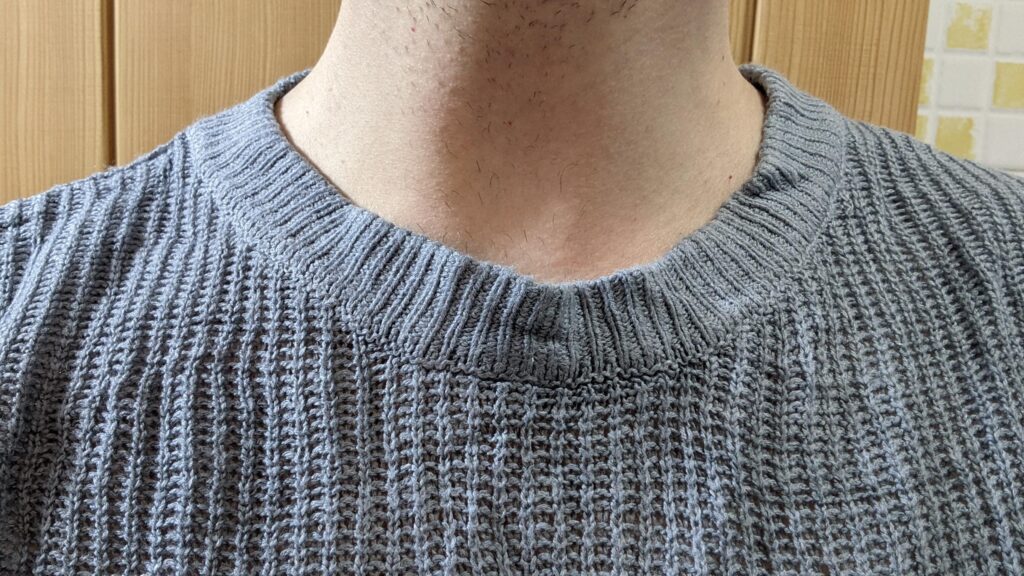

Clothes stretching in the wash is almost always caused by using the wrong cycle. Knitwear and delicates need a wool or delicate programme at a low temperature with a reduced spin – not a standard 40°C cotton cycle. Always check the care label before washing, and dry flat or hang gently rather than tumble drying if the label requires it.
Jumpers, cardigans, and other knitwear getting stretched out of shape – especially the sleeves – is a common problem. While build quality plays a role, the most likely cause is incorrect washing or drying. The fix is usually straightforward.
What Causes Clothes to Stretch in the Wash?
Delicate fabrics can be damaged by too much heat, agitation, or spinning. The most common causes of stretching are:
- Ignoring the care label and using the wrong wash cycle
- Washing delicates on a standard cotton cycle at 40°C
- Using a full spin speed on items that require a gentle or no-spin setting
- Tumble drying items that should be dried flat or hung carefully
- Using excessive heat, which weakens fibres over time
The Problem With Using One Programme for Everything
Many people wash most items on the same programme – typically a 40°C cotton cycle with a full spin. It is convenient, and for robust items it often works well. But for knitwear, wool, and delicate fabrics, this approach can shorten the lifespan significantly. Repeated exposure to the wrong cycle gradually weakens fibres, causing garments to lose their shape and sleeves to stretch until they are unwearable.
What Do Wash Symbols Mean?
Modern garments carry specific care symbols for washing, drying, and ironing. These instructions exist precisely to prevent damage, but they are often ignored – particularly once the label has faded or become difficult to read. Learning to recognise the most common symbols before that happens is worth the effort.
See the full guide: what do wash symbols mean?
Check Care Labels Before Buying
Some garments carry restrictive care instructions such as “hand wash only” or “dry flat” – requirements that are simply impractical for many households. Machine washing a hand-wash-only jumper even once can cause the sleeves to stretch badly. Laying items flat to dry, rather than hanging or tumble drying, is another instruction that many people will not routinely follow.

If the washing instructions are impractical for how the household does laundry, the garment is unlikely to last under normal use. Knowing this before purchase helps avoid disappointment later.
Frequently Asked Questions
Why do my jumper sleeves keep stretching in the wash?
The most likely cause is washing on the wrong cycle. Knitwear and wool require a delicate or wool programme at a low temperature, with a reduced spin speed. A standard 40°C cotton cycle with full spin applies too much heat and agitation to delicate fibres, causing them to loosen and stretch over time. Always check the care label and use the appropriate programme.
Can tumble drying cause clothes to stretch?
Yes. Many knitwear and delicate items should not be tumble dried at all. The combination of heat and tumbling action can stretch fibres and deform the garment’s shape. Items that must be dried carefully should either be dried flat on a clean surface or hung very gently. The care label will specify which method is required.
How do I know which wash cycle to use?
The care label on the garment is the most reliable guide. Symbols on the label indicate the maximum wash temperature, whether tumble drying is safe, and whether any special handling is required. See the full explanation: what do wash symbols mean?
Ask the repair forum
Post the make, model and symptoms and get help from the Whitegoods Help community.
14 Comments
Grouped into 7 comment threads.
1 reply Finally found a discussion on clothes getting damaged in the w.m. I have a top load w.m. IMHO, I don't think it's the water or the clothes. It's 2 main things : 1) THE MACHINE 2) THE METHOD 1) THE MACHINE The machine is no substitute for hands when it comes to washing. It is useful for washing bedsheets n towels though because we aren't too concerned about shape. The reason we buy knitwear ( tshirts etc.) Is because of its stretchable fibres. So a tshirt that fits a small built person comfortably could also be worn by a person of medium built ... it would just be more snug on his/her body. Congratulations to modern mass production! A dream come true for manufacturers.... one size fits all!!!! Nowadays even Jean's have elastic fibres in them. 2) THE METHOD In all machines, after the wash cycle, the clothes are spun in order to remove the max. Possible detergent in them. So the clothes are treated to spinning even before the drying cycle. Spinning before rinsing = less detergent = less water / less rounds of rinsing with fresh water = water being saved ( but clothes getting damaged!!!!!) Imagine if: During handwashing, we squeezed, wrung the clothes and flung the clothes like cowboys .. about 5/6 times!!! THE SOLUTION MESH BAGS 1) I put every single garment in mesh bags. Smallest sized ones are the best as the clothes dont get a chance to move much. Mesh bags have to be filled to about 80% ( eg. 2/3 small tshirts) .. not stuffed ... not half empty either otherwise they will get tugged due to the force of the machine. I have found this has actually reduced stretching significantly. 2) Use the soak option. Because the clothes are in mesh bags, soaking for about 20 mins...makes sure that the clothes are immersed well... 3) Never use Normal cycle for ANYTHING that's stretchable.. I use SOAK + GENTLE all the time... ( even for towels n bedsheets). Who needs a towel with frayed edges??? For curtains, wool cycle ( gentlest) works for me. Hope this helps. Priya
0 replies Yes, I have the same problem with stretched clothing. I started using washing soda to soften the water and improve the cleaning power of my detergent and now all my clothes -even those that were snug-are becoming stretched to the point of needing to be discarded. This is the problem I have not changed the temperature on my drier or anything else. If using a fabric softener/ or hair conditioner will stretch clothes that are too tight then the reverse is true. The major culprit is the washing soda and possibly the detergent.
Yes, I have the same problem with stretched clothing. I started using washing soda to soften the water and improve the cleaning power of my detergent and now all my clothes -even those that were snug-are becoming stretched to the point of needing to be discarded. This is the problem I have not changed the temperature on my drier or anything else. If using a fabric softener/ or hair conditioner will stretch clothes that are too tight then the reverse is true. The major culprit is the washing soda and possibly the detergent.
0 replies I have purchased a Bosch washing machine, i hate it. All my clothes have stretched, it has nothing to do with washing instructions. I previously had a 15 year old washing machine that washed my clothes a lot better than my new Bosch. Very dissappointed......
I have purchased a Bosch washing machine, i hate it. All my clothes have stretched, it has nothing to do with washing instructions. I previously had a 15 year old washing machine that washed my clothes a lot better than my new Bosch. Very dissappointed……
1 reply Curious to see if anyone has found remedies for stretched clothes. My mom washed a dress accidentally that was for hand wash and it’s gotten a lot of the stetch snags in it and fades. Any ideas?
Curious to see if anyone has found remedies for stretched clothes. My mom washed a dress accidentally that was for hand wash and it’s gotten a lot of the stetch snags in it and fades. Any ideas?
2 replies It is more complicated than labels. Water comes into play and all those salts and enzymes in the detergent. It's been nearly 10 months that I have been trying to find the solution to this problem. All my knits and T-shirts, basically anything soft, is being irreversibly altered in just 1 wash! However, I never had this problem until I installed a resin based water softener. With soft water, my clothes even come out of the washer shredded! I did notice more problems of tears on the areas that were exposed to perspiration so I assume it is related to the higher salt (sodium chloride) content in the soft water. Overall, I think soft water is making the fibers too soft to endure any spin cycle at all. I am trying magnesium sulfate to reharden my water (1st try shows improvement). and I will try calcite (gypsum) as well. I am sick of limp, super soft, stretched, aged looking knits and T's. I prefer my firm, hard, and hey even scratchy, but forever lasting clothes. The water softener producer has no answers after much arguing. I have finally come to the conclusion that most people are simply used to separating and struggling with laundry, using delicate cycles and not spinning occasionally. I on the other hand, was used to iron rich- even rusty water, but tossing everything in together without a care and laundry came out perfect, except for whites (that needed delicate bleach or peroxide). Is this possible? That I did not know I was blessed with laundry ease? Or is my water just 'too soft' now. There has to be a solution to re-create a similar environment (without the iron) as before the water softener.
It is more complicated than labels. Water comes into play and all those salts and enzymes in the detergent. It’s been nearly 10 months that I have been trying to find the solution to this problem. All my knits and T-shirts, basically anything soft, is being irreversibly altered in just 1 wash! However, I never had this problem until I installed a resin based water softener. With soft water, my clothes even come out of the washer shredded! I did notice more problems of tears on the areas that were exposed to perspiration so I assume it is related to the higher salt (sodium chloride) content in the soft water.
Overall, I think soft water is making the fibers too soft to endure any spin cycle at all. I am trying magnesium sulfate to reharden my water (1st try shows improvement). and I will try calcite (gypsum) as well. I am sick of limp, super soft, stretched, aged looking knits and T’s. I prefer my firm, hard, and hey even scratchy, but forever lasting clothes. The water softener producer has no answers after much arguing. I have finally come to the conclusion that most people are simply used to separating and struggling with laundry, using delicate cycles and not spinning occasionally. I on the other hand, was used to iron rich- even rusty water, but tossing everything in together without a care and laundry came out perfect, except for whites (that needed delicate bleach or peroxide). Is this possible? That I did not know I was blessed with laundry ease? Or is my water just ‘too soft’ now.
There has to be a solution to re-create a similar environment (without the iron) as before the water softener.
Likely replying to kathi wise
Hello Kathi. If your issue definitely only started after installing the water softener then it may well be related to it. I have an article here which advises that you shouldn’t use a water softener on water supply in the washing machine as it makes the water far too soft Connecting a washing machine to a softened water supply. However, I haven’t been aware of any likelihood to damage laundry. If you cannot stop the water to the washing machine being softened I would at the very least reduce the amount of detergent you are you using and use the amounts suggested by the detergent for very soft water. I would also consider not using any fabric softener.
3 replies I do Alex. In the first paragraph I say, "Not paying attention to the wash labels and washing them on the wrong wash cycles, and or, either tumble drying them when they shouldn’t be put in a dryer or drying them on too high a heat setting may be the culprit." In the penultimate paragraph I say, "so if you want to avoid this sort of damage always check the wash symbol labels on new clothing straight away " and then in the last paragraph I say, "You might be surprised at how many modern t-shirts, shirts and jumpers have restrictive wash, tumble dry and ironing instructions, which if ignored will damage the item". As it happens I've had more jumper sleeves go the same way and when I checked the latest one I can see that it says on its wash label - "hand wash only and dry by laying down flat." These instructions have been completely ignored by the wife and have caused the sleeves to go baggy and elongate again. I've added a few extra paragraphs at the end and changed the "may be the culprit" to "is the culprit" to make it more clear :)
I do Alex. In the first paragraph I say, “Not paying attention to the wash labels and washing them on the wrong wash cycles, and or, either tumble drying them when they shouldn’t be put in a dryer or drying them on too high a heat setting may be the culprit.”
In the penultimate paragraph I say, “so if you want to avoid this sort of damage always check the wash symbol labels on new clothing straight away ” and then in the last paragraph I say, “You might be surprised at how many modern t-shirts, shirts and jumpers have restrictive wash, tumble dry and ironing instructions, which if ignored will damage the item”.
As it happens I’ve had more jumper sleeves go the same way and when I checked the latest one I can see that it says on its wash label – “hand wash only and dry by laying down flat.” These instructions have been completely ignored by the wife and have caused the sleeves to go baggy and elongate again. I’ve added a few extra paragraphs at the end and changed the “may be the culprit” to “is the culprit” to make it more clear :)
Alex was right. You Do Not explain why it happens!
You detail TWO common reasons for it happening. One being people washing things on the wrong cycle, namely the wash cycle or drying cycle being too hot being something that can cause clothing to stretch. Then second being if you put things in the dryer that say you shouldn’t.
BUT – you don’t say what other possibilities there are when you are NOT doing either of those things. From Alex commenting I suspect they like me want to know what the additional causes might be. Please tell us?
I was also surprised that the key items you mention only seem to have stretched at the sleeves?
My experience has the whole item stretching – something with a nice fit becoming baggy and shapeless. An old cotton Tshirt I wear as a PJ top getting continually bigger.
The items I am finding get stretched more frequently now are almost always cotton (‘possibly’ 95% cotton 5% elastane..), 1 linen top too. I hardly wear anything in other fabrics.
I always check the maximum temperature and avoid setting it higher. I check if items say wash on a delicate cycle. The delicate cycles are either both 30*C or one at 40*C (unclear re a misprint in the guide).
Hi there. Yes I do explain why I believe it happens but my article is mostly about when sleeves are being stretched. The instances that I have had, which inspired my article have all been where the rest of the garment is perfectly okay but the sleeves stretch in width and length. I think we can all agree that this is quite bizarre. The only explanation I can think of in my cases is that both of these garments had wash labels that specifically say they cannot be washing a washing machine. That they must be hand washed. One of them even said that in order to dry them, they have to be laid out on a flat surface.
I think it’s fair to say that the reason my laundry has been stretched, is that these wash labels were ignored by my wife, and instead were washed inside a washing machine and hung out to dry on the clothes line.
I would still say that the most likely cause for any stretching of laundry is a failure to read and observe the wash labels. If anyone is experiencing laundry being badly stretched, and they can honestly say that they have followed the wash label instructions explicitly, then of course some other cause needs to be investigated.
I have to say that you do give the impression of having wider knowledge in the posting of your article and being certain of far more stuff the way you write it rather than it being all you can think of kind of supposition to a degree. It also seems strange that you only mention sleeves in your article rather than being clear from the heading that draws people to the page that your specifically going to be talking about your personal experience with sleeves stretching while nothing else is affected.
You haven’t clarified these things when you said it is something you’ve answered in reply to the earlier respondent but you have done now in replying to me.
For reference I did find some tips from a few different people on some other sites about different things that can cause material to stretch. none of these cover the issue you say that you were commenting on from experience, where only one part of the item stretches though.
0 replies you never explained why they stretch out tho
you never explained why they stretch out tho
Finally found a discussion on clothes getting damaged in the w.m.
I have a top load w.m.
IMHO, I don’t think it’s the water or the clothes.
It’s 2 main things :
1) THE MACHINE
2) THE METHOD
1) THE MACHINE
The machine is no substitute for hands when it comes to washing.
It is useful for washing bedsheets n towels though because we aren’t too concerned about shape.
The reason we buy knitwear ( tshirts etc.) Is because of its stretchable fibres. So a tshirt that fits a small built person comfortably could also be worn by a person of medium built … it would just be more snug on his/her body.
Congratulations to modern mass production! A dream come true for manufacturers…. one size fits all!!!!
Nowadays even Jean’s have elastic fibres in them.
2) THE METHOD
In all machines, after the wash cycle, the clothes are spun in order to remove the max. Possible detergent in them. So the clothes are treated to spinning even before the drying cycle.
Spinning before rinsing = less detergent = less water / less rounds of rinsing with fresh water = water being saved ( but clothes getting damaged!!!!!)
Imagine if:
During handwashing, we squeezed, wrung the clothes and flung the clothes like cowboys .. about 5/6 times!!!
THE SOLUTION
MESH BAGS
1) I put every single garment in mesh bags. Smallest sized ones are the best as the clothes dont get a chance to move much. Mesh bags have to be filled to about 80% ( eg. 2/3 small tshirts) .. not stuffed … not half empty either otherwise they will get tugged due to the force of the machine.
I have found this has actually reduced stretching significantly.
2) Use the soak option.
Because the clothes are in mesh bags, soaking for about 20 mins…makes sure that the clothes are immersed well…
3) Never use Normal cycle for ANYTHING that’s stretchable.. I use SOAK + GENTLE all the time… ( even for towels n bedsheets). Who needs a towel with frayed edges???
For curtains, wool cycle ( gentlest) works for me.
Hope this helps.
Priya
It’s been good in one sense seeing others post on here about the same problem (ie it’s not just me!) though not so good in no instant solution being found yet.
Thank you Priya for this detailed and constructive post about other possibilities causing clothes to stretch and about things you have found help minimise it.
I have been wondering whether my machine is faulty, maybe spinning things more rigorously than it was programmed to on lots of the cycles.
I don’t want to swap my machine if that’s not it though!
I saw some comments in the topic thread about certain detergents. I’ve not actually swapped detergent in like 20years – so unless they (Persil) have changed it a lot?
I also saw about soft water – but I thought it was hard water in my area (clay soil, more limescale..?)
Re those last 2 issues I have family in the same street who use the same product – but don’t have this issue…
– confused.com ;-)
NB – I used to be able to use the 40*C ‘fast cycle’ on all my non-delicate 40*C wash items without this problem. It’s only happened in the last 2-3 years.