
Keep a fire extinguisher near your appliances
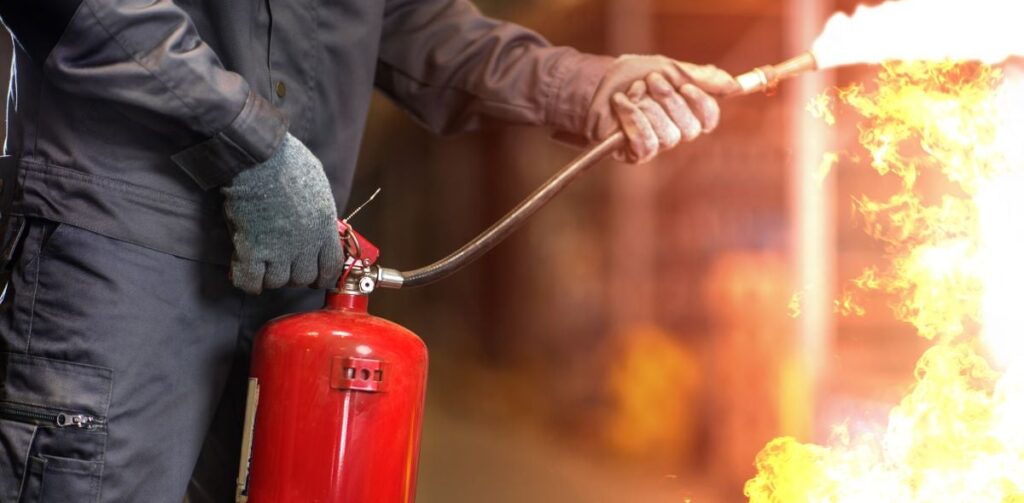

A small home fire extinguisher rated for electrical fires is a practical and relatively inexpensive addition to any kitchen or utility room where appliances are kept. It will not stop every fire, but it can prevent a small electrical fire from becoming a large one in the critical first moments. Always evacuate and call 999 first if a fire is out of control or there is any doubt about your safety.

Never attempt to tackle a fire if it is already spreading, if there is significant smoke, or if you are not confident it is safe to do so. Evacuate the building, close doors behind you, and call 999. A fire extinguisher is only appropriate for a very small, contained fire in its earliest stage. Your safety is always the priority.
Why are appliance fires a real risk?
Thousands of house fires are started each year by white goods appliances – washing machines, tumble dryers, dishwashers, and fridge freezers. These fires can start during use or, in the case of fridge freezers in particular, when the appliance is switched off and unattended.
Whitegoods Help has documented many cases over the years where people were alerted to an appliance fire but had nothing available to tackle it. In most cases the only options are to evacuate and wait for the fire service. By the time the fire brigade arrives, even a small initial fire can have caused extensive damage. A fire extinguisher does not guarantee a different outcome, but in the right circumstances it can significantly reduce damage, or prevent a fire from taking hold at all.

There have been cases where people have tried to carry burning appliances outside. This is very dangerous and risks spreading the fire, causing burns, and inhaling toxic fumes. If an appliance is on fire, leave the room, close the door, evacuate the building, and call 999.
Smoke alarms vs fire extinguishers: what is the difference?
There have been sustained public campaigns in the UK over many years promoting smoke alarms. As a result, the majority of UK homes now have at least one. Smoke alarms are excellent at alerting people to a fire early, but they do nothing to put it out.
Home fire extinguishers have not received the same level of promotion, and they remain uncommon in UK homes. The two forms of protection serve different purposes and are complementary: an alarm alerts you, an extinguisher gives you the option to act.
 Smoke alarms
Alert you to a fire early, giving time to evacuate. Essential in every home, test monthly and replace batteries regularly. They cannot stop or slow a fire.
Home fire extinguisher
Gives you the means to tackle a very small fire in its earliest stage before it spreads. Only appropriate when the fire is contained and escape routes are clear. Requires basic familiarity with how to use it.
Having both provides layered protection. An alarm alerts you early enough that a small fire might still be tackled. An extinguisher gives you a way to act on that alert.
Which type of fire extinguisher should you buy?
Not all fire extinguishers are suitable for electrical fires. Using the wrong type on an electrical fire can be dangerous. When searching for a home extinguisher, look specifically for one rated for electrical fires, sometimes described as suitable for Class E or listed as appropriate for electrical equipment.
| Type | Colour code | Suitable for electrical fires? | Notes |
|---|---|---|---|
| CO2 (carbon dioxide) | Black label | Yes | The most common choice for electrical and kitchen fires. Leaves no residue. Standard in public buildings. |
| Dry powder | Blue label | Yes | Effective on multiple fire types but leaves significant residue. Can obscure vision. Not ideal in enclosed spaces. |
| Water | Red label | No | Never use on electrical fires. Water conducts electricity and creates a risk of electrocution. |
| Foam | Cream label | No (unless rated) | Standard foam is not suitable for electrical fires. Some specialist formulations are rated for electrical use, check the label carefully. |
| Wet chemical | Yellow label | No | Designed for cooking oil fires. Not suitable for electrical fires. |

A CO2 extinguisher is generally the most appropriate choice. It is safe to use on electrical equipment, leaves no residue, and is widely available. Make sure any extinguisher carries the relevant British Standard (BS EN 3) marking.
Where should you keep a home fire extinguisher?
Placement matters. A fire extinguisher is useless if it cannot be reached quickly when needed.
- Kitchen: where the majority of appliance fires start. Mount it on the wall near the exit, not next to the cooker or appliances themselves. You need to be able to reach it without passing through the fire.
- Utility room or garage: if washing machines, tumble dryers, or other appliances are kept there, a second extinguisher in that space is worthwhile.
- Near but not next to appliances: position it so you can access it from the doorway, not only from deep inside the room where an appliance fire might block your route.
- Make sure everyone in the household knows where it is and has a basic understanding of how to use it. An extinguisher that cannot be found in an emergency is no help.
How do you reduce the risk of appliance fires?
A fire extinguisher is a last resort. Reducing the likelihood of an appliance fire in the first place is the more important goal.
- Do not leave washing machines, tumble dryers, or dishwashers running when you are out or in bed. See our guide: risks of leaving appliances running unattended.
- Check whether any of your appliances are subject to product recalls or safety notices. See: appliance safety notices.
- Clean tumble dryer filters after every use. Lint accumulation is a leading cause of dryer fires.
- Do not use extension leads or multi-socket adaptors for high-wattage appliances such as washing machines or tumble dryers. They should be plugged directly into a wall socket.
- Test smoke alarms monthly. Replace batteries annually or when the alarm chirps.
More on appliance fire risks
For full context on fire risk from white goods appliances, recall checks, and safe usage practices, see our related guides.
Frequently asked questions about home fire extinguishers
Should I have a fire extinguisher at home for appliance fires?
It is a sensible precaution, particularly in kitchens and utility rooms where appliances are used. A small CO2 extinguisher suitable for electrical fires does not cost much, takes up little space, and could make a significant difference in the first moments of a small appliance fire. It should be treated as complementary to smoke alarms, not as a replacement for them.
What type of fire extinguisher is safe to use on appliance fires?
For electrical and appliance fires, CO2 (carbon dioxide) extinguishers are the most appropriate choice for home use. They are safe on electrical equipment, leave no residue, and are widely available. Never use a water extinguisher on an electrical fire – water conducts electricity and creates a risk of electrocution. Always check that any extinguisher you buy is rated for electrical fires and carries the relevant British Standard marking.
When should I attempt to use a fire extinguisher?
Only when all of the following apply: the fire is very small and contained, you have a clear escape route behind you, you have already alerted others in the building, and you are confident in how to use the extinguisher. If there is any doubt – if the fire is spreading, there is significant smoke, or you are unsure – evacuate immediately, close doors behind you, and call 999. A fire extinguisher is for the first seconds of a very small fire, not a developing one.
Is it safe to try to move a burning appliance outside?
No. Moving a burning appliance is very dangerous. It risks spreading the fire, exposing you to flames and toxic fumes, and causing serious burns. Leave the room, close the door, evacuate the building, and call 999. Do not attempt to move a burning appliance under any circumstances.
How do I reduce the risk of an appliance fire?
Do not leave washing machines, tumble dryers, or dishwashers running when you are out or in bed. Clean tumble dryer filters after every use. Check whether your appliances are subject to safety recalls. Do not use extension leads for high-wattage appliances – plug them directly into a wall socket. Keep smoke alarms tested and maintained. See our guide: risks of leaving appliances running unattended.
How long does a CO2 fire extinguisher last and does it need servicing?
CO2 fire extinguishers typically have a service life of around 10 years from manufacture, with annual maintenance recommended in commercial settings. For domestic use, check the gauge or pressure indicator every few months to confirm the extinguisher is still charged, and inspect for any visible damage to the body, hose, or nozzle. If the pressure drops out of the recommended range, or if the extinguisher reaches its end-of-service date marked on the body, replace it. Most household CO2 extinguishers from major UK retailers are sold with a clear date stamp and replacement guidance.
Ask the repair forum
Post the make, model and symptoms and get help from the Whitegoods Help community.
5 Comments
Grouped into 5 comment threads.
0 replies There are a few people who do have fire fighting equipment. I am one of them. I have three in my house and one in the car. Also have a fire blanket in the kitchen. I don't know anybody else that has. Next doors don't even have a torch if the electric fails! I have them all-over the place. 15mm pipe clips screwed to the door frames with mini Mag lights in them. Mind you I was a boy scout (Did fireman's badge), spent 20 years in the army. Did the fireman's and ambulance strikes in the 70s and now health & Safety rep in my work place. So I think I am switched on to disaster prevention/readiness in the home. I never have any appliance running when we are not in the house or in bed. Most things are switched off during the night. I haven't got as far as digging a fall out shelter yet :-)
0 replies Years ago I went on a Fire Marshall course at a hospital what an eye opener since then I have had a fire extinguisher in the house and also a blanket to cover what ever is on fire mainly a cooker. Also since then I never leave a washing machine or tumble dryer on when I'm not about in the house. Good point though after that awful fire in those flats people need to be alert and take precautions
Years ago I went on a Fire Marshall course at a hospital what an eye opener since then I have had a fire extinguisher in the house and also a blanket to cover what ever is on fire mainly a cooker. Also since then I never leave a washing machine or tumble dryer on when I’m not about in the house. Good point though after that awful fire in those flats people need to be alert and take precautions
0 replies Many thanks Eileen. Yes they are a very wise investment indeed. I've had one in my kitchen for about 8 years. I've never had to use it, and according to the test button it still works. It certainly feels as though appliances have never been so potentially dangerous although in the great scheme of things these incidents are thankfully still rare. Just make sure you get one suitable for electrical fires. They really don't cost that much these days.
Many thanks Eileen. Yes they are a very wise investment indeed. I’ve had one in my kitchen for about 8 years. I’ve never had to use it, and according to the test button it still works. It certainly feels as though appliances have never been so potentially dangerous although in the great scheme of things these incidents are thankfully still rare. Just make sure you get one suitable for electrical fires. They really don’t cost that much these days.
0 replies HI . I read your article with interest. On looking up fire extinguishers I see there are several types. I think either the water or foam extinguishers are the ones for home use, can you advise please
HI . I read your article with interest. On looking up fire extinguishers I see there are several types. I think either the water or foam extinguishers are the ones for home use, can you advise please
0 replies Excellent article and very timely. Many years ago, we had a fire extinguisher at home, but during a decorating blitz it was in the way and was thrown out, meaning to be replaced but wasn't. We have read about Grenfell and it is a wake-up call as my husband and I live in a flat, although only 3 stories high, if one of our flats catches fire, they are all at risk. I am now going online to look for a good, electric fire extinguisher.
Excellent article and very timely. Many years ago, we had a fire extinguisher at home, but during a decorating blitz it was in the way and was thrown out, meaning to be replaced but wasn’t. We have read about Grenfell and it is a wake-up call as my husband and I live in a flat, although only 3 stories high, if one of our flats catches fire, they are all at risk.
I am now going online to look for a good, electric fire extinguisher.
There are a few people who do have fire fighting equipment. I am one of them. I have three in my house and one in the car. Also have a fire blanket in the kitchen. I don’t know anybody else that has. Next doors don’t even have a torch if the electric fails! I have them all-over the place. 15mm pipe clips screwed to the door frames with mini Mag lights in them. Mind you I was a boy scout (Did fireman’s badge), spent 20 years in the army. Did the fireman’s and ambulance strikes in the 70s and now health & Safety rep in my work place. So I think I am switched on to disaster prevention/readiness in the home. I never have any appliance running when we are not in the house or in bed. Most things are switched off during the night. I haven’t got as far as digging a fall out shelter yet :-)