
Tefal Quick cup review
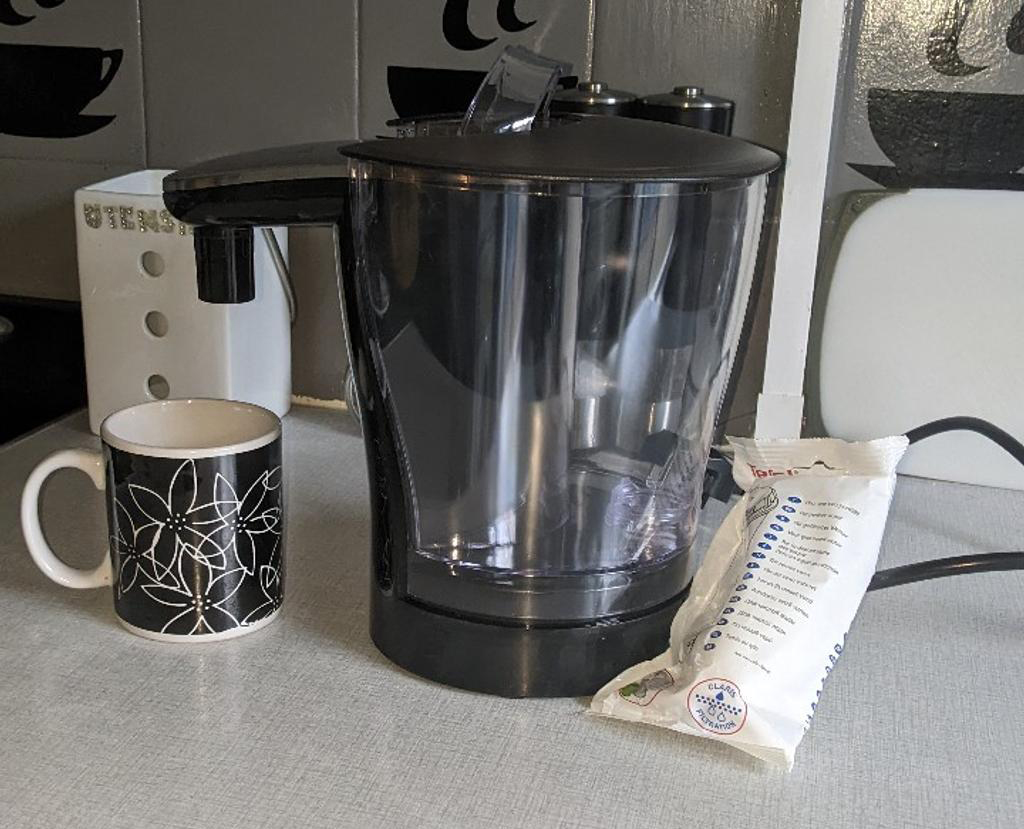

The Tefal Quick Cup delivers hot water in around 3 seconds and a full mug in under 30 seconds – significantly faster than a conventional kettle. It does not reach full boiling point (the water is approximately 90 degrees), which suits coffee and is acceptable for most tea drinkers. The energy saving claim of 65% against a conventional kettle is only valid when compared against boiling a full kettle rather than the same amount of water. It does not replace a kettle entirely but works well alongside one.
What Is the Tefal Quick Cup?
The Tefal Quick Cup is a countertop instant hot water dispenser. Rather than heating a reservoir of water and waiting for it to boil, it pumps cold water through a small heating chamber and dispenses it hot on demand. A programmable volume setting means it can deliver a precise amount – enough for one mug – at the press of a button.
Unlike a standard kettle, the water stored inside the unit is always cold. Hot water is only produced and dispensed when the button is pressed.
Pros and Cons
 Advantages
- Speed: Hot water is dispensed within 3 seconds. A full mug is ready in approximately 25 to 30 seconds from pressing the button – considerably faster than boiling a kettle
- Efficiency: Only heats the exact amount needed. A standard kettle typically heats more water than required. Tefal claim 65% less energy than a conventional kettle – though this figure is most valid when comparing against boiling a full kettle, not a single cup
- Temperature suited to coffee: The water reaches approximately 90 degrees rather than full boiling point. This is close to the ideal brewing temperature for coffee – fully boiling water can over-extract and produce a bitter result. Many tea drinkers also find the temperature acceptable
- Built-in filter: Useful in hard water areas. Can be omitted if preferred
- Cold water dispensing: The unit also dispenses cold filtered water
- Safety advantage over kettles: The water stored inside is always cold – there is no reservoir of boiling water to tip over. Hot water is only present at the point of dispensing
 Disadvantages
- Noise: The pump mechanism is noisy for the 20 to 25 seconds it operates. The noise level is comparable to a kettle, though for a shorter duration
- Does not reach full boiling point: At approximately 90 degrees, the water is noticeably less hot than a kettle. This may not suit tea drinkers who prefer very hot tea. Pre-heating the mug with a small amount of hot water helps, but adds time and wastes a little water
- Spout height causes splashing: The spout is high enough for tall glasses but too high for standard mugs. Water can splash onto the worktop unless the mug is held in place. The problem worsens when the tank has just been refilled and air enters the system
- Inconsistent volume delivery: The programmed volume is delivered by timing the pump rather than measuring flow. This means the exact amount can vary slightly between uses, particularly after refilling. A brief additional press may be needed to top up
- Cold water delay after hot: If cold water is needed immediately after a hot dispense, running for a few seconds first avoids residual hot water in the spout
- Standby energy use: The unit draws a small amount of power when left on at the socket. The manufacturer recommends switching off at the socket when not in use
- Does not replace a kettle: A standard kettle is still needed for filling buckets, carafes, or taking hot water elsewhere. The Quick Cup is a supplement, not a replacement
- Filter ongoing cost: In hard water areas, replacement filters add to the running cost over time
The Energy Saving Claim
Tefal’s claim of 65% less energy than a conventional kettle requires context. The saving is most significant when compared against boiling a full kettle of water to make a single drink – which is how many people use a standard kettle. If a conventional kettle is already used efficiently (boiling only the amount needed), the energy difference is considerably smaller. The Quick Cup’s genuine advantage is that it makes it easy to heat only the precise amount required, without guesswork.
Is It Worth Buying?
The Quick Cup works best for households that regularly make individual hot drinks and would benefit from instant delivery of hot water. The speed advantage is real and significant. The cons – noise, splashing, temperature slightly below boiling – are genuine but minor for most users. It should be thought of as a complementary appliance rather than a kettle replacement.
The fixed spout and limited delivery volume mean a standard kettle is still needed for tasks that require portability or larger quantities of hot water. Keep the existing kettle rather than replacing it.
Ask the repair forum
Post the make, model and symptoms and get help from the Whitegoods Help community.
25 Comments
Grouped into 24 comment threads.
0 replies UPDATE: Another design-flaw with the Morphy Richards Meno One Cup is that it boils water when there isn't enough water left in the container to pump through to the cup. Because there is no water level indicator you only realise the water needs replenishing when you try to mash a cup of tea. The One Cup switches on, makes all the right noises, takes the usual amount of time and the water "boils". But then instead of pumping the water into the cup - nothing happens. You lift the rear container to find it red hot, and in need of water. You just wasted not only your time, but all the electricity used to heat the water in the base that doesn't get used. This is a very bad design indeed. What it needs is - 1: A means of detecting that there isn't enough water to use which therefore prevents wasteful heating element operation 2: A water level indicator at the front.
0 replies OK the bubbles thing. This is caused because the Quick Cup does not actually boil the water. Try with a kettle i.e. stop the process BEFORE the kettle has boiled and you will get the same reaction. But, it is mainly an aesthetic issue. Still undecided. I think the technology is derived from the Gaggia espresso machine and mine has lasted quite well, but not sure about the Tefal. I think these units are thrown out by the million somewhere in China. Thanks for the comments - very helpful
OK the bubbles thing. This is caused because the Quick Cup does not actually boil the water. Try with a kettle i.e. stop the process BEFORE the kettle has boiled and you will get the same reaction. But, it is mainly an aesthetic issue. Still undecided. I think the technology is derived from the Gaggia espresso machine and mine has lasted quite well, but not sure about the Tefal. I think these units are thrown out by the million somewhere in China.
Thanks for the comments – very helpful
0 replies I'd like to add, that after using the Morphy Richards Meno One Cup for several weeks now I can say I'm not so sure it's better than the quick cup. I have some quibbles about it, particularly that unlike the Quick Cup, which as far as I know actually heats the water as it pumps it through into the cup - this one heats the water in the bottom of the chamber and then pumps it to the cup. The problem with this method is that it also heats up a lot of the other water in the water compartment so there is wasted heat and the water is constantly being made warm. There are other issues I have with it but don't have time to do a proper review unless enough interest is shown. However, I'm not saying it's no good, and generally it does the job.
I’d like to add, that after using the Morphy Richards Meno One Cup for several weeks now I can say I’m not so sure it’s better than the quick cup. I have some quibbles about it, particularly that unlike the Quick Cup, which as far as I know actually heats the water as it pumps it through into the cup – this one heats the water in the bottom of the chamber and then pumps it to the cup. The problem with this method is that it also heats up a lot of the other water in the water compartment so there is wasted heat and the water is constantly being made warm.
There are other issues I have with it but don’t have time to do a proper review unless enough interest is shown. However, I’m not saying it’s no good, and generally it does the job.
0 replies Hello Mr Gwilym Phillips: I've just swapped my Quickcup for a Morphy Richards Meno One Cup, which apart from three specific annoyances I'm quite pleased with. On balance think it's better than the Quickcup. I'd love to find time to review it, hopefully I will eventually. It differs from the Quickcup in that it actually boils the water before dispensing it but it is only supposed to boil cupfuls at a time with the ability to adjust the amount for small cups to large mugs. It's quieter than the Quickcup, which has a very annoying constant pumping and steaming noise throughout its operation and it looks considerably more stylish...
Hello Mr Gwilym Phillips: I’ve just swapped my Quickcup for a Morphy Richards Meno One Cup, which apart from three specific annoyances I’m quite pleased with. On balance think it’s better than the Quickcup. I’d love to find time to review it, hopefully I will eventually. It differs from the Quickcup in that it actually boils the water before dispensing it but it is only supposed to boil cupfuls at a time with the ability to adjust the amount for small cups to large mugs. It’s quieter than the Quickcup, which has a very annoying constant pumping and steaming noise throughout its operation and it looks considerably more stylish…
0 replies Hi, just to add another unmentioned advantage, I am about to buy one for my mum, who due to health issues finds it difficult to lift and fill, or lift and pour a kettle, even if only part filled. This device would seem to be the answer, as she can fill the tank with a jug (this is how she fills her kettle), and from then on she can have a quick cuppa without any painful lifting. Brilliant.
Hi, just to add another unmentioned advantage, I am about to buy one for my mum, who due to health issues finds it difficult to lift and fill, or lift and pour a kettle, even if only part filled. This device would seem to be the answer, as she can fill the tank with a jug (this is how she fills her kettle), and from then on she can have a quick cuppa without any painful lifting. Brilliant.
0 replies Herry: If you use the filters for the Tefal Quickcup I don't think you should need to descale as they are called "Replacement Claris anti-scale cartridges". Trying distilled white vinegar might help as it's known for doing all sorts of jobs. Other than that there are many descaling tablets on the market for descaling kettles and coffee makers.
Herry: If you use the filters for the Tefal Quickcup I don’t think you should need to descale as they are called “Replacement Claris anti-scale cartridges”.
Trying distilled white vinegar might help as it’s known for doing all sorts of jobs. Other than that there are many descaling tablets on the market for descaling kettles and coffee makers.
0 replies I bought refurbished Tefal QuickCup and am happy with the product. I lost the manual/instruction book as I need the instruction (only) how to de-scale (was told using 100% vinegar and run through the system). I am not sure if it runs through the filter as well. Help would be appreciated. Thank you.
I bought refurbished Tefal QuickCup and am happy with the product. I lost the manual/instruction book as I need the instruction (only) how to de-scale (was told using 100% vinegar and run through the system).
I am not sure if it runs through the filter as well. Help would be appreciated. Thank you.
0 replies Hello: I don't blame you, if that happened to me I would also expect a refund and would not buy another. You can't be blamed for totally losing confidence in the product. Of course any product can be subject to breakdowns and a small percentage of most products can go faulty quite quickly. But unless they had a faulty batch its exceptionally rare for you to get two consecutive products with the exact same fault, and pretty bad luck. I think the filmy surface on the water has definitely got something to do with oxygen as I believe it is hundreds of minute air bubbles. It doesn't happen when tea is mashed with water from a kettle though, so it must be something to do with the way the water is pumped out of the quick cup.
Hello: I don’t blame you, if that happened to me I would also expect a refund and would not buy another. You can’t be blamed for totally losing confidence in the product. Of course any product can be subject to breakdowns and a small percentage of most products can go faulty quite quickly. But unless they had a faulty batch its exceptionally rare for you to get two consecutive products with the exact same fault, and pretty bad luck.
I think the filmy surface on the water has definitely got something to do with oxygen as I believe it is hundreds of minute air bubbles. It doesn’t happen when tea is mashed with water from a kettle though, so it must be something to do with the way the water is pumped out of the quick cup.
0 replies I picked one up a couple of weeks ago, and after 3 days of sheer joy it stopped heating the water - I got luke warm, then not long after it went to room temperature... so, I returned it to the store and got a replacement (I liked it for the short time it was working). All happy again, till once more it stopped working (less than a week on the replacement unit). If I return it to the store again it will be for a refund, which is a shame as I like the idea of it - I've emailed Tefal for advice - I should not have the same issue on two units in such a short space of time... BTW, the filmy surface on top of the water - I can't remember exactly what it is (someone who was awake at school might help) but it's a natural reaction - something with the water, temp, tea, oxygen, solar system, winter equinox... help me out someone *lol*
I picked one up a couple of weeks ago, and after 3 days of sheer joy it stopped heating the water – I got luke warm, then not long after it went to room temperature… so, I returned it to the store and got a replacement (I liked it for the short time it was working). All happy again, till once more it stopped working (less than a week on the replacement unit). If I return it to the store again it will be for a refund, which is a shame as I like the idea of it – I’ve emailed Tefal for advice – I should not have the same issue on two units in such a short space of time…
BTW, the filmy surface on top of the water – I can’t remember exactly what it is (someone who was awake at school might help) but it’s a natural reaction – something with the water, temp, tea, oxygen, solar system, winter equinox… help me out someone *lol*
0 replies Remember, the main reason the QuickCup is more economical is because it only heats the exact amount needed as opposed to heating water in the kettle where the chances are more water will be heated than is needed, which is a waste. If I was mashing tea for more than two or three people I would probably use the teapot and put the kettle on. However, the QuickCup should be able to just keep dispensing the hot water several times if required.
Remember, the main reason the QuickCup is more economical is because it only heats the exact amount needed as opposed to heating water in the kettle where the chances are more water will be heated than is needed, which is a waste. If I was mashing tea for more than two or three people I would probably use the teapot and put the kettle on.
However, the QuickCup should be able to just keep dispensing the hot water several times if required.
Leave a comment
0 replies I am seriously considering getting one of these , especially after seeing them in Costco tonight for about £44, is there any problem with making lots of cups of hot water for instance if visitors come around, in other words can I get a constant flow of 3 seconds per cup, one directly after the other . I am having my kitchen done at the moment and see that a lot of kitchen places have a hot water thingymajig that goes by your sink but at a cost of about £500 I figured the tefal would do the job just as well, what do you think thanks Pat
I am seriously considering getting one of these , especially after seeing them in Costco tonight for about £44, is there any problem with making lots of cups of hot water for instance if visitors come around, in other words can I get a constant flow of 3 seconds per cup, one directly after the other . I am having my kitchen done at the moment and see that a lot of kitchen places have a hot water thingymajig that goes by your sink but at a cost of about £500 I figured the tefal would do the job just as well, what do you think
thanks
Pat
0 replies Many thanks Donal: I rely very much on people like yourself to inform me of outdated links to other sites. I've removed it now.
Many thanks Donal: I rely very much on people like yourself to inform me of outdated links to other sites. I’ve removed it now.
0 replies The offer on your site from Comet does seem out of date - quoted £59.99 today on the link you gave compared with £48.95 on the John Lewis site. Thanks for your informative comments though - I have pondered buying and may now do so but at £60 in local shops I was reluctant. Not even sure about £48.95 yet. When I bought my first energy saving light bulb it was heavy and fell out of the socket, losing about £17 instantly. They now cost very little. So I am not keen to save money by spending too much at the outset.
The offer on your site from Comet does seem out of date – quoted £59.99 today on the link you gave compared with £48.95 on the John Lewis site.
Thanks for your informative comments though – I have pondered buying and may now do so but at £60 in local shops I was reluctant. Not even sure about £48.95 yet.
When I bought my first energy saving light bulb it was heavy and fell out of the socket, losing about £17 instantly. They now cost very little. So I am not keen to save money by spending too much at the outset.
0 replies Andrew: Many people never factor in the big picture. It's too easy to get sucked into all this saving energy saving bandwaggon and even get conned into buying products that will take much longer to start saving money than some people realise. An example of this is energy saving light bulbs. I have a light fitting on my upstairs landing that has 3 bulbs in it. I replaced them with energy saving bulbs because I had the money to invest in replacing all my bulbs with the new energy saving ones. However, as my landing lights are only ever on for several minutes a day I worked out it would take 7 or 8 years to recoup the money I spent fitting them in saved energy. As I point out in my review of the Quickcup, it's more of a time saving product but kettles do use considerably more energy than light bulbs so you could recoup the expense in a much more reasonable time. If you need a new kettle anyway then the investment costs will be much less than if you bought the Quickcup as a secondary appliance. As you point out, if you only boil small amounts of water in a standard kettle you can start saving energy without any extra investment. At the end of the day this product is as much about convenience and saving time as saving energy.
Andrew: Many people never factor in the big picture. It’s too easy to get sucked into all this saving energy saving bandwaggon and even get conned into buying products that will take much longer to start saving money than some people realise.
An example of this is energy saving light bulbs. I have a light fitting on my upstairs landing that has 3 bulbs in it. I replaced them with energy saving bulbs because I had the money to invest in replacing all my bulbs with the new energy saving ones. However, as my landing lights are only ever on for several minutes a day I worked out it would take 7 or 8 years to recoup the money I spent fitting them in saved energy.
As I point out in my review of the Quickcup, it’s more of a time saving product but kettles do use considerably more energy than light bulbs so you could recoup the expense in a much more reasonable time. If you need a new kettle anyway then the investment costs will be much less than if you bought the Quickcup as a secondary appliance.
As you point out, if you only boil small amounts of water in a standard kettle you can start saving energy without any extra investment.
At the end of the day this product is as much about convenience and saving time as saving energy.
0 replies Nothing is ever straightforward with energy-saving ideas, it seems to me. We can save money or we can save energy, but combining the two aims leads to some uncomfortable maths. . For energy, our personal aim must be to making savings over the lifetime of the product in service. If we are going to do that, we really need some idea of the amount of energy that went into manufacturing the kettle. (I'm using the reasoning that, if we don't buy the kettle, we are not responsible for it being manufactured, but if we do buy it ... see where I'm going?) So the energy the kettle saves has, first of all, to offset the amount used to make it - and because I bought it, I have some responsibility for that. I'm guessing that it's going to take a while to eat into that initial "energy bill". . And, as has been pointed out by another switched-on guy, the idea is also to save money. And we won't be doing that until we have saved electricity equivalent to the £50 price tag of the kettle. At that point, the kettle is effectively "free" and we can finally get on with saving energy. . I love the idea of an energy-saving kettle because I recently measured the electricity and cost that mine imposed on our household consumption - and I was shocked, I must admit. I just get the feeling that, until my old kettle breaks down, I'll save both energy and money by just filling it less to boil the water I want. (And that's coming from a confirmed gadget man!)
Nothing is ever straightforward with energy-saving ideas, it seems to me. We can save money or we can save energy, but combining the two aims leads to some uncomfortable maths.
.
For energy, our personal aim must be to making savings over the lifetime of the product in service. If we are going to do that, we really need some idea of the amount of energy that went into manufacturing the kettle. (I’m using the reasoning that, if we don’t buy the kettle, we are not responsible for it being manufactured, but if we do buy it … see where I’m going?) So the energy the kettle saves has, first of all, to offset the amount used to make it – and because I bought it, I have some responsibility for that. I’m guessing that it’s going to take a while to eat into that initial “energy bill”.
.
And, as has been pointed out by another switched-on guy, the idea is also to save money. And we won’t be doing that until we have saved electricity equivalent to the £50 price tag of the kettle. At that point, the kettle is effectively “free” and we can finally get on with saving energy.
.
I love the idea of an energy-saving kettle because I recently measured the electricity and cost that mine imposed on our household consumption – and I was shocked, I must admit. I just get the feeling that, until my old kettle breaks down, I’ll save both energy and money by just filling it less to boil the water I want. (And that’s coming from a confirmed gadget man!)
0 replies Since buying the QuickCup I've discovered a new kettle that lets you fill a small chamber to boil. This is also a potentially time saving and energy saving device although I don't know how big the chamber is. I haven't looked into it yet but some people may prefer that as an option as it will presumably still boil the water and save money by only boiling small amounts. I would imagine the Quickcup will still be cheaper to run though and still quicker too. I'd recommend the Quickcup as an addition to the kitchen if not a direct kettle replacement although some (as you say yourself) will be happy to use it exclusively instead of a kettle. I would recommend people read the review to make sure they understand how it works and see if they can live with all its little quirks.
Since buying the QuickCup I’ve discovered a new kettle that lets you fill a small chamber to boil. This is also a potentially time saving and energy saving device although I don’t know how big the chamber is. I haven’t looked into it yet but some people may prefer that as an option as it will presumably still boil the water and save money by only boiling small amounts.
I would imagine the Quickcup will still be cheaper to run though and still quicker too. I’d recommend the Quickcup as an addition to the kitchen if not a direct kettle replacement although some (as you say yourself) will be happy to use it exclusively instead of a kettle. I would recommend people read the review to make sure they understand how it works and see if they can live with all its little quirks.
0 replies "Could it be when the water has run out and air is drawn into the pump?" No, I don't think so. For me, the bubbles appear in every cup I make with the tea bag/coffee already in the cup. Yet every time I pour water into an empty cup they are not there. So, as far as I can make out, it is definitely something to do with how the water is poured straight onto the contents of the cup and how it reacts with it, rather than what's happening in the kettle itself. However, I am no expert. With this little problem would you still recommend the kettle to others? I have done, but I have already had to explain this issue with it first.
“Could it be when the water has run out and air is drawn into the pump?”
No, I don’t think so. For me, the bubbles appear in every cup I make with the tea bag/coffee already in the cup. Yet every time I pour water into an empty cup they are not there. So, as far as I can make out, it is definitely something to do with how the water is poured straight onto the contents of the cup and how it reacts with it, rather than what’s happening in the kettle itself. However, I am no expert. With this little problem would you still recommend the kettle to others? I have done, but I have already had to explain this issue with it first.
1 reply Bit of an update with the bubbles- if you pour water into an empty cup, the bubbles aren't created, so it must be how the water is poured onto the tea bag. From now on then, for tea I will pur the water into the cup before adding the tea bag.
Bit of an update with the bubbles- if you pour water into an empty cup, the bubbles aren’t created, so it must be how the water is poured onto the tea bag. From now on then, for tea I will pur the water into the cup before adding the tea bag.
Likely replying to Barry Ward
Thanks Barry: I agree that it gives coffee a bit of a creamy look, which is fine. However, the minute bubbles on the top of my tea does look quite unappetising. I too have seen that when dispensing hot water alone (which I do when I want to be extra fastidious by pre-heating the cup) there does not seem to such a reaction. I can see lots of little bubbles but they soon disappear.
I have found that the “problem” doesn’t always appear, not sure what exact circumstances create the floating film. I should point out that I am pretty sure the scum-like cloud temporarilly floating in my tea is simply thousands of minute air bubbles whipped up into a froth and as you say they do disappear fairly quickly.
0 replies Ever since owning one of these babies, I haven't used my old kettle once. I think it's great, and don't mind the noise it makes. I don't use the filter as I have good soft water where I am. However, I must comment on what others have said too, about the bubbles. I too have a problem where the drink always ends up with lots of tiny bubbles floating on the surface. On Coffee it actually makes it look better, but on tea it makes it look less attractive, and actually makes it look like there is something in there you shouldn't be drinking. However, it IS just tiny bubbles, and after a minute or so they are no-where to be seen. It's just a little embarrassing when you have guests round and you have to explain what they are. Not so good when you are trying to show off your new marvel. I checked this review out (and the comments that followed) in the hope that I wasn't actually on my own, and at least I know now that I am not. I do know that attaching the filter still ends up with the bubbles, so that isn't the cause. Great otherwise though.
Ever since owning one of these babies, I haven’t used my old kettle once. I think it’s great, and don’t mind the noise it makes. I don’t use the filter as I have good soft water where I am.
However, I must comment on what others have said too, about the bubbles. I too have a problem where the drink always ends up with lots of tiny bubbles floating on the surface. On Coffee it actually makes it look better, but on tea it makes it look less attractive, and actually makes it look like there is something in there you shouldn’t be drinking. However, it IS just tiny bubbles, and after a minute or so they are no-where to be seen. It’s just a little embarrassing when you have guests round and you have to explain what they are. Not so good when you are trying to show off your new marvel.
I checked this review out (and the comments that followed) in the hope that I wasn’t actually on my own, and at least I know now that I am not.
I do know that attaching the filter still ends up with the bubbles, so that isn’t the cause.
Great otherwise though.
0 replies LeighG: Thanks for your contribution. I was going to add something about the filter as the thought you mention crossed my mind the other day. I live in a fairly soft water area and don't have limescale problems. However, as you point out, if anyone lives in a harder water area they could potentially get problems with limescale blocking the quickcup. Therefore when the filter needs replacing it should be replaced (even though I've found the quickcup works ok without it). I've no idea how long the filters last, but it's an indefinite financial commitment that needs taking into account prior to buying. They only cost about £5 though and if they last a year or so it's not bad. I don't know how long they last though. I will buy one and report back if it stops the scum-like film on top of my coffee and tea that I reported in an earlier comment. My spares and accessory site sells replacement filters if anyone needs to order any - Tefal Quick Cup Water Filter Cartridges
LeighG: Thanks for your contribution. I was going to add something about the filter as the thought you mention crossed my mind the other day. I live in a fairly soft water area and don’t have limescale problems. However, as you point out, if anyone lives in a harder water area they could potentially get problems with limescale blocking the quickcup. Therefore when the filter needs replacing it should be replaced (even though I’ve found the quickcup works ok without it).
I’ve no idea how long the filters last, but it’s an indefinite financial commitment that needs taking into account prior to buying. They only cost about £5 though and if they last a year or so it’s not bad.
I don’t know how long they last though. I will buy one and report back if it stops the scum-like film on top of my coffee and tea that I reported in an earlier comment.
My spares and accessory site sells replacement filters if anyone needs to order any – Tefal Quick Cup Water Filter Cartridges
0 replies I brought one of these as my friend had one and I just loved the idea of it. However, the water that came out of mine was much cooler than hers and with just a dash of milk in your drink you could almost drink all of it immediately. Hubby was not impressed so I sent it back and got a replacement that produced piping hot water - so love it now!! On the filter issue, I guess that if you do not use one, that the small tube where the water get heated on its way out, would scale up quite quickly and cause problems - unless you are in ah area with very soft water. My kettle always usef to fur up as our water is quite hard. My friend solves this water by tipping filtered water into her quick cup, but this means she still has to buy a filter for something!.
I brought one of these as my friend had one and I just loved the idea of it. However, the water that came out of mine was much cooler than hers and with just a dash of milk in your drink you could almost drink all of it immediately. Hubby was not impressed so I sent it back and got a replacement that produced piping hot water – so love it now!!
On the filter issue, I guess that if you do not use one, that the small tube where the water get heated on its way out, would scale up quite quickly and cause problems – unless you are in ah area with very soft water. My kettle always usef to fur up as our water is quite hard. My friend solves this water by tipping filtered water into her quick cup, but this means she still has to buy a filter for something!.
0 replies alex w: To me, the most impressive aspect of the Quickcup was the speed. Saving me time waiting for the kettle to boil was the biggest attraction. The fact that it claims to be up to 65% more economical was a bonus although I can see how the economic savings could be more of an attraction to some. You make a good point about the cost of filters although I don't know if that's factored in on the savings claims. I'd be surprised if it was though. I wouldn't expect the cost of filters to tip the balance too much but I haven't done the maths and it's something that should definitely be taken into account. My own filter has now been thrown out and I am using the Quickcup without a filter, which seems to be working fine. I can't see how a filter is vitally necessary, and should surely be an optional extra. One thing I have become concerned about though is the tea has a sort of scum on the top these days. My mate who bought one after seeing mine reckons they are just thousands of minute air bubbles. Mine only started doing it after several weeks. It doesn't look very appealing. I wondered if it's because the filter needed replacing but my mate says his did it from new.
alex w: To me, the most impressive aspect of the Quickcup was the speed. Saving me time waiting for the kettle to boil was the biggest attraction. The fact that it claims to be up to 65% more economical was a bonus although I can see how the economic savings could be more of an attraction to some.
You make a good point about the cost of filters although I don’t know if that’s factored in on the savings claims. I’d be surprised if it was though. I wouldn’t expect the cost of filters to tip the balance too much but I haven’t done the maths and it’s something that should definitely be taken into account.
My own filter has now been thrown out and I am using the Quickcup without a filter, which seems to be working fine. I can’t see how a filter is vitally necessary, and should surely be an optional extra.
One thing I have become concerned about though is the tea has a sort of scum on the top these days. My mate who bought one after seeing mine reckons they are just thousands of minute air bubbles. Mine only started doing it after several weeks. It doesn’t look very appealing. I wondered if it’s because the filter needed replacing but my mate says his did it from new.
0 replies about the tefal quick cup, i like the idea of a super fast cuppa and using less energy but the (perceived) long term cost of this product kinda put me off. it uses a filter which will need regular replacement. that costs money. so the money saved on using less energy will need to be used to buy filters. it ain't just about saving the environment, it's also about saving the pennies in the long term. or am i missing something out ? alex w
about the tefal quick cup, i like the idea of a super fast cuppa and using less energy but the (perceived) long term cost of this product kinda put me off. it uses a filter which will need regular replacement. that costs money. so the money saved on using less energy will need to be used to buy filters.
it ain’t just about saving the environment, it’s also about saving the pennies in the long term.
or am i missing something out ?
alex w
0 replies I don't normally add comments to my own article unless responding to a third party comment or question but I wanted to add a bit more without lengthening the original article. As it's the kind of thing I enjoy doing I've just done a quick experiment to compare the Tefal Quickcup with my kettle. I filled my kettle to the minimum line shown on the side, which is where it would normally be filled to mash a single, or a couple of mugs of tea. I switched it on and timed it. The "kettling" noise that I find so annoying (yes I can be a bit finicky) started within seconds and grew louder and louder until it boiled. The time taken was just under 2 minutes at 115 seconds. This boiled 3 and a half mugs of water - most of which resulted in between one and a half, and two and a half wasted mugs of hot water depending on how many teas I was mashing. Whilst the kettle was heating up this water I slipped a mug under the Quickcup, which dispensed a mug-full of piping hot water in just over 22 seconds. A second mug was filled in a similar time resulting in 2 mugs of tea in 45 seconds and not a drop of wasted energy. Savings in energy would be even greater for anyone who is less judicious whilst filling the kettle and just keeps it fairly full for convenience.
I don’t normally add comments to my own article unless responding to a third party comment or question but I wanted to add a bit more without lengthening the original article.
As it’s the kind of thing I enjoy doing I’ve just done a quick experiment to compare the Tefal Quickcup with my kettle.
I filled my kettle to the minimum line shown on the side, which is where it would normally be filled to mash a single, or a couple of mugs of tea. I switched it on and timed it. The “kettling” noise that I find so annoying (yes I can be a bit finicky) started within seconds and grew louder and louder until it boiled. The time taken was just under 2 minutes at 115 seconds. This boiled 3 and a half mugs of water – most of which resulted in between one and a half, and two and a half wasted mugs of hot water depending on how many teas I was mashing.
Whilst the kettle was heating up this water I slipped a mug under the Quickcup, which dispensed a mug-full of piping hot water in just over 22 seconds. A second mug was filled in a similar time resulting in 2 mugs of tea in 45 seconds and not a drop of wasted energy.
Savings in energy would be even greater for anyone who is less judicious whilst filling the kettle and just keeps it fairly full for convenience.
UPDATE: Another design-flaw with the Morphy Richards Meno One Cup is that it boils water when there isn’t enough water left in the container to pump through to the cup. Because there is no water level indicator you only realise the water needs replenishing when you try to mash a cup of tea.
The One Cup switches on, makes all the right noises, takes the usual amount of time and the water “boils”. But then instead of pumping the water into the cup – nothing happens. You lift the rear container to find it red hot, and in need of water.
You just wasted not only your time, but all the electricity used to heat the water in the base that doesn’t get used. This is a very bad design indeed.
What it needs is –
1: A means of detecting that there isn’t enough water to use which therefore prevents wasteful heating element operation
2: A water level indicator at the front.