
Raise a washing machine off the floor
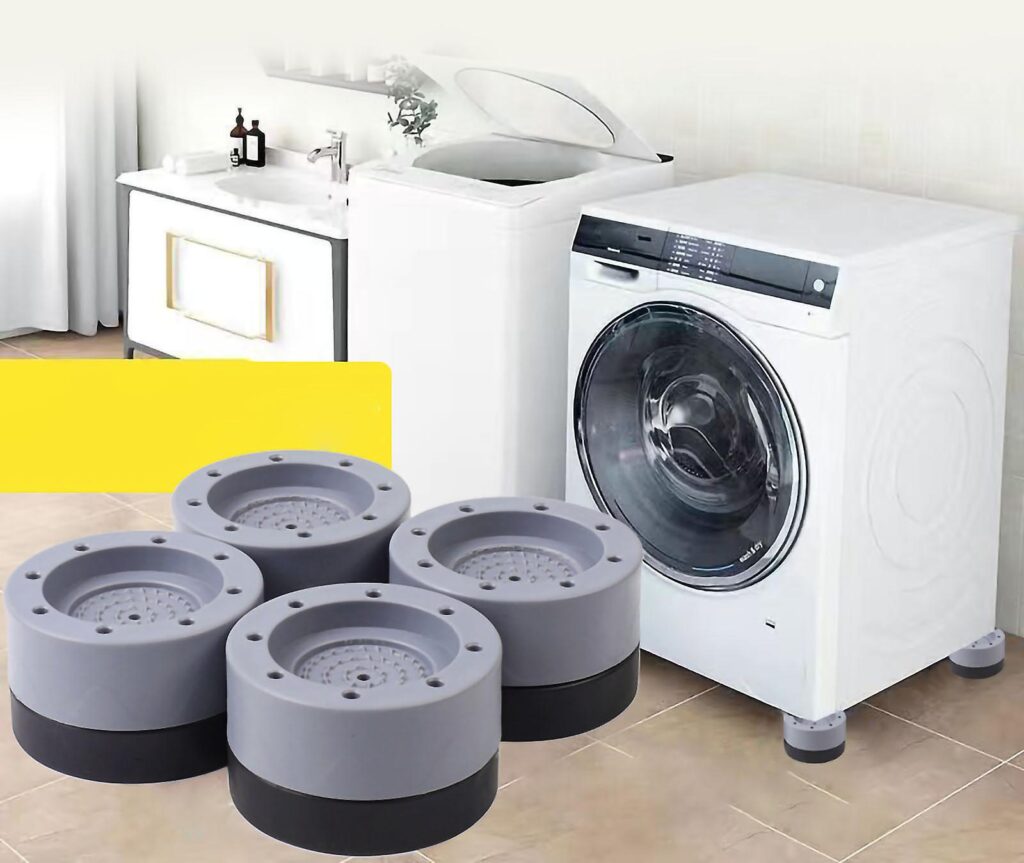

Washing machine pedestals and stands are purpose-made products that raise a machine by approximately 30 to 35cm. They are useful when the machine needs to be higher for drainage reasons, to lift it above a damp or flood-prone floor, or simply for ergonomic comfort when loading and unloading. Before buying a pedestal for drainage purposes, test the height difference first using temporary supports to confirm it makes the required improvement.
Why You Might Need to Raise a Washing Machine

Improving drainage height in a basement or cellar
A washing machine in a basement that struggles to pump water up to ground-floor drainage level may benefit from being raised. The machine’s pump works against less head pressure for every centimetre it is raised. A pedestal typically provides around 30 to 35cm of additional height. Whether this is sufficient to resolve a drainage problem depends on the total height the pump needs to overcome. See our full guide on washing machines in a basement – a specialist pump system may be a more reliable solution for significant height differences.

Protection from damp or water ingress
In areas prone to condensation on the floor, occasional flooding, or persistent damp, raising the machine reduces the risk of water reaching the motor, electrical components, and pump at the base of the machine. Even a modest height increase provides meaningful protection against shallow water ingress.

Ergonomic comfort
Loading and unloading a front-loading washing machine from floor level involves significant bending. Raising the machine by 30 to 35cm brings the drum opening to a more comfortable height, reducing strain on the back. Many purpose-made pedestals include a storage drawer below the machine for laundry products or small items.
Testing Before Buying a Pedestal
If the reason for raising the machine is to improve drainage – particularly in a basement installation – it is worth confirming the height increase actually makes a sufficient difference before spending on a pedestal.
-
Temporarily raise the machine using stable supports.
Place the machine on sturdy, stable supports to approximately the same height a pedestal would achieve. Secure the machine so it cannot move during the test – it must not be able to slide or tip. Do not proceed if the temporary arrangement is not secure.
-
Run a test wash with a normal load.
A rinse and spin cycle with laundry inside is sufficient to test drainage and confirm the machine is stable at the raised height. The machine must have a proper load inside to replicate real operating conditions – an empty drum produces an unbalanced spin.
-
Observe drainage and stability throughout the cycle.
Confirm that drainage has improved and that the machine does not vibrate excessively or move on its temporary supports during spin. If both are satisfactory, a pedestal will provide a safe permanent version of the same setup.

A washing machine on temporary supports during spin is a significant safety risk if the supports are not completely stable. The machine must be unable to slide or tip. Do not leave it unattended during the test cycle. If in any doubt about the stability of the temporary arrangement, do not proceed.
Choosing a Washing Machine Pedestal
Washing machine pedestals are available from appliance retailers and the machine’s manufacturer. Key points to check before buying:
-

Confirm compatibility with the specific machine. Pedestals are designed around specific machine dimensions and weight ratings. Check the pedestal’s stated maximum machine weight and footprint dimensions against the machine before ordering. -
Check the height provided. Most pedestals raise the machine by approximately 30 to 35cm. Confirm the final loaded drum height is comfortable for the household before ordering. -
Consider whether a drawer below is useful. Many pedestals include a pull-out storage drawer. This adds convenience but also adds cost. Assess whether the storage space is worth the additional price.
Installation Guides
Related Guides
Washing Machine in a BasementWhy a pump system rather than a pedestal is the correct solution for significant basement drainage height differences.
 How to Install a Washing Machine
Step-by-step installation guide including drainage, inlet connections, and levelling.
Washing Machine in a GarageInstallation considerations for garage settings – condensation, frost, and drainage.
 How to Pull a Washing Machine Out Safely
Technique for moving a washing machine without damaging floors, hoses, or the machine itself.
Frequently Asked Questions
Can raising a washing machine help it drain better?
Yes, in some cases. The drain pump has to overcome less head pressure when the machine is higher relative to the drainage connection. A pedestal typically raises the machine by 30 to 35cm. Whether this is sufficient to resolve a drainage problem depends on the total height the pump needs to overcome. For significant height differences – such as a full basement below ground-floor drainage – a specialist pump system is a more reliable solution than a pedestal alone.
What height does a washing machine pedestal raise the machine?
Most standard washing machine pedestals raise the machine by approximately 30 to 35cm. This brings a front-loading drum to a noticeably more comfortable loading height and provides a meaningful reduction in drainage head pressure. The exact height varies between products – check the specification before purchasing.
Are all washing machine pedestals compatible with all machines?
No. Pedestals are designed around specific machine dimensions and weight ratings. Confirm the pedestal’s maximum weight capacity and footprint dimensions match the specific machine before ordering. Some manufacturers produce pedestals specifically for their own machine ranges – these are the safest compatibility choice.
Ask the repair forum
Post the make, model and symptoms and get help from the Whitegoods Help community.
3 Comments
Grouped into 3 comment threads.
0 replies Hello, My partner and I just moved our washing machine up on a custom made shelf about a meter off the ground. Since then it became faulty and making funny sucking noises. Would you say we broke it while transporting or is it the height that causes the problem? Thanks
0 replies That should be fine as long as you have sides on it to prevent the washing machine falling off.
That should be fine as long as you have sides on it to prevent the washing machine falling off.
0 replies Thank you for pointing me in the right direction for a device to raise a washing machine/Tumble dryer. My wife suffers from arthritis and the platform you suggest seems ideal. Do you have a view on achieving the same objective by buiding a breeze block platfrom. Thank again
Thank you for pointing me in the right direction for a device to raise a washing machine/Tumble dryer.
My wife suffers from arthritis and the platform you suggest seems ideal.
Do you have a view on achieving the same objective by buiding a breeze block platfrom.
Thank again
Hello,
My partner and I just moved our washing machine up on a custom made shelf about a meter off the ground. Since then it became faulty and making funny sucking noises. Would you say we broke it while transporting or is it the height that causes the problem?
Thanks