Actually plumbing in a washing machine comes under plumbing. So it’s not a topic covered by Whitegoodshelp. The drain hose should be fitted according to the washing machine’s manual. If you don’t have the instruction manual you might be able to download one here – instruction manuals for white goods appliances.
Having said that, this page offers additional advice not covered by the manuals.
Sink
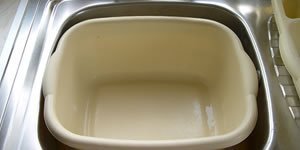
At the most basic level a drain hose can be hooked over a sink. This requires no plumbing in. However, it’s not ideal at all. If something (eg. a dish cloth) fell into the sink, or if a washing up bowl was left in, then the sink hole could get blocked.
This would result in the water flooding over the top of the sink. Also if the drain hose somehow fell off the sink you would have a serious flood. If left unattended the washing machine would continue to fill trying to make up the lost water. It would never stop filling and flooding until stopped.
So clearly a drain hose needs to be attached properly and permanently into the plumbing.
Drain hose

Washing machine drain hoses have traditionally been pushed into a standpipe, which was just a grey or white plastic tube that went through the outside wall and pointed into an open grate.
But this method has fallen out of fashion. Most washing machines are now plumbed into a u-bend under a sink. Plumbing into the u-bend is considerably easier and cheaper.
The drain hose now pushes onto a spigot, which in turn screws onto the u-bend. The spigot is usually tapered. If you push the drain hose onto it as firmly as possible it should fit quite snugly.

Plumbing the drain hose properly
 After making sure that the drain also securely fixed to the plastic spigot you can screw the spigot onto the U bend. Make sure you don’t cross thread, which is easily done with plastic threads. The most important thing to ensure now is that there is not a direct run from this drain hose down into your washing machine.
This is because if there is a direct run down from the drain hose you can get water from the sink running down into the washing machine. This can cause water to build up in the drum.
Drain hose not long enough?

The drain hose on a new washing machine is quite short. It’s only long enough to fit right in front of the waste water pipe, or right next to the sink if plumbed into a u-bend. This is fine for most people.
But many people need to install their washing machine further away. So the drain hose is way too short. So if your drain hose is too short you can either replace it with a longer one (typically 2 or 2.5 m) or you could extend the current one using a drain hose extension kit. Try my affiliate Ransom Spares for drain hoses and extensions.
This is the second article on installing a washing machine. If you haven’t seen the first part which looked at the basics and then concentrated on fill hose related advice check it out here – How to install a washing machine. This article just looks at how to install the drain hose.
More information and advice on installing a washing machine
- Connected washing machine but now it just constantly fills with water and goes down the drain
- If you connect a washing machine in a new house and the washing machine won’t drain the water
- Aqua stop hoses for washing machines & dishwashers (What is an aqua stop hose and do you have to use it?)
- Washing machine is a hot and cold fill, but I only have a cold water supply
- What should I do with the old hot water tap when connecting a cold fill washing machine?
- Why you should not connect a cold fill washing machine to the hot water supply
Repairs
Fixed-price repairs, Pay monthly options, Repair & protect your whole appliance..
Save Money Now
Subscribe to Which? today and start saving money now. Subscription offers often available.
Spares
Spares4Appliances is a spares company run by repair engineers who understand all about spare parts for appliances.
Hi, I want to place my washing machine across the kitchen from the sink/waste outlet. Is it ok to run a 3 metre flexible drain hose from the machine down through the floor, along the joists then up and into the waste outlet? Or, would it be better to put a standpipe next to the washer then join it to a 40mm waste pipe below the floor and out to the (outside) drain?
is there any history of long flexible hoses causing problems?
Advice appreciated,
Gary
Washing machine pumps aren’t very strong, and can’t push water much further than normal lengths. I used to have a washing machine in a pantry about 3 meters away from the sink though and used a drain hose extension to route it to the u-bend. It worked ok because the long run was along the floor. If it had been uphill it would have struggled to pump out that extra distance quick enough.
Going down, then up again will increase the height the water has to pump and potentially be a problem though if going to a u-bend connection under a sink it may be fine as long as it doesn’t go too low. The standpipe idea would work only if the subsequent run of water went straight out or down to a drain. If the water had to go up again it would only have a small force behind it as the pump would no longer be forcing it once it had pumped into the stand pipe and you;d be relying on just the natural water flow rate.
Hi
I want to move my washing machine 2.0m away from the sink, which in effect, the drain pipe has to travel 2.0m plus about 0.8m uphill to reach to the sink from the floor, will the washing machine has capacity to pump out to such a distance and height.
Thanks
Rav
Hi Rav. I used to routinely fit 2.5 m extended drain hoses to washing machines and none of them ever had a problem so, up to 2.5 m should pose no problems.
Is it possible to connect 2 extension hoses together to get more distance. The outlet pipe would run along the floor then a rise of about 2 feet up to the outlet under the sink.
Hello Fred,
Yes this is possible although it is better to replace it with one long hose as they would be much less chance of leaks in the future and it is easier to manage. The last paragraph of this article entitled fill hose not long enough? covers it.
When our wash machine drains we have a lot of pressure from the dish charge hose. We connect the hose on to some 1and half inch PVC pipe that the drain that comes from the wash machine we would like to. Know.if their is a way we could stop so much pressure and be able to stop so much lint and stuff getting to the sub pump which plugs all the time.
A washing machine pump can’t really discharge too fast, they aren’t that powerful, you can’t adjust the water flow in any way either. But if you have a partial blockage in the plumbing it can cause water being pumped into the waste pipe to back up and spill out over the top of the pipe. Make sure there isn’t any lint or other obstructions stuck inside the bends on the plumbing pipework which can restrict the water flow.
If the pump has a filter you can check the filter regularly but lint comes off certain types of laundry such as towels so there’s not much you can do to prevent it.
Our washing smells bad; I suspect a hose issue with perhaps water coming backwards into the machine. There’s a metre long waste hose which drops down halfway then back up before it connects into the pipe. Is this too long maybe and water is collecting somehow?
Yes Sarah, this is covered in the article above under “Drain Hose” and more information is linked to there but I’ll re post the link – it’s tip 2 on this page 5 things to check for after connecting a washing machine. The subject is also covered in specific detail here Smells caused by plumbing faults
Also, in case your washing machine smell is not connected to the drain hose read this article too – washing machine smells