
How to fit new Hotpoint carbon brushes
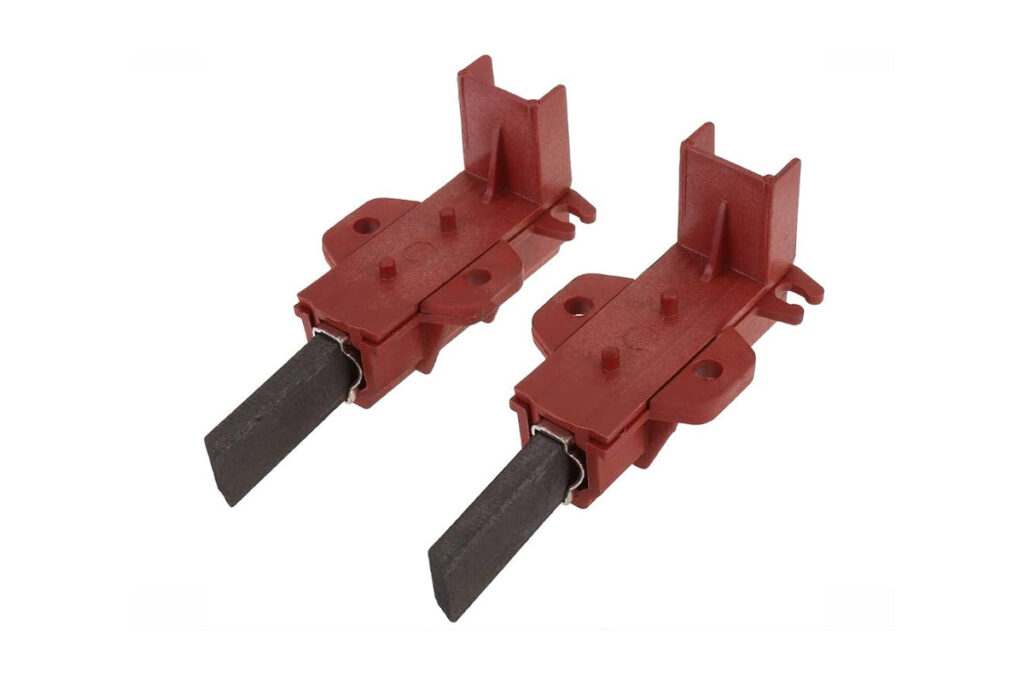

Slide the brushes into the motor with the carbon retracted and held captive inside the holder. Once fully seated and clicked in place, bend the small brass lug outward to 90 degrees to release the brush. Never release the brush before inserting – doing so risks the carbon snapping or being displaced inside the motor undetected.
This guide covers how to fit the older slot-in type Hotpoint and Creda carbon brushes – the type that slide directly into the motor rather than being fixed in holders with screws. The fitting instructions apply equally to both the older black type and the later laminated type.

Even experienced repairers can be electrocuted if proper precautions are not taken. All motors and the washing machine as a whole should be tested for insulation leaks to earth using a megger at 500v DC before work begins. Read the full safety guidance first: washing machine repair safety.
Accessing the Brushes Next to the Tub Weight
On Hotpoint motors mounted on top of the tub, access to the brush next to the tub weight can be improved by removing that weight. It is possible to change the brush with the weight in place using a short stubby flat-bladed screwdriver to lever the old brush out, but the process is more difficult. Some repairers prefer to remove the motor entirely instead.
If removing the tub weight – take care not to overtighten when refitting. Overtightening can shear the bolt or crack the tub bracket. Under-tightening can allow the weight to work loose over time and cause damage. Avoid tools that generate excessive leverage.
If removing the motor – note the belt tension before removal and mark the motor position against the tub fixing bracket before loosening. When refitting, the belt should have a slight “ping” when plucked, with around a quarter of an inch of play either side. It must be tight enough not to slip under load but not so tight that movement is restricted. If the belt was already slack through wear, tighten it slightly when refitting rather than returning it to the worn position.
How to Fit the Carbon Brushes

Top brush: brass lug released, carbon brush popped out. Bottom brush: lug still pressed in, brush held captive. Brushes should arrive in the captive position shown by the bottom brush.
The brushes should be received with the carbon held captive inside the holder – like the bottom brush in the image above. The small brass lug pressed into the brass strip holds the carbon in place. If either brush has come out of its holder in transit, push it back inside before fitting.

Releasing the carbon before insertion risks it snapping, or riding over or under the armature during insertion without being noticed. If this happens, the brush can break months later and release the spring into the motor, causing extensive damage.
The correct fitting sequence is:
-
Slide each brush into its slot in the motor with the carbon retracted and held captive inside the holder.
-
Push the brush all the way in until it clicks securely into place.
-
Bend the small brass lug outward to approximately 90 degrees to release the captive carbon and allow it to contact the commutator. Use a small flat implement such as a blade to lever the lug out. Make sure it is bent far enough – if the lug is not fully released the brush can stick inside the holder and fail to make proper contact.
Cleaning the Commutator
The commutator is the ring of copper segments that the carbon brushes run against. When new, it has a clean copper colour. Over time, the carbon brushes deposit black carbon on the segments. In theory, new brushes will run adequately on an uncleaned commutator – but in practice, cleaning the commutator before fitting new brushes significantly improves the chances of the brushes bedding in correctly.
Professional repairers use a comm stick for this purpose – a dedicated tool costing around £10. A very fine emery cloth can be used as an alternative if a comm stick is not available.
Coarser abrasives can scratch the soft copper surface or embed grit into it, causing sparking and potentially serious motor damage.
Is It Safe to Fit Carbon Brushes Yourself?
Physically, fitting Hotpoint carbon brushes is a straightforward task. However, working on washing machine motors involves genuine electrical risk. This type of repair is not recommended for anyone without prior experience of electrical appliance repair. Competent repairers still need to follow proper safety procedures at every stage. See: washing machine repair safety.
For diagnostic advice before attempting fitting, see: Hotpoint and Creda carbon brushes diagnostics.
Frequently Asked Questions
Should I release the carbon brush before inserting it into the motor?
No. The brush must be inserted with the carbon retracted and held captive inside the holder. Once the holder is fully seated and clicked into place, the brass lug is then bent outward to release the brush. Releasing the carbon first risks it snapping or being displaced inside the motor without being noticed, which can cause serious damage later.
How far should the brass lug be bent when releasing the brush?
Bend it outward to approximately 90 degrees. If the lug is not bent far enough, the brush can stick inside the holder and fail to make proper contact with the commutator. This will cause the motor to underperform or fail to run, and may result in the brush burning out inside the holder.
Do I need to clean the commutator before fitting new brushes?
It is not strictly essential, but it significantly improves the chances of the new brushes bedding in correctly. Use a comm stick or very fine emery cloth only. Do not use regular sandpaper or any coarser abrasive – this can scratch or embed grit in the soft copper commutator surface, causing sparking and motor damage.
2 Comments
Grouped into 1 comment thread.
Thank you for this information. My problem is that I cannot get the black holder out of the machine. I have removed the weight, removed the electrical connectors, and cannot find where to lever with the ‘small stubby screwdriver’, or any other way to get the black holder to budge. Any hints would be appreciated!!
Likely replying to Jane Brown
Hello Jane. I presume this is a very old washing machine with the brushes that slot into the motor? Brushes are now inside a plastic holder and screwed to the motor with 2 screws. For the old slotted-in ones there is a small square hole at the side of the motor where each brush slots in. The screwdriver needs to go in there and release the plastic flap that’s stopping the brush and holder from sliding out.