 I have a previous article describing exactly how a washing machine controls water levels. This article is a follow up to it describing some of the faults that can occur with the pressure system on a washing machine or Washer dryer.
What is the pressure system?
The pressure system is made up of several parts. It has a simple purpose and that is to tell the washing machine when water inside the drum has reached a specific level, and when all the water has been successfully pumped away. If something goes wrong and the washing machine does not receive these signals then the washing machine can either overfill, or refuse to spin.
Various things can go wrong causing symptoms described below – but all these symptoms have other possible causes too. So it’s important not to make assumptions. In order to try and understand pressure system faults you should read the first article to understand how the pressure system works.
 They are normally very reliable, but it’s possible for a pressure switch to be faulty.
The pressure switch
However, in my experience it is the last thing to suspect. Never fit a new one if you haven’t ruled out all other faults – especially a blockage in the pressure chamber bottle at the base of the outer drum (details later). A switch sticking on will make the washer think there’s water inside the drum when there isn’t. Conversely, sticking in the off position will tell the washer there isn’t any water in when there is.
The former would cause the washing machine to not do the fast spin. The latter would cause it to overfill. However, neither of these symptoms are exclusively related to a stuck pressure switch – there are more likely causes. Remember, a pressure switch is far more likely to be stuck because of a blockage.
 Forbes rent appliances and specialise in renting Bosch appliances so they know them inside out. They also rent other brands and many other products – more details at Forbes
The modern pressure switch
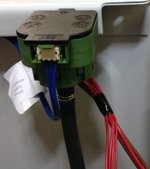 The pressure switches shown and described above have now been replaced with a different type. Instead of having mechanical switches inside that are operated by air pressure they have small coils with magnets inside that give a different resistance reading depending on how much air pressure is applied.
The old style pressure switch has remained virtually unchanged for 40 years or more and has usually been one of the more reliable parts on a washing machine. It remains to be seen whether these (obviously cheaper) designs are reliable or not but in theory they ought to be very reliable still (if not more so) because of the reduced number of parts. Troubleshooting these modern pressure switches may be a bit more difficult without knowing the expected resistance readings.
The small pressure switch tubing between the pressure switch and pressure chamber bottle
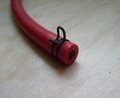 Damage to the pipe, or air leaks at the connection points on the pressure switch or plastic pressure chamber bottle can cause overfilling because air pressure is lost. Without an airtight connection it’s impossible to create enough pressure to activate the pressure switch or at last to keep it switched on..
Pressure chamber bottle
If the pressure chamber at the bottom of the tube gets blocked with gunge inside, then when the washing machine empties the water, the water inside the pressure chamber (which is only really a small plastic bottle) gets trapped because it can’t get past the gunge. This means that the air pressure is held inside the plastic tube so the pressure switch is jammed ON.
 A blocked pressure chamber bottle can also restrict or prevent water getting into the bottle in the first place causing the washer to take in too much water or to overfill.
This would need a fairly solid blockage though and is much more rare than trapping the air pressure as described in the last paragraph. This is because the sheer volume of water inside the tub can sometimes force its way past gunge into the bottle, but because hardly any water actually goes into the bottle this very small amount cannot force its way back out when it drains (if there is a blockage).
If a pneumatic door lock is fitted that prevents the door opening when full of water, a part of the small pressure tubing (at the top of the pressure chamber bottle) branches off and fits onto the door lock. The air pressure is therefore also used to operate a lock inside the door as described in this article different types of door locks.
This type of interlock is rarely used these days because of cost cutting, but it used to be common on washing machines from the 90s. The relevance here is that gunge inside the pressure chamber bottle can also trap air in the tube that leads to the door lock preventing it from opening even when water has been pumped away.
Fixing a blocked pressure system
This article looks specifically at blocked pressure systems and how to fix or diagnose one how to clear a blocked pressure system
Other symptoms
Not taking any water in or refusing to do a fast spin are other possible symptoms of faults on the pressure system related to the machine thinking there is water inside when there isn’t – but as with most of the other symptoms, other unrelated faults can cause the exact same symptoms. General help for these two faults can be found here – not taking in water and not spinning.
Finally, a fault in the pressure system can cause the washer to abort the programme and give an error code – appliance Error codes – What You Need to Know
Get an engineer
Faults on the pressure system can be difficult to diagnose. They can also be very easily misdiagnosed when a fault is caused by something totally different. Don’t just start messing with or replacing parts in the pressure system because your washing machine exhibits symptoms that can be caused by the pressure system. Unless you fully understand how it all works you will be better advised to call an engineer.
Repairs
Fixed-price repairs, Pay monthly options, Repair & protect your whole appliance..
Save Money Now
Subscribe to Which? today and start saving money now. Subscription offers often available.
Spares
Spares4Appliances is a spares company run by repair engineers who understand all about spare parts for appliances.
Hello Jean and thanks. It’s probably frustrating, but my article (and the previous – how the pressure system works) are intended to just give a good idea how the pressure system works. From there, if someone has the skills and experience at repairing things – but just not washing machines – it might help them diagnose a fault.
Continuously pumping when set on a cycle could be caused by insulation faults on the machine. Continuous pumping could theoretically be caused by a stuck pressure switch if it has an overfill switch built in. I think stuck pressure switches are very unlikely these days though.
Hi,
I have a Hotpoint WMFUG942 machine which displays a F05 error through a cycle.
The machine starts up/spins OK and fills (with a small amount of water, not the usual amount) it then drains away but whilst in this process the error appears.
I have checked the filter, the water supply going into the machine, the drainage hose (which seems to pump out fine when left in a bucket) and the sump hose which appear to be free from blockages.
The pressure switch has a faint click when I blow in it and I can freely blow through the tube leading down through the machine, I have read about this and this normally goes to a chamber, unfortunately this appears to go into the drum assembly on this machine which i cannot seem to get too easily.
To test I took the tube out of the pressure switch and set the machine to rinse in which the same fault is present, does this still point towards the pressure switch as I’ve also read this could be a PCB or pump issue.
Many thanks for your help in advance
Best regards
Mark
Hello Mark. F05 error is often common between Hotpoint and Indesit washing machines. They are made by the same company and share some parts. Check this article for specific information on Error Code F05
Thanks very much for these excellent articles. I’d be very grateful for any advice on the following problem. In short it seems our machine often keeps on filling whenever it has power on regardless of position in cycle or even if cycle has finished. I have taken off pressure switch and tube and cleaned. PS Clicks on + off when blown into as described starting to think thats not problem. (Indesit WI121, pressure switch is HD505 T85, inlet valves replaced last summer, not very heavy use)
For example:
1 – I turn the machine on, all OK (pressure switch ticks then 2s late ticks again then 8s ticks, 2s, tick, 8s, tick, 2s, tick etc.)
2 – I start cycle – seems to work normally except water keeps running in. (Pump kicks in occassionally to stop water level around 2/3 way up the window)
3 – If I then cancel cycle by moving control to off position it stops as normal but water still running in.
4 – I move control to drain position, it drains and moves on to finished position. but water is still running in.
5 – I switch it off (on machine or at socket). The water stops instantly.
6 – I switch machine back on, control in stopped position. Water starts flowing again (sometimes immediately, sometimes after a couple of seconds of it ‘thinking’)
7 – If I disconnect water supply, I can hear inlet solenoid/valve buzzing as it holds open. This time I can’t hear ticking from pressure valve that I did in step 1.
8 – A couple of times after being left off for a some time I switch on and the water doesn’t run. Then I’m back to step 1
Any ideas? I’m wondering if there’s a sticky relay controlling the inlet solenoid?? Or is it time to give up?
Thank you very much, Simon
Hello Simon. If it’s filling even on spin I can’t see it being related to the pressure switch. If the valve is being energised all the time there’s possibly a fault on the pcb. Low insulation faults can also cause weird behaviour. I think it would need an engineer to see it and test the insulation too.
I have Bosch WFO 2860. The machine appears to go through the wash and drain cycle but when it gets to the spin cycle it just says the cycle is complete. Would this be a a pressure switch or the Pub?
A blocked pressure system can cause the washing machine to not spin, but as it wouldn’t spin because it thought it had been unable to drain out the water it should normally produce an error. Some washing machines may not spin because they couldn’t balance the load properly and then eventually finish without spinning as though nothing was wrong. However, that should only happen occasionally with a bad load and not every time with different loads. I wouldn’t change the PCB, it’s too speculative and they aren’t cheap.
I stumbled onto your site while searching for information on how the modern washing machine knows how much water to put in the tub.
After reading your article I think I understand how the washing machine turns on and off the water going into the tub. I also understand a pressure switch is used to determine how much water is in the tub, but not how much should be in the tub. How does the washing machine know when there is a small load of laundry and it only needs a small amount of water. Or that there is a large load in the washer requiring more water.
I hope I made my question clear.
Michael-
Hello Michael. They should be able to tell the weight of the load of laundry inside the drum by the resistance needed to turn the drum. They can monitor the strain load on the motor, how much power it needs, how smoothly it is running etc. Also some loads will naturally take more water if they are absorbent. Loads that don’t contain absorbent laundry will fill up quicker.
Hi, Thanks for your articles they are very informative, I have a beko washing machine which doesn’t drain fully on a normal programme, it only drains fully when I do an additional spin and drain, would this be a pressure switch problem?