
Thinking About Switching to EV’s for Appliance Repair Work?
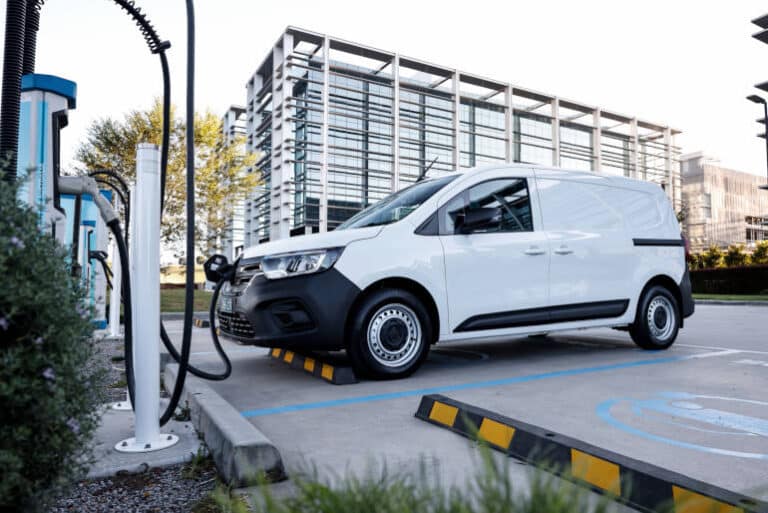

For most appliance repair engineers covering up to 100 miles per day across 8 to 10 jobs, the latest small electric vans are now a genuinely viable option. Real-world ranges of 130 to 160 miles in normal conditions, overnight home charging, and running costs well under 10p per mile at current off-peak tariffs make the economics increasingly compelling, particularly with diesel now averaging above 165p per litre. The technology has matured significantly, but cold weather range reduction, payload considerations, and home charging access remain real factors that need honest assessment before making the switch.

All van prices, electricity tariff rates, diesel prices, and finance figures in this article are based on data current at April 2026. Van prices should be verified directly with dealers before any purchasing decision, as manufacturer pricing changes regularly and dealer discounts vary. UK diesel prices are currently elevated and volatile due to geopolitical factors, which strengthens the running cost case for electric but means the comparison figures in this article may shift as market conditions change.
Is going electric realistic for an appliance repair engineer in 2026?
This is a question more engineers are taking seriously in 2026, and the honest answer is that for the majority of appliance repair engineers working in suburban and urban areas, a small electric van is now a credible daily working tool. For engineers in rural areas, those without home charging access, or those regularly covering more than 120 miles per day, the transition still needs careful planning. For broader context on the year-on-year direction of the trade, see our appliance repair annual trends coverage.
Electric light commercial vehicle registrations rose by 35.5% in 2025 even as the overall light commercial vehicle market declined. That is not a trend driven by corporate fleet managers. It reflects genuine improvements in real-world range, more competitive pricing, and the straightforward fuel cost arithmetic that any engineer can work out with a calculator. With UK diesel now above 165p per litre and the best EV overnight tariffs available at under 8p per kWh, the financial case for an electric van has never been stronger.
The legislative picture is equally clear. Under the UK Government’s Zero Emission Vehicle mandate, 70% of new vans sold must be zero emission by 2030, rising to 100% by 2035. New petrol and diesel-only vans will not be on sale after 2035. That is nine years away. For any engineer planning a van purchase today – whether setting up as a self-employed appliance repair engineer or upgrading the vehicle of an established business – this is the horizon against which the decision should be made.
The headline figures
Cost per mile on a 7p/kWh EV overnight tariff (45kWh battery, 130 real miles)
Approximate cost per mile for a diesel van at 165p/litre and 40mpg
Approximate annual fuel saving at 15,000 miles, switching to EV overnight
UK new petrol and diesel-only vans no longer on sale
The appliance engineer’s use case – why the numbers work
Before looking at specific vans, it helps to model what a typical appliance repair working day actually demands from a vehicle, because the instinctive worry about range is often based on a misunderstanding of how daily mileage is accumulated.
An engineer covering 8 to 10 jobs across a service area does not travel 100 miles in a single continuous run. The 100-mile figure is the total of multiple short hops between customer addresses, with the motor stopped for significant periods at each job. This stop-start pattern in suburban and urban areas is actually one of the most efficient use cases for an electric drivetrain. At low speeds and with frequent regenerative braking, electric motors perform considerably better relative to their WLTP figures than they do on motorway runs.
The practical concerns are not about the daily mileage total in isolation. They are about the combination of that mileage with payload weight, cold weather effects, and the need to complete the day without a mid-route charge stop.
| Daily profile factor | EV implication | Verdict |
|---|---|---|
| Total daily mileage up to 100 miles | Within real-world range of all current small EV vans with buffer |  Manageable Manageable |
| 8 to 10 short hops, not one long run | Stop-start pattern suits EV efficiency and regenerative braking | Favourable |
| Tool and parts load of 200 to 400kg | Payload weight reduces effective range by approximately 10 to 20% | Plan for it |
| Cold winter days below 5°C | Range can reduce by 20 to 35% in cold conditions | Plan for it |
| No mid-day charging opportunity | Full day range must be available at start; home overnight charging is essential | Viable with home charging |
| Van parked at home overnight | Ideal for home wallbox charging; full range every morning | Strong advantage |
How does WLTP range compare to real-world performance?
Every van’s official range is quoted as a WLTP figure, measured under standardised laboratory conditions. Real-world range is consistently lower, and understanding the gap is essential for honest planning.
In normal conditions, mixed suburban and urban driving at moderate speeds with a moderate payload, real-world range is typically 75 to 85% of WLTP. In cold conditions below five degrees Celsius, range drops to 65 to 75% of WLTP, as lithium-ion batteries are less efficient at low temperatures and cabin heating draws significantly on the battery. Using pre-conditioning to warm the cabin while the van is still plugged in each morning substantially reduces this hit.
For a loaded engineer’s van in UK winter conditions, plan on 70% of the WLTP figure as your effective daily range. A van rated at 186 miles WLTP provides approximately 130 usable miles on a cold loaded day. If your working day regularly exceeds 100 miles in winter, a van with a WLTP figure of at least 180 miles is the minimum to consider, and 200 miles plus gives a more comfortable buffer.
What are the best small electric vans for appliance repair engineers in 2026?
The following vans represent the strongest options available in the UK small to medium van categories as of April 2026, assessed specifically for the appliance engineer use case. All prices are OTR (on the road) recommended retail prices confirmed at April 2026 and should be verified with dealers before purchase. Finance figures are indicative, based on a representative commercial HP rate of 10% APR over 36 months with no deposit, and will vary by lender and credit profile.
VAT-registered businesses can reclaim the VAT on a van used exclusively for business purposes, which significantly reduces the effective financed amount. The finance figures below show both the inc VAT position for those not VAT-registered and the ex VAT position for those who are, with the relevant monthly payment for each.
Renault Kangoo E-Tech Electric
 Specifications
WLTP range: 186 miles. Planned range at 70%: approximately 130 miles. Battery: 45kWh usable. Motor: 90kW (121hp). Payload: up to 612kg. Load volume: 3.9 cubic metres. DC rapid charge: 80% in approximately 40 minutes. AC onboard: 11kW (full charge overnight in 6 to 7 hours on a 7kW wallbox). Battery warranty: 8 years / 100,000 miles.
 Pricing (April 2026)
OTR from £34,075 inc VAT (£28,396 ex VAT). Finance indicative at 10% APR, 36 months, no deposit: approximately £1,098 per month inc VAT, or approximately £915 per month ex VAT for VAT-registered businesses. Actual dealer pricing and finance rates will vary. Always request a quote before committing.
The Kangoo E-Tech is our top recommendation for most appliance repair engineers in 2026. Its 186-mile WLTP range is the best in the small van class and gives a real-world winter figure comfortably above 130 miles, providing a genuine buffer above the 100-mile daily requirement. The 40-minute DC rapid charge to 80% is useful backup for the occasional longer day. Load space and payload are practical for a typical tool and light parts load, though engineers carrying a heavy refrigeration or large component stock should verify their loaded weight against the 612kg payload rating. The Kangoo also benefits from an 8-year battery warranty and an established dealer network across the UK.
Stellantis triplets – Citroën ë-Berlingo, Peugeot e-Partner, Vauxhall Combo Electric
SpecificationsWLTP range: 180 to 213 miles depending on variant. Planned range at 70%: approximately 126 to 149 miles. Battery: 50kWh. Motor: 100kW (136hp). Payload: up to 781kg. Load volume: up to 4.4 cubic metres. DC rapid charge: available. AC onboard: 11kW. The three models share an identical Stellantis platform and are functionally the same van under different badges and dealer networks.
Pricing (April 2026)Citroën ë-Berlingo – from £31,390 inc VAT (£26,158 ex VAT). Finance: approximately £1,011/month inc VAT or £843/month ex VAT. Peugeot e-Partner – from £34,895 inc VAT (£29,079 ex VAT). Finance: approximately £1,124/month inc VAT or £937/month ex VAT. Vauxhall Combo Electric – from approximately £35,160 inc VAT (£29,300 ex VAT). Finance: approximately £1,133/month inc VAT or £944/month ex VAT. Figures based on 10% APR, 36 months, no deposit.
These three vans offer a class-leading payload of up to 781kg, making them the most practical choice for engineers carrying a heavier stock of spare parts or larger components. The load volume of up to 4.4 cubic metres matches the diesel equivalent exactly, meaning no compromise on working capacity. Of the three, the Citroën ë-Berlingo offers the most competitive entry price and the Vauxhall Combo Electric benefits from a well-established UK dealer and service network. All three are built at Vauxhall’s Ellesmere Port plant, making them a notable choice for engineers who want to support UK manufacturing.
Ford Transit Custom PHEV (plug-in hybrid)
SpecificationsElectric-only range: 35 to 40 miles. Total range (electric plus petrol): up to 236 miles combined. Battery: 11.8kWh. Engine: 2.5-litre petrol generator. Payload: up to 1,136kg. Load volume: up to 6.8 cubic metres. AC charging only (no DC rapid charge). Charge time: approximately 2.5 hours from empty on a 7kW wallbox.
Pricing (April 2026)From approximately £47,982 inc VAT (£39,985 ex VAT). Finance indicative at 10% APR, 36 months, no deposit: approximately £1,546/month inc VAT or £1,288/month ex VAT for VAT-registered businesses. Actual pricing and finance rates will vary by dealer and credit profile.
The Transit Custom PHEV is not a full electric van but earns its place in this guide as the most practical transitional option for engineers not yet ready to go fully electric. On days under 40 miles it can run entirely on battery with zero tailpipe emissions. On longer days the petrol generator removes range anxiety entirely, making it suitable for engineers covering variable or occasionally extended routes. The payload and load volume are the most generous in this comparison, and the Transit Custom name is the most familiar and trusted in the UK tradesperson market. For engineers who want to begin the transition to electrified driving without the constraints of a pure EV, this is the lowest-risk entry point.
Ford E-Transit Custom (full electric)
SpecificationsWLTP range: 209 to 232 miles depending on variant. Planned range at 70%: approximately 146 to 162 miles. Battery: 65kWh. Motor: up to 100kW (136hp). Payload: up to 1,088kg. Load volume: up to 6.8 cubic metres. DC rapid charge: available. Same cargo dimensions as the diesel Transit Custom.
Pricing (April 2026)From approximately £54,000 inc VAT (£45,000 ex VAT) for Trend trim. Finance indicative at 10% APR, 36 months, no deposit: approximately £1,740/month inc VAT or £1,450/month ex VAT for VAT-registered businesses. Actual pricing and finance rates will vary by dealer and credit profile.
The full electric E-Transit Custom offers the best range and payload combination of any van in this guide and is Ford’s most significant statement in the electric commercial vehicle market. Real-world winter range of 146 to 162 miles comfortably covers a 100-mile working day with a well-loaded van even in challenging conditions. Its pricing puts it at the higher end of this comparison, but for engineers already running a Transit-size vehicle who want to move to full electric, it is now a credible step rather than a compromise. The identical cargo dimensions to the diesel version mean no adjustment to how you load and organise your van.
All vans at a glance
| Van | WLTP range | Winter range (70%) | Payload | From (inc VAT) | Finance/month (inc VAT)* | Finance/month (ex VAT)* |
|---|---|---|---|---|---|---|
| Renault Kangoo E-Tech Electric | 186 miles | ~130 miles | 612kg | £34,075 | ~£1,098 | ~£915 |
| Citroën ë-Berlingo | Up to 213 miles | ~149 miles | 781kg | £31,390 | ~£1,011 | ~£843 |
| Peugeot e-Partner | Up to 213 miles | ~149 miles | 781kg | £34,895 | ~£1,124 | ~£937 |
| Vauxhall Combo Electric | 180 to 220 miles | ~126 to 154 miles | 781kg | ~£35,160 | ~£1,133 | ~£944 |
| Ford Transit Custom PHEV | 35 to 40 miles electric only | Unlimited (petrol backup) | 1,136kg | ~£47,982 | ~£1,546 | ~£1,288 |
| Ford E-Transit Custom | 209 to 232 miles | ~146 to 162 miles | 1,088kg | ~£54,000 | ~£1,740 | ~£1,450 |
*Finance figures are indicative only, based on a representative 10% APR Hire Purchase over 36 months with no deposit. Actual monthly payments depend on the lender, your credit profile, any deposit paid, and the final agreed purchase price. Always obtain a personalised finance quote before committing. Prices are OTR RRP at April 2026 and should be confirmed with dealers. Manufacturer discounts and dealer deals may reduce the purchase price.
Charging – the practical reality for self-employed engineers
Charging strategy matters as much as the van itself. Getting this right makes the transition smooth. Getting it wrong turns range anxiety into a daily operational headache.
Home overnight charging – the foundation of EV operation
The great operational advantage a self-employed engineer has over a fleet driver is the ability to charge at home overnight, every night. This is the optimal model for an electric van – the battery starts each working day full, the cost is at the lowest possible rate, and there is no dependency on the public charging network for routine daily operation.
A 7kW home wallbox charger will fully charge most small van batteries in six to eight hours overnight. A van plugged in at 7pm is fully charged before midnight. Installation costs for a 7kW wallbox including labour run from £800 to £1,500. From 1 April 2026, the Government’s EV chargepoint grant increased from £350 to £500, bringing the net cost to eligible homeowners and renters down to between £300 and £1,000.
Electricity costs at April 2026 rates
The April 2026 Ofgem price cap sets standard electricity at 24.67p per kWh. However, dedicated EV overnight tariffs offer significantly cheaper rates during off-peak hours. At April 2026, the best EV overnight tariffs in the UK charge between 6.49p and 9.5p per kWh during the overnight window, typically midnight to 6am. Some tariffs, including Octopus Intelligent Go, offer rates as low as 3.49p per kWh for certain off-peak periods.

UK diesel prices are elevated at April 2026, averaging approximately 165p per litre following significant market volatility from late February 2026. This makes the running cost case for electric vans unusually strong at the time of writing. If diesel prices normalise, the saving per mile will be somewhat lower, but even at 130p per litre the electric advantage at EV overnight tariff rates remains substantial at approximately 12 to 14p per mile.
Charging cost comparison
| Charging type | Speed | Rate (April 2026) | Full charge cost (45kWh) | Cost per mile | Best for |
|---|---|---|---|---|---|
| Home 3-pin socket | 2.3kW, 20 to 24 hours | 24.67p/kWh | ~£11.10 | ~8.5p | Emergency only, too slow for daily use |
| Home 7kW wallbox, standard tariff | 7kW, 6 to 8 hours | 24.67p/kWh | ~£11.10 | ~8.5p | Daily charging, but not cost-optimised |
| Home 7kW wallbox, EV overnight tariff | 7kW overnight | 7p to 9.5p/kWh | ~£3.15 to £4.28 | ~2.4p to 3.3p | Ideal daily charging for engineers |
| Public AC destination charger | 7 to 22kW, 2 to 4 hours | 30p to 50p/kWh | ~£13.50 to £22.50 | ~10p to 17p | Opportunistic top-up during long jobs |
| Public DC rapid charger | 50 to 150kW, 30 to 50 min to 80% | 45p to 89p/kWh | ~£20 to £40 | ~15p to 31p | Emergency backup on longer than normal days |
What if you cannot charge at home?
Home overnight charging is practical if you have a driveway or private parking. It is not straightforward if you park on the street. Engineers without off-street parking face a significantly harder transition to full electric, and this barrier should not be minimised. On-street charging infrastructure is expanding in some urban areas but remains inconsistent nationally. For engineers in this position, the Transit Custom PHEV is a considerably more practical option as it eliminates the dependency on an infrastructure that may not yet be adequate at your location.
The financial case – total cost of ownership
The running cost saving from switching to electric is real and significant, but it needs to be set against the higher purchase price of electric vans. The financial case is strongest for engineers with high annual mileage and access to home overnight EV tariff charging. For lower mileage engineers, the payback period is longer.
For a self-employed engineer, additional financial advantages include the zero van benefit-in-kind charge for fully electric vans (compared with £4,020 per year for a diesel van at 2025/26 HMRC rates), and the 100% first year capital allowance available on new zero emission vans, which allows the full purchase cost to be offset against taxable income in the year of purchase. Always discuss the most advantageous treatment for your specific circumstances with your accountant before purchasing.
For VAT-registered engineers, the ability to reclaim all VAT on a van used exclusively for business purposes reduces the effective purchase cost by 20%, which makes a meaningful difference both to the outright cost and to monthly finance payments, as shown in the comparison table above.
For broader thinking about the business case of running an independent operation rather than relying on contract work through intermediaries, see our pieces on the case for the independent engineer over manufacturer service and contract work versus building a business. The economics of an electric van are most attractive when the engineer controls their own customer base and route planning.
What works well and what still needs planning?
What works well for engineers
- Stop-start suburban driving pattern suits EV efficiency and regenerative braking
- Home overnight charging fully restores range every morning
- Running cost saving of 10 to 17p per mile over diesel at current fuel prices
- Zero benefit-in-kind charge on a fully electric van
- 100% first year capital allowance reduces tax in year of purchase
- Free access to ULEZ and Clean Air Zones
- Quieter, smoother driving with lower long-term maintenance costs – EVs have significantly fewer moving parts than diesel engines
 Genuine concerns to plan around
- Cold weather range reduction of 20 to 35% is real and must be factored into winter day planning
- No home charging access makes the transition significantly harder
- Occasional days over 120 miles require a rapid charge stop or a back-up plan
- Rural public charging infrastructure is still inconsistent
- Higher upfront purchase price than an equivalent diesel van
- Payload reduction on EV models means engineers carrying heavy parts loads must check the numbers carefully
Why will this decision be made regardless?
Even for engineers not yet convinced by the current economics, the regulatory timeline makes this a decision that cannot be deferred indefinitely. Under the UK Government’s Zero Emission Vehicle mandate, 70% of new vans sold must be zero emission by 2030 and 100% by 2035. New petrol and diesel-only vans will not be available after 2035.
This does not mean existing diesel vans become illegal. Engineers can continue running diesel vans to the end of their working life. But it does mean the next new van purchased after 2035 will be electric by default, that the used diesel van market will shift significantly as that date approaches, and that diesel fuel infrastructure and service availability will progressively contract over the coming decade. Planning the transition now, rather than being forced into it under time pressure later, is the approach that gives the most control over timing and cost.
Is an electric van right for you? A self-assessment
-
Do you have off-street parking at home? Home overnight charging is the operational foundation of a viable electric van. If you have a driveway or private parking, the most important prerequisite is in place. -
Is your typical daily mileage under 120 miles? At 70% of WLTP for the vans in this guide, most engineers covering up to 100 to 120 miles per day will have a comfortable winter range buffer without any mid-day charging required. -
Is your typical loaded van weight under the payload rating? Most appliance engineers carrying a tool kit and a light parts stock will be within the 612 to 781kg payload range of the small EV vans. Engineers regularly carrying heavy refrigeration stocks or large component inventories should weigh a typical load before choosing a van. -
Do you mainly operate in suburban or urban areas? Stop-start suburban driving at moderate speeds is the most efficient use pattern for an electric van. Engineers covering a compact geographic service area in built-up areas are in the strongest position to benefit from EV operation. -
Are you VAT-registered? VAT registration allows the 20% VAT on the van to be reclaimed in full (for exclusive business use), reducing the effective purchase price and monthly finance cost significantly. -
Can you switch to an EV overnight electricity tariff? The difference between charging on a standard 24.67p/kWh tariff and a best-available EV overnight tariff at 7p/kWh is approximately 6p per mile. Over 15,000 miles per year that is approximately £900 in additional annual savings on top of the diesel-versus-electric comparison.
Want to learn appliance repair properly before investing in the van?
A new van of any kind is a substantial investment. For engineers earlier in their career, getting the skill foundation right first is what makes the rest of the business case work. The NAC National Training Centre offers City and Guilds Assured practical and online training delivered by working engineers.
Related engineer-trade reading
If you are thinking about the wider business case alongside the vehicle decision, the following pieces are useful adjacent reading.
 Becoming self-employed
Step-by-step on setting up as a self-employed appliance repair engineer in the UK.
 Contract work vs building a business
Why the customer-base you build directly shapes whether the EV economics in this article work in practice.
 Independent vs manufacturer service
The case for the independent engineer over manufacturer-managed service contracts.
 Job management software
Route planning, scheduling, and customer communication tools that improve daily efficiency.
 Annual repair trends
Year-on-year trends in UK appliance repair demand and what they mean for vehicle and business planning.
 Pacifica acquires Repaircare
April 2026 UK industry consolidation news affecting the managed-repair end of the trade.
Frequently asked questions about electric vans for appliance repair engineers
Can an electric van cover 100 miles per day for appliance repair work?
Yes, with the right van and planning. The Renault Kangoo E-Tech Electric, Citroën ë-Berlingo, Peugeot e-Partner, and Vauxhall Combo Electric all offer WLTP ranges of 180 to 213 miles, which at a conservative 70% winter planning figure gives usable daily ranges of 126 to 149 miles. Most engineers covering up to 100 miles per day will have a comfortable buffer even on cold loaded days. The key requirements are a fully charged battery every morning via home overnight charging, awareness of cold weather range reduction, and a payload check against your typical load.
What is the cheapest electric van to buy in the UK in 2026?
Among the vans recommended in this guide, the Citroën ë-Berlingo has the lowest entry price at approximately £31,390 OTR inc VAT (£26,158 ex VAT) at April 2026 pricing. It shares its platform and specifications with the Peugeot e-Partner and Vauxhall Combo Electric and offers up to 781kg payload and 4.4 cubic metres of load space. Prices should be verified with dealers as manufacturer pricing and dealer discounts change regularly. All prices in this article are OTR RRP at April 2026.
How much does it cost to charge an electric van at home in 2026?
On the April 2026 standard electricity tariff of 24.67p per kWh, fully charging a 45kWh van battery costs approximately £11.10. On a dedicated EV overnight tariff at 7p per kWh, the same charge costs approximately £3.15, providing around 130 real-world miles. That works out at approximately 2.4p per mile on the best available overnight tariff, compared with approximately 19p per mile for a diesel van at April 2026 fuel prices of around 165p per litre. The annual saving at 15,000 miles on an EV overnight tariff compared to diesel is approximately £1,950 at current prices.
What is the EV chargepoint grant and how much is it in 2026?
The Government’s EV chargepoint grant (administered through the DVLA) increased from £350 to £500 per socket on 1 April 2026. Eligible homeowners and renters can claim up to £500 towards the cost of installing a home EV chargepoint. With typical 7kW wallbox installation costs of £800 to £1,500, the net cost after the grant is approximately £300 to £1,000. Applications are made through an OZEV-approved installer rather than directly. Check current eligibility and grant terms at gov.uk before proceeding, as the scheme details are subject to change.
Do electric vans lose range in winter?
Yes, and planning for this is essential. In UK winter conditions below five degrees Celsius, real-world range is typically 65 to 75% of the WLTP figure rather than the 80 to 85% achievable in normal conditions. On the coldest days it can fall to 60% of WLTP. Using pre-conditioning, warming the van cabin while it is still plugged in before your first job, significantly reduces the heating drain on the battery and improves effective range. For a van with a 186-mile WLTP rating, plan on approximately 130 usable miles on a cold winter day with a loaded van.
When do new petrol and diesel vans stop being sold in the UK?
Under the UK Government’s Zero Emission Vehicle mandate, 100% of new vans sold must be zero emission by 2035, with 70% required by 2030. New petrol and diesel-only vans will not be available after 2035. This does not affect the legality of operating existing diesel vans, which can continue to run until the end of their service life. However, it means every engineer currently planning a new van purchase should factor the regulatory transition into their thinking, as the alternatives available after 2035 will be electric by default.
What if I cannot get home charging installed?
Home overnight charging is the most practical and cost-effective charging model for a self-employed engineer. Without it, the transition to a full electric van is significantly more difficult, as dependency on public rapid charging is more expensive, less convenient, and unreliable in some areas. If home charging is not an option due to on-street parking, the Ford Transit Custom PHEV is a much more practical alternative – its 35 to 40 miles of electric-only range covers the majority of shorter working days, and the petrol engine provides unlimited additional range without requiring public charging infrastructure. It is a sensible transitional vehicle for engineers in this situation.
Does an electric van make more sense for an established business than a new self-employed engineer?
The case has good arguments both ways. An established business with a known customer base, predictable routes, and steady annual mileage can calculate the EV business case with high confidence, and the saving compounds over years of operation. A new self-employed engineer benefits from operating an electric van for the lower running costs and the regulatory future-proofing, but faces higher upfront capital outlay at exactly the point when cashflow is most constrained. Used electric vans are now available on the market in growing numbers, which can be a sensible entry point for newer businesses. See our guide to becoming a self-employed appliance repair engineer for broader context on early-stage business decisions.
Van prices, electricity tariff rates, diesel prices, grant values, tax rates, and finance figures in this article are based on data researched and confirmed at April 2026. All prices are OTR RRP and should be verified with manufacturers and dealers before any purchasing or financial decision. Finance figures are indicative only, based on 10% APR Hire Purchase over 36 months with no deposit, and do not constitute a finance quotation. Actual rates and payments will vary. Tax and capital allowance information should be verified with your accountant. Grant eligibility and terms should be confirmed at gov.uk. Whitegoods Help is not a financial, tax, or vehicle purchasing adviser. This article is intended as a practical industry overview only.
Ask the repair forum
Post the make, model and symptoms and get help from the Whitegoods Help community.
0 Comments