
Connecting a washing machine to a softened water supply
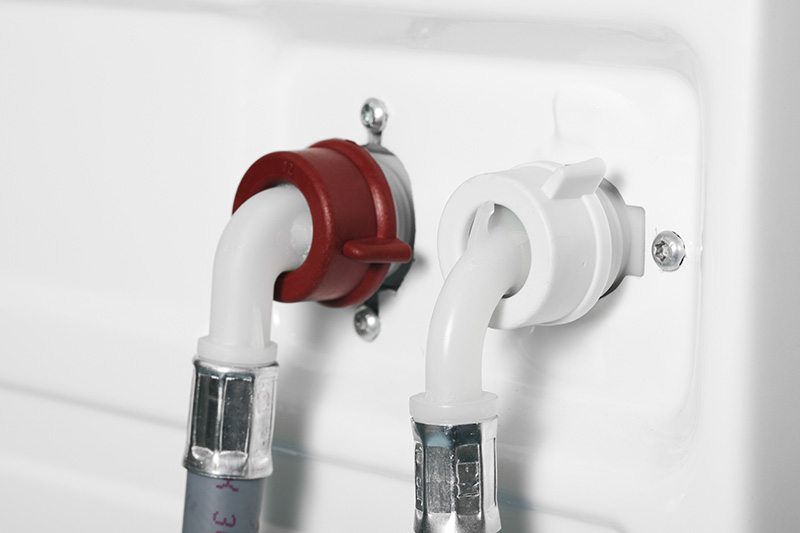

Connecting a washing machine to a chemically softened water supply can cause problems with detergent performance. Very soft water prevents detergent from dissolving properly, which can leave residue on laundry and cause excessive foaming. Some manufacturers specifically advise against using a fully softened supply. Electronic water conditioners fitted to pipes are a different matter and are not subject to the same concerns.
There are two quite different types of water softening system commonly used in domestic properties, and the advice about washing machine connections differs significantly between them.
Two Types of Water Softening – and Why the Difference Matters
 Chemical (ion exchange) water softeners
A full water softening system using ion exchange resin to physically remove hardness minerals (calcium and magnesium) from the water supply. This produces genuinely soft water – often very soft water. This is the type that some manufacturers advise against connecting a washing machine to. More common in countries with very hard water supplies, but present in some UK properties.
 Electronic water conditioners
Devices clamped to the outside of a pipe that claim to reduce limescale formation through electromagnetic treatment. These do not chemically soften the water – the mineral content remains the same. They are not subject to the same concerns as full chemical softeners. Their effectiveness is also frequently disputed.
The guidance below applies specifically to full chemical water softeners, not to electronic conditioners.
The Problem With Chemically Softened Water
Modern washing machine detergents are formulated to work with water in a range of hardness levels. Very soft water – as produced by a full chemical softening system – falls outside this range in a way that affects how detergent behaves.

Detergent does not dissolve correctly
In very soft water, detergent – particularly powder detergent – can fail to dissolve fully during the wash cycle. This leaves detergent residue on laundry. The effect is most noticeable as white streaks or powdery deposits on dark fabrics. Using an extra rinse cycle helps but may not completely resolve the issue. See our guide on too much foam in the washing machine for related detail on detergent and water softness.

Excess foaming
Soft water produces significantly more suds from the same quantity of detergent than hard water. If the detergent dosage is not reduced to compensate for the soft supply, excess foaming can result – which itself affects wash quality and can in severe cases prevent the pump from draining correctly.

The detergent dosage dilemma
Reducing the detergent dose to control foaming risks underdosing for the soil level of the laundry – resulting in poorer cleaning performance. The balance point between enough detergent to clean effectively and not so much that foaming becomes a problem is narrower with a very soft supply than with harder water.
This guidance also applies to households in naturally very soft water areas – parts of Scotland, Wales, and the south-west of England – even without any water softening equipment fitted. The same detergent dosage adjustments may be needed. Check your water hardness with your local water company if unsure.
What to Do If Your Washing Machine Is on a Softened Supply
- Reduce the detergent dose to the minimum recommended quantity for your load size and soil level – the soft water dose rather than the hard water dose shown on the packet
- Use the extra rinse option if your machine has one – this helps flush residual detergent from the laundry more thoroughly
- Check the instruction manual for your specific machine – some manufacturers include guidance on softened water connections and may specify connecting to an unsoftened supply or a bypass tap
- Consider whether a bypass connection – feeding the machine from an unsoftened tap rather than the softened supply – would resolve the issue if problems persist
Related Guides
Related Guides
 Is Calgon Worth Using?
Whether anti-limescale products genuinely protect your machine – and how they interact with detergent dosage.
 Limescale in Washing Machines
How limescale builds up in hard water areas, the damage it causes, and how to prevent it.
Too Much Foam in the Washing MachineWhy soft water causes excess suds and how detergent dosage affects foam production.
 Hoses and Plumbing Compatibility
Whether new machines use the same hoses and plumbing connections as older ones.
Frequently Asked Questions
Can I connect a washing machine to a softened water supply?
It depends on the type of softening. A full chemical (ion exchange) water softener produces very soft water that some manufacturers advise against using as the sole supply to a washing machine. The water can cause detergent to perform poorly, leaving residue on laundry and causing excess foaming. An electronic water conditioner clamped to the pipe is a different matter and does not produce chemically soft water.
Will a softened water supply damage my washing machine?
A chemically softened supply is unlikely to damage the machine itself. The problem is with wash results – detergent performance is affected, which leads to residue on laundry and excess suds. Adjusting the detergent dose to the soft water quantity and using an extra rinse can mitigate the issue.
My machine is connected to a softened supply and I am getting white marks on laundry – what should I do?
White marks or powdery deposits on laundry from a softened water connection are usually caused by undissolved detergent residue. Reduce the detergent dose to the minimum recommended quantity for soft water and add an extra rinse cycle. If the problem persists, consider connecting the washing machine to a bypass tap that supplies unsoftened water, or contact the machine manufacturer for guidance specific to your model.
15 Comments
Grouped into 12 comment threads.
1 reply Alex- thanks for the chemistry input. I have that precise type of ion exchange- which removes pretty much all minerals (because I need to remove iron). The problem is ever since the filter, the clothes are getting ruined. I have since turned off the polyphosphate additive, knowing this is a 'sequesterer' of what, i'm not sure, but the purpose is to deposit scale on pipes to avoid corrosion. My laundry is better, fewer tears, but things are stretched and weak. I have now just started adding magnesium sulfate and by gosh I see a difference. They come out less crunched (wrinkled absurdly) and feel a tad bit sturdier. I want to also try calcite- so basically I am trying to turn the water into what it was before, less the iron. I am also assuming the calcite (gypsum) will absorb some of those excess salts, which may be softening my fabrics too much. Do you think this last one will be a mistake? (calcite) I don't want calcium deposits or anything that will damage the washing machine. I just want balanced water. I finally did find some research stating that these precise minerals are used in the industry to give body and stability to fabrics. Just what they need to endure the spin cycle. I have yet to try re-shrinking those stretched out lifeless clothes with hot water and a hair dryer / or pellet stove. I'm afraid IT will stress the fibers. Will have to test. As it is my sleeves are well over my hands and sweaters are limp and baggie, PEOPLE ARE OUT OF THEIR MINDS TO WANT SOFT CLOTHES- SOFT WATER !!!!!!! (thanks to whitegoodshelp for these helpful articles/comments)
1 reply Dreadfully harsh towels coming out of machine since softener fitted. Wd vinegar in the rinse help? Can't use "less detergent" - the capsules are one size.
Dreadfully harsh towels coming out of machine since softener fitted. Wd vinegar in the rinse help? Can’t use “less detergent” – the capsules are one size.
Likely replying to Rob
Hello Rob, it could be detergent residue as detergent doesn’t dissolve easily in very soft water. Make sure you reduce the amount of detergent used to that recommended for soft water. You could also try selecting extra rinse option if available or making sure you don’t use eco wash cycles that might use less water and make rinsing less effective. As a last resort you could try doing a few extra rinses.
1 reply Interesting, I'm sure this will surprise many people who fit softeners in the sole belief it is better for their machine and cheaper in detergent than using hard water. Hard mains it is then (for now). Another aspect to consider were you to consider going down the softened route is the pressure loss through a softener (this can easily be 1bar) which may then leave you with insufficient pressure at the machine.
Interesting, I’m sure this will surprise many people who fit softeners in the sole belief it is better for their machine and cheaper in detergent than using hard water. Hard mains it is then (for now). Another aspect to consider were you to consider going down the softened route is the pressure loss through a softener (this can easily be 1bar) which may then leave you with insufficient pressure at the machine.
0 replies Hello S. I have a separate article linked to at the end of this article, which you should read. Essentially if you use the right amount of detergent and ensure that is good quality detergent then you should not need any other water softener. It might not hurt to use Calgon. If you do use Calgon you are supposed to reduce the amount of normal detergent to the dose for soft water. As far as I can see it's the main function of Calgon because essentially it is only doing what the detergent already does. So the main point of using Calgon as far as I've been able to work out, is so that you can use less detergent. I'm unsure if the combination of limescale tablets and less detergent would be cheaper or more expensive than using the highest dose of detergent for hard water or not. Probably not is my guess but I don't know if anyone's ever worked out the maths. Here is the article, Is Calgon Worth Using?
Hello S. I have a separate article linked to at the end of this article, which you should read. Essentially if you use the right amount of detergent and ensure that is good quality detergent then you should not need any other water softener. It might not hurt to use Calgon. If you do use Calgon you are supposed to reduce the amount of normal detergent to the dose for soft water. As far as I can see it’s the main function of Calgon because essentially it is only doing what the detergent already does. So the main point of using Calgon as far as I’ve been able to work out, is so that you can use less detergent. I’m unsure if the combination of limescale tablets and less detergent would be cheaper or more expensive than using the highest dose of detergent for hard water or not. Probably not is my guess but I don’t know if anyone’s ever worked out the maths.
Here is the article, Is Calgon Worth Using?
0 replies Just had new machine & dishwasher put in but the kitchen fitter didn't connect them through the new Softner seen limescale build up in dishwasher already so do I use Calgon or get it connected to Softner? Don't want my machines ruined as really hard water here in herts! Our last water Softner was used with machines & no limescale problem?
Just had new machine & dishwasher put in but the kitchen fitter didn’t connect them through the new Softner seen limescale build up in dishwasher already so do I use Calgon or get it connected to Softner? Don’t want my machines ruined as really hard water here in herts! Our last water Softner was used with machines & no limescale problem?
0 replies Been using a water softener for 5 years now with all of the house taps including the washing machine and dishwasher. Depends on the powder that you are using as to how well it dissolves, e.g. main brands are OK, but Aldi brand tends to clog in the soap drawer. But I'm not sure if this is to do with hard or soft water, or the quality of the powder. Definitely follow the instructions on the powder pack as if you live in a soft water area. Do not over-dose. In fact, I tend to underdose slightly. I never noticed any effect on the quality of the wash, apart from the clothes feeling softer. Also cut down on the amount of fabric softener you use - only half the dose, mainly to add a nice smell to the final rinse. Liquid washing machine detergent is better still - no powder residue at all. Also, I never put salt into the dishwasher any more. The washing tablets don't soften the water - the salt fill does that, but it's not needed if the water supplying it is already softened.
Been using a water softener for 5 years now with all of the house taps including the washing machine and dishwasher.
Depends on the powder that you are using as to how well it dissolves, e.g. main brands are OK, but Aldi brand tends to clog in the soap drawer. But I’m not sure if this is to do with hard or soft water, or the quality of the powder.
Definitely follow the instructions on the powder pack as if you live in a soft water area. Do not over-dose. In fact, I tend to underdose slightly. I never noticed any effect on the quality of the wash, apart from the clothes feeling softer. Also cut down on the amount of fabric softener you use – only half the dose, mainly to add a nice smell to the final rinse.
Liquid washing machine detergent is better still – no powder residue at all.
Also, I never put salt into the dishwasher any more. The washing tablets don’t soften the water – the salt fill does that, but it’s not needed if the water supplying it is already softened.
0 replies Hi John. I was quoting from washing machine manufacturer's advice on the subject. Detergent already has sufficient water softener built into it, so if you use the correct amount of detergent combined with already softened water, the water can be too soft. Detergent can over foam creating too many suds. This will cushion clothes from each other and potentially reduce cleaning efficiency. The problems with dissolving would presumably be if the water was too soft rather than just being soft, so maybe you get the combination of not all the detergent dissolving properly but the detergent that does dissolve creates too many soap suds. If you reduce the amount of detergent used (and don't go on what they recommend) then you may not have any problems.
Hi John. I was quoting from washing machine manufacturer’s advice on the subject. Detergent already has sufficient water softener built into it, so if you use the correct amount of detergent combined with already softened water, the water can be too soft. Detergent can over foam creating too many suds. This will cushion clothes from each other and potentially reduce cleaning efficiency.
The problems with dissolving would presumably be if the water was too soft rather than just being soft, so maybe you get the combination of not all the detergent dissolving properly but the detergent that does dissolve creates too many soap suds.
If you reduce the amount of detergent used (and don’t go on what they recommend) then you may not have any problems.
0 replies I don't understand why you say the detergent might not dissolve properly. I find everything dissolves better in softened water, so it doesn't leave soap scum in the bathroom, for example, and it cleans away existing soap residue. Also you need less detergent. Have you seen any independent scientific tests on soap powder and softened water that I can look at?
I don’t understand why you say the detergent might not dissolve properly. I find everything dissolves better in softened water, so it doesn’t leave soap scum in the bathroom, for example, and it cleans away existing soap residue. Also you need less detergent. Have you seen any independent scientific tests on soap powder and softened water that I can look at?
0 replies Thanks for your contribution John. Using a washing machine with an artificially softened water supply should not damage the washing machine, but wash results can be affected due to the detergent not dissolving properly and leaving detergent residue on laundry although it seems you have noticed no issues.
Thanks for your contribution John. Using a washing machine with an artificially softened water supply should not damage the washing machine, but wash results can be affected due to the detergent not dissolving properly and leaving detergent residue on laundry although it seems you have noticed no issues.
0 replies I've been using water-softeners since 1984, and supplying my dishwasher and washing machine from them. The washing mnachine was replaced a few weeks ago due to motor failure, after 28 years of use. It had never gone wrong otherwise, and has always been free of limescale and soap deposits. The clothes come out clean and the towels and other items are soft and fluffy (which you can't say for towels washed in hard water). I have seen no evidence of ill-effects from softened water.
I’ve been using water-softeners since 1984, and supplying my dishwasher and washing machine from them. The washing mnachine was replaced a few weeks ago due to motor failure, after 28 years of use. It had never gone wrong otherwise, and has always been free of limescale and soap deposits. The clothes come out clean and the towels and other items are soft and fluffy (which you can’t say for towels washed in hard water).
I have seen no evidence of ill-effects from softened water.
Leave a comment
0 replies I agree with Bob above, nearly all the probs I have come across on drum shaft spiders ( I'm working mostly on a german brand who have well constructed drums) have occured where the machine is connected to a water softner (using salt - not magnetic, electrical) and in most cases they have had low usage i.e an older couple, no kids doing 1 -3 loads a week . My theory is this; the softening is achieved by exchanging calcium and magnesium ions with sodium ions. When you start to wash with this and add chemical alkilis (detergent) and heat you get a fairly agrresive solution which starts to degrade the metal especially the shaft spider alloys. Then they don't use the machine for say 4 days, and in the meantime the residue water starts to evaporate leaving a much stronger solid residue probably high in Sodium which is an alkaline metal and a very reactive metal ( back to chemistry lessons) which continues to do the damage at an increasing rate. With higher usage it appears to be less of a problem as the water never really evaporates off , as it's in fairly constant use and also if it does happen after say 12 years of heavy use would you worry about it? possibly not. I would advise it's better to steer clear of these types of softners on a washing machine and just use the correct amount of detergent that is good quality and you should be fine as Andy says. You could also employ a 'one shot' descaler ands use it once or twice a year and is would still be cheaper than the big brand descaler that we're asked to use every wash.
I agree with Bob above, nearly all the probs I have come across on drum shaft spiders ( I’m working mostly on a german brand who have well constructed drums) have occured where the machine is connected to a water softner (using salt – not magnetic, electrical) and in most cases they have had low usage i.e an older couple, no kids doing 1 -3 loads a week .
My theory is this; the softening is achieved by exchanging calcium and magnesium ions with sodium ions. When you start to wash with this and add chemical alkilis (detergent) and heat you get a fairly agrresive solution which starts to degrade the metal especially the shaft spider alloys. Then they don’t use the machine for say 4 days, and in the meantime the residue water starts to evaporate leaving a much stronger solid residue probably high in Sodium which is an alkaline metal and a very reactive metal ( back to chemistry lessons) which continues to do the damage at an increasing rate.
With higher usage it appears to be less of a problem as the water never really evaporates off , as it’s in fairly constant use and also if it does happen after say 12 years of heavy use would you worry about it? possibly not.
I would advise it’s better to steer clear of these types of softners on a washing machine and just use the correct amount of detergent that is good quality and you should be fine as Andy says. You could also employ a ‘one shot’ descaler ands use it once or twice a year and is would still be cheaper than the big brand descaler that we’re asked to use every wash.
0 replies Many water softeners use ion exchange, where sodium ions replace calcium & magnesium ions to soften the water. The effect of increased sodium going into the washer may result in agressive reactions with metalic items such as the drum, shaft and spider eventually leading to premature mechanical failure.
Many water softeners use ion exchange, where sodium ions replace calcium & magnesium ions to soften the water. The effect of increased sodium going into the washer may result in agressive reactions with metalic items such as the drum, shaft and spider eventually leading to premature mechanical failure.
Alex- thanks for the chemistry input. I have that precise type of ion exchange- which removes pretty much all minerals (because I need to remove iron). The problem is ever since the filter, the clothes are getting ruined. I have since turned off the polyphosphate additive, knowing this is a ‘sequesterer’ of what, i’m not sure, but the purpose is to deposit scale on pipes to avoid corrosion.
My laundry is better, fewer tears, but things are stretched and weak. I have now just started adding magnesium sulfate and by gosh I see a difference. They come out less crunched (wrinkled absurdly) and feel a tad bit sturdier. I want to also try calcite- so basically I am trying to turn the water into what it was before, less the iron.
I am also assuming the calcite (gypsum) will absorb some of those excess salts, which may be softening my fabrics too much. Do you think this last one will be a mistake? (calcite) I don’t want calcium deposits or anything that will damage the washing machine. I just want balanced water.
I finally did find some research stating that these precise minerals are used in the industry to give body and stability to fabrics. Just what they need to endure the spin cycle.
I have yet to try re-shrinking those stretched out lifeless clothes with hot water and a hair dryer / or pellet stove. I’m afraid IT will stress the fibers. Will have to test. As it is my sleeves are well over my hands and sweaters are limp and baggie, PEOPLE ARE OUT OF THEIR MINDS TO WANT SOFT CLOTHES- SOFT WATER !!!!!!!
(thanks to whitegoodshelp for these helpful articles/comments)
Likely replying to Kathi
Thanks Kathi. And thanks also to Alex’s comment from a few years back. It looks like I might have missed it before.