
How to connect a washer or dishwasher properly
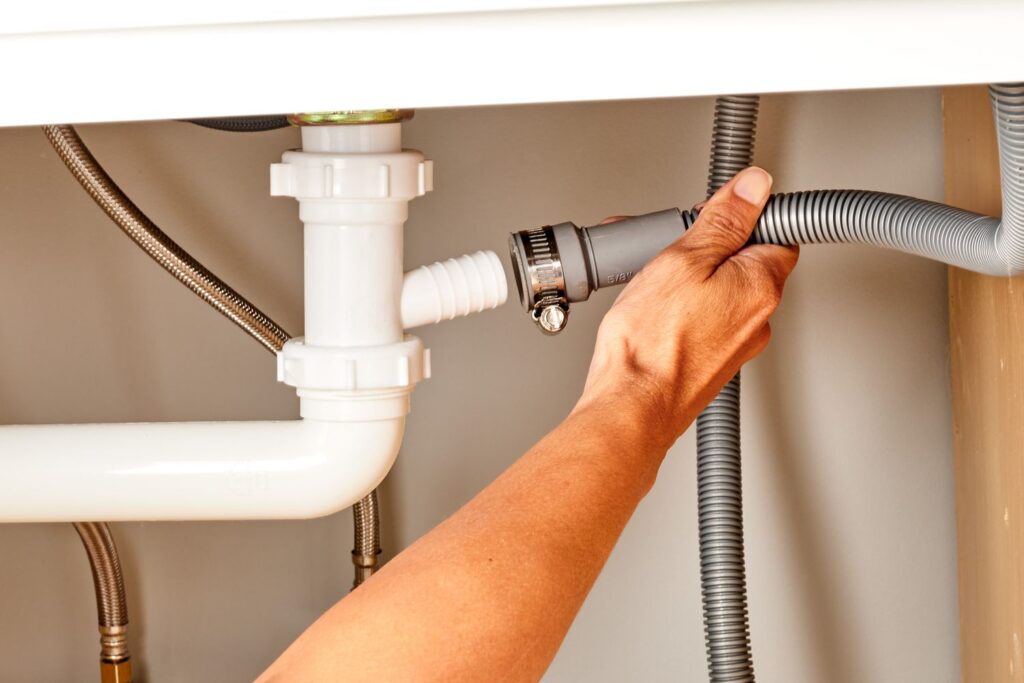

Waste water from washing machines and dishwashers must drain into the sewerage system – not the surface water or storm drain system used by gutters and rainwater downpipes. Connecting to the wrong drain is illegal and environmentally harmful. This article covers how to identify correct connections and what misconnection looks like.
Washing machines and dishwashers must be connected to the correct drainage system. Misconnection to the wrong drain is a significant and widespread problem that sends soapy waste water directly into rivers and streams rather than the sewerage system where it belongs.

It may help to read Part 1: Is your washing machine or dishwasher misconnected? first for context.
Connecting a Washing Machine or Dishwasher Correctly
Connection Diagram 1 – Correct and Incorrect Connections

Diagram showing correct and incorrect plumbing connections
In the diagram above, the house on the left has all plumbing connected correctly. Water from gutters (shown in blue) runs through the storm drain system and into rivers. Waste water from the toilet, bath, sinks, and appliances (shown in red) runs into the sewerage system.
The house on the right is misconnected – two appliances are draining into the same drain that the gutter water uses, marked with red crosses. This means detergent-laden waste water flows directly into the storm drain system and from there into rivers and streams.
Connection Diagram 2 – How Connections Should Be Made

How appliance drain connections should be made
Two Real-Life Examples of Misconnected Plumbing

Real examples of appliance waste pipes incorrectly connected to rainwater drain systems
The left side of the image shows an appliance or sink waste pipe emerging from an upstairs wall and connecting into the clean rainwater drain pipe for the guttering. The right side shows the same problem occurring downstairs – most likely a washing machine plumbed in using the nearest available drain connection, which happened to be the wrong one.
This type of misconnection is easy to make accidentally, particularly when plumbing in a washing machine in a location where the nearest drain access point leads to the surface water system rather than the foul water sewer.
Part 1: Is your washing machine or dishwasher misconnected? – How to install a washing machine
Frequently Asked Questions
Which drain should a washing machine connect to?
A washing machine must connect to the foul water sewer – the same drain that takes waste from toilets, baths, and sinks. It must not connect to the surface water or storm drain system, which carries rainwater from gutters and downpipes directly to rivers and streams without treatment.
How do I know if my washing machine is misconnected?
The most reliable way is to run the machine and check which external drain the water exits from. Water leaving via a drain connected to a downpipe or surface water gulley is a sign of misconnection. See: is your washing machine or dishwasher misconnected?
Is it illegal to misconnect a washing machine drain?
Yes. Connecting appliance waste water to the surface water drain system is illegal under UK water regulations and environmental law. Detergent-laden waste water discharged to rivers causes significant environmental harm. If a misconnection is identified, it should be corrected as soon as possible.
Ask the repair forum
Post the make, model and symptoms and get help from the Whitegoods Help community.
2 Comments
Grouped into 2 comment threads.
0 replies I've no experience of cess pits at all. However, I can find what looks like useful information searching Google for - connecting washing machine to cesspit (including this one https://inspectapedia.com/septic/Washing_Machine_Impact_on_Septic.php )
0 replies After reading the comments above I have a question. I have a situation were I am not connected to the sewer system instead I have a cess pit and soak away. I have read that it is not a good idea to run washing machine waste into these tanks. What is the solution a totally separate sealed tank ?
After reading the comments above I have a question. I have a situation were I am not connected to the sewer system instead I have a cess pit and soak away. I have read that it is not a good idea to run washing machine waste into these tanks. What is the solution a totally separate sealed tank ?
I’ve no experience of cess pits at all. However, I can find what looks like useful information searching Google for – connecting washing machine to cesspit (including this one https://inspectapedia.com/septic/Washing_Machine_Impact_on_Septic.php )