
Shock warning if repairing an appliance that’s turned off
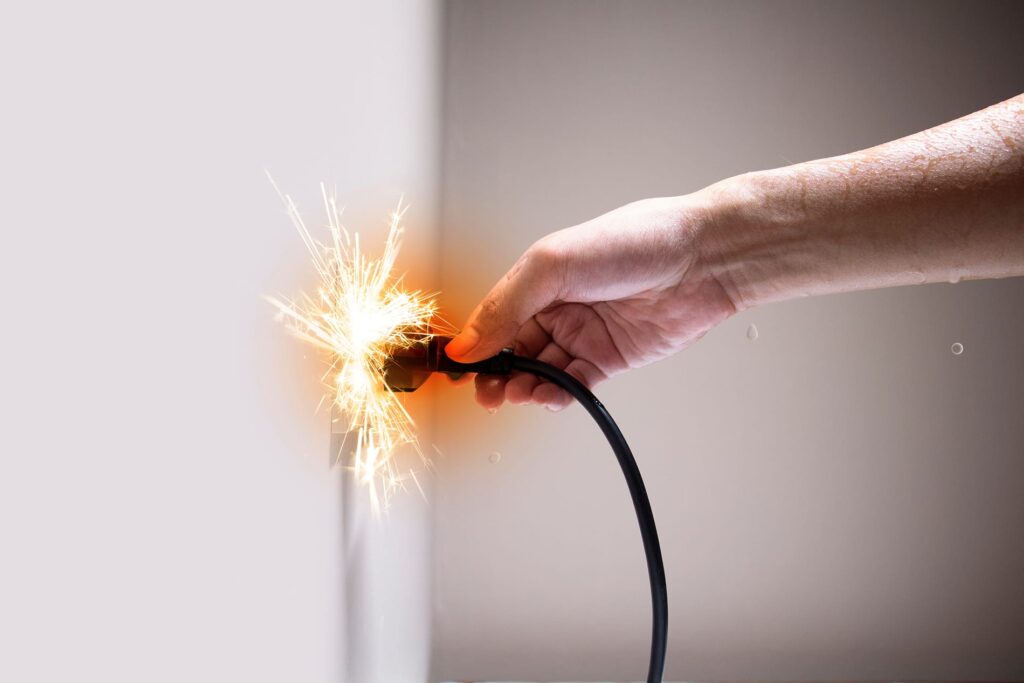

There are two situations where a washing machine can deliver an electric shock even when apparently safe: stored charge in capacitors after unplugging, and live wiring persisting despite the machine appearing off – due to switch faults, reverse polarity sockets, or neutral-side switching. Neither can be assumed not to apply. Wait 5 minutes after unplugging, verify disconnection with a working tester, and never trust an on/off switch as proof of safety.

Capacitors and suppressors inside washing machines can hold an electrical charge for several minutes after the appliance is unplugged. On some Hotpoint models, and potentially others, this charge can be sufficient to cause electrocution for up to 5 minutes after unplugging. Do not touch any internal component – particularly the PCB or capacitors – until the machine has been unplugged for at least 5 minutes.
Unplugging an appliance is the most important safety step in DIY repair – but it is not always sufficient on its own. Understanding why, and what else to check, is essential for anyone carrying out repair work on a washing machine or other large appliance.
Danger 1: Stored Charge in Capacitors and Suppressors
Washing machines contain capacitors and suppressors – components that handle and filter the mains electrical supply. Capacitors in particular can store an electrical charge and release it even after the appliance has been disconnected from the mains. Depending on the machine and the component, this charge can persist for several minutes after unplugging.
The capacitors inside a microwave oven can hold tens of thousands of volts – sufficient to be lethal – for extended periods after the appliance is unplugged. This charge does not discharge automatically. Never open the casing of a microwave oven under any circumstances unless you are a qualified engineer with the specific knowledge to safely discharge the capacitors before working inside.
 Safe practice for washing machines and large appliances
- Unplug the machine at the wall socket – not just switch it off
- Wait a minimum of 5 minutes before touching any internal component
- Do not touch the main PCB, capacitors, or suppressor during this waiting period
- Apply this 5-minute wait to all washing machines, not just Hotpoint models
Danger 2: Live Wiring Despite the Machine Appearing Off
Unplugging is essential – but there are circumstances where a machine can still carry live voltage even after being switched off, or where the wrong cable has been disconnected:

Reverse polarity sockets
An incorrectly wired wall socket with the live and neutral reversed can cause wiring inside the appliance to remain live even when the machine is switched off and appears completely dead. This is more common than most people expect, particularly in older properties. The machine appears off – all lights dead – but live voltage is still present internally.

Neutral-side switching
Not all appliances switch components by interrupting the live supply. Some switch via the neutral return instead. This means a heater, pump, or valve may have a permanent live feed connected to it even when the component is not running. The fact that a part is not operating does not prove there is no live feed present.

Replaced or rewired plugs
Appliance plugs are sometimes cut off and replaced to route cables through kitchen cupboards or worktops. An incorrectly wired replacement plug can create unexpected live conditions. Be particularly cautious if the appliance plug appears to have been replaced from the factory original.

Disconnecting the wrong cable
When a mains cable runs behind units, through holes in worktops, or out of sight, it is possible to unplug the wrong lead and believe the appliance is isolated when it is not. Never assume disconnection is confirmed unless the mains cable is clearly visible from the appliance all the way to the wall socket.
How to Verify Disconnection Reliably
A neon screwdriver or voltage tester can confirm whether a wire or terminal is live – but only if the tester itself is known to be working. A flat battery or faulty tester gives no indication and could falsely suggest safety where none exists.
-
Test the tester before relying on it. While power is confirmed to be present, touch the tester to a known live point and confirm it indicates live. This proves the tester is working.
-
Unplug the appliance and watch the tester indicator go out on the same point. Now you have confirmed both that the tester works and that power has been removed.
-
Recheck any wire or component you intend to touch before doing so. Do not assume power remains off – if the machine has been moved, plugged back in temporarily for a test, or if there is any doubt, re-verify.
Do not rely on someone else to unplug or isolate an appliance before you work on it. Cases where the wrong socket was unplugged, or where an appliance was re-plugged in after work started, are well documented. Unless the mains cable is clearly visible in its entirety from machine to wall socket, verify disconnection yourself every time before touching any component.
Not Confident? Book a Qualified Engineer
Electrical diagnosis and component replacement on large appliances carries real risks. A qualified engineer has the equipment and training to work safely.
Related Safety Guides
 DIY Appliance Repair Safety Tips
Ten essential safety rules for anyone carrying out DIY repairs on washing machines and other appliances.
8 Things You Should Never Do When Repairing a Washing MachineCommon DIY repair mistakes that cause injury, further damage, or introduce new faults.
 Electric Shocks or Tingles From a Washing Machine
Why a tingle when touching a machine indicates a broken earth – and what must be done immediately.
Washing Machine Tripping the ElectricsCauses of RCD trips and blown fuses – and why specialist equipment is needed for proper diagnosis.
Frequently Asked Questions
Can I get an electric shock from a washing machine I have just unplugged?
Yes. Capacitors and suppressors inside the machine can retain a charge for several minutes after unplugging. On some Hotpoint models and potentially others, this charge can persist for up to 5 minutes. Do not touch any internal component – especially the PCB or capacitors – until the machine has been unplugged for at least 5 minutes.
Is a washing machine safe to work on once it is switched off?
Not if only switched off – the machine must be unplugged. Switching off alone does not guarantee safety: some appliances have neutral-side switching that leaves a live feed on certain components even when they are not running. A faulty on/off switch, a reverse polarity wall socket, or an incorrectly wired replacement plug can all create live conditions in an apparently off machine. Always unplug and verify disconnection.
How do I know a wire is safe to touch?
Use a voltage tester – but first confirm the tester is working by testing it against a known live point before disconnecting. Then unplug the machine and watch the indicator go out on the same point. Only then can you be confident the tester is working and the power is off. Re-verify before touching any wire or terminal during the repair.
Why are microwave capacitors especially dangerous?
Microwave ovens contain capacitors that can hold tens of thousands of volts – a level that can be lethal – for an extended period after unplugging. These capacitors do not discharge automatically and cannot be safely discharged without specialist knowledge and equipment. The inside of a microwave casing must never be opened by anyone who is not a qualified engineer with specific microwave repair training.
Ask the repair forum
Post the make, model and symptoms and get help from the Whitegoods Help community.
1 Comment
Grouped into 1 comment thread.
Thank you it was really knowledgeable and helpful