
Can I install a washing machine in a bathroom?
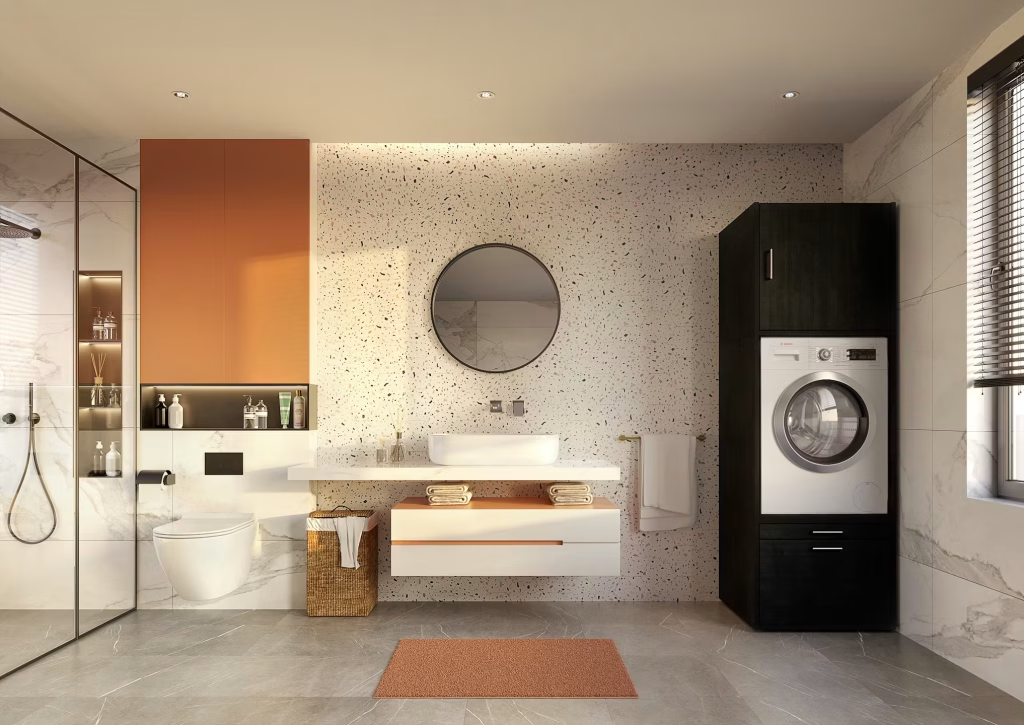

It is permitted to install a washing machine in a bathroom in the UK, but strict electrical regulations apply. The machine must be positioned so that someone in the bath or shower cannot reach it, the electrical connection must be made outside the bathroom or from a suitably protected source, and the circuit must be RCD protected. Always consult current regulations before proceeding – the rules are specific and must be followed exactly.

Installing a washing machine in a bathroom involves work in a special location under Part P of the Building Regulations. This work must either be carried out by a registered electrician or notified to your local building control authority. Do not attempt this installation without checking the current requirements. Regulations may have changed since this article was written – always verify with a qualified electrician or your local authority.
A bathroom is far from an ideal location for a washing machine – but it is a common solution in smaller homes, flats, and properties without a separate utility room. Understanding the rules before you proceed can prevent both a dangerous installation and a costly building regulations problem.
Why a Bathroom Is Not Ideal
There are two practical concerns with a bathroom installation beyond the electrical regulations.
The first is flood risk. A washing machine installed upstairs in a bathroom that develops a leak or floods – whether from a hose, a pump fault, or an overflow – can cause serious damage to the ceiling and floor structure below. The risk is not eliminated by a careful installation, only managed. An aqua-stop inlet hose reduces the risk of a supply-side flood. See our guide on aqua-stop hoses for more detail.
The second is the bathroom environment itself. Steam and condensation are damaging to the electronic control systems inside modern washing machines. A bathroom that regularly becomes very humid will shorten the life of the machine’s PCB and other sensitive components over time.
What the Electrical Regulations Require
Electrical installations in rooms containing a bath or shower are governed by BS 7671 (the IET Wiring Regulations), specifically Section 701 – Locations Containing a Bath or Shower. These regulations define restricted zones around the bath and shower within which certain equipment cannot be installed or connected.
The regulations are technical and detailed. The summary below covers the key points relevant to washing machine installation, but it is not a substitute for consulting the current regulations or a qualified electrician before proceeding. Regulations are updated periodically and local requirements may vary.
The Key Requirements for Bathroom Washing Machine Installation
- Zone restrictions: The washing machine must be positioned outside Zone 1, which extends 0.6 metres horizontally from the edge of the bath or shower tray. No standard socket outlet can be installed within zones 0 or 1.
- Reachability: The critical test is that a person using the bath or shower must not be able to reach the washing machine. If they can touch it while in contact with water, the installation does not comply.
- Socket location: The plug and socket connection must be located outside the bathroom – typically in an adjacent hallway or airing cupboard – with the cable running through the wall. Standard 13A socket outlets cannot be installed inside a bathroom.
- RCD protection: The circuit supplying the washing machine must be protected by a Residual Current Device (RCD). This is a requirement for all socket circuits in bathrooms and most domestic circuits under current regulations.
- Notifiable work: This installation falls under Part P of the Building Regulations in England and Wales. It must be carried out by a registered competent person or notified to building control.

The requirements outlined above are based on the IET Wiring Regulations 18th Edition (BS 7671:2018 and subsequent amendments). Regulations are updated periodically. Always consult a qualified electrician or your local building control authority to confirm current requirements. You can find your local council at gov.uk/find-local-council.
Do You Need an Electrician?
Yes, in most cases. Installing a socket circuit in a bathroom, or altering an existing circuit to supply a washing machine in a bathroom, is notifiable electrical work under Part P of the Building Regulations. This means it must be carried out by a registered electrician (such as one registered with NICEIC, NAPIT, or a similar scheme) or notified to your local building control authority before the work is done.
Using a registered electrician is the simpler route – they can self-certify the work and issue the necessary certificate without a separate building control application.
Alternatives Worth Considering
Before committing to a bathroom installation, it is worth considering whether there is a more suitable location available. A landing cupboard, a hallway, or even a garage may be workable alternatives that avoid the regulatory complexity and environmental risks of a bathroom installation.
See our guides on installing a washing machine in a garage and installing in a basement for guidance on other non-standard locations.
Need Help With Washing Machine Installation?
For a straightforward installation in a standard location, our guides cover everything from connection to first use.
Related Guides
 Can You Put a Washing Machine in a Garage?
The practical and technical considerations of a garage installation, including cold weather, damp, and plumbing access.
 Installing in a Basement
Drainage requirements and pump solutions for machines installed below the main drain level.
 Aqua-Stop Hoses
How flood-protection inlet hoses work and whether they are worth fitting – especially relevant for upstairs installations.
 How to Connect a Washing Machine Properly
A complete guide to connecting inlet and drain hoses correctly, including standpipe height requirements.
Frequently Asked Questions
Is it legal to have a washing machine in a bathroom in the UK?
Yes, but only if the installation complies with BS 7671 (the IET Wiring Regulations) and Part P of the Building Regulations. The machine must be positioned outside the restricted zone around the bath or shower, cannot be reachable by someone using the bath, and the electrical connection must be made from outside the bathroom on an RCD-protected circuit. The work must be carried out by a registered electrician or notified to building control.
Can I put a socket in a bathroom for a washing machine?
Not a standard 13A socket outlet. Standard sockets cannot be installed within the restricted zones around a bath or shower. The washing machine connection must be made from a socket positioned outside the bathroom – typically in an adjacent hallway or airing cupboard – with the cable running through the wall. A qualified electrician can advise on the correct configuration for your specific layout.
Does a bathroom washing machine need to be on an RCD circuit?
Yes. Any circuit supplying a bathroom location must be RCD protected under current wiring regulations. In modern consumer units, most circuits are already RCD protected – but this should be confirmed by a qualified electrician before the installation proceeds.
How far from the bath does a washing machine need to be?
The machine must be positioned outside Zone 1, which extends 0.6 metres horizontally from the edge of the bath or shower tray. The practical test is that a person using the bath or shower must not be able to reach the machine while wet. If there is any doubt about the distance, the installation does not comply.
What are the risks of having a washing machine in an upstairs bathroom?
The main risks are flood damage if the machine leaks or overflows – water from an upstairs bathroom can cause significant structural damage to floors and ceilings below – and accelerated wear on the machine’s electronics from steam and condensation. An aqua-stop inlet hose reduces supply-side flood risk, but does not eliminate all failure modes.
Ask the repair forum
Post the make, model and symptoms and get help from the Whitegoods Help community.
15 Comments
Grouped into 7 comment threads.
1 reply The thing about not siting a washing machine in a bathroom because of the possibility of it leaking is in most cases a red herring/irrelevent. Not all bathrooms are upstairs and quite how you deal with flats over multiple floors apart from forcing everyone to use a communal wash house on thre ground floor I don’t know. My washing machine & didhwasher were sited directly above the kitchen now bedroom of my downstairs neighbour. I’m with Barbara on this, the bathroom is a great place to site a washing machine, provided the distances from the bath/shower are possible. Perhaps even put it in a proper cupboard (small room?) within the bathroom.
1 reply Jumping on this thread sorry, as i have the idea to make space in my kitchen by moving the washing machine into the bathroom plus most the time my laundry is laying around the kitchen and living room when i actual change in bedroom and bathroom so ideal place to chuck your washing straight in and then straight out (i don't line dry it's an all in one tumble dryer) currently i have a 100cm kitchen cupboard under my sink with a kitchen worktop (bigger than your standard bathroom furniture) from the bath you could stretch over and touch these doors i have a shower in the bath with a shower screen running half the length of the bath, my idea was to replace the 100cm cupboard with a 50cm and put the washing machine where the other half of the cupboard was, it's an integrated machine so effectively it's going to be like being put in a cupboard, and i was thinking an IP66 rcd socket at the bottom of the remaining 50cm cupboard or behind the washing machine, house has recently been rewired and i have rcd protection at the dis board... The socket could be picked up from the existing socket in the bedroom on the otherside of the wall directly behind where it would be mounted. Over engineered the bathroom extract fan to so it never gets damp or fills up with steam. In the UK this is. Thoughts on this?
Jumping on this thread sorry, as i have the idea to make space in my kitchen by moving the washing machine into the bathroom plus most the time my laundry is laying around the kitchen and living room when i actual change in bedroom and bathroom so ideal place to chuck your washing straight in and then straight out (i don’t line dry it’s an all in one tumble dryer) currently i have a 100cm kitchen cupboard under my sink with a kitchen worktop (bigger than your standard bathroom furniture) from the bath you could stretch over and touch these doors i have a shower in the bath with a shower screen running half the length of the bath, my idea was to replace the 100cm cupboard with a 50cm and put the washing machine where the other half of the cupboard was, it’s an integrated machine so effectively it’s going to be like being put in a cupboard, and i was thinking an IP66 rcd socket at the bottom of the remaining 50cm cupboard or behind the washing machine, house has recently been rewired and i have rcd protection at the dis board…
The socket could be picked up from the existing socket in the bedroom on the otherside of the wall directly behind where it would be mounted.
Over engineered the bathroom extract fan to so it never gets damp or fills up with steam.
In the UK this is.
Thoughts on this?
Likely replying to Eddie
Hello Eddie. To be honest I’ve put all of the knowledge I have about this in my article. One of the main regulations is that you should not be able to touch the washing machine from the bath or shower. Of course it’s easy to be confident that you would never be so silly so it doesn’t matter but of course these are the regulations. It isn’t difficult to imagine a scenario where someone could be in the shower and the washing machine suddenly starts to flood, or jump around violently due to a problem and a person in the shower at the time reaching over to try and turn it off. At this point, if something had gone wrong with the earthing on the washing machine someone could be electrocuted.
The socket for the washing machine has to be outside of the bathroom too. It’s easy to assume that if you have RCD protection nothing can happen but I’ve just done a quick search on the question, “is it impossible to get an electric shock with RCD installed?” And the first result was from a consumer safety research site and it says, ” in some circumstances even with RCD protection it is possible to receive an electric shock which may present serious risk of injury or death”.
1 reply We have a washing machine and a tumble dryer in our toilet/shower room, at the moment both are hardwired, is this necessary to get an electric test certificate ? It would make life so much easier if they were plug in. We are in England
We have a washing machine and a tumble dryer in our toilet/shower room, at the moment both are hardwired, is this necessary to get an electric test certificate ?
It would make life so much easier if they were plug in.
We are in England
Likely replying to Ken
Hello Ken. As far as I’m aware the main rules are that they should be plugged in outside the room and you should not be able to touch an appliance from the shower. They should also be protected by an RCD, which if a modern fuse board that trips and can be reset is fitted in the house they should be.
1 reply Guys...everywhere in the world but UK baths have sockets and white goods...in UK baths have extensions sockets...far more dangerous in my opinion...deaths for electrocution are incredibly rare...never heard of anybody...my personal opinion? Align regulation to rest of Europe and allow sockets in bathrooms.
Guys…everywhere in the world but UK baths have sockets and white goods…in UK baths have extensions sockets…far more dangerous in my opinion…deaths for electrocution are incredibly rare…never heard of anybody…my personal opinion? Align regulation to rest of Europe and allow sockets in bathrooms.
Likely replying to De
Hello De. I’m not 100% sure but in the US (at least) the voltage is 110 v compared to our 230 v. There might be more chance of electrocution with 230 v. Also I wonder if RCD boards are standard in some other countries whereas they aren’t fitted in millions of UK houses. But to be honest, a bathroom is just not a good place for a washing machine. I’m sure some people may have no other space, but in the UK it is highly unusual for there to be even enough room for a washing machine.
1 reply Here in Argentina there is a socket above the sink in the bano,on the adjacent wall as the sink is in a corner.Thus allowing you to plug in your hair dryer etc while you wash one hand and dry hair at the same time.Its a new build apartment.I find it a bit odd,not to say dangerous,as I am from England where things are over regulated to the point of manic.
Here in Argentina there is a socket above the sink in the bano,on the adjacent wall as the sink is in a corner.Thus allowing you to plug in your hair dryer etc while you wash one hand and dry hair at the same time.Its a new build apartment.I find it a bit odd,not to say dangerous,as I am from England where things are over regulated to the point of manic.
Likely replying to dani ellis
Hello Dani. Yes that does sound unusual. I’ve just checked and the mains voltage in Argentina is 220 V which is very similar to England. In England you can only really plug shavers in at the bathroom. However, you could plug any appliance in if you fitted it with the plug that goes into the special bathroom socket. If your bathroom sockets are only meant for shavers then they should be a different socket to the ones in the rest of the house like they are in the UK.
1 reply Australia & NZ standards permit laundry equipment in bathroom. My home in Sydney has both a washer & drier located immediately next to my bath & shower, which are seperated by a glass shower screen. The power points are located high on the wall behind the washer so they are difficult to reach from the bath, but nowhere near 3 meters away. The units are simply plugged in to the power points and not wired in. Never heard of anyone being electrocuted with this setup down under.
Australia & NZ standards permit laundry equipment in bathroom. My home in Sydney has both a washer & drier located immediately next to my bath & shower, which are seperated by a glass shower screen. The power points are located high on the wall behind the washer so they are difficult to reach from the bath, but nowhere near 3 meters away. The units are simply plugged in to the power points and not wired in. Never heard of anyone being electrocuted with this setup down under.
2 replies A standard 13 amp socket can be installed in a bathroom, if certain criteria is met. 1. the socket must be 3mtrs horizontally from the edge of the bath or shower tray. 2. it must be 30 milliamp RCD protected. Personally I would not fix a washing machine in the bathroom, it is just not worth the risk. I am an electrician!
A standard 13 amp socket can be installed in a bathroom, if certain criteria is met.
1. the socket must be 3mtrs horizontally from the edge of the bath or shower tray.
2. it must be 30 milliamp RCD protected.
Personally I would not fix a washing machine in the bathroom, it is just not worth the risk.
I am an electrician!
I can’t uderstand how in the kitchen next or even under the sink is safety but in the bathroom not . Whole Europe have IT in the bathroom and no problem at all Just in GB is . All germs , threadworms are in dirty laundry and People in this country still don’t unerstand why the rest of Europe have washing machines in bathrooms instead of kitchen .
Hello Barbara. The issue is that in a bathroom, people are often naked, with nothing on their feet, covered in water, and sat or stood in a bath. Anyone in such a position touching a washing machine that is no longer earthed and has developed an insulation fault could be instantly killed. This is why the regulations state that you cannot have a washing machine in the bathroom if anyone stood in the bath or shower is able to touch it.
If a bathroom is large, it’s possible that a washing machine could be installed far enough away to be of no threat. However, if a washing machine develops a bad leak and floods, in a kitchen, water may go down under the floorboards into the footing space. But in a bathroom, water could run down into the room below, causing damage to the ceiling etc.
But having a washing machine upstairs (ideally in a separate utility room) makes 100% sense to me. I visited a friend once in Canada, and their washing machine was upstairs. Not in a bathroom, though. I remember thinking wow, the dirty washing is always upstairs, so of course having a washing machine upstairs is a lot more convenient. I think in the UK though, the problem is that historically our houses are generally quite small, and in the case of the ubiquitous terraced houses extremely small. This is why we mostly have washing machines in the kitchen. There is no room for a separate utility room, or to put one upstairs.
I live in a house that was built in the 1980s and is a detached house, but our kitchen is so small that the only appliances that could be fitted in is a fridge and dishwasher. So our washing machine has to live in the garage, which is not ideal at all.
The thing about not siting a washing machine in a bathroom because of the possibility of it leaking is in most cases a red herring/irrelevent. Not all bathrooms are upstairs and quite how you deal with flats over multiple floors apart from forcing everyone to use a communal wash house on thre ground floor I don’t know. My washing machine & didhwasher were sited directly above the kitchen now bedroom of my downstairs neighbour. I’m with Barbara on this, the bathroom is a great place to site a washing machine, provided the distances from the bath/shower are possible. Perhaps even put it in a proper cupboard (small room?) within the bathroom.
Hello R Reid. Fair points. The flood risk really only applies to upstairs bathrooms above habitable rooms, and it’s not the main reason the regulations exist. The core issue is electrical safety: keeping the machine outside reach of anyone in the bath or shower, placing the socket outside the bathroom, and ensuring RCD protection.
A cupboard within the bathroom is actually a sensible approach and meets the spirit of the regulations well, provided the electrics are run correctly. It also helps shield the machine’s electronics from steam and humidity, which is the other issue worth being aware of over the longer term.