
Biological detergents damage woollens & silks (cause holes)
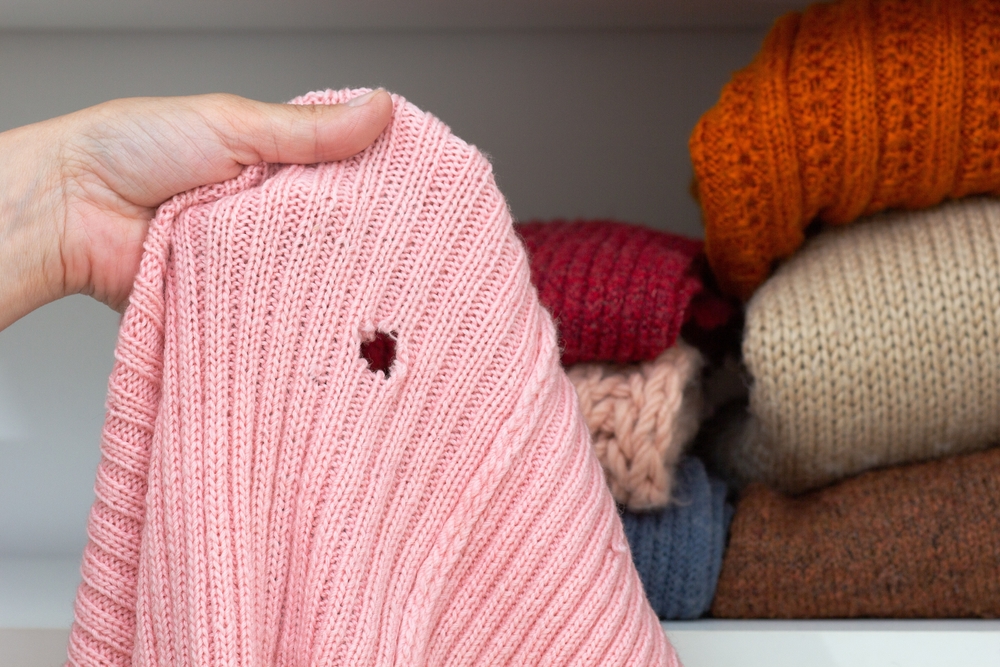

Most biological detergents include a warning against use on wool and silk – but it is often in small print. The biological enzymes that make these detergents effective at removing protein-based stains (egg, blood, dairy) work on the same chemical basis as wool and silk fibres. Use a dedicated delicate or wool detergent for these fabrics and for any garment with wool or silk content.

Biological detergents contain enzymes specifically designed to break down proteins. Wool and silk are protein-based fibres. The enzymes cannot distinguish between a food stain and the fabric itself, and will gradually attack and degrade wool and silk garments with repeated washing. The damage appears as small random holes, typically after several washes rather than immediately.
How Biological Detergent Damages Wool and Silk
“Biological detergents contain certain enzymes that are there to remove proteins from a garment. This is how they are effective at cleaning things such as egg from clothing. However, silk and wool are also made up of proteins. Biological detergent cannot differentiate between a bit of egg stain and a bit of silk so the enzymes will eat away at it. This results in very small, randomly placed holes on a garment. They won’t appear after the first wash, but tend to appear after several washes once the enzyme has gradually eaten the fabric away.”
Miele UK – explanation of biological enzyme action on protein fibres
This is the key mechanism: proteolytic enzymes (protease) in biological detergents break down protein chains. Food stains from egg, blood, and dairy are protein-based – which is why biological detergents excel at removing them. Wool and silk are also protein-based fibres (keratin and fibroin respectively). The enzyme does not distinguish between stain protein and fibre protein.
What Damage Looks Like – and Why It’s Often Attributed to the Machine
The damage does not appear immediately. After the first wash, the fabric may look entirely normal. After several washes, small random holes begin to appear – typically at seams first on silk, and across the fabric on wool. The delayed appearance means the connection to detergent is not always made. Many people blame the washing machine.
Before investigating a washing machine fault for small holes in laundry, consider whether biological detergent has been used on wool or silk content garments. This is a very common cause. See our guide on holes appearing in laundry after washing for the full range of causes.
Fabrics Affected

Wool
All wool garments and items with any wool content are vulnerable to biological enzyme damage. This includes merino wool, lambswool, cashmere, and blended fabrics where wool makes up part of the fibre content. The damage causes weakening, distortion, and eventually holes in the fabric.

Silk
Silk is particularly vulnerable. Holes typically appear first at the seams where fabric is under tension, then across the garment surface. Silk is a delicate fibre with no tolerance for proteolytic enzyme exposure. Even a single wash with biological detergent begins the degradation process, though visible damage may take several washes to appear.

Blended fabrics with wool or silk content
Garments labelled as wool or silk blends – even those where the natural fibre is a minority component – carry the same risk. Check care labels for any wool or silk content before washing with biological detergent.
What to Use Instead
A dedicated delicate or wool-specific detergent should be used for wool, silk, and any garment with wool or silk content. These are formulated without proteolytic enzymes. Most are labelled specifically as suitable for wool, silk, or fine fabrics. They are available at most supermarkets.
-

Always check the care label before washing. The care label indicates the fabric content and the recommended washing method. Any garment with wool or silk content should not be washed with biological detergent. -
Keep a separate delicate detergent for wool, silk, and fine fabrics. Most households use one biological detergent for all washing. Keeping a small bottle of delicate-specific detergent for the occasional wool or silk item prevents accidental damage. -
Check the label of the detergent itself. Biological detergents typically carry a warning against use on wool and silk – but it is often in small print. Look for it in the “fabric care” or “what to use it for” sections of the packaging. Some well-known brands market themselves under names that do not immediately suggest “biological” – always check the product labelling.
Related Guides
Related Guides
 Which Type of Detergent Is Best?
Biological vs non-biological, powder vs liquid, and tablet detergents compared on cleaning performance.
 Biological Detergent and Skin Irritation
What research shows about biological detergents and eczema – the enzymes are not the culprit for skin reactions.
 Holes in Clothes After Washing
All causes of holes and tears appearing in laundry – detergent, machine faults, and other causes.
 Pilling and Bobbling on Clothes
A related type of fabric damage – friction-based fibre breakdown that creates bobbles on fabric surfaces.
Frequently Asked Questions
Does biological detergent damage wool?
Yes. Biological detergents contain proteolytic enzymes (protease) that break down protein-based substances. Wool is a protein-based fibre (keratin). The enzymes attack the wool fibre in the same way they attack protein-based food stains, causing the wool to weaken, distort, and eventually develop holes. The damage is cumulative and typically becomes visible after several washes rather than immediately.
Does biological detergent damage silk?
Yes. Silk is also a protein-based fibre (fibroin). Biological enzymes attack silk in the same way as wool. Silk is particularly vulnerable – holes tend to appear first at the seams where the fabric is under tension, then across the garment surface. Even one wash with biological detergent begins the degradation, though visible holes typically appear after repeated washing.
How can I tell if my detergent is biological?
Check the packaging for the words “biological” or “bio”. Some brands do not prominently advertise this on the front of the packaging – look for it in the ingredients description or the fabric care instructions section. Most biological detergents also carry a warning, in small print, against use on wool and silk. If the warning is present, the detergent is biological. If in doubt, use a non-biological or delicate-specific detergent for any wool or silk items.
7 Comments
Grouped into 5 comment threads.
0 replies I found small holes in my wool jumpers after very little wear and washing,however my biological detergent is clearly the reason for this damage! I spoke to two manufacturers where one said they have no product for wool/silk but the other , Persil, has a silk/wool liquid washer so I hope no more holes; thanks for your info.
0 replies I've been washing my clothes for the past few years with biological soap powder and hot water (usually 50 degrees C) but have found that my cotton clothes are falling apart. The cuffs on my shirs and pyjamas have come away from the sleeves and the fabric is so weak, that my clothes rip very easily. I never had this problem years ago when my wife or mother washed my clothes. They apparently used non bio powders. So, after reading this article on silk and wool problems, it got me thinking. I looked up cotton and see it DOES CONSIST OF PROTEINS, AS WELL! So, I feel we should all be suing the manufacturers for ruining our clothes!!!! Here is the cotton info: "Cotton (Gossypium hirsutum L.) mRNA (H6) is expressed predominantly in fiber cells and is present during early primary cell wall formation. However, H6 protein is found to accumulate during later stages, when active secondary cell wall formation occurs, indicating possible regulation at the translational level and function in the secondary cell wall assembly. The nucleotide-derived amino acid sequence of pCK-H6 is proline rich (35 mol %) with a calculated molecular mass of 21 kD. Cotton protein H6 contains a repetitive pentameric motif (17) of alanine (serine)-threonine (serine)-proline-proline-proline. Its amino acid composition and solubility indicate that it may belong to the group of arabinogalactan proteins. Both sodium dodecyl sulfate-polyacrylamide gel electrophoresis (55 kD) and size-exclusion chromatography (77-83 kD) overestimated the size of in vitro synthesized H6 protein compared to the molecular mass derived from the nucleotide sequence (21 kD). The conformation of the molecule determined by its unusual primary structure may be the cause of its anomalous mobility. The presence of a proline-rich, arabinogalactan-type protein in cotton fiber raises the interesting possibility that it may be an integral part of the plasmalemma taking part in the development and architecture of the secondary wall of cotton fiber."
I’ve been washing my clothes for the past few years with biological soap powder and hot water (usually 50 degrees C) but have found that my cotton clothes are falling apart. The cuffs on my shirs and pyjamas have come away from the sleeves and the fabric is so weak, that my clothes rip very easily. I never had this problem years ago when my wife or mother washed my clothes. They apparently used non bio powders. So, after reading this article on silk and wool problems, it got me thinking. I looked up cotton and see it DOES CONSIST OF PROTEINS, AS WELL!
So, I feel we should all be suing the manufacturers for ruining our clothes!!!!
Here is the cotton info:
“Cotton (Gossypium hirsutum L.) mRNA (H6) is expressed predominantly in fiber cells and is present during early primary cell wall formation. However, H6 protein is found to accumulate during later stages, when active secondary cell wall formation occurs, indicating possible regulation at the translational level and function in the secondary cell wall assembly. The nucleotide-derived amino acid sequence of pCK-H6 is proline rich (35 mol %) with a calculated molecular mass of 21 kD. Cotton protein H6 contains a repetitive pentameric motif (17) of alanine (serine)-threonine (serine)-proline-proline-proline. Its amino acid composition and solubility indicate that it may belong to the group of arabinogalactan proteins. Both sodium dodecyl sulfate-polyacrylamide gel electrophoresis (55 kD) and size-exclusion chromatography (77-83 kD) overestimated the size of in vitro synthesized H6 protein compared to the molecular mass derived from the nucleotide sequence (21 kD). The conformation of the molecule determined by its unusual primary structure may be the cause of its anomalous mobility. The presence of a proline-rich, arabinogalactan-type protein in cotton fiber raises the interesting possibility that it may be an integral part of the plasmalemma taking part in the development and architecture of the secondary wall of cotton fiber.”
0 replies Great information. I have been getting small holes in my natural fabrics, usually soft fabrics of cotton, model, and rayon. I thought it may have been bugs, but I check my clothes before they go in and are fine, but come out with small holes. I use only biological products, so am beginning to think they do more damage than just to wool and silk. The enzyme information makes a lot of sense. Ugh, I am just sick with the many shirts I have lost. I have a few pairs of jeans that have holes, but not many. I have a front end load machine, so maybe the biological detergent is to strong. I am afraid to do any more experimenting. Thank you so much for the information, I will be changing my products. Dori D.
Great information. I have been getting small holes in my natural fabrics, usually soft fabrics of cotton, model, and rayon. I thought it may have been bugs, but I check my clothes before they go in and are fine, but come out with small holes. I use only biological products, so am beginning to think they do more damage than just to wool and silk. The enzyme information makes a lot of sense. Ugh, I am just sick with the many shirts I have lost. I have a few pairs of jeans that have holes, but not many.
I have a front end load machine, so maybe the biological detergent is to strong. I am afraid to do any more experimenting.
Thank you so much for the information, I will be changing my products.
Dori D.
0 replies No Eileen. It sounds quite a bizarre claim. Would need more information to make an informed comment.
No Eileen. It sounds quite a bizarre claim. Would need more information to make an informed comment.
0 replies do you know that you do not need to wash wool at all. It cleans itself, by hanging into fresh air.
do you know that you do not need to wash wool at all. It cleans itself, by hanging into fresh air.
I found small holes in my wool jumpers after very little wear and washing,however my biological detergent is clearly the reason for this damage! I spoke to two manufacturers where one said they have no product for wool/silk but the other , Persil, has a silk/wool liquid washer so I hope no more holes; thanks for your info.