
Appliance Error Codes
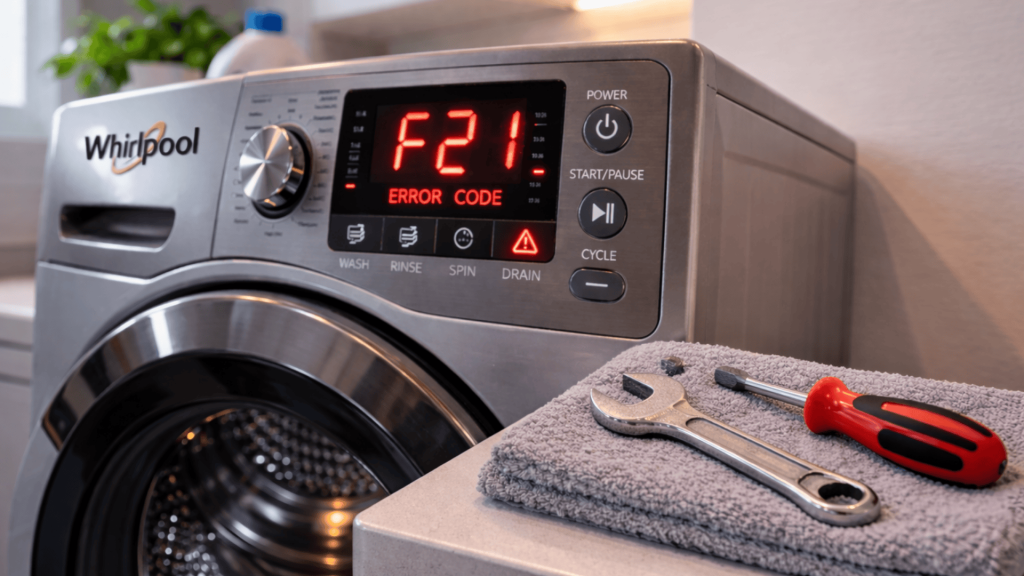

Appliance error codes tell you which part of the machine’s self-diagnostic system detected a problem, not necessarily which component has failed. The same code can have several causes, some simple and some expensive. Some codes are deliberately vague. Some are actively misleading. And some are completely wrong. Always treat an error code as the beginning of a diagnosis, never the end of one.
Appliance Error Codes: What You Need to Know Before Acting on Them
An error code on your appliance display is a starting point for diagnosis, not a verdict. Before spending money on parts or booking an engineer based on an error code alone, there are four things every appliance owner needs to understand. This guide covers all of them, with real engineering examples of when error codes help, when they mislead, and when they are simply wrong.
What Appliance Error Codes Actually Are
Error codes are a relatively recent development in domestic appliances. Until the 1990s, most washing machines, dishwashers, and ovens had no self-diagnostic capability at all. When something went wrong, diagnosis relied entirely on symptoms and engineer experience. Error codes changed that by giving the appliance’s control board a way to report when a sensor reading or component response fell outside its expected parameters.
In theory, this should make diagnosis faster and more accurate. In practice, the picture is considerably more complicated, for four reasons that every appliance owner should understand before acting on any error code.
The 4 Things You Need to Know About Appliance Error Codes
1. Error codes are often kept secret
The first and most fundamental problem with appliance error codes is that most of them are not published. Manufacturers deliberately restrict access to the full list of error code meanings, providing only a handful of basic codes in the instruction manual, typically covering things the user can check themselves such as a blocked filter or a closed tap.
The complete diagnostic codes are often withheld even from independent repair engineers, not just the public. Some manufacturers provide them only to their own engineers or to authorised service companies. The legality of withholding this information from independent engineers has been debated in the context of Right to Repair legislation, but the practice remains widespread. Read our guide: right to repair and what it means for consumers.
The practical implication: if you cannot find what your error code means, it may not be because the information does not exist. It may be because the manufacturer has chosen not to make it available.
2. Even published error code explanations are often unhelpful
When an error code explanation is available, it frequently lists multiple possible causes covering components at very different price points and difficulty levels. Consider this real example from a Zanussi washing machine service manual:
Incongruency between level of electronic pressure switch and level of electronic pressure switch 2 (duration of fault at least 60 seconds)
Possible causes: 1. Hydraulic circuit of pressure switches. 2. Electronic pressure switch. 3. Pressure switch. 4. Wiring. 5. Main PCB.
This explanation would be of limited use to most people. It lists five possible causes, ranging from a poor wiring connection that costs nothing to fix, all the way to the main PCB which can cost well over £100 and carries no guarantee that it is the actual fault. An engineer can sometimes test with a spare PCB, removing and replacing it if it does not cure the fault. A homeowner cannot.
Codes designed for experienced engineers often assume diagnostic skills and test equipment that the average person does not have. They are tools for professionals, not consumer guides.
3. Precise error code explanations can still be wrong
Some error codes are more specific, directly implicating a named component. The natural instinct is to replace that component. This does not always work. On more than one occasion, experienced engineers have replaced the part named in an error code explanation only to find the fault remained. And on the other side, faults have been found in components that the error code gave no indication of.
An error code that says “motor not running” or “not draining” is essentially describing a symptom you can already observe. It does not tell you why the motor is not running or why the machine is not draining. It contains no diagnostics. The code has identified that something is wrong without contributing anything useful to identifying what caused it.
Compare this with a more useful code explanation, again from Zanussi:
 Zanussi error code E11
Problems with water fill in wash phase (maximum 10 minutes for each fill phase).
Possible causes: 1. Tap closed. 2. Mains water pressure insufficient. 3. Solenoid valve. 4. Hydraulic circuit of pressure switches. 5. Pressure switches. 6. Wiring. 7. Main PCB.
This is more useful because two of the seven possible causes are things any owner can check in seconds without tools or technical knowledge. A closed tap or insufficient water pressure accounts for a significant proportion of fill fault reports in practice. Check these first before assuming any component has failed.
4. Some error codes are completely wrong
This is the most counterintuitive point, and arguably the most important. A poor earth connection, either in the appliance itself or at the wall socket, can cause certain washing machines to generate error codes that bear no relation to the actual fault.
A documented example from a Whitegoods Help engineer: two different brands of washing machine, installed in the same location, produced two entirely different error codes. One flagged a motor fault. The other flagged a door lock fault. Both owners investigated those stated faults. Neither found anything wrong. It eventually emerged that the fault was with the wall socket itself, not with either machine. Both error codes were wrong, generated by an electrical supply problem that the machines’ diagnostic systems misread as component failures.
This is not an isolated case. Voltage irregularities, poor earth connections, and supply problems can all generate false error codes on modern electronically controlled appliances. Before investing in any repair based on an error code, it is worth checking the supply circuit if no component fault can be found. Read the full analysis: appliance error codes, friend or foe?
How to Use an Error Code Effectively
Given everything above, an error code is best used as a filter rather than a diagnosis. It tells you which system the machine’s control board has identified as behaving unexpectedly. Used correctly, this significantly narrows the field of investigation. Used incorrectly, it sends people straight to the most expensive possible explanation.
-
Write down the code exactly as displayed. A misread code directs the entire investigation in the wrong direction. If the machine is showing a flashing light pattern rather than a digital code, count the flashes carefully and note which lights are involved. Take a photograph if that is easier and more reliable.
-
Check the instruction manual first. Most manufacturers list the small number of error codes that relate to things the user can check and fix themselves, such as a blocked filter, a closed tap, or a door that has not latched properly. These are deliberately included because they reduce unnecessary call-outs. Read them before doing anything else. If you have lost your manual, read our guide: washing machine instruction books and user manuals.
-
Check the simple physical causes first. Whatever the code says, check the obvious things that match it before assuming component failure. A fill fault: is the tap on, is the hose kinked, is the filter at the back of the valve blocked? A drain fault: is the pump filter blocked, is the drain hose kinked, is the standpipe too high? A door fault: is the door fully closed, is anything obstructing the seal? These take minutes and account for a large proportion of real-world faults.
-
Look up the specific code for your brand and model. Once you have checked the basics, find the brand-specific meaning for your code. The same letter and number combination means different things on different machines. Use our brand-specific error code guides below, or our full washing machine error code hub: washing machine error codes by brand.
-
Treat the code as one input among several. Cross-reference the error code with the actual symptom. A code saying “not draining” combined with the machine visibly full of water is a stronger diagnosis than the code alone. A code implicating a component that the machine is not actually showing symptoms of is a reason to investigate the supply circuit and wiring before ordering parts.
-
If no component fault can be found, check the electrical supply. Given that false error codes can be generated by supply problems, a fault that resists component-level investigation is worth referring to the supply circuit. Check the socket, the earth connection, and whether the same fault appears on a different circuit.
Error Codes by Appliance and Brand
For specific error code meanings, use these guides. Each covers what the code means for that brand, the most likely causes, and what to check first. Remember that the same code on different brands means different things.
 Washing machine error codes: all brands
Complete guide to washing machine error codes covering Hotpoint, Indesit, Hoover, Samsung, LG, Zanussi, Whirlpool, and more, plus how to read flashing light patterns
Washing machine lights flashingHow to read flashing indicator light patterns on machines without a digital display, including Hotpoint and Indesit models
 Programme selector dial clicking continuously
Why the programme knob on some machines clicks around repeatedly rather than stopping, and what this indicates about the fault
 Error codes: friend or foe?
A deeper analysis of when error codes genuinely help diagnosis and when they mislead, with further engineering examples of codes that pointed in the wrong direction
When to Call an Engineer
An error code that points to a specific component fault, and where basic checks have not resolved the problem, is the point at which a qualified engineer adds the most value. Engineers can test components with specialist equipment, carry spare parts to test with before ordering, and interpret codes in the context of the machine’s full behaviour rather than in isolation.
An engineer visiting with prior knowledge of the error code and the model’s common fault patterns can often diagnose and fix a fault in a single visit. Without that context, the same fault may take multiple visits and parts orders to resolve. It is worth noting the exact code, the machine’s behaviour, and any recent changes to the installation before the engineer arrives. Read our guide: DIY repair safety and when to call a professional.
Need an engineer to diagnose your error code?
If your error code is pointing to a fault you cannot resolve through basic checks, a qualified engineer is the right next step. Whitegoods Help can connect you with experienced appliance repair engineers for same-day and next-day bookings nationwide.
Frequently Asked Questions
What does an appliance error code actually tell me?
An error code tells you which part of the machine’s self-diagnostic system detected a reading outside its expected parameters. It does not tell you which specific component has failed, whether the fault is intermittent or permanent, or whether the sensor making the reading is itself accurate. Think of it as a pointer to a system, not a confirmed diagnosis of a component. The same code can have several different causes, and the right one can only be established by further investigation.
Why can I not find what my error code means?
Most manufacturers deliberately restrict access to the full list of error code meanings, providing only a small number of basic codes in the instruction manual. The complete diagnostic codes are often withheld even from independent repair engineers, not just the public. If you cannot find the meaning of your code, it may genuinely not be published for your machine. Check the instruction manual first, then try our brand-specific guides: washing machine error codes by brand.
Should I replace the part named in the error code explanation?
Not automatically. Error code explanations typically list multiple possible causes, often ranging from a simple free fix such as a closed tap or a poor connection, to an expensive component replacement. Check all the simpler causes first before assuming the most expensive explanation is the correct one. Experienced engineers have replaced components named by error codes and found the fault remained, because the code pointed to a system rather than a specific failed part.
Can an error code be completely wrong?
Yes. Poor earth connections, voltage irregularities, and supply problems can generate error codes that have no relation to the actual fault. There are documented cases of two machines producing two different error codes in the same location, both wrong, because the actual fault was a problem with the wall socket. If component-level investigation finds nothing wrong, check the electrical supply and earth connection before concluding the fault is internal to the machine.
How do I read error codes on a machine with flashing lights rather than a display?
Count the flashes in the repeating sequence and note which lights are involved. On most Hotpoint and Indesit machines, the number of flashes corresponds to a fault code number. The specific meaning varies by model and generation, so cross-reference with your instruction manual or our brand-specific guides. Read our full guide: washing machine lights flashing.
Can I clear an error code myself?
Switching the machine off at the wall and back on clears most displayed codes. Some machines have a specific reset procedure described in the instruction manual. Clearing the code does not fix the underlying fault. If the same code reappears after a reset, the fault is still present. Clearing is useful to confirm whether the fault is consistent or intermittent, but it is not a repair.
My machine shows an error code but seems to be working normally. What should I do?
Switch the machine off at the wall, wait 60 seconds, and restart. Transient error codes caused by voltage fluctuations, momentary sensor readings, or software glitches are common and often clear after a power reset. If the same code reappears consistently across multiple cycles, or the machine develops any symptom such as not draining, not heating, or not spinning, it represents a real fault worth investigating. Note the code and check it against our brand guides.
4 Comments
Grouped into 4 comment threads.
IE error means “pressure switch fault” and OE means “Overflow Error”. Both errors seem related as water levels are controlled by the pressure system. The machine doesn’t seem to be getting the signal that there is enough water in the machine so may be it’s overfilling and triggering the OE error. Study this article for further information – Washer overfilling and make sure you also follow the links at the bottom of it for information on – How washing machines control water levels | Faults on pressure systems