
Drying Clothes Without a Tumble Dryer
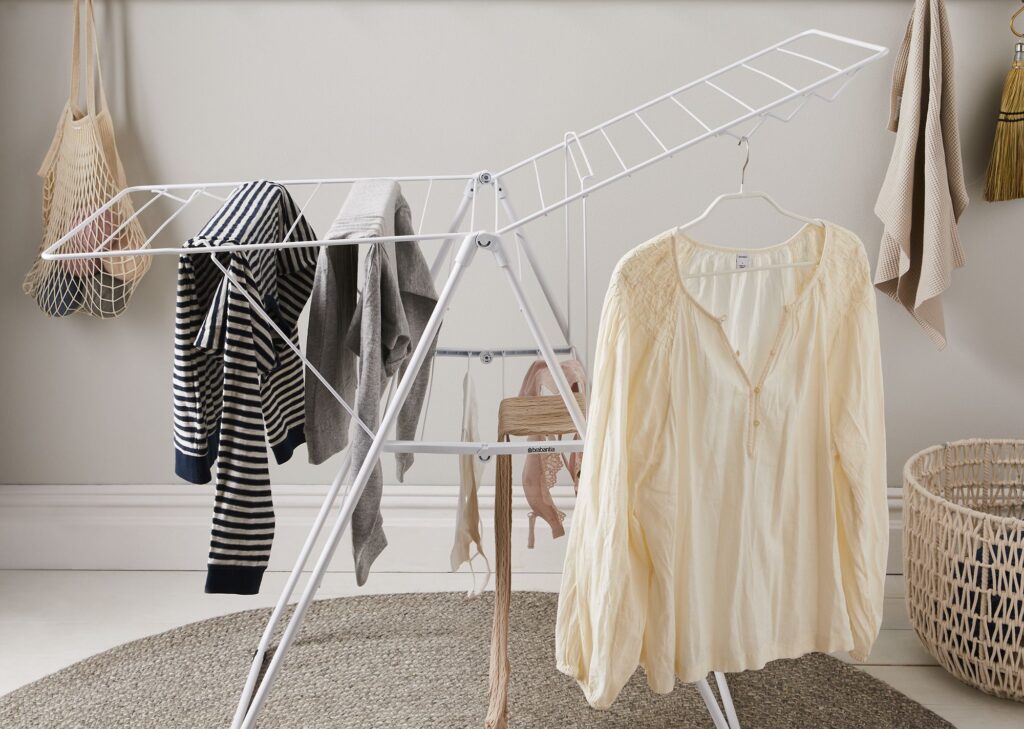

Drying a single wash load releases roughly 1.5 to 2 litres of water into the air. Indoors, with no ventilation strategy, that water condenses on the coldest surfaces in your home (window frames, external walls, behind furniture) and creates the conditions black mould needs to grow. The honest answer is that drying clothes without a tumble dryer is perfectly achievable, but only if you actively manage the moisture rather than ignoring it. A heated airer alone is cheap to run but does not solve the moisture problem. A dehumidifier solves the moisture problem but does not dry clothes by itself. The two combined, used correctly, give the best results outside of a modern heat pump tumble dryer. This guide covers all the alternatives honestly, including the costs, the drying times, and the mould risk most other guides leave out.
Why this question matters more than it used to
Drying clothes without a tumble dryer used to be unremarkable. Most British households did it for most of the year, hung washing on a line in the garden or on a wooden airer indoors, and the question barely needed asking. Three things have changed over the past few years and made this a genuinely important topic to think through carefully.
First, the cost of running a conventional tumble dryer has risen sharply with electricity prices. A vented or condenser dryer costs around £155 to £210 a year to run for a typical household at current UK rates, more for heavy users. For households who already own such a dryer, the running cost has become a real budget consideration. For households buying a new dryer, the picture is more nuanced because heat pump dryers are significantly cheaper to run, but the upfront cost is also higher.
Second, more UK homes are smaller, more airtight, and better insulated than they used to be. Modern double glazing, draught-proofing, and tighter building standards trap moisture inside the home in a way that older, draftier properties did not. Drying clothes indoors in a 1980s house was a mild inconvenience. Drying clothes indoors in a tightly sealed 2020s flat can be a serious damp and mould problem if the moisture has nowhere to go.
Third, awareness of the health consequences of damp and mould has risen sharply following high-profile UK cases. Damp and mould are no longer just an aesthetic problem. They are a recognised public health issue with documented respiratory consequences, particularly for children, older people, and those with pre-existing conditions. The way a household chooses to dry clothes is one of the largest single contributors to indoor moisture in many UK homes, and the decision deserves more thought than it usually gets.
The honest framing is that drying clothes without a tumble dryer is entirely possible and frequently sensible. It just needs to be done with awareness of where the moisture actually goes.
The water problem nobody talks about
Every washing machine cycle leaves a few kilograms of water in the clothes after the final spin. The exact amount depends on the spin speed, the fabric type, and how full the load is, but a typical 7kg cotton wash with a 1,400 rpm spin still has roughly 1.5 to 2 litres of water remaining in the clothes when you take them out.
That water has to go somewhere when the clothes dry. If you dry the clothes on a line in the garden, the water evaporates into the outdoor atmosphere and disperses harmlessly. If you dry the clothes in a tumble dryer, the water is captured in the condenser tank, the heat pump system, or vented outside through the hose. The household is unaffected because the water never enters the indoor air in any significant volume.
If you dry the clothes indoors without a dryer, on an airer, on radiators, or draped over the bath, that 1.5 to 2 litres of water has to evaporate into the indoor air of your home. Multiplied across multiple wash loads per week, the cumulative volume is substantial. A family of four running five or six wash loads a week is releasing roughly 10 to 12 litres of water into the indoor air every week, simply by drying the laundry.
| Source | Daily water released into indoor air (typical household of 4) |
|---|---|
| Breathing and perspiration (4 people) | ~4 litres |
| Cooking | ~3 litres |
| Bathing and showering | ~1.5 litres |
| Drying laundry indoors (no dryer used) | ~1.5 to 2 litres per load |
| Houseplants, mopping floors, other | ~0.5 litres |
Indoor laundry drying is one of the single largest controllable sources of moisture in a typical UK home. Reducing or managing it has a disproportionate effect on indoor humidity levels, on condensation on windows, and on the long-term risk of damp and mould.
What happens to that water in your home
Warm air can hold more moisture than cold air. As the moisture-laden air drifts around your home, it cools when it touches cold surfaces — typically window frames, external walls, areas behind furniture pushed against external walls, the cold corners of bedrooms, and bathroom walls. At those cold surfaces, the air can no longer hold all the moisture, and water condenses out as visible droplets on the window glass or invisible dampness in wall plaster.
Wherever that condensed moisture settles repeatedly, the conditions are right for black mould (typically Aspergillus or Stachybotrys chartarum) to colonise. Black mould produces spores that are released into the indoor air, where they are inhaled. The respiratory effects are well documented: aggravated asthma, increased respiratory infections, allergic reactions, and in vulnerable individuals, serious harm.
The cold surfaces that catch the moisture are not always visible. The dampness on the inside of a wardrobe pushed against an external wall, on the back of a bookcase, behind the sofa, or in the underside of upholstered furniture is often the first sign of a moisture problem in a house. By the time the mould becomes visible on the wall itself, the problem has been developing invisibly for months.
None of this is alarmist. It is the basic physics of moisture in modern UK homes, and it is the reason that the question “how do I dry my clothes without a tumble dryer” needs to be answered as “with a strategy for managing the moisture, not just for getting the clothes dry”.
The options compared honestly
There are six realistic ways to dry clothes without a conventional tumble dryer in a UK home. Each has trade-offs in cost, drying time, energy use, and moisture handling. The honest comparison below covers all of them.
The most efficient drying method ever invented when the weather cooperates. Free to run, releases moisture harmlessly into the outdoor atmosphere, gentle on clothes, and gives a result that nothing else quite matches. Constrained by weather, garden access, and time of year. In UK conditions, fully outdoor drying is realistically possible for about half the year, with summer being reliable and shoulder seasons mixed.
A traditional wooden or plastic clothes airer placed indoors. Cheap to buy (£15 to £60), free to run, and effective in dry, ventilated conditions. The serious limitation is that it releases all the laundry moisture directly into your indoor air. In a small flat, a poorly ventilated bedroom, or a property with existing damp risk, this is the worst option for the household even though it costs the least. If used, must be combined with deliberate ventilation (open windows) or a dehumidifier.
A clothes airer with electric heating elements in the bars. Costs £30 to £100 to buy. Running cost is modest, typically 3p to 10p per hour at current UK electricity rates, depending on the wattage of the model. Dries faster than an unheated airer (typically 4 to 8 hours for a load versus 24+ hours unheated). Still releases all the laundry moisture into indoor air. Better than unheated for speed but worse for moisture management because the warm clothes evaporate water faster, making the indoor humidity rise more quickly.
An electrical appliance that pulls moisture out of the indoor air and collects it as liquid water in a tank. Costs £100 to £300 to buy. Running costs typically 10p to 30p per hour depending on the model. Crucially, a dehumidifier on its own does not dry clothes meaningfully faster than just hanging them in the room. What it does is capture the moisture they release before it reaches your walls. Most useful when run in the same room as drying clothes, ideally with the airer placed close to the dehumidifier intake.
The combination is the most effective indoor drying approach short of a tumble dryer. The heated airer evaporates water from the clothes faster. The dehumidifier captures that water as it leaves the clothes. Drying times come down to 3 to 6 hours for a typical load, comparable to a heat pump tumble dryer cycle. Combined running cost is roughly 15p to 40p per hour, comparable to running a conventional dryer. The upfront cost of buying both is the obvious downside. The combined moisture management is the key advantage.
For households where the question is really “is a tumble dryer worth buying” rather than “how do I dry without one”, a heat pump dryer is the most efficient option available. Costs £400 to £900 to buy. Running costs typically £60 to £95 per year for a moderate user, less than half a conventional dryer. All moisture is captured in the machine and either drained or collected in a tank. Drying times 2 to 3 hours for a typical load. See our detailed buying guide on heat pump vs vented vs condenser tumble dryers.
Side-by-side: the honest comparison
The numbers below are estimates based on typical UK conditions, current Ofgem-capped electricity rates, and average household usage of approximately 150 to 200 wash loads per year. Actual costs vary with appliance specification, tariff, and household usage patterns.
| Method | Upfront cost | Drying time (per load) | Running cost per load | Indoor moisture impact |
|---|---|---|---|---|
| Outdoor line | £10-£50 | 3-8 hours (weather dependent) | £0 | None |
| Unheated airer (indoor) | £15-£60 | 12-24+ hours | £0 | High — all moisture into indoor air |
| Heated airer alone | £30-£100 | 4-8 hours | 20p-60p | High — all moisture into indoor air, faster |
| Dehumidifier alone (with airer) | £100-£300 | 8-14 hours | 50p-£1.20 | Low — moisture captured |
| Heated airer + dehumidifier | £130-£400 total | 3-6 hours | 70p-£1.60 | Low — moisture captured |
| Conventional tumble dryer | £200-£450 | 90-130 mins | £1.00-£1.50 | None (water captured/vented) |
| Heat pump tumble dryer | £400-£900 | 120-180 mins | 40p-65p | None (water captured) |
The mould risk by drying method
The genuine public-health-relevant question is which methods carry an ongoing risk of damp and mould in the home, and which do not. The answer divides the options more sharply than the cost or speed comparisons.
 Low mould risk methods
Outdoor washing line (moisture released outside). Heat pump or conventional tumble dryer (moisture captured or vented). Heated airer plus dehumidifier (moisture released indoors then captured). Unheated airer plus dehumidifier (same principle). A drying room or cupboard with a dehumidifier inside it (moisture captured at source). Any indoor drying method combined with active mechanical ventilation, such as a working bathroom or utility room extractor fan that runs throughout the drying period.
 High mould risk methods
Unheated airer indoors in a closed room with no ventilation. Heated airer alone in a closed room with no ventilation. Clothes draped over radiators or furniture in poorly ventilated areas. Drying in bedrooms, particularly in winter when windows stay closed. Drying in small rooms with no extractor fan. Any indoor drying in a property already showing signs of damp, condensation, or mould. Any indoor drying in a tightly sealed modern flat without active dehumidification.
The pattern is clear. Methods that either keep the moisture out of the home (outdoor line, dryer) or actively remove the moisture from the home (any combination involving a dehumidifier or active ventilation) are low-risk. Methods that release moisture into an enclosed space with no removal strategy are high-risk, even when they are otherwise convenient and cheap to run.
How to use a dehumidifier properly for drying clothes
The dehumidifier is the key piece of equipment for safe indoor drying. Used correctly, it transforms indoor laundry drying from a mould risk into a viable alternative to a tumble dryer. Used incorrectly, it adds running cost without solving the moisture problem. The practical points below are based on the engineering principles, not just product marketing.

Place the dehumidifier in the same room as the clothes, close to the airer
The dehumidifier captures moisture from the air around it. Putting it in a different room means the laundry moisture has to travel further (typically across cold floors and walls where it can condense first) before reaching the unit. The closer the unit is to the source of moisture, the more efficiently it works.

Close the room off
Counter-intuitively, the room should be closed (door shut, windows shut) when drying clothes with a dehumidifier. An open room means the dehumidifier is trying to dry the entire house, which it cannot do effectively. A closed room means the appliance is dehumidifying a manageable volume of air and the laundry dries faster. This is the opposite of what you would do without a dehumidifier, where ventilation is the answer.

Position so airflow reaches the clothes
Most dehumidifiers expel dehumidified air from a vent on the front or top of the unit. Positioning the airer in the direct path of that airflow significantly speeds up drying. The dehumidifier becomes effectively a low-temperature, gentle dryer for the load nearest the airflow.

Check the litre rating against your needs
Dehumidifiers are rated by how many litres of water they can extract from indoor air per 24 hours under specified conditions. For laundry drying, a 10 to 12 litre per day unit is typically sufficient for a single household. Larger units (20 litres per day or more) work faster but cost more to buy and to run. Choose the lowest rating that handles your actual drying volume comfortably.

Refrigerant vs desiccant: which type to buy
Refrigerant (compressor) dehumidifiers are the standard type and work efficiently in normal household temperatures (above approximately 15°C). They are cheaper and quieter. Desiccant dehumidifiers use a chemical absorbent material and work better in colder conditions (garages, unheated rooms, below 10°C). They are more expensive and slightly noisier. For most kitchen, living room, or bedroom drying, a refrigerant unit is the right choice. For a garage, utility room, or conservatory in winter, a desiccant unit may dry faster.

Empty the tank or plumb in the drain
The captured water collects in a removable tank, typically 2 to 4 litres. A heavy drying day can fill the tank multiple times. Most modern dehumidifiers can be plumbed into a drain or routed to a sink or external drain via a hose, which removes the manual emptying task. For households using a dehumidifier daily, plumbing in is worthwhile.
How long things actually take
The drying time numbers below are rough averages for a typical UK 7kg cotton wash load with a 1,400 rpm final spin, dried in a room at typical indoor temperature (around 18°C to 20°C). Lower spin speeds, lower room temperatures, and tightly packed airers all slow drying time. Heavier fabrics (towels, jeans) take longer than lighter ones. Wool and delicate items should not be heat-dried at all.

Outdoor line, good drying day
3 to 6 hours in summer with sun and breeze. The fastest drying method available. The same load on a still, overcast day in autumn or spring can take 8 to 12 hours and may need to come in damp to finish off indoors.
Unheated indoor airer alone
12 to 24+ hours in normal household conditions. Significantly longer in cold or damp rooms. Items that take more than 36 hours to dry start to smell musty regardless of how clean they were when hung up. The bacteria responsible for the “damp washing” smell start to grow on the wet fabric and need re-washing to remove.

Heated airer alone
4 to 8 hours, depending on wattage and how thickly clothes are loaded. Heavy items (towels, jeans) need to be at the bottom near the heating elements. A cover that traps the heat (sold separately for most models) significantly speeds up drying but also concentrates the moisture release into a more limited area, which makes the mould-management problem worse if no dehumidifier is running.
Heated airer plus dehumidifier in a closed room
3 to 6 hours, the fastest indoor method short of a tumble dryer. The combination works because the heated airer accelerates evaporation and the dehumidifier captures the water as it leaves the clothes. The closed room keeps the dehumidifier working on a manageable volume of air.

Heat pump tumble dryer
2 to 3 hours for a typical 7kg cotton load. The slowest of the tumble dryer options but still significantly faster than any indoor non-dryer alternative. The lower drying temperature (around 50°C versus 70 to 80°C in conventional dryers) is gentler on clothes.

Conventional vented or condenser dryer
90 to 130 minutes for a typical 7kg cotton load. The fastest method available but with the highest running cost of any drying option, and the shortest expected lifespan. See our analysis on the 2027 UK tumble dryer regulations for the regulatory direction on this class of dryer.
What about radiators, the airing cupboard, and the bathroom?
Three folk methods for indoor drying come up so often that they deserve a direct answer rather than being left implied.
Drying clothes on radiators
Three problems. First, the same moisture release as any other indoor drying, concentrated near walls where mould is most likely to form. Second, draping clothes over a radiator significantly reduces the heat output of the radiator into the room, which means the heating system runs longer to compensate (so the apparent free drying is actually paid for in extra heating cost). Third, on warmed radiators with thick laundry, the contact heat can damage some fabrics over time. Convenient, but not recommended as a routine method.
Drying clothes in the airing cupboard
The airing cupboard is designed for airing already-dry linen, not for drying wet laundry. A modern combi-boiler-fed airing cupboard typically has no heated cylinder and limited ventilation, so wet clothes inside it dry slowly and the moisture has nowhere to go but into the cupboard itself, eventually into the surrounding walls. Even older airing cupboards with a hot water tank have limited ventilation and concentrate moisture in a small space. Workable in moderation if the cupboard has decent airflow; not recommended as a primary drying location.

Drying clothes in the bathroom
Surprisingly, this can work reasonably well if the bathroom has a working extractor fan that runs for an extended period. The bathroom is already designed to handle moisture, the fan moves moist air outside, and the contained space concentrates the drying effect. The extractor must actually be running while drying takes place, not just for 15 minutes after a shower. Bathrooms without working extractors are not suitable for laundry drying.
Which method is right for your situation?
The right drying approach depends on your living situation, your budget, your space, and the specific risks in your home. The honest matching below covers the most common UK household types.

House with a garden
Outdoor line whenever weather allows (summer, dry shoulder seasons). For wet weather and winter, a heat pump tumble dryer in a utility room or garage is the most cost-effective complementary option. If a dryer is not affordable, a dehumidifier plus heated airer in an enclosed space (utility, kitchen with closed doors, or spare room) is the next best choice.

Flat or apartment with no outdoor drying space
This is where the moisture management question matters most. A modern, well-insulated flat with no outdoor space cannot safely dry laundry indoors without either a tumble dryer or a dehumidifier. The “just hang it on an airer” approach causes mould in this housing type more reliably than almost anywhere else. A heat pump tumble dryer or a dehumidifier plus heated airer combination is the safe answer. Skipping both is not.

Tight budget, no dryer affordable
A dehumidifier is the single most important purchase. A basic 10-litre-per-day refrigerant dehumidifier starts around £100, runs at modest electricity cost, and protects the household from the cumulative damp and mould risk of indoor drying. Pair with a basic unheated airer (£15-£30) used in a closed room close to the dehumidifier. The combined upfront cost is roughly £120 to £150, significantly less than a tumble dryer, and the moisture management is genuinely effective.

Large household with high laundry volume
The volume of drying makes a heat pump tumble dryer the most economically sensible option, simply because the running cost difference against any indoor non-dryer alternative becomes significant at high volume. A family of five running 8+ wash loads a week will recover the upfront cost of a heat pump dryer faster than a smaller household. See our heat pump vs vented vs condenser tumble dryer buying guide.
Rental property with existing damp issues
If the property already shows signs of damp or mould (visible black spots on bedroom walls, peeling paint, persistent condensation), indoor laundry drying without active moisture management will make the problem worse and faster. A dehumidifier becomes essential rather than optional in this situation, regardless of the rest of the drying setup. Indoor drying without a dehumidifier in a damp-prone property is the single fastest route to a mould problem.

Household with respiratory health concerns
Households where any member has asthma, allergies, COPD, immune compromise, or other respiratory vulnerability should treat moisture management as a health priority rather than a convenience question. The mould risk of unmanaged indoor drying is not theoretical for these households. A heat pump tumble dryer or a properly used dehumidifier setup is the safe approach. Indoor drying without moisture management is genuinely not.
The Whitegoods Help view
The honest editorial position is that drying clothes without a tumble dryer is entirely possible in most UK homes, but it deserves more thought than the typical “just buy a heated airer” advice provides. The cost of running a tumble dryer is a real consideration for many households. The environmental case for not running a dryer when an alternative works is genuine. The household budget benefit of avoiding the tumble dryer purchase price is real.
The counterweight is that indoor laundry drying in a modern UK home is one of the single largest controllable sources of indoor moisture, and that moisture has to go somewhere. The honest answer is that it usually ends up in your walls, on your windows, in the corners of your bedrooms, and eventually as black mould. The respiratory consequences of that mould are increasingly well documented and increasingly taken seriously.
The right framing for the decision is therefore not “tumble dryer or no tumble dryer” but “what is my strategy for managing the moisture that comes off my clothes regardless of how I dry them”. A heat pump tumble dryer manages it by capturing it inside the appliance. A dehumidifier plus airer combination manages it by capturing it in a different appliance. An outdoor line manages it by never letting it into the house in the first place. A heated airer with no other plan manages it by releasing it into the house and hoping for the best, which over time often does not work out well.
For households on a tight budget, the dehumidifier purchase is genuinely transformative. It changes indoor drying from a damp-and-mould risk into a viable alternative to a tumble dryer, at a fraction of the upfront cost of the dryer itself. For households who can afford a heat pump tumble dryer, the long-term economics, the convenience, and the moisture management all favour the dryer, particularly with the 2027 UK regulatory direction against the older inefficient dryer types. The middle ground (heated airer alone, with no moisture management) is the option we would advise against most strongly, because it has the worst long-term outcome despite looking the most convenient on day one.
Other ways we can help
Whether you are considering replacing an existing dryer, repairing one that has developed a fault, or sourcing parts to extend the life of a working appliance, our nationwide repair service and spare parts service support households who want to make sensible appliance choices over the long term.
Frequently asked questions
Is drying clothes indoors bad for your health?
Not by itself, but the moisture released during indoor drying can contribute to high indoor humidity, condensation, and ultimately black mould growth on cold surfaces. Mould releases spores that, when inhaled regularly, are associated with aggravated asthma, respiratory infections, and allergic reactions, particularly in children, older people, and those with pre-existing conditions. Drying clothes indoors safely requires managing the moisture rather than ignoring it, typically with a dehumidifier or with deliberate mechanical ventilation while drying takes place.
What’s the cheapest way to dry clothes without a tumble dryer?
An outdoor washing line is free to use and costs nothing to run, when weather allows. For indoor drying when the line is not an option, an unheated airer is the cheapest method by upfront cost (£15 to £60 to buy, £0 to run). However, without active moisture management, indoor drying carries a real mould risk in modern airtight UK homes. A dehumidifier (£100 to £300 to buy, around 50p to £1.20 per hour to run) plus a basic airer is the cheapest safe combination for routine indoor drying in homes without a tumble dryer.
Is a heated airer better than a dehumidifier?
They do different things. A heated airer speeds up drying by warming the clothes and accelerating evaporation. A dehumidifier captures the resulting water vapour from the indoor air. Used alone, the heated airer leaves all the moisture in your home. Used alone, the dehumidifier does not significantly speed up drying. The two used together are significantly more effective than either alone, with drying times comparable to a heat pump tumble dryer and effective moisture management.
How much does a dehumidifier cost to run while drying clothes?
Running cost typically 10p to 30p per hour depending on the model wattage and current UK electricity rates. A typical drying cycle of 4 to 6 hours therefore costs around 50p to £1.20 in electricity, plus the cost of running a heated airer alongside if used. The combined running cost of a heated airer plus dehumidifier setup is roughly 70p to £1.60 per load. For households running 150 to 200 loads per year, the annual cost is approximately £105 to £320, comparable to running a conventional tumble dryer.
Can I just dry clothes on the radiators?
Not recommended as a routine method. Three issues: the moisture from the clothes ends up in the room you can least afford to dampen (next to the cold external wall surfaces where the radiator typically sits), the clothes draped over the radiator reduce its heat output so the central heating runs longer to compensate, and over time the heat can damage some fabrics. Occasional use to finish off slightly damp items is fine. Routine indoor drying on radiators contributes to the same damp and mould problems as any other unmanaged indoor drying method.
What size dehumidifier do I need for drying clothes?
For drying clothes in a single household, a 10 to 12 litre per day refrigerant dehumidifier is typically sufficient. Larger units (16 to 20+ litres per day) work faster but cost more to buy and to run. Desiccant dehumidifiers are worth considering for unheated spaces such as garages, utility rooms, or conservatories in winter where temperatures fall below 10°C, because they work better in the cold than compressor-based units do.
Do I need to open the windows when drying clothes indoors?
It depends on what else you are doing. If using a dehumidifier, no — close the windows and door so the dehumidifier can work on a manageable volume of air. If drying without a dehumidifier, yes — open windows are essential to move the moisture out of the house rather than letting it accumulate. Either active dehumidification (closed room) or active ventilation (open windows, ideally with cross-draft) is needed. Doing neither is the worst option and the one most likely to cause damp.
Will a dehumidifier help with damp in my home generally?
Yes. A dehumidifier reduces indoor humidity, condensation on windows, and the conditions in which black mould grows. It does not fix structural damp problems (rising damp, penetrating damp from outside, plumbing leaks) which need their underlying cause addressed. For condensation damp caused by household moisture (breathing, cooking, bathing, indoor drying), a dehumidifier addresses the cause directly. Many UK households who buy a dehumidifier for laundry drying find it also reduces condensation on bedroom windows and visible mould patches in damp corners.
Are heat pump tumble dryers worth it as an alternative?
For households running 100+ loads per year, yes. Heat pump dryers use roughly half the electricity of conventional dryers, and unlike indoor drying alternatives they capture all the moisture inside the machine. The upfront cost is higher (£400 to £900) but the long-term running cost (£60 to £95 per year typical) compares favourably to both conventional dryers and to running a dehumidifier-plus-airer combination repeatedly. See our detailed heat pump vs vented vs condenser tumble dryer buying guide for the full picture.
What about drying clothes outside in winter?
Surprisingly effective in dry, cold weather. Even when the air temperature is at or below freezing, low humidity and any breeze will dry clothes through sublimation (water passing directly from frozen to vapour). The clothes typically come in stiff but dry, or slightly damp and able to finish indoors in a fraction of the time of starting from fully wet. Outdoor drying works year-round in dry weather, with the limitation being rain and persistently overcast still days rather than temperature.
Ask the repair forum
Post the make, model and symptoms and get help from the Whitegoods Help community.
0 Comments