
Washing Machine Door Wont Open
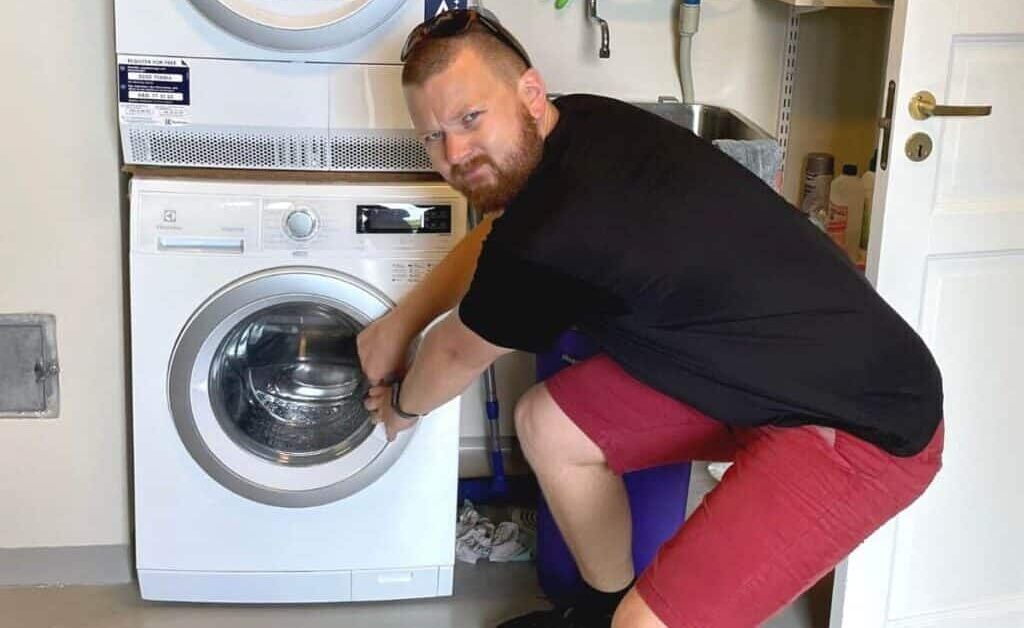

A washing machine door that won’t open after a cycle is most commonly caused by the door safety lock still being engaged. This is normal and the door will usually release within two to five minutes of the cycle ending. If it still won’t open after waiting, the most likely causes are water remaining in the drum, the child lock being active, or a faulty door interlock. Most of these can be resolved without an engineer. Work through the checks in this guide before calling for help.
Why won’t my washing machine door open?
A washing machine door that refuses to open is one of the most common and frustrating problems a consumer can experience, particularly when there is wet laundry trapped inside. The reassuring news is that in the majority of cases the cause is not a mechanical fault at all. It is a safety feature doing exactly what it is designed to do.
Modern front-loading washing machines use an electrically operated door interlock that prevents the door from opening while the drum is spinning or while water is present inside the machine. This is a deliberate safety design – a door opening mid-cycle on a machine with water inside would cause flooding and could result in injury. The interlock keeps the door locked until it is safe to open, and it can sometimes take a few minutes after the cycle ends before the lock releases. For a fuller technical explanation of how the lock itself works, see our guide to the washing machine door lock and the different types of door interlocks used across modern machines.
Understanding which situation you are dealing with determines what action to take. The causes are very different and so are the solutions.
The six causes ranked by how likely they are
Across the field, six causes account for the vast majority of stuck washing machine doors. Working through them in this order will resolve most situations without an engineer visit.
Normal safety lock delay – just needs 1 to 5 minutes
Water still in the drum – machine hasn’t drained
Child lock active on the control panel
Failed door interlock – common at 5-10 years
Step 1 – have you waited two to five minutes?
Before doing anything else, wait. Most washing machine door interlocks have a built-in delay after the cycle ends, typically between one and five minutes, before they release the door. This is because the drum may still be rotating slightly as it comes to a complete stop, and the machine needs a moment to confirm the cycle has fully finished before releasing the lock.
On many machines you will hear a click as the interlock releases. If the door opens freely after waiting a few minutes and there are no other issues, nothing further needs to be done. This is normal machine behaviour and not a fault.
If the door still will not open after five minutes, move to the next checks.
Cause 1 – is there water remaining in the drum?
The most common reason a washing machine door remains locked after the cycle ends is that water is still present inside the drum. The door interlock is designed not to release while water is present, for obvious safety reasons. If your machine has not drained fully, the door will stay locked until the water is removed.
You can confirm this by looking through the door glass. If you can see water sitting in the bottom of the drum, the machine has not drained.
Why has the machine not drained?
The most common causes of a machine failing to drain are a blocked pump filter, a kinked or blocked drain hose, or a failed drain pump. The pump filter is by far the most frequent culprit and is straightforward to check yourself. Our dedicated washing machine pump filter guide covers how to access and clean it, and our full guide to washing machine not draining covers all the other causes. If the pump filter looks clean but the machine still won’t drain, see no blockage and still not draining.
How to get the door open with water in the drum
-
Switch the machine off at the mains and wait five minutes. On some machines, cutting the power allows the interlock to release even with water present. Try the door gently after waiting.
-
If the door remains locked, locate the emergency door release. Most modern washing machines have a small emergency pull cord or tab inside the pump filter access panel at the bottom front of the machine. It is usually a small coloured tag, often orange or red. Pulling it manually releases the door interlock. Check your machine’s manual for the exact location on your model.
-
Before opening the door with water in the drum, place towels on the floor directly in front of the machine. When the door opens, some water will flow out. Have a bucket ready and be prepared for a significant amount of water. For a fuller walk-through of draining water out of the machine before opening, see how to drain a washing machine.
-
Once the door is open and the drum is accessible, address the drainage fault before running another cycle. Running the machine again without resolving the drain fault will result in the same outcome.

If the machine has recently completed a hot wash at 60°C or above, the water remaining in the drum may still be very hot. Allow time for the water to cool before opening the door using the emergency release. Opening the door and releasing hot water unexpectedly can cause scalding.
Cause 2 – is the child lock active?
Many modern washing machines include a child lock feature that, when activated, disables the control panel and prevents the door from being opened mid-cycle or even after a cycle ends. If the child lock is active it will typically show as a symbol on the display, often a padlock icon or the letters CL, and the door will not respond to normal opening attempts.
The child lock is activated and deactivated by pressing and holding a specific button combination, which varies by manufacturer and model. On most Bosch, Siemens, and Neff machines it is a long press on the spin speed button (see also our Bosch washing machine error codes guide). On most Samsung machines it is a long press of the temperature and spin buttons simultaneously – our Samsung washing machine error codes covers further Samsung quirks. On many Hotpoint and Indesit machines it is a long press on the start/pause button, with model-by-model details in our Hotpoint and Indesit guides.
Check your machine’s manual or look up your specific model online to find the child lock deactivation sequence. Once the child lock is disabled, the door should release normally. If you do not have the manual, searching for your model number followed by “child lock deactivate” will usually find the correct button sequence very quickly.
Cause 3 – has the cycle paused mid-way?
If the machine has paused during a cycle rather than completed it, the door will remain locked. This can happen if the machine has encountered a fault mid-cycle, if the power was interrupted, or if the pause button was pressed accidentally. In any of these cases the machine considers the cycle unfinished and the interlock remains engaged.
Check the display for any error codes or flashing indicators. If the machine is showing a fault code, look it up in our appliance error codes guide to identify what has happened. If no code is showing, try pressing the start/pause button to resume the cycle, allow it to complete, and then wait for the door to release normally after the programme finishes.
If the machine appears completely unresponsive, switch it off at the mains, wait two minutes, and switch it back on. On many machines this resets the control board and allows a fresh start. After power cycling, select a short programme such as a spin and drain only cycle to clear any remaining water and complete the cycle before the door will release.
Cause 4 – has the door interlock failed?
If the machine has drained correctly, the cycle has completed, the child lock is not active, and the door still will not open, the door interlock itself may have failed. The interlock is an electromechanical component that receives a signal from the control board to release when conditions are safe. If it fails in the locked position, it will prevent the door from opening regardless of the machine’s cycle state. For background on the component itself and the variations used across brands, see our guide to different types of door interlocks.
A failed interlock can sometimes be confirmed by listening for the click sound that normally accompanies door release. If you hear no click at the end of a cycle that has drained correctly and completed, the interlock may not be receiving the release signal or may not be mechanically releasing when it does.
The emergency door release described in the water-in-drum section above will also work to manually open the door when the interlock has failed electrically. This gets your laundry out and allows you to use the machine in a limited way while arranging a repair, but the interlock fault should be addressed rather than relying on the emergency release as a routine workaround.
Door interlock replacement is one of the most common washing machine repairs and is a practical job for an experienced engineer. Genuine replacement interlocks are available for most major brands through our appliance spare parts section, and confident DIY repairers can often carry out this repair themselves with the correct part and basic tools. See our DIY appliance repair safety guide before attempting any internal work.
Cause 5 – is the door handle or catch broken?
A door that is unlocked but still will not open is a different problem from an interlock fault. If you can hear the interlock click and release but pulling the handle produces no movement, the handle mechanism, the door catch, or the linkage between them may be broken.
Washing machine door handles are subject to repeated mechanical stress over thousands of cycles and are a common wear item, particularly on machines more than five years old. A broken handle may still look intact from the outside but have failed internally, so the handle movement no longer engages the release mechanism properly. A related issue is a broken door hinge – see washing machine door hinge broken for that specific scenario.
If the handle has broken cleanly and the door is locked shut with no emergency release accessible from the front, the door can usually still be opened by carefully inserting a piece of thin, strong cord or a cable tie around the door, looping it behind the door latch, and pulling with firm but controlled force to release the catch mechanism. This is a workaround rather than a repair – the handle will need replacing before the machine is used again.
Replacement door handles are available for most major washing machine brands and are typically straightforward to fit. The part is usually held by one or two screws accessible from the inside of the door once the door glass assembly is partially disassembled. Genuine replacement handles are available through our spare parts section.
Cause 6 – could it be a control board fault?
In a small number of cases, a door that will not release is a symptom of a control board fault rather than a problem with the interlock or drain system directly. The control board is responsible for sending the release signal to the interlock at the appropriate point in the cycle. If the board has developed a fault, it may fail to send this signal even when all other conditions are correct.
A control board fault is typically accompanied by other symptoms – unusual display behaviour, functions that no longer work correctly, or error codes that do not correspond to the obvious physical state of the machine. If the door is the only symptom and all other checks have been completed, a control board fault is less likely but remains a possibility to be considered when the simpler causes have been ruled out.
Control board diagnosis and replacement requires an engineer. The cost of a control board repair should be considered alongside the age and overall condition of the machine before committing. Our guide to whether to repair or replace an appliance provides a useful framework for this decision.
Quick fault finder – match your situation to a cause
| Situation | Most likely cause | Action |
|---|---|---|
| Cycle just finished, door not opening yet | Normal safety lock delay (1 to 5 minutes) | Wait for the interlock to release automatically |
| Can see water in the drum | Machine has not drained | Use emergency release with towels ready, then fix drain fault |
| Padlock symbol or CL on display | Child lock active | Deactivate child lock using button sequence in manual |
| Display showing mid-cycle, machine paused | Cycle interrupted or fault mid-cycle | Check for error code, resume or power cycle the machine |
| Cycle completed, drum empty, still locked | Faulty door interlock | Use emergency release to retrieve laundry, arrange interlock repair |
| Can hear click but door won’t budge | Broken door handle or catch | Use cord workaround to open, replace handle before next use |
| Multiple faults alongside door issue | Control board fault | Engineer diagnosis required |
| Error code showing on display | Specific fault indicated by code | Look up code in our error codes guide |
How do you use the emergency door release?
Most front-loading washing machines manufactured in the last fifteen years include an emergency door release mechanism that allows the door to be opened manually when the electrical interlock cannot release. The location and design varies by manufacturer but the most common arrangement is a small pull cord or tab located inside the pump filter access panel at the bottom front of the machine.
-
Switch the machine off at the mains and unplug it from the socket before proceeding. This is important – the machine must be isolated from power before you access any internal components.
-
Place several towels on the floor directly in front of the machine. If there is water in the drum, it will flow out when the door is opened. Have a bucket ready.
-
Locate the pump filter access panel at the bottom front of the machine. On most machines this is a small rectangular cover that pulls or pops open. Some machines have a single cover for both the pump filter and the emergency release cord.
-
Look inside the access area for a small coloured cord, tab, or lever. It is typically orange, red, or yellow. On some machines it hangs down alongside the pump filter. On others it is a small plastic lever.
-
Pull the cord or tab firmly downward or toward you, depending on your machine’s design. You should feel or hear the door interlock release. Try the door handle.
-
If you cannot locate the emergency release, consult your machine’s manual or search for your model number alongside “emergency door release” to find specific instructions for your model.

Some older machines and certain budget models do not have an easily accessible emergency release cord. If you cannot locate one, do not attempt to force the door. Forcing the door can damage the handle, the interlock, the door seal, and the door hinges, turning a simple repair into a much more expensive one. Contact an engineer who can open the door safely and diagnose the underlying fault.
Safety – what should you not do?
 Safe approaches
- Wait the full five minutes after the cycle ends before assuming a fault
- Switch off at the mains and unplug before accessing any internal component
- Use the manufacturer’s emergency release cord if available
- Keep towels and a bucket ready before opening a door with water in the drum
- Allow hot water to cool before opening the door after a 60°C+ wash
- Consult your manual or look up your model number for brand-specific instructions
 What to avoid
- Never force or lever the door open with a tool
- Never attempt to pry the door seal away from the drum opening
- Never try to bypass the interlock by cutting wires or disconnecting components
- Never open a door with very hot water in the drum
- Never use a knife or sharp implement near the door seal, which is expensive to replace and critical to the machine’s waterproofing
- Never apply force to the door glass itself – see washing machine door glass danger
For full guidance on what is safe to attempt yourself and what requires a professional, see our DIY appliance repair safety guide.
Door still stuck after working through these checks?
If the emergency release has not worked, the interlock has failed and the door cannot be opened without accessing the component directly, or there is a control board fault involved, an engineer visit is the right next step. We cover washing machine repairs across all major brands nationwide with genuine spare parts available for most models.
Related washing machine door and drain guides
If your fault involves the door, the drain system, or a connected issue, the following dedicated guides cover the specific topic in more depth.
 Types of door interlock
The technical breakdown of the different interlock systems used across washing machine brands.
 Washing machine door lock
How the door lock works and how to test it for faults.
 Door hinge broken
Diagnosing and resolving a broken door hinge as a separate issue from the lock.
 Pump filter
How to access, clean, and refit the pump filter – the most common cause of drain failure.
 Won’t drain water
Full drain-fault diagnostic walk-through if water is still in the drum.
 Leaking from door
If the door seal is the issue, or has been damaged in a forced opening.
Want to learn appliance fault diagnosis properly?
Door interlock and drain-fault diagnosis is core appliance repair work. For anyone wanting to develop the full skill set – whether for a career, a side business, or just to repair their own appliances confidently – the NAC National Training Centre offers practical hands-on courses and online training delivered by working engineers.
Frequently asked questions about a washing machine door that won’t open
Why won’t my washing machine door open after the cycle has finished?
The most common reasons are the safety lock delay (wait two to five minutes for it to release automatically), water remaining in the drum preventing the interlock from releasing, or the child lock being active on the control panel. In a smaller number of cases, the door interlock itself has failed and needs replacing. Work through the checks in this guide in order: wait first, check for water in the drum, check for child lock activation, then consider a component fault if the first three checks are clear.
How do I open my washing machine door if it is stuck?
If waiting and checking for obvious causes has not resolved it, use the machine’s emergency door release. This is usually a small coloured cord or tab inside the pump filter access panel at the bottom front of the machine. Switch the machine off and unplug it first, place towels on the floor in case water flows out, then pull the emergency release cord firmly to manually release the interlock. The door should then open. If your machine does not have an accessible emergency release, contact an engineer rather than attempting to force the door, as forcing it can cause expensive secondary damage.
My washing machine door is locked with wet clothes inside. What should I do?
First check whether there is water visible in the drum through the door glass. If there is, the machine has not drained and the interlock is holding the door shut for safety reasons. Use the emergency release cord (with towels on the floor and a bucket ready) to open the door and retrieve your laundry. Then investigate and resolve the drainage fault before running the machine again – see our washing machine not draining guide. If the drum is empty but the door is still locked, check for child lock activation, try power cycling the machine, and if neither resolves it, use the emergency release cord to access your laundry while you arrange a repair.
How long should I wait for my washing machine door to unlock?
Most washing machines release the door interlock within one to three minutes of the cycle completing. Some models take up to five minutes. If the door has not released after five minutes and the cycle has completed normally with no water visible in the drum and no child lock indicator showing on the display, the interlock may have failed. On most machines you will hear a click when the interlock releases – the absence of this click after five minutes is a useful indicator that something is preventing the release.
Where is the emergency door release on my washing machine?
On most front-loading washing machines, the emergency door release is a small coloured cord, tab, or lever located inside the pump filter access panel at the bottom front of the machine. The access panel is usually a small rectangular cover that pulls or clicks open. The emergency release cord is typically orange, red, or yellow and hangs down or is visible alongside the pump filter. The exact location varies by manufacturer and model – consult your machine’s manual or search for your model number alongside “emergency door release” for specific instructions.
Can I fix a faulty washing machine door interlock myself?
Door interlock replacement is one of the more accessible washing machine repairs for a confident DIY repairer. It requires isolating the machine from power, removing the door seal and the front panel or inner door trim to access the interlock, disconnecting the wiring, and fitting the replacement. Genuine replacement interlocks are available for most major brands through our spare parts section, and our guide to interlock types sets out which variant your machine is likely to have. If you are not comfortable with appliance repair work, an engineer visit is the safer option. Always follow the guidance in our DIY appliance repair safety guide before starting any internal work.
My washing machine door handle has broken. Can I still open the door?
If the handle has broken and the door is locked shut, you can often open it by looping a piece of thin strong cord or a cable tie around the door, passing it behind the door catch mechanism, and pulling firmly to release the latch. This is a temporary workaround. Once the door is open, do not use the machine until the handle has been replaced, as operating without a functional handle risks further damage. Replacement door handles are available for most major brands and are a practical DIY repair on most models.
Could a tripped circuit be why my washing machine door won’t open?
Yes – if the machine has lost power mid-cycle (whether through a tripped RCD, blown fuse, or power cut), the interlock can be left in the locked state and the cycle marked as paused or interrupted. Power cycle the machine at the mains for two minutes, then switch back on and either resume the cycle or run a short drain-and-spin programme to bring the machine to a proper end state. If the machine repeatedly trips the electrics, that is a separate fault to investigate – it should not be reset and ignored.
Ask the repair forum
Post the make, model and symptoms and get help from the Whitegoods Help community.
0 Comments