
The amazing Dryer Balls?
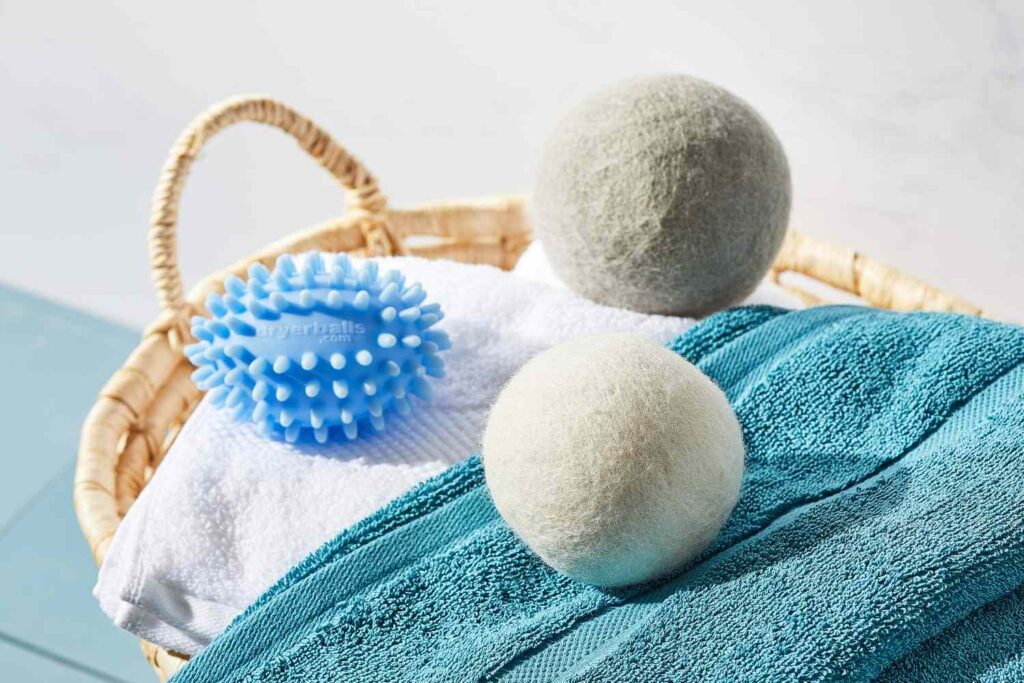

Dryer balls may reduce drying time modestly – in the region of 10% rather than the 25% claimed by manufacturers. The softening claims are questionable: tumble drying itself softens laundry, so separating the dryer ball effect from normal tumble drying is difficult. They are noisy in use. Independent testing by Which? found them underwhelming. They are not harmful to use but the claimed benefits may be overstated.
What Dryer Balls Claim to Do
Plastic dryer balls with textured or knobbly surfaces are marketed with several claims:
- Reduce tumble dryer running costs by up to 25% by shortening drying time
- Soften fabrics by physically breaking down stiffness created by water drying in fibres
- Reduce creases, wrinkles, and lint
- Remove the need for fabric softener or dryer sheets
What Testing Shows
 What appears to be real
- Some reduction in drying time is plausible. The balls create space between items in the drum and improve air circulation. A modest time saving – likely 5 to 15% rather than 25% – is achievable in some loads
- Preventing laundry from clumping in the drum is a genuine benefit for bulky items such as duvets and towels
 What is questionable
- The 25% drying time claim is not supported by independent testing. Which? tested dryer balls and found performance underwhelming (a subscription is required for full results)
- The softening claim is difficult to verify independently because tumble drying itself softens laundry – the mechanical action of items tumbling in warm air is what creates softness. Separating any additional dryer ball effect from normal tumble drying is not straightforward
- The claim that dryer balls replace fabric softener is weak for the same reason – fabric softener use is already largely unnecessary when tumble drying. See our guide on saving on fabric softener when tumble drying
One consistent and well-documented characteristic of plastic dryer balls is the noise they produce. Hard plastic balls bouncing around a metal drum create a significant racket – louder than a standard tumble dryer load. The noise reduces slightly as the balls warm up during the cycle but remains noticeable throughout. If the tumble dryer is in a kitchen or near a living area, this may make them impractical to use.
Wool Dryer Balls – A Quieter Alternative
Wool dryer balls are increasingly popular as a quieter alternative to hard plastic ones. Compressed wool balls do not produce the same impact noise as plastic and are claimed to offer similar benefits. They are also a more sustainable product than plastic. The same caveats apply regarding the extent of the benefits – modest time savings are plausible, the softening effect is difficult to isolate from normal tumble drying, and independent testing shows results are variable.
Are They Worth Buying?
At a price of approximately £5 to £15 for a set, dryer balls are not a significant expenditure. If a modest reduction in drying time is achieved consistently, the cost is recovered over time in reduced electricity use. They are unlikely to cause any harm. The risk is primarily in believing the most extravagant claims – a 25% reduction in running costs is not a realistic expectation based on independent evidence.
Tumble Dryer Guides
Related Guides
 Most Energy Efficient Tumble Dryers
Heat pump, condenser, and vented dryers compared on running costs – the biggest factor in tumble dryer efficiency.
 Save on Fabric Softener When Tumble Drying
Why tumble drying already softens laundry – and when fabric softener adds little benefit.
 Tumble Dryer Not Heating
Fault diagnosis when a tumble dryer runs but produces no heat or dries very slowly.
 Condenser vs Vented Tumble Dryer
The installation and running cost differences between condenser and vented electric dryers.
Frequently Asked Questions
Do tumble dryer balls actually work?
Modestly – some reduction in drying time is plausible as the balls create space between items and improve air circulation. A saving in the region of 5 to 15% is more realistic than the 25% some manufacturers claim. The softening and fabric conditioner replacement claims are harder to substantiate because tumble drying itself softens laundry through its normal operation.
Are dryer balls noisy?
Yes – hard plastic dryer balls make a considerable noise as they bounce around the drum during the cycle. This reduces slightly as they warm up but remains noticeable throughout. If the dryer is in a kitchen or close to a living area, the noise may make plastic dryer balls impractical. Wool dryer balls are quieter and may be a better option for noise-sensitive situations.
Do dryer balls replace fabric softener?
This claim is questionable mainly because tumble drying already softens laundry without any additional product. The mechanical action of items tumbling in warm air is what creates softness – and this happens with or without dryer balls. Any additional softening effect from the balls is difficult to measure separately from normal tumble drying. Using fabric softener in the wash is already largely unnecessary if the laundry is being tumble dried.
Ask the repair forum
Post the make, model and symptoms and get help from the Whitegoods Help community.
7 Comments
Grouped into 6 comment threads.
0 replies I bought two dryer balls in the pound shop, and always use them. They make a real racket for a minute or two, and then seem to calm down. I really cannot say if they actually do anything- only use them in hope that they do as tumble drying is SO expensive.
0 replies I've been using these balls for about three years now and I've definitely found they reduce drying time. I haven't noticed any difference in softness though, and I only use them on items such as towels and sheets and they seem to crease clothes (many of which I just tumble dry and put on hangers with no ironing).
I’ve been using these balls for about three years now and I’ve definitely found they reduce drying time. I haven’t noticed any difference in softness though, and I only use them on items such as towels and sheets and they seem to crease clothes (many of which I just tumble dry and put on hangers with no ironing).
0 replies I remain sceptical about the benefits of these balls. They are very noisy and put lots of dimples in my drum.
I remain sceptical about the benefits of these balls. They are very noisy and put lots of dimples in my drum.
0 replies I bought some dryer balls last year. I live in a bungalow and found the noise was absolutely unbearable! in addition I didn't find they made any difference to time or softness. When you have a long drying load such as towels, which take two hours, it is a nightmare to have the crashing and thumping going on. I tried to make sure that they were inside the towels but they didn't stay there. In the end I contacted the supplier who gave me a credit to choose something else from their range which was better than nothing
I bought some dryer balls last year. I live in a bungalow and found the noise was absolutely unbearable! in addition I didn’t find they made any difference to time or softness. When you have a long drying load such as towels, which take two hours, it is a nightmare to have the crashing and thumping going on. I tried to make sure that they were inside the towels but they didn’t stay there.
In the end I contacted the supplier who gave me a credit to choose something else from their range which was better than nothing
0 replies I fell for the hype and the promised reduction in drying times. What a waste of money, they do not reduce drying time at all nor make the clothes softer without conditioner. Useless
I fell for the hype and the promised reduction in drying times. What a waste of money, they do not reduce drying time at all nor make the clothes softer without conditioner. Useless
1 reply Andy, in my opinion the load dried quicker because you had a smaller load. You took a towel out! What percentage of the initial load did this towel represent? To have a real comparison you should have dried exactly the same amount again! P.S. I can see your website is improving considerably. Well done. I keep coming back to it when I need advice regarding repairing washing machines! Contacted you a year or so ago, when I pointed out some links were not working. Keep up the good work!!!
Andy,
in my opinion the load dried quicker because you had a smaller load. You took a towel out! What percentage of the initial load did this towel represent? To have a real comparison you should have dried exactly the same amount again!
P.S. I can see your website is improving considerably. Well done. I keep coming back to it when I need advice regarding repairing washing machines!
Contacted you a year or so ago, when I pointed out some links were not working. Keep up the good work!!!
I bought two dryer balls in the pound shop, and always use them.
They make a real racket for a minute or two, and then seem to calm down.
I really cannot say if they actually do anything- only use them in hope that they do as tumble drying is SO expensive.