
How dangerous are our white goods appliances?
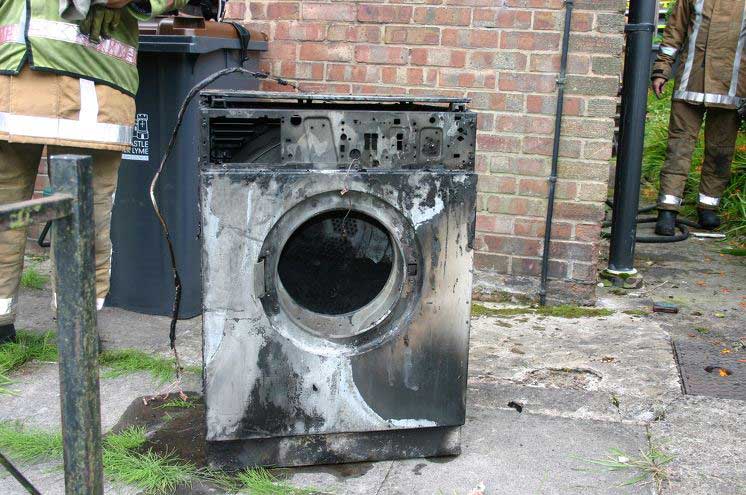
White goods appliances carry an inherent risk that most people significantly underestimate. Bad design, poor build quality, user misuse, and complacency all increase that risk unnecessarily. This article sets out the reality of how dangerous household appliances can be – and why being proactive about safety genuinely matters.

After reading this article, see the practical steps in Part 2: 8 ways to make your appliances safer.
Fires, Explosions, and Injuries – the Scale of the Problem
Electrical appliances are routinely catching fire, exploding, injuring, and in some cases killing people. This is not a rare occurrence. It is happening in ordinary homes across the UK every week. White goods appliances – washing machines, tumble dryers, dishwashers, fridge freezers – are among the most common causes.
In recent years, millions of tumble dryers were found to have a potential fire risk – see tumble dryer fire risk notices. Fridge freezers have caused fires. Dishwashers have caught fire. The door glass on some washing machines has shattered dangerously – see exploding door glass danger. Inner washing machine drums have also been known to fail catastrophically – see washing machine drum explosions. In 2016, Samsung recalled 2.8 million top-loading washing machines in the US following reports of drum failures: BBC News – Samsung washing machine recall.
These are not isolated or unusual events. They are part of a pattern that affects a wide range of electrical products across many categories.
The Facts and Statistics
The scale of the problem is larger than most people realise. Statistics published by Electrical Safety First for a single year (2011/12) recorded approximately 13,000 fires caused by white goods appliances in the UK – equivalent to around 250 fires every week. Those fires were responsible for 10 deaths and over 1,600 injuries in that year alone.
Data collated between 2011 and 2014 by the UK Government and quoted by Which? found that white goods accounted for 55% of all house fires. That makes white goods appliances the single most common cause of house fires in the UK (note: the full Which? article is available to subscribers).
In the same period, tumble dryers alone were linked to 3 deaths and over 300 injuries.

A significant proportion of appliance fire incidents go unreported nationally. The actual number of fires, injuries, and near-misses is considerably higher than official statistics capture.
Why Most People Are Not Aware of the Risk
Appliance fires and injuries affect a relatively small percentage of the population in any given year. Because most people have not experienced one personally, and because incidents are often reported locally rather than nationally, the cumulative scale of the problem is not well understood.
This lack of awareness has direct consequences. People who do not understand the risk are more likely to leave appliances running unattended, skip reading instruction manuals, ignore safety notices, and use appliances in ways that increase the likelihood of an incident. Awareness is not just interesting information – it changes behaviour in ways that genuinely reduce risk.
 Unaware of the risk
More likely to leave washing machines, tumble dryers, and dishwashers running overnight or when the house is empty. Less likely to read manuals, register appliances, or check safety notices. May use appliances incorrectly without realising the consequences.
 Aware of the risk
Makes informed decisions about when appliances run. Reads and follows manufacturer guidance. Registers appliances to receive safety notices. Checks known recalls. More likely to catch and respond to early warning signs of a problem.
User Behaviour Is a Major Factor
This is not an article about assigning blame – it is about identifying where risk can realistically be reduced. A substantial proportion of appliance incidents, potentially the majority, might have been avoided if the user had been more aware or had followed manufacturer instructions correctly.
Responsibility for appliance safety is shared. Manufacturers have an obligation to build safe products and to issue clear safety warnings. Governments have a role in regulation and enforcement. But users also have a significant influence over the level of risk they are exposed to in their own homes – and that influence is often not exercised.
The good news is that many of the most effective risk reduction steps cost nothing and require only a modest change in habit. These are covered in detail in Part 2 of this series.
Fridges and Freezers: A Special Case
Most white goods appliances can be switched off when not in use – washing machines, tumble dryers, and dishwashers do not need to run overnight or when the house is empty. Fridge freezers are different: they must run continuously to preserve food safely. This means the risk from a fridge freezer cannot be managed in the same way.
Keeping a suitable fire extinguisher close to hand in the kitchen, and ensuring smoke alarms are tested and maintained, are the most practical mitigations for the risk posed by continuously running appliances. See: home fire extinguishers near appliances.
Take action – read Part 2
Frequently Asked Questions
How many house fires are caused by white goods appliances?
Electrical Safety First recorded approximately 13,000 fires caused by white goods appliances in a single year (2011/12) in the UK – around 250 fires per week. Government data collated between 2011 and 2014 attributed 55% of all house fires to white goods appliances, making them the single most common cause of domestic fires. These figures cover reported incidents only; the actual total including unreported incidents is higher.
Are tumble dryers particularly dangerous?
Tumble dryers are among the highest-risk white goods appliances. In recent years, millions of tumble dryers were found to carry a potential fire risk and were subject to safety notices and recalls. Tumble dryers have been linked to deaths and hundreds of injuries. Lint accumulation in the heating system is a key fire risk factor. Cleaning the filter after every use and never leaving a dryer running unattended are the most effective precautions. See: tumble dryer fire risk safety notices.
Can a fridge freezer catch fire?
Yes. Fridge freezers have been the source of serious fires. Unlike other white goods appliances, fridge freezers must run continuously and cannot be switched off when the house is empty – which makes the risk harder to manage. Keeping a suitable fire extinguisher in the kitchen and maintaining working smoke alarms are the most practical ways to reduce the consequences of a fridge freezer fire. Checking whether any fridge freezer in the home is subject to a safety notice is also important.
What percentage of house fires are caused by appliances?
Government data collated between 2011 and 2014, as quoted by Which?, attributed 55% of all house fires to white goods appliances. This makes white goods the leading cause of domestic fires in the UK by a significant margin – ahead of cooking, candles, and other common sources. Note that the full Which? report is available to subscribers.
What can I do to reduce the risk from my appliances?
The most impactful steps are: never leave washing machines, tumble dryers, or dishwashers running when out of the house or in bed; read and follow instruction manuals; register all appliances with the manufacturer; check whether any appliance is subject to a safety notice or recall; install appropriate smoke alarms; and keep a fire extinguisher suitable for electrical fires in the kitchen. All of these steps are covered in detail in Part 2: 8 ways to make your appliances safer.
Ask the repair forum
Post the make, model and symptoms and get help from the Whitegoods Help community.
0 Comments