
Cold fill verses Hot fill washing machines
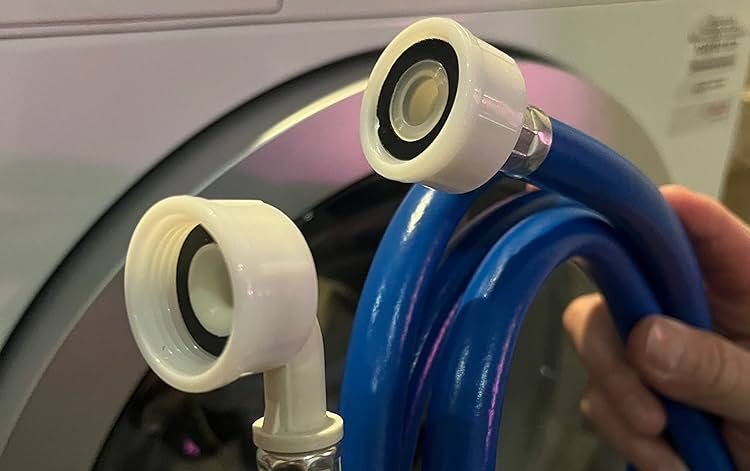
This page summarises the key points of the debate around cold fill versus hot and cold fill washing machines. For many decades, all washing machines used both a hot and a cold water supply. Most modern machines are cold fill only. This page explains who benefits from each arrangement and when a hot valve might still be worth seeking out. For the full in-depth analysis, see: cold fill washing machines – should I buy cold fill or hot and cold fill?
Cold Fill vs Hot Fill: Who Benefits From Each?
The right answer depends on how the household washes laundry and how the hot water system works. The following points summarise the main considerations.
 Cold fill works well if…
Biological detergents are used regularly and most washes are done at 30 or 40 degrees. Biological detergents work best when cold water is heated gradually from within the machine – this is exactly what a cold fill machine does. Manufacturers cite this as the primary reason for removing the hot valve.
 A hot valve may be useful if…
Non-biological detergents are used. Boil washes (90°C) are done regularly – cold fill machines experience more wear and longer cycle times on high-temperature programmes. Hot water is generated cheaply via solar or another economical source. A combi boiler is located close to the machine and supplies instant hot water at adequate pressure.

The benefit of cold fill is most pronounced when biological detergents are used on low-temperature washes. For those using non-bio detergents, the absence of a hot valve may make only a marginal difference to wash results.
If You Heat Water With Solar or Renewable Energy
A hot valve can be genuinely useful if hot water is generated by solar panels or another environmentally friendly or economical method. The logic is sound: if the hot water is essentially free, drawing it directly into the machine saves energy. However, as a separate guide explains, getting a meaningful amount of hot water into the machine in practice is harder than it sounds – especially with modern machines that use very little water. See: do washing machines with a hot valve actually use much hot water?
The Case for User Choice
There is an argument that washing machines should offer both hot and cold inlets with an option to specify when the hot valve is used. The scenarios where a hot valve would genuinely help include washing without biological detergents, maintenance boil washes, regular high-temperature washes, households with economical or renewable hot water, and homes with a combi boiler close to the machine supplying instant hot water at full pressure.
However, delivering a hot valve that works well across all the different hot water systems found in UK homes – from stored cylinder systems to instant combi boilers – requires sophisticated control that manufacturers have not prioritised. Modern machines are designed around an assumed average user: biological detergents, low-temperature washes, and a conventional stored hot water system.
Should I Buy a Washing Machine With a Hot Valve?
Hot and cold fill machines are now uncommon and are mostly found at the lower end of the market. If a hot valve seems desirable, it is worth considering whether the energy savings it might deliver would be offset by potentially reduced reliability or longevity compared to a better-quality cold fill machine.

Choosing a lower-quality machine solely for its hot valve could be a false economy. Any savings in energy costs may be outweighed by higher repair costs or shorter machine life. Overall, more energy is saved nationally with cold fill only machines, because only the water the machine actually needs is heated.
For most people, a cold fill machine is the practical and economical choice. There are, however, genuine scenarios where a hot water inlet would be beneficial – particularly for households that regularly wash at high temperatures or have access to very cheap hot water. See: is a hot and cold fill washing machine more economical?
Summary
The subject is more nuanced than it first appears. According to manufacturers, most people who use biological detergents and wash primarily at low temperatures are better served by cold fill machines. But this assumption fails to account for the many households that wash differently – with non-bio detergents, at higher temperatures, or with access to economical hot water.
Modern washing machines are designed around a broadly assumed average user and do not accommodate the full range of washing habits found in real households. Cold fill is the right default for most – but not everyone.
Read the full guides
Frequently Asked Questions
Why do modern washing machines only have a cold fill?
Manufacturers say cold fill machines are more efficient for the majority of users who wash with biological detergents at 30 or 40 degrees. Biological detergents work best when cold water is slowly heated from within the machine. Cold fill also means only the water actually used is heated, which is more energy-efficient nationally. The full explanation is in the main guide: cold fill washing machines.
Would I benefit from a washing machine with a hot water valve?
Possibly, if you regularly wash at high temperatures (60°C or above), use non-biological detergents, or have access to very cheap or renewable hot water. A combi boiler close to the machine that supplies instant hot water at full pressure is another scenario where a hot valve can be genuinely useful. For biological detergent users washing mostly at 30-40°C, the benefit is unlikely to be significant.
Are hot and cold fill washing machines still available?
They are rare and mostly found at the lower end of the market. Most mid-range to premium machines are cold fill only. If a hot valve is a priority, consider whether the potential energy savings outweigh any reduction in machine quality or reliability that may come from choosing a lower-specification model for this feature alone.
Does a cold fill machine use more energy on boil washes?
Yes. On high-temperature programmes such as 90°C washes, a cold fill machine has to heat all the water from cold, which means longer cycle times and more wear on the heating element. A hot fill machine in the same situation would take in pre-heated water and reach temperature faster. For households that regularly do boil or high-temperature washes, this is one of the stronger arguments for a hot valve.
Is it worth connecting a cold fill washing machine to the hot tap?
In most cases, no. Modern washing machines use very little water and the hot water in the supply pipework often cools before it reaches the machine in sufficient quantity. The result is frequently that lukewarm or even cold water enters the machine despite being drawn from the hot supply. The exception is a combi boiler that is physically close to the machine and supplies instant hot water at adequate pressure. See: do washing machines with a hot valve actually use much hot water?
Ask the repair forum
Post the make, model and symptoms and get help from the Whitegoods Help community.