
Appliance Error Codes – Friend or Foe?
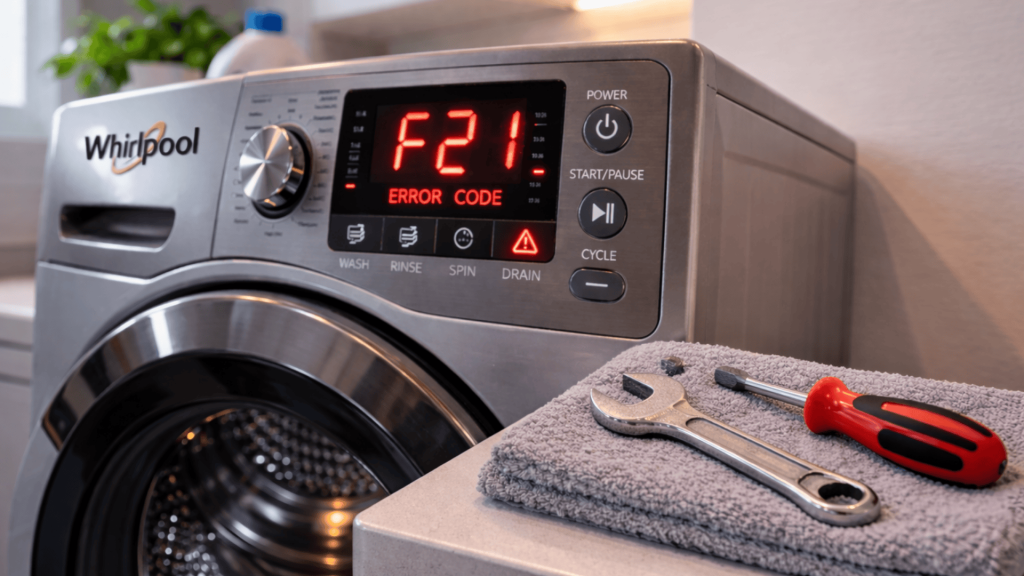

Appliance error codes are a genuine technological advancement when used honestly. They can prevent serious damage by aborting cycles when faults are detected. However, when manufacturers withhold the meaning of those codes from both consumers and independent engineers, they become a tool for restricting repair choice and driving customers towards more expensive manufacturer-only servicing. The technology itself is neutral. How it is used is not.
Error codes on washing machines, dishwashers, and other white goods are now universal. They can stop a machine from flooding your kitchen. They can also prevent you from knowing what is wrong with your own appliance. Whether error codes are a genuine advancement or a tool for restricting independent repair depends on how manufacturers choose to use them. This guide examines both sides of the argument from an engineering perspective.
Before Error Codes: Symptoms as Diagnosis
Error codes on domestic appliances are a relatively recent development. Before microchip-controlled machines became the norm, appliances did not abort cycles when faults developed. Instead, they continued running and displayed symptoms.
Some of these symptoms were serious. A washing machine developing an overfilling fault could flood uncontrollably. A heating fault on a machine with a mechanical timer could, in theory, allow water to heat indefinitely if left unattended. These were genuine dangers of the pre-error-code era.
However, many symptoms were entirely benign and highly informative. A machine sticking partway through a wash, reaching the end of a cycle without spinning, or leaving a small puddle of water on the floor gave both the owner and the engineer a clear starting point. A skilled engineer knew exactly what questions to ask about those symptoms, and the answers almost always pointed directly to the suspected fault, regardless of the brand of machine involved.
This is because all washing machines, regardless of brand or manufacturer, contain essentially the same components serving the same functions. A machine sticking on the rinse cycle on any brand almost certainly indicated a pump or fill valve fault. That cross-brand diagnostic logic, built from symptoms, meant a competent independent engineer could work on any machine from any manufacturer.
What Error Codes Changed
When microchip-controlled appliances arrived, they brought with them the ability to detect faults and abort the cycle before serious damage occurred. This was, and remains, a genuine benefit. A washing machine that detects a leak and shuts off before flooding the kitchen is unambiguously better than one that carries on regardless.
However, the same technology that detects the fault also replaces the observable symptom with a code. Instead of a puddle on the floor and a machine sticking mid-cycle, the owner sees a series of flashing lights or an alphanumeric code on a display. The symptom has been intercepted and replaced with information that may or may not be accessible to the owner or their chosen repair engineer.
 What error codes do well
They abort cycles before damage occurs. They can prevent flooding, overheating, and dangerous operation. They give engineers a starting point when a customer cannot describe symptoms accurately. On machines where the code meanings are freely available, they speed up diagnosis considerably.
 What error codes do badly
They conceal symptoms from owners. They can prevent owners from making a basic judgement about how serious a fault is. When code meanings are withheld from independent engineers, they restrict repair choice. When codes are too vague or cover too many possible causes, they are of limited diagnostic use to anyone.
The Secrecy Problem
The clue is in the name: error code. A code is, by definition, something that requires a key to decode. For most appliance error codes, that key is not provided.
Most manufacturers include only a small number of error codes in the instruction manual, typically the ones that describe faults the owner can resolve themselves, such as a blocked filter, a closed tap, or an overloaded drum. The full diagnostic code list, covering the hundreds of fault conditions the machine’s software can detect, is typically not published to the public.
More significantly, many manufacturers have historically withheld these lists from independent repair engineers. This creates a direct commercial problem. If an independent engineer cannot decode an error code, they cannot efficiently diagnose the fault. If they cannot diagnose the fault efficiently, their competitive advantage over manufacturer-employed engineers erodes. If enough codes are withheld, the practical effect is to funnel customers towards manufacturer service at manufacturer prices, reducing competition in the repair market.

A competent engineer, or a confident DIY person, pulls out their washing machine and finds a split hose causing a small leak. Without error codes, they would see the puddle, identify the hose, order the part, and fix it. With error codes, the machine shuts off displaying a cryptic code before any puddle forms. Without knowing the code means “leak detected”, they cannot even begin. There is nothing technically complex about a split hose. The barrier is not the repair. The barrier is the code.
A reasonable question follows: what is actually wrong with displaying “leak detected” or “motor fault” on the panel instead of an alphanumeric code? Nothing, from a technical standpoint. The machine’s software knows what it detected. Displaying that in plain language costs nothing and loses nothing in terms of safety. The choice to use a code instead of a plain description is a design decision, not a technical requirement.
Error Codes and the Right to Repair
The issue of manufacturers restricting access to technical information is not simply an abstract engineering concern. It has been the subject of legislative action in both the UK and the European Union.
In July 2021, new UK regulations came into force requiring manufacturers of certain domestic appliances to make spare parts available to professional repairers for a minimum of seven to ten years after a product is placed on the market. The regulations cover washing machines, washer-dryers, dishwashers, refrigerators, televisions, and other product categories. This was the first significant legislative step towards addressing the structural barriers that had accumulated around independent appliance repair.
The Right to Repair framework addresses spare parts availability directly. Access to technical information, including error code meanings, is a related but separate issue that remains less comprehensively addressed by current UK legislation. However, the direction of regulatory travel is clear: the argument that manufacturers should be able to restrict repair exclusively to their own service networks is increasingly difficult to sustain legally and politically.
Read our full guide: Right to Repair and what it means for white goods owners.
What the Secrecy Costs Consumers
When error code meanings are withheld, the practical costs fall on consumers in several distinct ways.

Higher repair costs
If independent engineers cannot efficiently diagnose faults, customers are directed towards manufacturer service at manufacturer prices. Independent engineers have consistently provided faster and cheaper service in independent consumer testing, but that advantage is eroded when diagnostic information is withheld.

Reduced choice
A customer who can only get their appliance diagnosed by the manufacturer has no meaningful choice of repairer. Price competition requires alternatives. Restricting the information needed to repair effectively limits those alternatives in practice, whatever the legal position may be.

Loss of self-diagnosis
Before error codes, a competent homeowner could often make an informed judgement about whether a fault was serious or straightforward. A puddle on the floor from a leaking hose is self-evidently different from a machine that will not heat water. Error codes remove this ability, replacing observable symptoms with opaque codes that give no immediate indication of severity.

Blocked DIY repair
A competent DIY person who could identify and fix a split hose or worn motor brushes cannot begin if they cannot decode the error that caused the machine to abort. The barrier is not technical capability. It is information access. This is particularly frustrating because the repairs involved are often straightforward once the fault is identified.
When Error Codes Work Well
It is important to be clear that error codes are not inherently problematic. The technology itself is neutral. When manufacturers make code meanings available to independent engineers and, where practical, to consumers, error codes genuinely improve the repair experience for everyone.
 Preventing serious damage
The most unambiguous benefit. A machine that detects a leak and shuts off before flooding occurs, or detects an overheat and prevents water from boiling dry, is protecting both the appliance and the home. This is a genuine advancement over mechanical-timer-controlled machines that had no such protection.
 Faster diagnosis with access
When code meanings are freely available to independent engineers, they can speed up diagnosis significantly. Rather than working through symptoms methodically, a known code can direct the engineer straight to the most likely fault cause. This saves time and can reduce the cost of the repair visit.
 Accurate fault recording
Some appliances store fault history in memory, allowing an engineer to see what codes were generated and in what sequence. This can reveal intermittent faults that were not present at the time of the repair visit, which would be very difficult to diagnose from symptoms alone.
Reducing misleading descriptionsNot all customers can accurately describe what an appliance was doing when it failed. A fault code is objective. It records what the machine’s software detected, regardless of how the customer perceived or described the symptoms. This can prevent engineers being sent in the wrong diagnostic direction by an inaccurate fault description.
A Note on Brand-Level Information Availability
Earlier versions of this article, originally published in 2011, included specific lists of brands where technical information was and was not available to independent engineers at that time. Given the significant changes in the appliance industry since then, including brand acquisitions, corporate restructuring, legislative developments, and evolving manufacturer policies, those specific lists are no longer reproduced here. The information environment has changed materially, and presenting 2011 brand-level assessments as current fact would be misleading.
As a general principle, the availability of technical information to independent engineers has improved in some areas, partly driven by Right to Repair legislation and partly by commercial pressure as independent repair bodies have become more vocal. However, the situation varies between brands, product categories, and individual markets. Before choosing an appliance with a view to long-term repairability, it is worth researching current independent engineer access for that brand specifically.
The repairability of an appliance and the availability of independent engineers who can service it are legitimate factors in a purchasing decision. A machine that can only be serviced by its manufacturer, at manufacturer prices, with manufacturer lead times, is a fundamentally different product from one with a competitive independent repair market. Whitegoods Help covers repairability and what to look for in our buying guides: washing machine buying advice.
Related Guides
 Appliance error codes: what you need to know
The practical guide to understanding, finding, and acting on error codes before spending money on parts or engineers.
Washing machine error codes by brandBrand-specific error code meanings for all major UK washing machine manufacturers.
 Right to Repair and white goods
What the UK Right to Repair regulations mean for appliance owners, spare parts, and independent repair engineers.
 LG Smart Diagnosis: advancement or con?
A detailed look at LG’s app-based diagnostic system, what it actually tells you, and whether it helps or hinders independent repair.
Washing machine lights flashingHow to read flashing light fault codes on machines without a digital display, including Hotpoint and Indesit models.
DIY repair safetyEssential safety guidance before attempting any repair work on a domestic appliance.
Need an engineer who knows your error code?
If your appliance is displaying a fault code you cannot resolve, a qualified engineer is the right next step.
Frequently Asked Questions
Are appliance error codes a good thing?
They can be. When error code meanings are freely available to independent engineers and, where practical, to consumers, they genuinely improve diagnosis and can prevent serious damage by aborting cycles early. When manufacturers withhold code meanings, they remove the practical benefits for independent repair while retaining the commercial advantage of directing customers towards their own service networks. The technology is beneficial. The secrecy is not.
Why don’t manufacturers publish all their error codes?
Manufacturers rarely explain their reasoning publicly. The practical effect of withholding code meanings is that customers with appliances displaying unknown codes have fewer alternatives than customers who can describe symptoms to any competent engineer. Whether this is a deliberate commercial strategy or simply an absence of incentive to publish is a matter of interpretation. The Right to Repair movement has applied increasing pressure for greater transparency, with some legislative success in requiring spare parts availability and technical information access.
Can independent engineers repair appliances with unknown error codes?
Yes, though it is more difficult. An experienced engineer can often work backwards from the code’s context and the machine’s behaviour to identify the fault. However, this takes more time and may result in a less certain diagnosis than one informed by a known code meaning. Where codes are withheld, experienced engineers rely on the same symptom-based diagnostic logic that existed before error codes were introduced, supplemented by whatever code information is available through trade channels.
What is the Right to Repair and does it help with error codes?
UK Right to Repair regulations that came into force in July 2021 require manufacturers of certain appliances to make spare parts available to professional repairers for seven to ten years after the product is placed on market. This addresses spare parts access directly. Access to technical information including error code meanings is related but not fully covered by the same regulations. However, the regulatory direction is towards greater openness, and manufacturers face increasing pressure to make technical information more accessible. Read our full guide: Right to Repair and white goods.
Why did my appliance just stop and show a code without any visible symptoms?
Modern appliances detect fault conditions through sensors and software before those conditions become visible as physical symptoms. A machine detecting a small water leak will abort the cycle and display a code before any puddle appears. A machine detecting that the motor is not responding will stop before the drum fails to turn noticeably. This is the double-edged nature of error codes: they prevent damage but they also remove the observable symptoms that would otherwise help you understand what has gone wrong.
How do I find out what my error code means?
Start with the instruction manual, which lists the small number of codes covering user-resolvable issues. If the code is not there, try our brand-specific guide: washing machine error codes by brand. If the code cannot be found, it may be one that the manufacturer has not published. In that case, an engineer with access to trade-level technical information is the most reliable next step.
Ask the repair forum
Post the make, model and symptoms and get help from the Whitegoods Help community.
0 Comments