
Problems after fitting carbon brushes
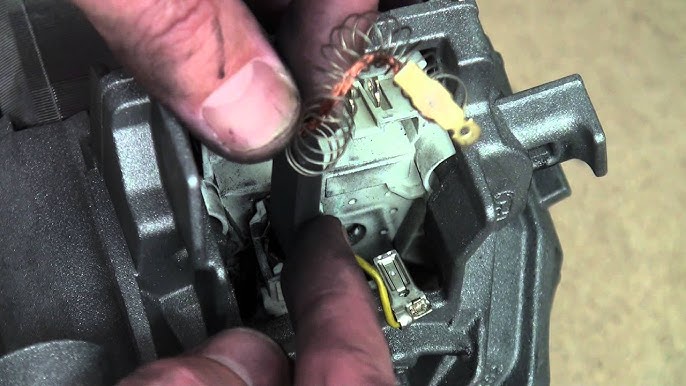

Start by confirming whether the motor was running before the brushes were replaced. If it was, the problem was introduced during fitting. Check the motor plug connections, the wires to both brush holders, and that the brushes are fitted the correct way around and are not stuck in their holders. If the motor was not running before fitting either, the original fault may not have been the brushes at all.
If new carbon brushes have been fitted to a washing machine motor and the motor still does not run, there are several specific things to check before concluding the motor has failed.
Was the Motor Running Before the Brushes Were Replaced?
The answer to this question changes the diagnosis significantly:
- If the motor was running before – and it no longer runs after the brush replacement – something went wrong during fitting. Work through the checks below.
- If the motor was not running before – and it still does not run with new brushes – there are two possibilities. Either something went wrong during fitting, or the original fault was not caused by worn brushes at all. Check the work carefully, and if satisfied that fitting was correct, the fault lies elsewhere. See: possible causes of a motor not running.
Check the Motor Plug Connection
Confirm the motor plug is connected to the motor and fully seated. Disconnect it and inspect the pins in both the motor connector block and the plug itself. When connectors are pushed together with pins slightly misaligned, one or more pins can be pushed back out of their seating.
Gently press down on each pin in the motor block to check if any push inward under light pressure. Use only very light pressure – the aim is to identify a pushed-back pin, not to create a new fault.
Check the Wires on the Carbon Brush Holders
Both carbon brush holders have small wires providing the electrical connection to the brush. Confirm both wires are properly connected and secure.
Ideally, check continuity across the brushes using a multimeter. Measure across the two relevant pins in the motor connector block – this tests the circuit from one pin, down to a brush, across the commutator, back up through the second brush, and out to the second pin. An open circuit reading indicates a broken connection somewhere in this path.
Were the Brushes Fitted the Right Way Around?
Modern carbon brushes are usually designed to fit only one way, but some replacement brushes are non-genuine copies that may not be exact matches. Consider the following:
- Were any lugs filed off or modifications made to get the brushes to fit? If so, they may not be seated correctly.
- Was just the carbon material replaced inside existing holders, rather than the complete brush and holder assembly? Fitting carbon material into old holders is not ideal and can cause poor contact.
- Are the brushes from the correct range? A brush intended for a slightly different motor may appear similar but not seat correctly.
Remove both brushes and check they are not stuck inside their holders. The brush should press all the way in and spring straight back out when released. If a brush is sticking, it will not maintain proper contact with the commutator. On older Hotpoint and Creda brushes in particular, the small brass lug must be fully released before fitting – if it was not, the brush can become stuck in the holder. A charred brush is a sign it has been stuck and not making proper contact.
Was the Original Fault Actually the Brushes?
If fitting is confirmed to be correct and all connections are sound, the original fault may not have been worn carbon brushes at all. The motor TOC (thermal overload cut-out) is worth testing. A blown TOC will prevent the motor from running and requires a continuity tester to identify. This is a common cause of motor failure on Hotpoint and Creda machines.
The Washerhelp forum has a dedicated Hotpoint and Creda section where searching for “carbon brushes” or “TOC” may surface relevant solved cases: Washerhelp forum.
For full carbon brush diagnostic guidance with photos, see: Hotpoint and Creda carbon brushes diagnostics.
Frequently Asked Questions
I fitted new carbon brushes and now the motor doesn’t run – what should I check first?
First confirm whether the motor was running before the brushes were replaced. If it was, check the motor plug pins for any that have pushed back into their seating, check the wires to both brush holders are properly connected, and confirm the brushes are seated correctly and not stuck in their holders. If the motor was not running before fitting either, the original fault may not have been the brushes.
What is a TOC and why might it be causing the motor not to run?
A TOC (thermal overload cut-out) is a safety device inside the motor that blows if the motor overheats. When blown, it breaks the circuit and the motor will not run – regardless of whether the carbon brushes are new or worn. It requires a continuity tester to diagnose. If the brushes have been correctly fitted but the motor still does not run, a blown TOC is a likely cause to investigate.
Could the original fault have been something other than worn brushes?
Yes. If the motor was not running before the brushes were replaced and is still not running with new ones, it is possible the brushes were not the cause of the fault at all. A blown motor TOC, a wiring fault, or a faulty motor winding could all prevent the motor from running regardless of brush condition. See: possible causes of a motor not running.
Ask the repair forum
Post the make, model and symptoms and get help from the Whitegoods Help community.
2 Comments
Grouped into 1 comment thread.
We have an Indesit washing machine XWD71452. This week it developed a fault with the drum. It seems to be trying to turn but is unable to do so, or occasionally it does turn but seems unable to reach the required speed for a spin or to maintain a steady tumble. We checked the brushes and although they don’t appear to be worn we replaced them anyway. This has not corrected the problem. Do you have any suggestions as to the possible cause of this fault. The machine is filling and pumping out as normal.
Likely replying to Malcolm Cutts
Hello Malcolm. Aye that’s why I wrote my article on carbon brushes diagnostics. So many people waste time and money on a hope :) Unlucky though as carbon brushes are the most common cause of motor problems.
If the motor is struggling to turn and it’s not the belt slipping or the brushes, we would next look for dodgy connections on the motor block and/or motor plug, broken wires in the motor harness going from motor plug down to the pcb or faults on the main pcb. I would not recommend trying changing the pcb though.