
Is Calgon Worth Using?
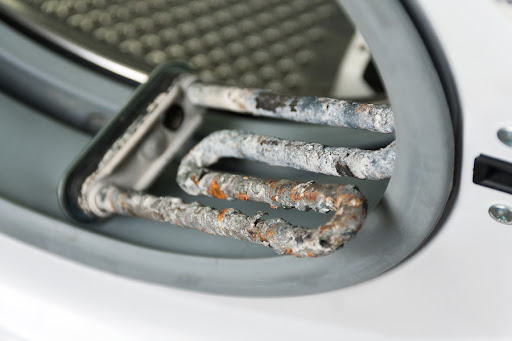

If you use a good quality washing machine detergent at the correct dosage for your water hardness, you should not need Calgon or any similar product. Washing machine detergent already contains water-softening agents that prevent limescale. Calgon works by doing the same thing – softening the water – but adds to your running costs without providing protection that correct detergent use would not already give you.
Calgon has been marketed for decades with the claim that washing machines last longer with its product. The question is whether that claim holds up under scrutiny – and whether adding an extra product to every wash is actually necessary.
What Do Washing Machine Manufacturers Say?
The clearest evidence that Calgon-style products are unnecessary comes from washing machine manufacturers themselves. Their instruction manuals consistently link limescale problems to insufficient detergent use rather than the absence of an additional additive.
“Too little detergent results in limescale on the heating element.”
Washing machine instruction manual (manufacturer unspecified)
“Use the right amount of detergent. Too little will cause poor wash results and a build up of scale.”
Washing machine instruction manual (manufacturer unspecified)
Detergent manufacturers make the same point directly. Persil’s guidance on washing machine care states:
“One of the things that can damage your washing machine is the build up of scale, particularly in hard water areas. But if you use Persil Automatic (or other detergent) at the correct dosage, you won’t need any additives to help protect your machine from limescale.”
Persil washing machine care guidance
The message from both appliance manufacturers and detergent makers is consistent: the water-softening protection needed to prevent limescale is already built into washing machine detergent. Additional products are not required if the detergent is used correctly.
What Does Calgon Actually Do?
Calgon works by softening the water – the same mechanism used by the softening agents already present in washing machine detergent. Calgon themselves now acknowledge this on their website. The product does not contain any special ingredient or technology that detergent does not already provide.
 What Calgon Can Do
Provide water-softening protection in cases where detergent is being under-dosed. Allow use of a reduced detergent dose in hard water areas by supplementing the softening action.
 What Calgon Cannot Do
Provide any protection that correct detergent use would not already give. Justify its cost if you are already dosing detergent correctly for your water hardness.
Does Limescale Really Shorten a Washing Machine’s Life?
Yes – limescale can damage washing machines. It accumulates on the heating element, acting as an insulator that causes the element to run hotter than designed, which can lead to premature failure. It also coats hoses and seals, accelerating their deterioration. For a full explanation of how limescale affects a washing machine, see our guide on limescale in washing machines.
What is less clear is how quickly this damage occurs in practice. Independent research – including testing by Which? (full results require a subscription) – has found that washing machines do not accumulate damaging levels of limescale as quickly as Calgon’s advertising implies. Calgon’s own research, reported by Which? in 2011, suggested it takes at least three years for significant limescale damage to develop, even in hard water areas. At the prices prevailing at that time, three years of Calgon use at one tablet per wash would have cost around £170.
Experienced engineers who have stripped down many old washing machines report regularly finding machines covered in limescale internally that were still functioning. The heating element can become coated in scale and still continue to work – though any coating will reduce heating efficiency, increase energy use, and over time create hot spots that may eventually cause failure. In areas with soft or moderately hard water, limescale may take many years to cause any practical problem.
Many modern washing machines have relatively short lifespans – often less than the time limescale would take to cause a breakdown in areas with anything other than very hard water. The irony is that the machine may need replacing for other reasons long before limescale becomes the critical issue.
The Warning Calgon Does Not Emphasise: Do Not Use in Soft Water Areas
Water that has been softened too much is not good for washing. Over-softened water can cause excessive foam, poor wash results, and in some cases prevent detergent from dissolving properly. Calgon should not be used in soft water areas – yet for many years its advertising ran in all areas without adequate qualification of this point.
If you are unsure of your water hardness, contact your local water company – most will provide the information freely and some offer water hardness test kits on request. Do not rely on postcode-based online tools as a precise guide; Yorkshire Water and other suppliers have noted that postcode is an unreliable indicator of water hardness for individual properties.
Why Do Some Washing Machine Manufacturers Recommend Calgon?
A small number of washing machine manufacturers do recommend Calgon or similar products. This is likely a commercial arrangement rather than a technical endorsement. One plausible explanation is that manufacturers are aware a significant proportion of users under-dose detergent. Recommending an additional softening product may be a pragmatic way of protecting machines – and the brand’s reputation for reliability – when they know their instructions on detergent dosage are frequently ignored.
It is notable that not all manufacturers make this recommendation. If Calgon were genuinely essential, the recommendation would be universal.
Is Calgon Worth the Cost?
The financial case for Calgon depends on one calculation: does the money saved by reducing detergent use (Calgon claims up to 25% reduction is possible) outweigh the cost of a tablet in every wash? For most households dosing detergent correctly, the answer is no – there is no saving to be made by adding a product that duplicates what the detergent is already doing.
The only situation where Calgon clearly earns its cost is for households who are consistently under-dosing detergent and not willing to change that habit. In that specific scenario, Calgon provides a limescale protection they would not otherwise have. The better solution, however, is simply to use the correct amount of detergent.
Use a good quality washing machine detergent. Check the dosage instructions on the packet and adjust for the hardness of your water – this is the single most effective limescale prevention measure available, and it costs nothing extra. Check your water hardness with your local water company if you are unsure.
Concerned About Limescale Damage?
If you suspect limescale has already damaged a component, a qualified engineer can assess and advise.
Related Guides
 Limescale in Washing Machines
How limescale forms, where it causes damage, and what the most effective prevention measures are.
 Which Is the Best Type of Washing Machine Detergent?
Powder, liquid, or capsule – which detergent type works best and which is most effective in hard water areas.
 Washing Machine Smells
Causes of grease, slime and mould inside washing machines – and how detergent use affects the problem.
 Eco-Friendly Detergents
How green and plant-based detergents compare to conventional products for washing performance and machine care.
Frequently Asked Questions
Do I need to use Calgon if I already use washing machine detergent?
Not if you are using a good quality detergent at the correct dosage for your water hardness. Washing machine detergent already contains water-softening agents that prevent limescale. Calgon works by the same mechanism and adds nothing that correctly dosed detergent does not already provide.
What does Calgon actually do?
Calgon softens the water, which is the same function performed by the softening agents already present in washing machine detergent. Calgon themselves acknowledge this. The product does not contain any unique ingredient or technology absent from standard detergent.
Can I use Calgon in a soft water area?
No – this is not recommended. Softening water that is already soft or moderately soft can cause excessive foam, poor wash results, and may prevent detergent from dissolving properly. Before using any anti-limescale additive, confirm your water hardness with your local water company.
Will my washing machine break down without Calgon?
Probably not, unless you live in a very hard water area and consistently under-dose detergent. Independent research, including testing by Which? (subscription required for full results), has found that washing machines do not develop damaging limescale accumulation as quickly as Calgon’s advertising implies. Limescale-related breakdowns are more likely in very hard water areas after many years of insufficient detergent use.
How do I know if I need to use more detergent or add Calgon?
First, find out your water hardness by contacting your local water company – most provide this information freely. Then check the detergent packaging for the recommended dose for your hardness level and load size. If you are already dosing correctly, neither more detergent nor Calgon is needed. If you have been under-dosing, increasing the detergent amount is more cost-effective than adding Calgon.
Ask the repair forum
Post the make, model and symptoms and get help from the Whitegoods Help community.
3 Comments
Grouped into 2 comment threads.
1 reply I use Calgon in every wash, and have done so in the same machine for over 11 years. The machine was second hand when I bought it, ex rental, so it is 12+ years old. My last two machines failed due lime-scale build up on the heating element in under 3 years. The small additional cost per was has been more than offset by the fact that I have not had to buy 3 new machines. Plus it also does act as a descaler. During use scale brakes off, but if no (of insufficient) softer is used it it then replaced by new scale. Just look in the bottom of kettle in a hard water ares, lots of lose bits of scale and the element and sides are still covered. The scale is falling off as fast as it forms. That is why kettles have a filter on the spout, to keep the scale out of your drink. With Calgon the scale still falls off, but is not replaced. Eventually most of it falls off, especially in the case of the element, which is subjected to increases in temperature, and expands/contracts.
0 replies My Miele recommend a superheat wash with nothing but detergent and it really works. I found it on white goods care site.
My Miele recommend a superheat wash with nothing but detergent and it really works. I found it on white goods care site.
I use Calgon in every wash, and have done so in the same machine for over 11 years.
The machine was second hand when I bought it, ex rental, so it is 12+ years old.
My last two machines failed due lime-scale build up on the heating element in under 3 years.
The small additional cost per was has been more than offset by the fact that I have not had to buy 3 new machines.
Plus it also does act as a descaler.
During use scale brakes off, but if no (of insufficient) softer is used it it then replaced by new scale. Just look in the bottom of kettle in a hard water ares, lots of lose bits of scale and the element and sides are still covered. The scale is falling off as fast as it forms. That is why kettles have a filter on the spout, to keep the scale out of your drink.
With Calgon the scale still falls off, but is not replaced. Eventually most of it falls off, especially in the case of the element, which is subjected to increases in temperature, and expands/contracts.
Likely replying to Mark
Hi Mark. No one says Calgon doesn’t work, what’s in question is how necessary and or cost effective it is bearing in mind detergent does the same job. The trouble is many people don’t use the correct dosage of detergent so they get limescale.
Even Calgon say it’s not a descaler –
“Calgon has a unique formulation with active ingredients being polycarboxylates which softens hard water, preventing limescale from forming in the first place. It is not a descaler, it is purely a preventative ”
Consumer group Which? extensively tested it and said –
“We found no convincing proof that washing machines really do ‘live longer with Calgon’ when we put it to the test.”