
How are fridges and freezers affected by the room temperature?
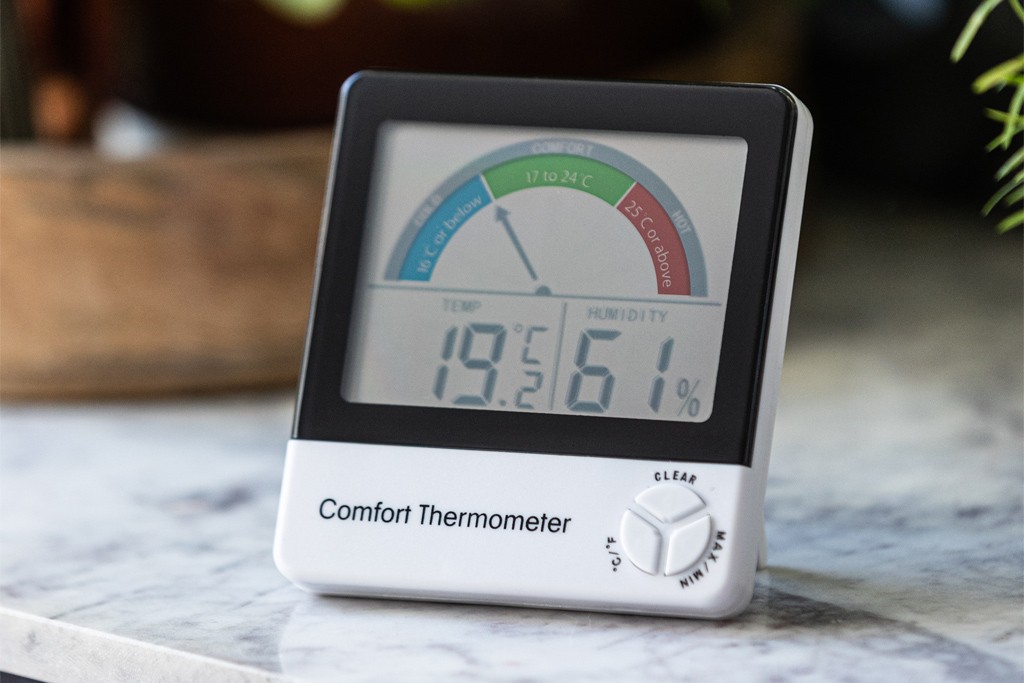

Most refrigeration appliances sold in the UK are rated to operate between 10 degrees and 32 degrees Celsius. In a cold garage or outbuilding where temperatures fall below 10 degrees in winter, a combined fridge-freezer may work incorrectly – and in some cases the freezer section can partially defrost. Separate fridges and standalone freezers are less susceptible to this problem. Some appliances are now specifically designed for colder environments.
Climate class is the manufacturer’s specification for the ambient temperature range in which a refrigeration appliance is designed to work reliably. Understanding this prevents choosing the wrong appliance for a garage, shed, or cellar installation – and explains problems that are already occurring.
What Is Climate Class?
All refrigeration appliances carry a climate class rating that specifies the minimum and maximum ambient (room) temperature they are designed to operate in. See our guide on climate classes for fridges, freezers and fridge-freezers for the full classification system.
The most common climate class for UK domestic appliances is SN-ST, which covers a range of approximately 10 degrees to 38 degrees Celsius. In a typical UK home, this range is easy to stay within. In a garage, shed, or cellar, temperatures in winter may regularly fall below 10 degrees – and in summer an uninsulated garage can exceed 35 degrees.
What Happens When the Temperature Is Too Cold
A combined fridge-freezer with a single thermostat – which is the majority of domestic fridge-freezers – is particularly vulnerable to cold ambient temperatures. Here is why:

How a single-thermostat fridge-freezer works
A combined fridge-freezer typically has one compressor and one thermostat, which is usually located in the fridge compartment. The thermostat cycles the compressor on and off to maintain the fridge at 0 to 5 degrees. The freezer section, needing to reach minus 18 degrees, is kept cold by the same compressor running continuously enough to also cool the freezer.

The cold garage problem
When the ambient temperature in the garage falls to 10 degrees or below, the fridge compartment can reach its target temperature from the surrounding air alone – without the compressor needing to run. The thermostat shuts off. With the compressor off, the freezer section is no longer actively cooled. If the thermostat stays off for an extended period, the freezer compartment gradually warms up and food can begin to partially defrost.

The hidden partial defrost risk
In some cases food partially defrosts and then refreezes when the compressor resumes – creating a cycle the owner may not notice. Food that has been repeatedly partially defrosted and refrozen has reduced quality and shorter safe storage life. Ice cream is often the first item to show obvious changes – becoming coarse and crystallised.
Some have separate temperature controls for each compartment. If a fridge-freezer is already installed in a cold space and the freezer is struggling, check the specification to confirm whether it has a single thermostat or independent controls for each section.
What Happens When the Temperature Is Too Hot
If the ambient temperature rises above the appliance’s maximum climate class rating, the condenser (typically at the back of the unit) cannot shed heat effectively. The condenser needs the surrounding air to be at least 10 degrees cooler than the condenser itself for heat to radiate away. In a very hot garage in summer, this differential cannot be maintained.
The consequences are the opposite to cold ambient temperature problems: the appliance runs continuously trying to maintain the internal temperature, uses significantly more energy, and may struggle to keep food cold. Prolonged operation above the rated maximum temperature can cause the compressor to overheat and fail.
Separate Fridge and Freezer vs Combined Unit
 Separate fridge and standalone freezer
- Each appliance has its own thermostat controlling only its own compartment
- A standalone freezer will continue to maintain temperature correctly in cold ambient conditions because its thermostat is set to reach minus 18 degrees – the ambient temperature being cold does not prevent the thermostat from cycling
- Generally more suitable for garage installation than combined units
 Combined fridge-freezer (single thermostat)
- Single thermostat in the fridge section controls the whole appliance
- In cold conditions, the thermostat can shut off the compressor entirely while the fridge is kept cool by the ambient air
- The freezer section is not maintained independently and can defrost
- More susceptible to both cold and hot ambient temperature extremes
Appliances Designed for Cold Environments
Some manufacturers now produce refrigeration appliances specifically rated for cold environments – with climate classes that extend down to minus 15 degrees Celsius or similar. These are sometimes marketed as “garage ready” or “outbuilding rated.” If placing a fridge or freezer in a garage or outbuilding is a firm requirement, searching specifically for appliances with an appropriate low-temperature climate class rating is strongly recommended over fitting a standard domestic appliance.
Condensation in Cold Rooms
A refrigerator or freezer in a cold, damp garage can develop condensation on the external cabinet surfaces – particularly on the warmer parts of the outside wall. This can lead to mould growth on the door seal and rust on the cabinet over time.
Continuous condensation on specific patches of the cabinet even when the room is not particularly cold can indicate insulation breakdown – where the insulation inside the cabinet wall has failed. This causes cold air to leak from the cabinet continuously, the appliance to run excessively, and increased energy use. Insulation failure is generally terminal for the appliance.
Related Guides
Related Guides
Fridge and Freezer Climate ClassesWhat the climate class ratings mean and how to check whether an appliance is suitable for your installation environment.
 Frosting Up in a Fridge or Freezer
Excessive frost formation – causes, how to check the door seal, and when to defrost manually.
 How Frost-Free Defrosting Works
How modern frost-free appliances manage defrost cycles – and what goes wrong when they don’t.
 Washing Machine in a Garage
The risks and precautions for washing machine installations in garages – condensation, frost, and drainage.
Frequently Asked Questions
Can I put a fridge-freezer in a garage?
It depends on the temperature range the garage reaches and the climate class rating of the appliance. Most UK domestic fridge-freezers are rated to a minimum of 10 degrees Celsius. If the garage regularly falls below this in winter, a combined fridge-freezer with a single thermostat may cause the freezer section to defrost. Standalone freezers are less susceptible. Some appliances are now specifically rated for cold environments – these are better suited to garage installation.
Why is my garage fridge-freezer defrosting in winter?
Almost certainly because the ambient temperature in the garage has fallen below the appliance’s minimum climate class rating, causing the single thermostat to shut off the compressor. With the compressor off, the freezer section is no longer actively cooled and gradually warms up. This is a design characteristic of combined fridge-freezers with a single thermostat in the fridge section, not a fault with the appliance. A separate standalone freezer does not have this problem as its thermostat controls the freezer independently.
Is a standalone freezer safe in a cold garage?
Generally yes, as long as the ambient temperature stays within the appliance’s climate class range. A standalone freezer has its own thermostat set to maintain minus 18 degrees. Cold ambient temperature does not cause it to shut off in the way that affects a combined fridge-freezer, because minus 18 degrees is far colder than any UK garage temperature. Some freezers are specifically rated for very cold environments – check the climate class if the garage regularly falls below 5 to 10 degrees.
Ask the repair forum
Post the make, model and symptoms and get help from the Whitegoods Help community.
11 Comments
Grouped into 10 comment threads.
0 replies Re freezers in outbuildings. I have 2 upright Beko freezers and have had no trouble with them in an outside, brickbuilt shed. One is a recent purchase, the other I have had for several years. I purposely chose these as they were the only models I could find that would be good in an ambient temperature down to -18degs. Unfortunately however, the only place my fridge can be sited in my small kitchen, is against an outside (cavity) wall, with an airbrick behind the fridge. This is my third fridge - not an ideal place for it to be; blasts of icy air directly on to the rear of the fridge in winter, hot air in summer. I know I can't cover the airbrick over but is there any way I could maybe re-direct the air flow (use of a cowl/insulated cowl[?] for example) to help prevent the direct affects of heat/cold against the back of the fridge. This is also a Beko freestanding model - the other 2 fridges were different makes - but happy as I am with the freezers, I don't think even Beko fridges are made to withstand these variables in ambient temperature. Any help/suggestions would be very welcome.
0 replies 16 should be OK according to the climate class. What is the temperature in the middle of the night though?
16 should be OK according to the climate class. What is the temperature in the middle of the night though?
0 replies I have a 6 month old expensive Aeg upright fridge, the water tray at the back of the unit has overflowed ( not for the first time) the engineer has just left, apparently at 16 degrees my kitchen is too cold, I've checked the manual and the ambient temp should be between 16 & 38. The same happened in the summer and he said my kitchen was too hot. Can't seem to win.
I have a 6 month old expensive Aeg upright fridge, the water tray at the back of the unit has overflowed ( not for the first time) the engineer has just left, apparently at 16 degrees my kitchen is too cold, I’ve checked the manual and the ambient temp should be between 16 & 38. The same happened in the summer and he said my kitchen was too hot. Can’t seem to win.
0 replies It's always possible they may blame the temperature. Normally though higher temperatures tend to just cause the appliance to have to work much harder, which can of course have breakdown implications. It's possible a modern one may struggle to get down to -18 in temperatures over 30 degrees. However, I would still expect everything to return to normal once the temperature returns to lower levels.
It’s always possible they may blame the temperature. Normally though higher temperatures tend to just cause the appliance to have to work much harder, which can of course have breakdown implications. It’s possible a modern one may struggle to get down to -18 in temperatures over 30 degrees. However, I would still expect everything to return to normal once the temperature returns to lower levels.
0 replies I have a John lewis Freezer which is set at -18c I have just been away on a 3week holiday my freezer is in the garage and fairly close to garage rear door that has a window during the time I have been away the temp. here have been around 30%c and above probably higher in my garage I find that my freezer is only getting up to -15c if I call an engineer out is the likely cause going to be it is sited in the wrong place? can anyone advise
I have a John lewis Freezer which is set at -18c I have just been away on a 3week holiday my freezer is in the garage and fairly close to garage rear door that has a window during the time I have been away the temp. here have been around 30%c and above probably higher in my garage I find that my freezer is only getting up to -15c if I call an engineer out is the likely cause going to be it is sited in the wrong place? can anyone advise
0 replies Alan Fox: I too have refrigeration appliances in my attached garage which gets pretty cold although they are all separate and not fridge-freezer combinations. One of my freezers also seems to be running far too much of the time. I've never decided if theirs a problem with it, or it's related to the temperature or if it's just that modern appliance do run a lot longer than they used to.
Alan Fox: I too have refrigeration appliances in my attached garage which gets pretty cold although they are all separate and not fridge-freezer combinations. One of my freezers also seems to be running far too much of the time. I’ve never decided if theirs a problem with it, or it’s related to the temperature or if it’s just that modern appliance do run a lot longer than they used to.
0 replies My Bosch fridge freezer is in the unheated but attached garage. I have no problem with defrosting Freezer set at - 18 and frdge at 4 C. But freezer compressor seems to run an awful lot even when the door has been closed for some time. what could cause this, please?
My Bosch fridge freezer is in the unheated but attached garage.
I have no problem with defrosting Freezer set at – 18 and frdge at 4 C.
But freezer compressor seems to run an awful lot even when the door has been closed for some time.
what could cause this, please?
0 replies Beko fridge freezers are designed to work at sub-zero ambient . As far as I know they are the only ones.
Beko fridge freezers are designed to work at sub-zero ambient . As far as I know they are the only ones.
0 replies Oops! Just found this other thread, which has just the sort of recommendations I am looking for :-) Climate class explanation for fridges and freezers
Oops! Just found this other thread, which has just the sort of recommendations I am looking for :-)
Climate class explanation for fridges and freezers
0 replies I live in an old, cold house where the kitchen is in a single-storey scullery (there is evidence in the adjoining "breakfast room" room that it originally contained a huge kitchen-range so I guess the "kitchen" functions were once shared between these two rooms). There is no central heating or built-in heating in either room and in the winter I retreat to the "back living room" which has a gas fire. Last winter, which was the coldest since I moved here, the fridge freezer stopped working properly for a short while but then started up again. In the last couple of days, with the dramatic drop in temperature (coldest November on record?) it has stopped working again - and I finally made the connection with ambient temperature! I have checked the manual and yes, it does say that it needs to be kept in an environment above 14C (I wish!) I am trying to find a replacement that has separate controls for the fridge and freezer and climate class SN (I know that, theoretically, that should be no better than my current fridge-freezer when the weather is so cold. However, my current fridge-freezer has coped in previous years when the temperature was certainly below 14C but not as cold as last year or this year.) I have been looking on the internet for a replacement (the cheaper the better) but info on thermostat controls and climate class does not seem to be included routinely. I have also been trawling charity shops with refurbished "white goods" without success so far. If anyone could suggest any SN Class Fridge-Freezers with separate controls for fridge and freezer, I would be very grateful! (If I find that I can be fussy about size then I would go for something up to height 181cm x max width 60cm - if any higher then I need to remove a wall cupboard and if any wider I need to put it in the adjoining room, which would need re-wiring to put a socket on the wall facing the windows. If I need to, I could get a separate fridge and freezer but, despite the house being huge, the layout, size of windows and paucity of electric outlets means that a lot of the space is difficult to use so a fridge-freezer works very well). Any advice or info would be very gratefully received!
I live in an old, cold house where the kitchen is in a single-storey scullery (there is evidence in the adjoining “breakfast room” room that it originally contained a huge kitchen-range so I guess the “kitchen” functions were once shared between these two rooms). There is no central heating or built-in heating in either room and in the winter I retreat to the “back living room” which has a gas fire.
Last winter, which was the coldest since I moved here, the fridge freezer stopped working properly for a short while but then started up again. In the last couple of days, with the dramatic drop in temperature (coldest November on record?) it has stopped working again – and I finally made the connection with ambient temperature!
I have checked the manual and yes, it does say that it needs to be kept in an environment above 14C (I wish!)
I am trying to find a replacement that has separate controls for the fridge and freezer and climate class SN (I know that, theoretically, that should be no better than my current fridge-freezer when the weather is so cold. However, my current fridge-freezer has coped in previous years when the temperature was certainly below 14C but not as cold as last year or this year.)
I have been looking on the internet for a replacement (the cheaper the better) but info on thermostat controls and climate class does not seem to be included routinely. I have also been trawling charity shops with refurbished “white goods” without success so far.
If anyone could suggest any SN Class Fridge-Freezers with separate controls for fridge and freezer, I would be very grateful!
(If I find that I can be fussy about size then I would go for something up to height 181cm x max width 60cm – if any higher then I need to remove a wall cupboard and if any wider I need to put it in the adjoining room, which would need re-wiring to put a socket on the wall facing
the windows. If I need to, I could get a separate fridge and freezer but, despite the house being huge, the layout, size of windows and paucity of electric outlets means that a lot of the space is difficult to use so a fridge-freezer works very well).
Any advice or info would be very gratefully received!
Re freezers in outbuildings. I have 2 upright Beko freezers and have had no trouble with them in an outside, brickbuilt shed. One is a recent purchase, the other I have had for several years. I purposely chose these as they were the only models I could find that would be good in an ambient temperature down to -18degs.
Unfortunately however, the only place my fridge can be sited in my small kitchen, is against an outside (cavity) wall, with an airbrick behind the fridge. This is my third fridge – not an ideal place for it to be; blasts of icy air directly on to the rear of the fridge in winter, hot air in summer. I know I can’t cover the airbrick over but is there any way I could maybe re-direct the air flow (use of a cowl/insulated cowl[?] for example) to help prevent the direct affects of heat/cold against the back of the fridge. This is also a Beko freestanding model – the other 2 fridges were different makes – but happy as I am with the freezers, I don’t think even Beko fridges are made to withstand these variables in ambient temperature. Any help/suggestions would be very welcome.