
Installing a washing machine or dishwasher in basement
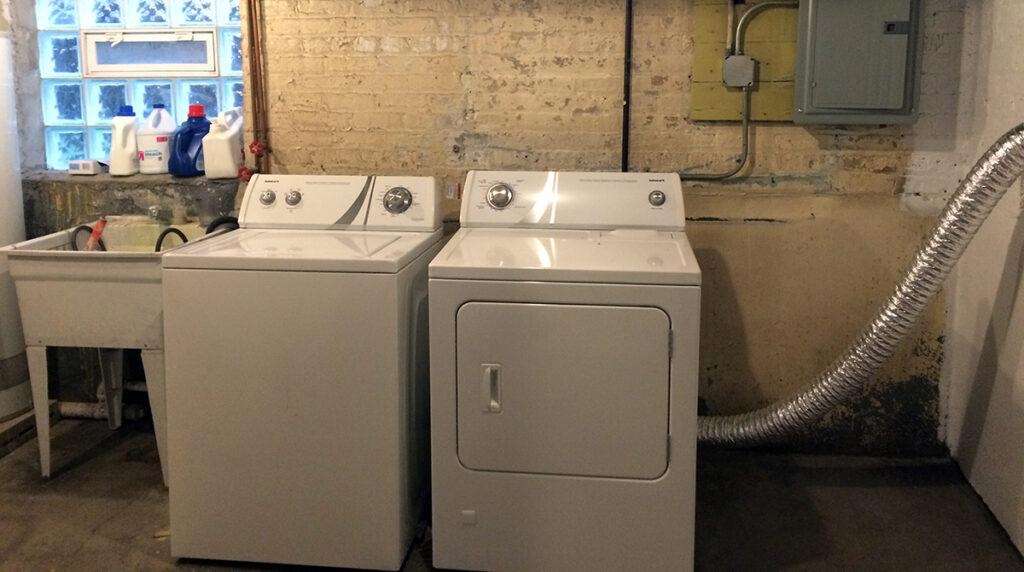

A washing machine or dishwasher installed in a basement cannot drain to ground-level plumbing using its own built-in pump alone – the pump is not designed to push water upwards more than a limited height. The correct solution is a specialist macerator or waste pump system designed for below-ground installations. The best-known brand in the UK is Saniflo. Simply extending the drain hose up to ground level will not work reliably.
Installing a washing machine or dishwasher in a basement or cellar is entirely achievable, but requires additional drainage infrastructure. The appliance’s own pump is not up to the task of lifting waste water to ground-floor drainage level on its own.
Why the Built-In Pump Is Not Enough
Washing machine and dishwasher drain pumps are designed to move water through a relatively short run to a nearby standpipe or trap at approximately the same height. They are not designed to lift water significantly above the machine’s own level.
Attempting to drain a basement appliance by simply extending the drain hose up to ground level will produce one or more of the following problems:
 Problems with an extended drain hose in a basement
- The machine cannot drain within its programmed time limit – modern machines monitor drain time via software and will abort the cycle with a drain error code if water has not cleared within the allowed window
- Spin programmes fail because insufficient water has been removed – the machine detects the remaining water and will not proceed to spin
- Even if water partially drains, rinse efficiency is reduced – dirty water cannot be fully expelled before the next rinse fill
- The pump motor works against excessive head pressure continuously, shortening its lifespan
The Correct Solution: A Specialist Pump System
The proper way to install an appliance below ground-floor drainage level is to add a specialist waste pump – a secondary pumping unit that receives the appliance’s drain water and actively pumps it up to the ground-level drainage connection. These systems are designed specifically for this purpose.

Macerator and waste pump systems
Pump systems such as those made by Saniflo (the best-known brand in the UK for this application) are designed to receive appliance waste water and lift it to whatever height is needed. They are installed between the appliance’s drain outlet and the drain connection. A plumber experienced with this type of installation should carry out the work.

Pre-installation requirements
Only install appliances in a basement that has been properly converted into a usable room – dry, with adequate ventilation. A damp cellar is not suitable for any appliance installation. The room will also need a properly earthed electrical supply and adequate cold water inlet pressure. See our guide on low water pressure and washing machines – basement supply pressure may also be an issue depending on the property.
Raising the machine itself on a pedestal – to reduce the height differential it needs to drain – is sometimes discussed as an alternative. In practice this is only marginally helpful and creates other problems: the dispenser drawer and drum become difficult to access, and the machine must be secured very firmly to prevent it moving on spin. Commercial machine pedestals typically only raise a machine by approximately 30cm – not enough to eliminate the need for a pump system in a true basement installation.
Cost and Installation Considerations
-

Budget for the pump system as well as the appliance. A Saniflo or equivalent waste pump for an appliance installation is a significant additional cost on top of the machine itself. Get quotes before committing to the installation plan. -
Use a qualified plumber with experience of this type of installation. Not all plumbers have fitted waste pump systems for appliances – ask specifically when getting quotes. -
Confirm the basement room is dry and has adequate ventilation. Appliances in damp spaces will suffer condensation damage to electronics and motor components. -
Ensure the drain connects to the foul water sewer, not surface water. See our guide on washing machine drain misconnections.
Installation Guides
Related Guides
 How to Install a Washing Machine
Step-by-step installation guide including drainage, inlet connections, and levelling.
 Washing Machine in a Garage
The risks and precautions for garage appliance installations – condensation, frost, and illegal drain connections.
 Washing Machine Drain Misconnections
Why connecting to a surface water drain is illegal and how to check the connection is correct.
 Low Water Pressure and Washing Machines
How low inlet pressure affects filling and what minimum pressure is needed for a washing machine to function.
Frequently Asked Questions
Can a washing machine drain uphill from a basement?
Not reliably using its own built-in pump. The built-in drain pump is designed to move water a short distance to a nearby standpipe, not to lift it significantly above the machine’s level. Extending the drain hose up to ground level will cause drain timeout errors, spin failures, and pump motor strain. A specialist waste pump system is required for a below-ground installation to work correctly.
What pump do I need to install a washing machine in a basement?
A specialist waste pump or macerator system designed for below-ground appliance installations. Saniflo is the best-known brand in the UK for this application. These units are installed between the appliance’s drain outlet and the ground-floor drainage connection, actively pumping waste water up to the required height. Installation should be carried out by a qualified plumber experienced with this type of system.
Is it worth installing a washing machine in a basement?
It depends on the property and how the basement is set up. A properly converted, dry basement room with adequate ventilation, a correct electrical supply, and a professionally installed waste pump system can work well as an appliance location. An unconverted, damp cellar with a makeshift drain arrangement is not appropriate. Factor in the full cost of the waste pump system and its installation before committing to the plan.
6 Comments
Grouped into 4 comment threads.
1 reply I have a sump pump in the basement for the toilet, I want to make a kitchenette in basement too. Can I install a dishwasher to the sump pump. Do I need a sink?
0 replies If installing a washing machine in a basement you should use a Sanivite not a long hose as a washing machine is not powerful enough to pump the water away. If you use a Saniflo in a basement and would like a toilet as well, use a Sanibest as it can cope with hot water. One more tip, use a 32mm waste pipe out of the Saniflo as a minimum as a 22mm pipe cannot cope with a large drum washing machine not following this tip will cause Saniflo Problems.
If installing a washing machine in a basement you should use a Sanivite not a long hose as a washing machine is not powerful enough to pump the water away. If you use a Saniflo in a basement and would like a toilet as well, use a Sanibest as it can cope with hot water. One more tip, use a 32mm waste pipe out of the Saniflo as a minimum as a 22mm pipe cannot cope with a large drum washing machine not following this tip will cause Saniflo Problems.
0 replies I agree. Newer washer models need high water pressure for them to work perfectly. If there is a low water pressure in your basement, it might not fill up the washer drum in time. The washer will automatically abort the washing cycle if it does not detect enough water. One solution to this problem is using pressure gauge. These are a little costly, though.
I agree. Newer washer models need high water pressure for them to work perfectly. If there is a low water pressure in your basement, it might not fill up the washer drum in time. The washer will automatically abort the washing cycle if it does not detect enough water. One solution to this problem is using pressure gauge. These are a little costly, though.
I have a sump pump in the basement for the toilet, I want to make a kitchenette in basement too. Can I install a dishwasher to the sump pump. Do I need a sink?
Likely replying to Gloria McLaughlin
Hello Gloria. I don’t know to be honest. I suspect you need a separate pump but ask the guys on the link in the last comment as they are experts on the subject.