
Eco-labels suggestion
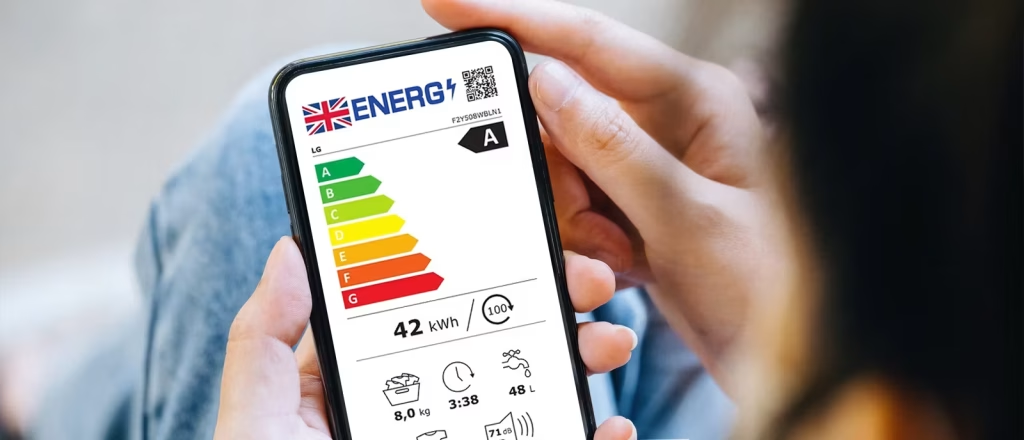

Energy efficiency labels on washing machines rate appliances on energy, water, wash performance, spin, and noise. What they do not rate is how long the appliance is likely to last. A washing machine that scores an A rating but lasts only 4 years causes more environmental harm overall than one rated slightly lower that lasts 20 years. Adding an expected lifespan indicator to energy labels would give consumers a genuinely complete picture.
What Energy Labels Currently Measure
EU energy efficiency labels (which remain in use in the UK in updated form) rate washing machines across several parameters: energy consumption per cycle, water consumption, wash performance, spin drying efficiency, and noise level. These are all useful measures of how the machine performs during its operating life.
What the label does not measure is how long that operating life is likely to be. A machine rated A for energy that lasts five years uses significantly more total energy over a 20-year period than a machine rated B that lasts 20 years. The label captures annual performance but not total lifetime impact.
The Missing Indicator: Expected Lifespan
A poorly built machine that will be scrapped within five years can achieve the same A energy rating as a well-built machine designed to last 20 years. The energy label gives no indication of this difference. Yet the environmental cost of manufacturing, transporting, and disposing of four machines over a 20-year period massively exceeds the marginal energy saving per cycle on the better-rated but shorter-lived machine.
Adding an expected lifespan indicator to the energy label – based on manufacturer reliability data, independent testing, or design standards – would change how many consumers approach the purchase decision. Consider the effect of seeing the following side by side at the point of sale:
| Machine | Price | Expected lifespan | Cost per year | Machines needed over 20 years |
|---|---|---|---|---|
| Appliance X | £850 | 15 to 20 years | ~£48 | 1 |
| Appliance Y | £299 | 3 to 5 years | ~£75 | 4 to 6 |
| Appliance Z | £575 | 7 to 10 years | ~£65 | 2 to 3 |
The cheapest machine is actually the most expensive over a 20-year period, and produces three to five times as much manufacturing and disposal waste. A lifespan indicator on the label would make this visible at the point of sale rather than invisible to most buyers.
Bigger Drum and Faster Spin Is Not Always Better Value
A common buying pattern is to compare two machines and conclude the one with a larger drum and higher spin speed at a lower price is better value. The specification comparison on the energy label encourages this reading. A lifespan indicator would add the dimension that is currently missing:
| Machine | Price | Drum / Spin | Expected lifespan | Cost per year |
|---|---|---|---|---|
| Machine A | £750 | 6kg / 1400rpm | 20 to 25 years | ~£34 |
| Machine B | £389 | 7kg / 1600rpm | 3 to 8 years | ~£70 |
Machine B appears to offer more – larger drum, faster spin, lower price. Without lifespan data, most consumers would choose it. With lifespan data, the cost-per-year comparison tells a different story.
Premium-priced machines are routinely dismissed as “expensive” by consumers who cannot see what they are getting for the higher price beyond surface specifications. A lifespan indicator on the label would directly explain the price difference for many machines – and give buyers the information needed to make a genuinely informed choice rather than defaulting to the lowest upfront cost. See our guide on how long washing machines should last.
The Current Label’s Limitations
 What the energy label misses
- Build quality and repairability are not rated. A machine that cannot be economically repaired when it fails is less environmentally friendly than one that can, regardless of its energy rating
- Longevity is not rated. A shorter-lived machine requires more manufacturing cycles per decade of service than a longer-lived one, with corresponding environmental cost
- The label rewards per-cycle efficiency but not lifetime efficiency. A machine that uses 5% less energy per cycle but lasts half as long is less efficient over its service life
- Manufacturers can design machines specifically to score well on the label tests without improving real-world performance. Scores have converged as manufacturers optimise for the rating rather than for genuine improvement
For the current energy label series and what the existing ratings mean, see our guides on what energy labels mean and how designing for eco labels can be misleading.
Related Guides
Related Guides
 What Washing Machine Energy Labels Mean
A full explanation of what each section of the current energy label measures and how to read it.
 How Eco Labels Can Be Misleading
Why manufacturers design to the test rather than for real-world performance – and what this means for buyers.
 Why Don’t Washing Machines Last?
How price competition has reduced machine longevity – the context behind the lifespan data that labels should show.
 Do We Need to Replace Old Appliances?
Whether replacing a working appliance with a higher-rated one actually reduces environmental impact overall.
Frequently Asked Questions
Why don’t energy labels show how long a washing machine will last?
Current EU and UK energy labels rate washing machines on measurable per-cycle performance metrics: energy use, water use, wash quality, spin efficiency, and noise. Lifespan is not currently included, though it is arguably the most important environmental factor. A machine that lasts 20 years has far lower lifetime environmental impact than one rated slightly better per cycle but replaced every five years.
Is a cheaper washing machine actually worse value over time?
Often yes, when lifespan is factored in. A budget machine at £300 that lasts five years costs £60 per year. A premium machine at £800 that lasts 20 years costs £40 per year – and involves one machine being manufactured and disposed of instead of four. The upfront price comparison is misleading without the lifespan context.
Would a lifespan indicator on energy labels change buying decisions?
For many buyers, yes. The specification comparison on current labels makes a larger drum and higher spin speed at a lower price look like better value – which it often is not when lifespan is included. Seeing cost per year alongside purchase price, and machines needed per decade, would give buyers the information currently missing from the point-of-sale comparison.
1 Comment
Grouped into 1 comment thread.
Please tell me what is the efficiency of a washing machine, using the cotton cycle, in terms of a rate between useful energy and final energy.