
Do we really need to dump our old inefficient appliances?
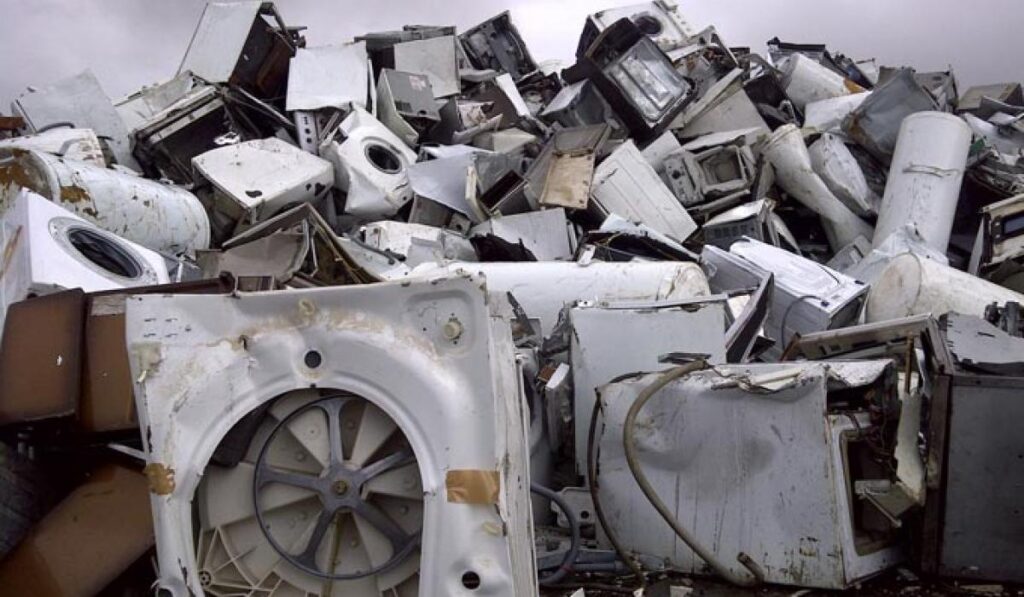

Replacing a working washing machine with a more efficient model saves a modest amount on running costs – typically under £15 per year in energy savings. At current appliance prices of £300 to £600 for a replacement, the payback period from energy savings alone is 20 to 40 years. The case for replacement on energy grounds alone is weak unless the appliance has already reached the end of its reliable service life.
Campaigns encouraging households to replace working appliances with more energy-efficient models are a regular feature of the domestic appliance market. The arguments deserve careful examination – both the claimed savings and the costs that are not always included in the comparison.
What the Energy Savings Actually Are
The energy saving from replacing a 10-year-old washing machine with a modern high-efficiency model is approximately 40 to 50 kilowatt-hours per year – roughly a 15 to 20% reduction in the machine’s annual energy consumption.
The 17% figure illustrates a common issue with percentage-based energy claims. A 17% saving sounds substantial – but 17% of a small number is still a small number. The annual cost to run a modern washing machine is approximately £25 to £50 depending on usage. A 17% saving on this is under £10 per year. Percentage claims require the underlying figure to be meaningful.
What Is Left Out of the Calculation
Campaign-based comparisons between old and new appliances typically show the energy consumption difference between the two machines. They do not typically include:
 Costs not included in standard replacement calculations
- The carbon cost of manufacturing the new appliance – including raw material extraction, component production, and factory energy use
- Logistics and transport of the new appliance from factory to retailer to household
- Collection and transport of the old appliance to a recycling facility
- The energy and resources required to process the old appliance – recovering refrigerant from cooling appliances, smelting metals, processing plastics
- Disposal of the new appliance’s packaging – significant volumes of polystyrene and cardboard
Industry research has argued that 90% of a domestic appliance’s lifetime environmental impact comes from the energy it uses during operation, not manufacture or disposal. This figure is widely cited in replacement campaigns. However, it describes the lifetime impact of the old appliance – which has already occurred. The relevant question for a replacement decision is the marginal cost of replacing now versus continuing to use the working appliance for a few more years.
Who Is Promoting Replacement?
The “Time to Change” campaign that produced much of the data used in appliance replacement arguments was promoted substantially through AMDEA – the Association of Manufacturers of Domestic Appliances. This is the trade body representing the manufacturers who benefit commercially from increased appliance replacement. This does not make the underlying energy efficiency data wrong, but it is relevant context when evaluating how the data is presented and emphasised.
Some supporting data came from the Energy Saving Trust and other bodies with no commercial interest in appliance sales – this lends more credibility to the raw figures. The question is whether the framing of the savings as compelling reasons to replace working machines is a balanced assessment.
When Replacement Does Make Sense
The case for replacing a working appliance on energy grounds alone is generally weak. The case is stronger in specific circumstances:
 When replacing an appliance is genuinely worthwhile
- The appliance has developed a fault and the repair cost approaches or exceeds the replacement cost – replacing at this point adds no additional environmental cost beyond what the failure already necessitates
- The appliance is very old – 15 or more years – and the energy difference compared to current models is significantly larger than the 10-year comparison
- The appliance is a large refrigeration unit that runs continuously – the cumulative energy saving over a long period is larger than for a machine that only runs when used
- A household is choosing between purchasing a new appliance regardless – in which case the energy efficiency of the replacement is absolutely a relevant criterion
Related Guides
Related Guides
 How Long Should a Washing Machine Last?
Expected lifespans by price tier and what affects how long a machine remains in reliable service.
 Why Don’t Modern Washing Machines Last?
How price competition has reduced build quality over 50 years – and what the inflation-adjusted numbers show.
 WEEE Regulations Penalise Quality Appliances
How recycling legislation creates perverse incentives for manufacturers of durable, repairable appliances.
 Are Eco Labels on Washing Machines Misleading?
How energy ratings are measured and why real-world performance may differ from the label.
Frequently Asked Questions
How much does replacing a washing machine save on energy bills?
Replacing a 10-year-old washing machine with a modern high-efficiency model saves approximately 40 to 50 kilowatt-hours per year – worth approximately £11 to £13 at current UK electricity rates. The saving increases if the old machine is significantly older. At a replacement cost of £300 to £600, the payback period from energy savings alone is 25 to 50 years – making the economics of replacement on energy grounds alone very weak unless the appliance would be replaced anyway.
Is it better for the environment to replace an old appliance?
This is more complex than it appears. The energy saving from using a newer appliance is real. However, manufacturing, transporting, and disposing of appliances all have environmental costs that are not typically included in campaign comparisons. For a working appliance with several years of service life remaining, the environmental benefit of the energy saving may not outweigh the impact of premature replacement. When an appliance needs replacing anyway, choosing the most energy-efficient option is clearly worthwhile.
Should I replace a working 10-year-old washing machine?
On energy grounds alone, probably not – the annual energy saving is under £15 and the payback period is very long. If the machine is developing reliability issues or the repair costs are significant, the calculation changes – replacing at this point adds no additional environmental cost beyond what the failure already requires. If the machine is working well and producing good results, keeping it running until it genuinely needs replacement is typically the most economical and arguably the most environmentally sound option.
9 Comments
Grouped into 6 comment threads.
1 reply Hi. I am talking to the Government in Wales, and close to do the same with the UK one. Its about the ReUse of White Goods, a Standard in Quality Training, and the Environmental Impact of New White Goods as opposed to ReUse. I'm trying to set up a UK/EU wide System for Regulation of the Sector and its Called EEE-Safe, to align with the thinking of the Gas Safe Register. I have developed in partnership with the Author of the Haynes Manuals for Appliance Repairs, a set of Learning Material to help deliver a Qualification. I wanted to know if it was ok to use the quotes from Washerhelp and others, that are on this site. I can probably come to the same conclusions and thoughts as they are my personal beliefs as well, but I thought it polite and fair to ask if I can. I can always come back and update you with info on my work. Thanks. Robert
1 reply Imagine then, if everyone follows AMDEA's advice and dumps "inefficient" appliances to 'save' (??) our planet Earth, what would happen? For a start, I don't imagine everyone would replace them old appliances with the reliable brands like Miele, because brands like Miele are "too expensive". Most people would buy brands such as Hotpoint, Beko, Hoover, Candy etc. which are cheaper and less reliable. All manufacturer's play on the "environmentally friendly" marketing c**p. Newer appliances are NOT as well made as the older ones, nowhere near as good. So these new appliances will break down more often, the cost of repair being nearly the same price as replacing the appliance, so it gets thrown and parts that can't be recycled go to landfill! Then the replacement breaks in less than 10 years and the same thing happens - and this happens again and again - which creates a hell of a LOT of landfill! Should we really throw away old appliances in our homes and replace them with modern unreliable ones? I don't think so! I'm surprised people don't have better things to do with their time than trying to control our lives. I agree with the above comment about them wasting energy sat around a table with computers, lighting and air conditioning switched on whilst discussing this nonsense. Not to mention their cups of coffee, lunch, nice cars and so on. If they are so "environmentally friendly", will they give up their luxuries and live on the bare minimum resources everyday? I don't think so!! I recommend that everyone keeps their old appliances running, they are solidly made and don't break so easily. Older washing machines use lots of water and rinse PROPERLY and are actually repairable. Thanks for reading. :)
Imagine then, if everyone follows AMDEA’s advice and dumps “inefficient” appliances to ‘save’ (??) our planet Earth, what would happen?
For a start, I don’t imagine everyone would replace them old appliances with the reliable brands like Miele, because brands like Miele are “too expensive”. Most people would buy brands such as Hotpoint, Beko, Hoover, Candy etc. which are cheaper and less reliable. All manufacturer’s play on the “environmentally friendly” marketing c**p.
Newer appliances are NOT as well made as the older ones, nowhere near as good. So these new appliances will break down more often, the cost of repair being nearly the same price as replacing the appliance, so it gets thrown and parts that can’t be recycled go to landfill! Then the replacement breaks in less than 10 years and the same thing happens – and this happens again and again – which creates a hell of a LOT of landfill!
Should we really throw away old appliances in our homes and replace them with modern unreliable ones? I don’t think so!
I’m surprised people don’t have better things to do with their time than trying to control our lives. I agree with the above comment about them wasting energy sat around a table with computers, lighting and air conditioning switched on whilst discussing this nonsense. Not to mention their cups of coffee, lunch, nice cars and so on. If they are so “environmentally friendly”, will they give up their luxuries and live on the bare minimum resources everyday? I don’t think so!!
I recommend that everyone keeps their old appliances running, they are solidly made and don’t break so easily. Older washing machines use lots of water and rinse PROPERLY and are actually repairable.
Thanks for reading. :)
0 replies And, WRT Boiler Scrappage, you might note that the EST's own website (they administer the Boiler scheme) says that if **all** of the 4.5m boilers that are assumed to be inefficient are replaced with the **very best** new ones that can be bought, the sum total of CO2 reduction would be just 14% of the UK's CO2. The scheme will only help 125,000 replacements to happen, which is just one-thirtysixth of the (assumed) inefficient boilers. Put it another way we can save 1/36 of that 14% of CO2, which is about 0.39% of the UK's CO2. It's not worth it from an environmental point of view, it's not worth it financially for the householders and it's not worth it in terms of meeting targets for emissions. And then factor in the cost of "making good" once you've ha dthe boiler changed and got walls to re plaster and decorating and so on, plus the knowledge that new boilers generally break down much more often that old ones and are not designed to last as long and it's a complete no-brainer. Which of course is what the Government relies upon: the assumption that Joe Public has no brains.
And, WRT Boiler Scrappage, you might note that the EST’s own website (they administer the Boiler scheme) says that if **all** of the 4.5m boilers that are assumed to be inefficient are replaced with the **very best** new ones that can be bought, the sum total of CO2 reduction would be just 14% of the UK’s CO2.
The scheme will only help 125,000 replacements to happen, which is just one-thirtysixth of the (assumed) inefficient boilers.
Put it another way we can save 1/36 of that 14% of CO2, which is about 0.39% of the UK’s CO2.
It’s not worth it from an environmental point of view, it’s not worth it financially for the householders and it’s not worth it in terms of meeting targets for emissions.
And then factor in the cost of “making good” once you’ve ha dthe boiler changed and got walls to re plaster and decorating and so on, plus the knowledge that new boilers generally break down much more often that old ones and are not designed to last as long and it’s a complete no-brainer.
Which of course is what the Government relies upon: the assumption that Joe Public has no brains.
0 replies They are trying it now with Gas Boilers. I saw a news article on BBC saying there's a new Boiler scrappage scheme - Householders will be able to claim £400 towards the cost of a new energy-efficient boiler under a scrappage scheme for old boilers announced by the Chancellor in his pre-Budget report" They are saying you can get up to £400 towards the cost of a new boiler, but they also said it would cost about £2500 to install one to save around £200 a year. By my reckoning that means it will take about 10 years to get back the money you paid to replace your boiler (taking into account gas prices are likely to increase). Unless your old boiler is broken down and beyond repair it's a con to persuade people to replace it "to save money". The main advantage would be reduced emissions for the UK towards the European quotas we are signed up to. As with replacing white goods appliance, the individual won't save anything because the savings are relatively so small it takes far too long to get back the initial investment. What use is saving £200 a year when it costs over £2000 to achieve. Surely it's better to keep running your "old" one as long as its still working (and safe of course) and replace it when it needs replacing. I just did a quick search and found this, Boiler scrappage scheme: who will benefit
They are trying it now with Gas Boilers. I saw a news article on BBC saying there’s a new Boiler scrappage scheme –
Householders will be able to claim £400 towards the cost of a new energy-efficient boiler under a scrappage scheme for old boilers announced by the Chancellor in his pre-Budget report”
They are saying you can get up to £400 towards the cost of a new boiler, but they also said it would cost about £2500 to install one to save around £200 a year.
By my reckoning that means it will take about 10 years to get back the money you paid to replace your boiler (taking into account gas prices are likely to increase). Unless your old boiler is broken down and beyond repair it’s a con to persuade people to replace it “to save money”. The main advantage would be reduced emissions for the UK towards the European quotas we are signed up to.
As with replacing white goods appliance, the individual won’t save anything because the savings are relatively so small it takes far too long to get back the initial investment. What use is saving £200 a year when it costs over £2000 to achieve. Surely it’s better to keep running your “old” one as long as its still working (and safe of course) and replace it when it needs replacing.
I just did a quick search and found this, Boiler scrappage scheme: who will benefit
0 replies On the hot fill washing machine boards on this site you will see endless posts from me which touch on this topic. Read them if you wish. However, the most significant post is one you'll find from a few months back where the Energy Saving Trust actually wrote to me admitting that they know full well (and don't actually pretend otherwise of you think very carefully about the wording that they use in their recommendations) that New appliances DO USE MORE FUEL than older ones. New appliances that are "recommended" (i.e. deemed to be "green" or Energy Saving) are simply ones which use less energy than their CURRENTLY AVAILABLE competitors. I think most readers will agree that this means that the EST are saying, very openly, that the campaign to get us to ditch old appliances is in fact a complete load of bullsh1t. Then, of course, on top of that bombshell you have to bear in mind the points made in the intro to this article, the points made by Oliver and WMUser and the fact that if you replace an appliance that you like you'll almost certainly land yourself with something that you don't like and can't get on with so well, so you'll never be really happy with it.
On the hot fill washing machine boards on this site you will see endless posts from me which touch on this topic.
Read them if you wish.
However, the most significant post is one you’ll find from a few months back where the Energy Saving Trust actually wrote to me admitting that they know full well (and don’t actually pretend otherwise of you think very carefully about the wording that they use in their recommendations) that New appliances DO USE MORE FUEL than older ones. New appliances that are “recommended” (i.e. deemed to be “green” or Energy Saving) are simply ones which use less energy than their CURRENTLY AVAILABLE competitors.
I think most readers will agree that this means that the EST are saying, very openly, that the campaign to get us to ditch old appliances is in fact a complete load of bullsh1t.
Then, of course, on top of that bombshell you have to bear in mind the points made in the intro to this article, the points made by Oliver and WMUser and the fact that if you replace an appliance that you like you’ll almost certainly land yourself with something that you don’t like and can’t get on with so well, so you’ll never be really happy with it.
0 replies Hi Andy, Hope this alleviates the disappointment..............you're onto something I feel very passionate about here........shame it is the opposite to what AMDEA want!!!! Not. I am proud of my views and will stand up and be counted! This is the biggest load of tosh I have heard in almost 21 years on this planet, dumping old appliances for new supposedly efficient ones. The old ones are more RELIABLE lasting a hell of a lot longer they wash, rinse and spin better than the new ones. So putting one old "inefficient" washer in land fill is as bad as say putting 5 unreliable modern machines in landfill as they don't last longer than the warranty period!! So what they may use more energy but spending a lot to save a little as you say is absolute claptrap! I have a 15 year old Bosch washing machine and WOULD NOT have anything else, much better than the modern ones, it sups energy and water but gives sterling service year after year. And above all will not be replacing it with modern junk! I find people making claims like AMDEA offensive. They should find a useful job to do and go and do it, think of all the energy these idiots are wasting sat around a table with computers, lighting, air conditioning on discussing this rubbish, that must cost the environment more than a few old inefficent appliances! Green Peace and the others have a hell of a lot to answer for!!! All the best to you Andy, Oliver.
Hi Andy,
Hope this alleviates the disappointment…………..you’re onto something I feel very passionate about here……..shame it is the opposite to what AMDEA want!!!! Not. I am proud of my views and will stand up and be counted!
This is the biggest load of tosh I have heard in almost 21 years on this planet, dumping old appliances for new supposedly efficient ones. The old ones are more RELIABLE lasting a hell of a lot longer they wash, rinse and spin better than the new ones. So putting one old “inefficient” washer in land fill is as bad as say putting 5 unreliable modern machines in landfill as they don’t last longer than the warranty period!! So what they may use more energy but spending a lot to save a little as you say is absolute claptrap!
I have a 15 year old Bosch washing machine and WOULD NOT have anything else, much better than the modern ones, it sups energy and water but gives sterling service year after year. And above all will not be replacing it with modern junk!
I find people making claims like AMDEA offensive. They should find a useful job to do and go and do it, think of all the energy these idiots are wasting sat around a table with computers, lighting, air conditioning on discussing this rubbish, that must cost the environment more than a few old inefficent appliances!
Green Peace and the others have a hell of a lot to answer for!!!
All the best to you Andy,
Oliver.
Hi. I am talking to the Government in Wales, and close to do the same with the UK one. Its about the ReUse of White Goods, a Standard in Quality Training, and the Environmental Impact of New White Goods as opposed to ReUse. I’m trying to set up a UK/EU wide System for Regulation of the Sector and its Called EEE-Safe, to align with the thinking of the Gas Safe Register. I have developed in partnership with the Author of the Haynes Manuals for Appliance Repairs, a set of Learning Material to help deliver a Qualification. I wanted to know if it was ok to use the quotes from Washerhelp and others, that are on this site. I can probably come to the same conclusions and thoughts as they are my personal beliefs as well, but I thought it polite and fair to ask if I can. I can always come back and update you with info on my work. Thanks. Robert
Likely replying to Robert Alexander
Hello Robert. I’m always happy to be quoted as long as the source is acknowledged. Thanks.