
Condenser dryer or vented dryer which is best?
There are now three types of tumble dryer to choose from: vented, condenser, and heat pump. Each has genuine advantages and disadvantages. This guide explains the differences – including reliability and repair implications – to help you make the right choice for your household.

Vented dryers are the cheapest to buy, most reliable, and easiest to repair – but need a vent hose to the outside. Condenser dryers are more convenient but more complex and expensive. Heat pump dryers cost the least to run but take significantly longer to dry and are the most expensive to buy.
What Is the Difference Between a Vented and a Condenser Tumble Dryer?
The fundamental difference is how each type handles the hot, damp air produced during drying. A vented dryer expels this air as steam and fluff – ideally through a vent hose to the outside. A condenser dryer condenses the steam back into water instead, which is either collected in a removable drawer or pumped directly to a drain.
Vented dryers are mechanically simpler appliances. Condenser dryers have significantly more parts and are more complicated – which inevitably affects both reliability and the ease and cost of repair.
Vented Tumble Dryers
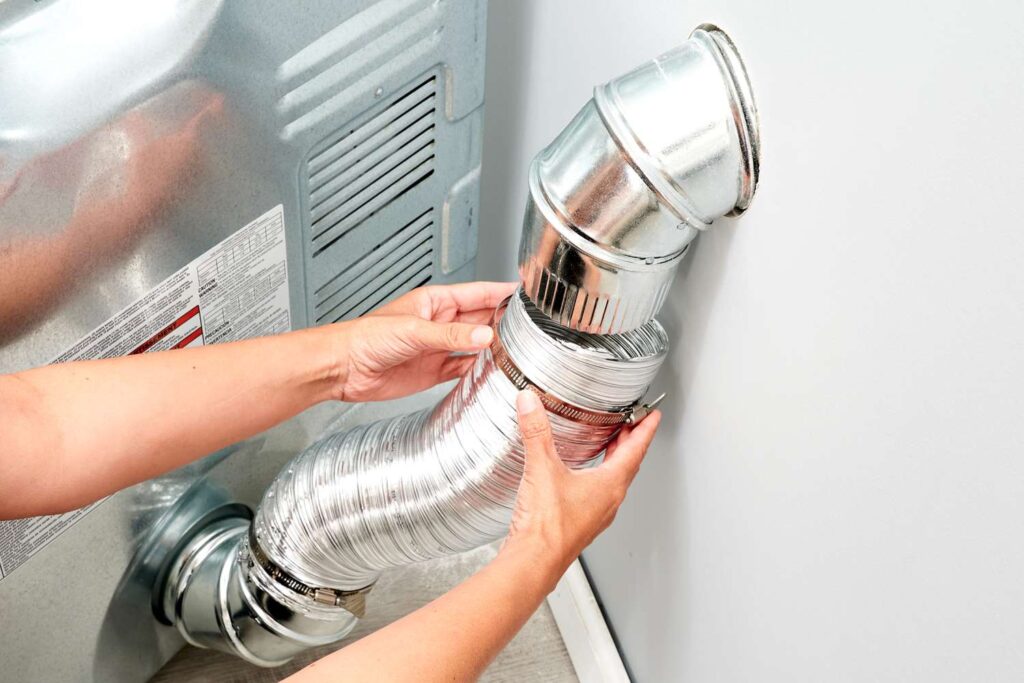
A vented dryer requires a vent hose to remove hot damp air from the room. Ideally this should be routed through an outside wall via a permanent wall kit, which requires drilling a large hole and fitting a louvre or grille. Alternatively the hose can be hung out of a window, though this is less practical in cold weather.
The vent hose is sometimes sold as an optional extra rather than included with the dryer. Flexible vent hoses are susceptible to damage, kinking, and fluff accumulation – particularly if too long or awkwardly positioned. A kinked or blocked vent hose reduces efficiency and can cause overheating.
 Advantages
Cheapest to buy. Most reliable. Easiest to repair. Usually only one filter to keep clean. Have worked reliably for decades.
 Disadvantages
Needs a vent hose, often sold separately. Vent hose ideally needs routing outside permanently. Flexible hose can be awkward, delicate, and prone to kinking or tearing. Can produce significant condensation if not properly vented.
Condenser Tumble Dryers
Condenser dryers route hot damp air into a condensing chamber rather than expelling it outside. The resulting water collects in a removable plastic drawer that needs emptying after each use, though many models can be plumbed directly to a drain to avoid this.
The convenience of not needing an external vent comes at the cost of greater mechanical complexity. Condenser dryers have more components, some of which can be difficult to access – requiring significant disassembly for what might be a straightforward repair on a vented machine. Replacing a belt on a condenser dryer, for example, can be extremely difficult or not practical as a DIY repair.
Advantages
No external vent hose needed. Can be positioned anywhere with a suitable power supply. More features available. Practical solution where venting outside is impossible or impractical.
Disadvantages
More expensive to buy. More parts and more to go wrong. Some repairs require a complete strip-down. Multiple filters to maintain. Lower-quality models may still let damp air escape and cause condensation or mould. Drawer requires emptying after each use unless plumbed in.

They typically have several filters – some not immediately obvious – plus a condensing chamber and water reservoir that all require regular cleaning. Neglecting these causes inefficiency, higher running costs, and breakdowns.
Heat Pump Tumble Dryers
Heat pump dryers are condenser dryers with an added heat pump – a refrigeration-style compressor that recycles otherwise wasted heat. This makes them significantly cheaper to run than both vented and standard condenser dryers. They do not require an external vent.
The trade-off is substantially longer drying times. By recycling heat rather than generating it at full intensity, the drying temperature is lower and cycles take considerably longer. They are also the most expensive type to buy and the most mechanically complex.
Which? has reported that it can take up to seven years of running cost savings to recover the extra purchase cost of a heat pump dryer compared to a cheaper vented or condenser model (full analysis requires a Which? subscription). Prices have been falling and energy costs rising, so this calculation changes over time.
Advantages
Cheapest of all types to run. No vent hose needed. More environmentally friendly. Running costs can be significantly lower than vented or standard condenser dryers.
Disadvantages
Most expensive to buy. Longest drying times of any type. Most mechanically complex. May take several years for running cost savings to recover the higher purchase price.
Which Type Should You Buy?
There is no single right answer – it depends on your circumstances. The key questions to consider are:
- Can you vent a dryer outside? If yes, a vented dryer is worth considering – it is the simplest, most reliable, and cheapest option. If venting outside is impossible or impractical, a condenser or heat pump model is the practical choice.
- How often do you use the dryer? High-volume users will benefit most from the running cost savings of a heat pump dryer and are most likely to recoup the higher purchase cost within a reasonable timeframe.
- Do drying times matter? If you regularly need laundry dried quickly, a heat pump dryer’s longer cycles may be a significant inconvenience. A vented or standard condenser dryer dries faster.
- What is your budget? Vented dryers are the lowest entry cost and typically cheaper to repair. Heat pump dryers have the highest purchase cost but lowest running costs.
More tumble dryer guides
Frequently Asked Questions
What is the difference between a vented and condenser tumble dryer?
A vented dryer expels hot damp air through a vent hose to the outside. A condenser dryer condenses that air back into water, which is collected in a drawer or pumped to a drain. Vented dryers are simpler and more reliable; condenser dryers are more convenient but more complex and more expensive to buy and repair.
Are condenser dryers more expensive to run than vented dryers?
Generally yes, though the difference has narrowed. Consumer group Which? has noted that vented dryers use less energy on average than standard condenser dryers for the same load (full analysis requires a Which? subscription). Heat pump dryers are the cheapest of all types to run, though they take longer to dry.
Do heat pump tumble dryers take longer to dry laundry?
Yes – significantly longer. Heat pump dryers operate at lower temperatures by recycling heat rather than generating it at full intensity. This makes them very economical to run but means drying cycles are considerably longer than with vented or standard condenser dryers. If drying time is important, this is the main trade-off to consider.
Can I use a condenser dryer anywhere in my home?
Yes – condenser dryers do not need an external vent, so they can be placed anywhere with a suitable power supply. This is their main practical advantage over vented dryers. However, cheaper models can still allow some damp air to escape into the room, which may cause condensation issues in poorly ventilated spaces. See: condenser tumble dryer making walls run with condensation.
Which type of tumble dryer is most reliable?
Vented dryers are generally the most reliable. They have fewer parts and a simpler design, which means less to go wrong and easier, cheaper repairs when something does fail. Condenser dryers have more components and are more complicated – including some parts that require significant disassembly to access. Heat pump dryers are the most mechanically complex of all.
Ask the repair forum
Post the make, model and symptoms and get help from the Whitegoods Help community.
14 Comments
Grouped into 12 comment threads.
0 replies Thank you that’s good to know.
0 replies Hello Jo. I am not aware of any condenser dryer that does not have a drawer to collect the water. However, if you could locate a condenser tumble dryer somewhere appropriate they can be plumbed in. You would need to double check, but most of them have a little tube at the back of the condenser and an optional draining kit that can connect to it. Once done, all of the water collected by condensing the steam runs down this tube. The end of the tube is intended to be connected to a drain somewhere, but it could be pushed securely into a washing machine's drain plumbing. Or if worse comes to worse, it could even just be hung out of the window if the water wasn't going to damage anything.
Hello Jo. I am not aware of any condenser dryer that does not have a drawer to collect the water. However, if you could locate a condenser tumble dryer somewhere appropriate they can be plumbed in. You would need to double check, but most of them have a little tube at the back of the condenser and an optional draining kit that can connect to it.
Once done, all of the water collected by condensing the steam runs down this tube. The end of the tube is intended to be connected to a drain somewhere, but it could be pushed securely into a washing machine’s drain plumbing. Or if worse comes to worse, it could even just be hung out of the window if the water wasn’t going to damage anything.
0 replies Hi, I'm looking for a tumble dryer for an elderly lady who would struggle to empty the water container and vented is not possible in the space. Do you have any suggestions? Thank you
Hi, I’m looking for a tumble dryer for an elderly lady who would struggle to empty the water container and vented is not possible in the space. Do you have any suggestions?
Thank you
1 reply Hello I’m currently in the process of buying a tumble dryer but am completely torn between vented or heat pump. The utility room where this will go has an external wall so a vented model is a definite option but having read so many reviews I’m undecided what is simply the best option? Any advice will be greatly appreciated thanks
Hello I’m currently in the process of buying a tumble dryer but am completely torn between vented or heat pump. The utility room where this will go has an external wall so a vented model is a definite option but having read so many reviews I’m undecided what is simply the best option? Any advice will be greatly appreciated thanks
Likely replying to Pete
Hello Pete. I’ve put all of my thoughts about the subject into this article. So I can only really suggest that you read it very carefully and try to get your head around the different pros and cons. I wrote this article quite a while back though, and it is ready for a complete rewriting and updating, so if you have any specific questions please ask.
1 reply We have a condensation tumble dryer in our basement and finding we are getting humidity on the bottom of the walls in the adjacent rooms, would putting in a vent and having a normal tumble dryer resolve this issue?
We have a condensation tumble dryer in our basement and finding we are getting humidity on the bottom of the walls in the adjacent rooms, would putting in a vent and having a normal tumble dryer resolve this issue?
Likely replying to Alison
Hello Alison. If the tumble dryer is the source of the condensation yes. If you get the room vented properly you might not have to change the dryer. Read my related article here Condenser tumble dryer makes walls run with condensation
0 replies Hello Mr Boam. Low temperatures could cause the drive belt to harden and get a kink causing the belt to slip. Condensation is another possible issue. My tumble dryer is in a garage and has been for 10 years. So far I haven't had a problem personally.
Hello Mr Boam. Low temperatures could cause the drive belt to harden and get a kink causing the belt to slip. Condensation is another possible issue. My tumble dryer is in a garage and has been for 10 years. So far I haven’t had a problem personally.
0 replies Are their any restrictions regarding where the tumble drier is situated because of low temperatures during winter months ?
Are their any restrictions regarding where the tumble drier is situated because of low temperatures during winter months ?
0 replies Hello Linda. If you are meaning the vent hose this article might help Can you use a tumble dryer without a vent hose?
Hello Linda. If you are meaning the vent hose this article might help Can you use a tumble dryer without a vent hose?
0 replies I've just purchased a White Knight tumble dryer : model no. C44A7W , my last tumble dryer was also a White Knight : sensor-dry . My old one had a blanking plate on the back but my new one has a hose fitted , where my dryer is sited it is not feasible to have the hose in use ( it's not on an outside wall or near a door or window ) can I still use the dryer or does it need something else attached to it ?
I’ve just purchased a White Knight tumble dryer : model no. C44A7W , my last tumble dryer was also a White Knight : sensor-dry . My old one had a blanking plate on the back but my new one has a hose fitted , where my dryer is sited it is not feasible to have the hose in use ( it’s not on an outside wall or near a door or window ) can I still use the dryer or does it need something else attached to it ?
0 replies My White Knight tumble dryer is 24 years old and never ever broke down.
My White Knight tumble dryer is 24 years old and never ever broke down.
Leave a comment
0 replies No brand of appliance is immune from an unexpected issue but as you might expect, the best quality (and more expensive brands) like Miele should offer the safest dryers. In my experience most of the safety notices are for the cheaper brands and mid price ones. I would buy Miele, or if they are too expensive I'd look at AEG or if you can't afford much try Bosch.
No brand of appliance is immune from an unexpected issue but as you might expect, the best quality (and more expensive brands) like Miele should offer the safest dryers. In my experience most of the safety notices are for the cheaper brands and mid price ones. I would buy Miele, or if they are too expensive I’d look at AEG or if you can’t afford much try Bosch.
0 replies Currently, I have a 4 year old Hotpoint Aquarius tumble dryer which is subject to recall but at least 8 weeks before an engineer will come out. We live in a very wet part of Devon and I've decided to replace it, to be on the safe side. The current machine sits on the utility room worktop and vents by hose through the window. What is the safest tumble dryer on the market, or at least one which does not have the filter problems that the "recall" ones have with the filters? I should also mention that I am disabled and am due to have an operation soon.
Currently, I have a 4 year old Hotpoint Aquarius tumble dryer which is subject to recall but at least 8 weeks before an engineer will come out. We live in a very wet part of Devon and I’ve decided to replace it, to be on the safe side. The current machine sits on the utility room worktop and vents by hose through the window. What is the safest tumble dryer on the market, or at least one which does not have the filter problems that the “recall” ones have with the filters?
I should also mention that I am disabled and am due to have an operation soon.
Thank you that’s good to know.