
What do the energy labels on washing machines mean?
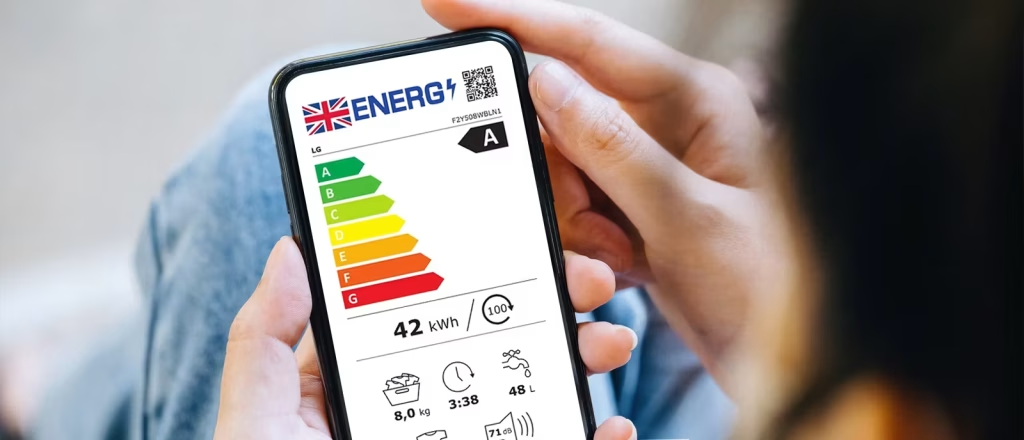

The energy efficiency rating on a washing machine label runs from A to G. Following a major reform in 2021, the scale was reset so that most machines now sit in the C to E range – with A and B reserved for future, more efficient products. The rating tells you which machine uses less energy, but not by how much, and says nothing about washing quality, reliability, or real-world running costs.
This is Part 1 of the Whitegoods Help guide to washing machine energy labels. It covers the energy efficiency rating – how to read it, what it does and does not tell you, and the important question of why rinsing performance is missing from the picture entirely.

The washing machine energy label, showing the A to G efficiency rating alongside consumption, capacity, spin, water use, and noise figures.
What Does the Energy Efficiency Rating Tell You?
The energy efficiency rating is the most prominent figure on the washing machine energy label, presented as a letter grade from A to G. A is the most efficient, G the least. The rating gives a way to compare the relative energy use of different machines – but it has a significant limitation that is easy to overlook.
The scale tells you that one machine is more efficient than another, but not by how much. The gap between an A-rated and a B-rated machine might represent a meaningful saving over a year, or it might be negligible. Without knowing the actual difference in energy consumption – shown separately as a kWh figure – the letter grade alone is too vague to act on.
A machine rated one band lower might cost only £10 to £15 more per year to run. If a machine rated higher costs significantly more to buy, or proves less reliable over time, any energy saving is quickly overtaken by other costs.
How the Rating Scale Changed in 2021
The original A to G scale ran into problems almost immediately after it was introduced. Manufacturers quickly optimised their machines to achieve top ratings, and within a few years virtually every washing machine on the market held an A rating. To restore some differentiation, additional categories were introduced – A+, A++, and eventually A+++ – creating a confusing system that had lost its original purpose.
In March 2021, the energy label was reformed across the UK and EU. The A+ to A+++ categories were abolished and the scale returned to a straightforward A to G. Critically, the bar was reset: most machines on sale today sit in the C, D, or E range. The A and B bands are left empty for now, reserved for future products that go significantly further in efficiency.
This makes the current scale more transparent and easier to read than what preceded it – but the fundamental limitation remains. The rating still compares energy use on a single test cycle, under conditions that do not reflect everyday use for most households.
The Missing Measure: Why Rinsing Is Not Rated
The energy label assesses energy efficiency, spin efficiency, and wash efficiency. It does not assess how well a machine rinses. This is a significant omission – and one that has real consequences for a large number of washing machine owners.
Independent testing has consistently found that many modern washing machines perform poorly when it comes to rinsing laundry. Clothes come out with detergent residue remaining, which can cause skin irritation in people with sensitivities and leaves laundry feeling stiff or uncomfortable. For a detailed look at this issue and its causes, see our guide on why modern washing machines rinse poorly.
Why Do Modern Machines Rinse Poorly?
There are two likely explanations, and both relate directly to the priorities built into the energy labelling system.
The first is water use. Effective rinsing requires a generous volume of water to flush detergent from fabric thoroughly. The ongoing drive to reduce water consumption – which is measured and rated on the energy label – works directly against this. Modern detergents have been developed to wash effectively at lower temperatures and with less water, but no equivalent breakthrough has made thorough rinsing possible with significantly reduced water volumes.
The second is that the label creates no incentive to rinse well. Because rinse performance is not tested or rated, manufacturers face no competitive pressure to improve it. As long as laundry looks clean and stains are removed, the wash efficiency test is passed – regardless of how much detergent residue remains in the fabric after rinsing.

If you or someone in your household has a skin sensitivity or allergy to laundry detergent, poor rinsing is a practical concern rather than a theoretical one. Consider using a lower detergent dose, selecting an additional rinse cycle, or checking independent test results for rinsing performance before buying. Note that full Which? test data on rinsing requires a subscription to access.
Is Rinsing Performance Tested Independently?
Which? carries out independent washing machine tests that include an assessment of rinsing performance. Their findings have consistently shown that most modern machines rate poorly or very poorly for rinsing – across brands and price points. Which? is an independent consumer organisation that works solely in the interests of its subscribers and does not take advertising revenue from the brands it tests. Their subscription-only test results are the most thorough independent source available for rinsing performance data.
The absence of a rinsing measure from the official energy label means this information does not reach most buyers at the point of purchase. A machine could hold a top energy efficiency rating while rinsing poorly, and the label would give no indication of this.
What About White Streaks and Detergent Residue on Laundry?
Not all detergent residue on laundry is caused by poor machine rinsing. There are several common causes – including using too much detergent, washing at too low a temperature for the detergent type, or a build-up of limescale or product residue inside the machine. If laundry is coming out with white streaks or powder deposits, see our guide on white streaks on laundry after washing for a full list of causes and solutions.
Need Help With a Washing Machine?
Whether you need a repair or genuine spare parts, Whitegoods Help can point you in the right direction.
Energy Label Series: All Parts
 Part 2: Energy Consumption (kWh per Cycle)
How to read the energy consumption figure and calculate the cost per wash from your electricity unit rate.
 Part 3: Wash Performance Ratings
How washing performance is rated on the label, why virtually every machine achieves the same grade, and what to use instead.
 Part 4: Spin, Water Use and Noise
The remaining label data points – spin drying efficiency, water consumption, and noise ratings – explained.
 Are Eco Labels Misleading?
Why energy labels do not tell the full story about running costs, reliability, or environmental impact.
Frequently Asked Questions
What does an A to G energy efficiency rating mean on a washing machine?
It shows where the machine sits on a scale from most efficient (A) to least efficient (G) in terms of electricity use. Following the 2021 label reform, most machines currently on sale sit in the C to E range. The A and B bands are reserved for future products that exceed current efficiency standards.
Did the energy label change – what happened to A+++ ratings?
Yes. In March 2021, the A+/A++/A+++ categories were abolished and the scale returned to a straightforward A to G. The previous system had broken down because virtually every machine achieved an A rating, making meaningful comparison impossible. The new scale was reset with a higher bar.
Does a higher energy efficiency rating always mean a better washing machine?
No. The energy efficiency rating only measures electricity use on a single test cycle. It says nothing about washing or rinsing quality, reliability, expected lifespan, or repair costs. A machine with a strong efficiency rating can still be a poor buy overall.
Why do modern washing machines rinse poorly?
The most likely cause is reduced water use. Thorough rinsing requires a generous volume of water to flush detergent from fabric, but the drive to reduce water consumption works directly against this. Rinse performance is also not tested or rated on the energy label, so manufacturers face no competitive pressure to improve it.
Why does my laundry have white streaks or detergent residue after washing?
This can be caused by poor machine rinsing, but also by using too much detergent, washing at too low a temperature for the detergent type, or product build-up inside the machine. See our guide on white streaks on laundry for a full breakdown of causes and solutions.
Ask the repair forum
Post the make, model and symptoms and get help from the Whitegoods Help community.
3 Comments
Grouped into 2 comment threads.
0 replies Thank you for your explanation. It clarifies much of the confusion I recently endured when seeking to purchase a new washing machine. This was not helped by the salesman who, although having around 20 machines on display in the store, in comparison with the 90-plus on the company’s website, was intent on stressing the benefits of some of the most expensive A-rated models, and seemed unable to explain exactly just how much less it would cost to use one of these models each year, in comparison with a B-rated machine that cost over £200.00 less. While on-line sources suggest around £10.00 or so, for an average family, with just two people in our household, aged 78 and 84 respectively, it seems difficult for me how such a minimal level of saving will justify a total expenditure of well over £500.00. Nevertheless, my wife was impressed by the salesman’s patter, and as she is the one that will be using the machine, she was persuaded that this was the model that we should purchase.
1 reply Just bought a new indesit washing machine A+++ rated. Like most we rarely use anything other than the 30 mins 40c wash with modern detergents being so good. however when i looked at the other options i was suprised that some where over 4 hrs (265 mins for 60c cotton wash - suspiciously this is the one that energy ratings are based on), which makes me wonder do the manufacturers build in ridiculous soak times to extend the wash times? This wil use the same energy (W) as a wash without these down periods, but the increased time will reduce the power consumptions (kWh) that are measured as a funtion of energy over time. I really cant believe a washing machine would need 265mins to wash anything, or am i just being a cynical old hector (that ages me!)
Just bought a new indesit washing machine A+++ rated. Like most we rarely use anything other than the 30 mins 40c wash with modern detergents being so good.
however when i looked at the other options i was suprised that some where over 4 hrs (265 mins for 60c cotton wash – suspiciously this is the one that energy ratings are based on), which makes me wonder do the manufacturers build in ridiculous soak times to extend the wash times? This wil use the same energy (W) as a wash without these down periods, but the increased time will reduce the power consumptions (kWh) that are measured as a funtion of energy over time.
I really cant believe a washing machine would need 265mins to wash anything, or am i just being a cynical old hector (that ages me!)
Likely replying to Garry
Hello Garry. They only do the test for energy usage on the 60° cotton wash, which is very seldom used by most people.
If they only tested for energy usage I’m pretty sure the cotton wash time would be much more in line with the 60° wash before these eco-labels came out. However, part of the label also tests the wash performance. Chances are the extended wash times are to get better results in the wash performance. To be honest it is going to cost exactly the same to heat up to 60° no matter how long they take to go about it. However some washing machines don’t even get up to 60° which is another story altogether (washing machines not heating to the right temperature )
So if there are long periods where it is not heating up the water this is going to cost very little in electricity. The motor does not use much energy compared to the heating element. So longer wash times don’t impact the energy usage so much as the wash efficiency and performance.
Thank you for your explanation. It clarifies much of the confusion I recently endured when seeking to purchase a new washing machine.
This was not helped by the salesman who, although having around 20 machines on display in the store, in comparison with the 90-plus on the company’s website, was intent on stressing the benefits of some of the most expensive A-rated models, and seemed unable to explain exactly just how much less it would cost to use one of these models each year, in comparison with a B-rated machine that cost over £200.00 less. While on-line sources suggest around £10.00 or so, for an average family, with just two people in our household, aged 78 and 84 respectively, it seems difficult for me how such a minimal level of saving will justify a total expenditure of well over £500.00. Nevertheless, my wife was impressed by the salesman’s patter, and as she is the one that will be using the machine, she was persuaded that this was the model that we should purchase.