
Samsung Home Appliances
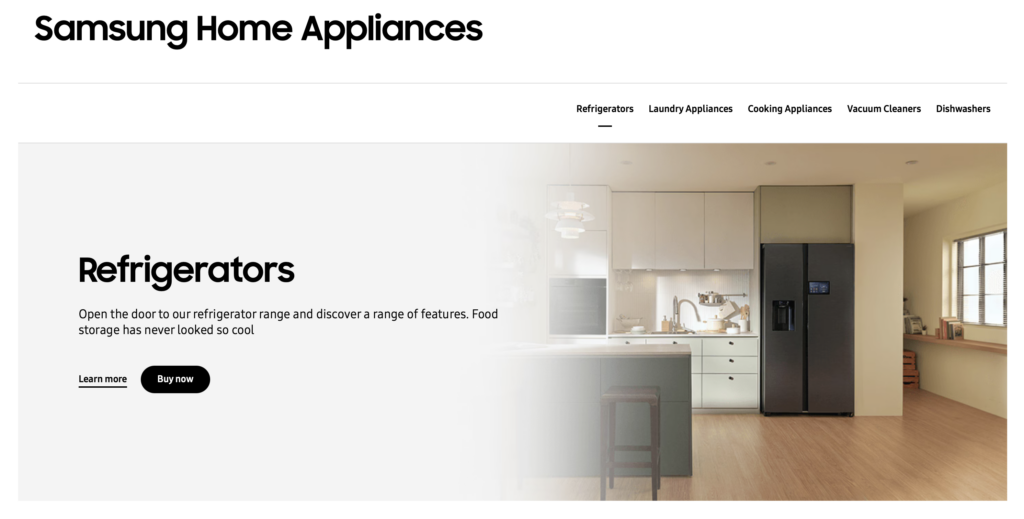

Samsung home appliances are made by Samsung Electronics Co., Ltd., the flagship subsidiary of the South Korean Samsung Group founded in 1938. Samsung Electronics is one of the world’s largest technology companies and one of the most widely owned UK appliance brands, with strong positions in refrigeration (the customisable Bespoke range), laundry (EcoBubble, Auto Dose, AI Energy Mode), and dishwashers. Samsung appliances connect to the SmartThings platform and include Smart Diagnosis for faster fault identification.

This page provides an independent overview of Samsung home appliances for UK consumers. All information was accurate at the time of writing. Sources are listed at the foot of this page.
Who makes Samsung home appliances?
Samsung home appliances are manufactured and sold by Samsung Electronics Co., Ltd., one of the world’s largest technology and electronics corporations. Samsung Electronics is the flagship subsidiary of Samsung Group, the South Korean conglomerate founded in 1938 by Lee Byung-chul, and it accounts for the substantial majority of the group’s global revenues.
Samsung Electronics reported revenue of US$220.7 billion in 2024, making it one of the world’s largest technology companies by revenue and one of the most significant electronics businesses ever established. Home appliances form one of the company’s major product divisions alongside semiconductors, consumer electronics, and mobile devices, and the Samsung appliance range is sold in the UK through a wide network of retailers as well as directly through Samsung’s own website and experience stores.
The current Samsung UK home appliance range is on the brand’s site at samsung.com/uk/home-appliances.
How did Samsung grow from a trading company to a global technology leader?
Samsung’s origins bear little resemblance to the global electronics company it is today. Samsung Group was founded on 1 March 1938 by Lee Byung-chul in Daegu, Korea, as a small trading company dealing primarily in dried fish, locally grown groceries, and noodles. The name Samsung translates from Korean as “three stars”, reflecting Lee’s aspiration for the company to be as powerful and everlasting as stars in the sky.
The company expanded significantly in the post-war years. Samsung moved into textiles in the 1950s, becoming the largest wool mill in Korea, and by the 1960s had diversified into insurance, retail, and manufacturing. In 1969, Samsung Electronics was established as a separate entity under the Samsung Group umbrella, initially manufacturing black-and-white televisions. It was from this foundation in consumer electronics manufacturing that the company’s home appliance business grew.
Samsung’s home appliances division developed through the 1970s and 1980s alongside the rapid industrialisation of South Korea, with the company establishing itself as a significant domestic manufacturer before expanding internationally. By the 1990s Samsung had begun the sustained global expansion that has made it one of the world’s most widely distributed consumer electronics and appliance brands.
What are Samsung’s key historical milestones?
1938: Samsung Group founded
Lee Byung-chul establishes Samsung as a trading company in Daegu, Korea. The name Samsung means “three stars” in Korean, reflecting Lee’s ambition for the company’s permanence and reach.
1969: Samsung Electronics established
Samsung Electronics Co., Ltd. is founded on 13 January 1969 in Suwon, South Korea, initially named Samsung Electric Industries. The company begins manufacturing black-and-white televisions, marking Samsung’s entry into consumer electronics.
1974: Semiconductor entry
Samsung acquires Korea Semiconductor, marking its first step into the semiconductor industry that would eventually become its largest revenue source. This investment in semiconductor technology would later underpin Samsung’s engineering capabilities across all its product divisions including home appliances.
1988: Samsung Electronics renamed
Samsung Electric Industries is renamed Samsung Electronics Co., Ltd., reflecting the company’s broadening scope across the full range of electronic products and appliance categories.
1990s: Global expansion
Samsung increasingly globalises its electronics and appliance operations throughout the 1990s, establishing manufacturing and sales operations across Europe, the Americas, and Asia. The UK becomes a significant market within Samsung’s European strategy.
2006: Smart Diagnosis introduced
Samsung introduces its Smart Diagnosis technology to its home appliance range, allowing appliances to transmit diagnostic data to Samsung’s service centre via a smartphone, enabling faster and more accurate fault identification before an engineer visit takes place.
2012: Leading global smartphone vendor
Samsung becomes the leading global vendor of smartphones, a position it has substantially maintained since (with Apple briefly overtaking in some individual quarters). This brings the Samsung brand to near-universal awareness in the UK consumer market and reinforces its presence across all product categories including home appliances.
2019: Bespoke range launched
Samsung launches its Bespoke appliance range, offering consumers the ability to customise fridge freezers and other appliances with interchangeable door panels in a range of colours and finishes. The Bespoke range represents Samsung’s most significant step into design-led premium appliance positioning.
2024: AI Energy Mode introduced
Samsung introduces AI Energy Mode across its home appliance range, using artificial intelligence to optimise energy use based on usage patterns and peak tariff times. The company claims savings of up to 70% on laundry appliance energy consumption in AI Energy Mode compared with standard operation.
How is Samsung positioned in the UK appliance market?
Samsung is one of the most widely owned appliance brands in the UK, with a strong presence across refrigeration, laundry, cooking, dishwashing, and floor care categories. The brand benefits from exceptionally high consumer awareness, driven in part by its dominant position in the UK smartphone and television markets, which gives Samsung a brand familiarity that most dedicated appliance manufacturers cannot match.
Samsung appliances are positioned across a broad price range, from competitively priced mid-market models to premium Bespoke-series appliances that compete at the upper end of the UK market. This breadth of positioning allows Samsung to reach a wider cross-section of UK consumers than brands concentrated in a single market segment. The brand’s most direct UK competitor is LG, the other major South Korean appliance brand, with both companies competing closely across washing machines, refrigeration, and dishwashers.
What appliances does Samsung make for the UK?
 Washing machines and laundry
Samsung produces a comprehensive range of washing machines, washer-dryers, and tumble dryers for the UK market. Key technologies include Auto Dose automatic detergent dispensing, EcoBubble which dissolves detergent in bubbles before the wash for improved low-temperature performance, AI Energy Mode, and the Drum Clean+ self-cleaning function. Samsung washing machines are available in freestanding and integrated configurations across a range of drum capacities.
 Refrigerators and fridge freezers
Samsung’s refrigeration range is one of its most prominent product areas in the UK, anchored by the Bespoke fridge freezer series with its customisable door panels and SpaceMax technology that maximises interior storage capacity through thinner wall insulation. The range also includes American-style side-by-side models, French door models, and integrated options, across a wide range of capacities.
 Dishwashers
Samsung dishwashers include features such as Zone Booster for intensive cleaning of heavily soiled items on one half of the machine while running a gentler cycle on the other, alongside Wi-Fi connectivity for remote monitoring through the SmartThings app. The range covers standard 60cm and slimline 45cm widths in freestanding configurations.
 Cooking appliances
Samsung’s cooking range includes built-in ovens, microwaves, and combination ovens. The Dual Cook Steam oven, which allows simultaneous cooking of different foods at different temperatures using a divider tray, has been a well-regarded product within the built-in cooking segment. Samsung also produces a range of microwave ovens, including combination and grill models.
 Vacuum cleaners
Samsung produces cordless and corded vacuum cleaners under its Jet series, as well as robotic vacuum cleaners under the Bespoke Jet Bot brand. The robotic vacuum range can be integrated with the SmartThings platform for scheduled and remote operation.
 Bespoke range
Bespoke is Samsung’s premium design-led appliance range, launched in 2019 and expanded across multiple appliance categories. It allows consumers to configure appliances with interchangeable door panels in a range of colours and finishes, including solid colours, glass panels, and stainless steel, enabling more personalised kitchen design. The Bespoke range spans fridge freezers, washing machines, dishwashers, and vacuum cleaners.
What are Samsung’s key appliance technologies?

SmartThings is Samsung’s smart home platform, which connects compatible appliances to a single app on a smartphone or tablet. Through SmartThings, users can monitor appliance status, start and stop cycles remotely, receive end-of-cycle notifications, and in some cases optimise energy use based on household patterns and tariff structures. SmartThings is compatible with a wide range of Samsung appliances and can also integrate with third-party smart home devices and services.

Introduced across Samsung’s appliance range, AI Energy Mode uses artificial intelligence to learn household usage patterns and adjust appliance operation to reduce energy consumption during peak tariff periods or when the household is unoccupied. Samsung claims potential energy savings of up to 70% on laundry appliances and up to 15% on refrigerators when AI Energy Mode is active. These figures represent potential savings under specific conditions and individual results will vary by household and energy tariff.
EcoBubble is a Samsung washing machine technology that mixes detergent with air and water before the wash cycle begins, creating a foam that penetrates fabrics faster than liquid detergent dissolved in water alone. Samsung claims this allows effective cleaning at lower temperatures, reducing energy consumption while maintaining wash performance on everyday loads.

Auto Dose is Samsung’s automatic detergent dispensing system for washing machines. It stores liquid detergent and fabric softener in integrated reservoirs and automatically dispenses the correct amount for each load based on weight and programme selection. Auto Dose eliminates the need to measure and add detergent for each wash and reduces the risk of over or under-dosing.

Samsung’s Smart Diagnosis feature allows compatible appliances to transmit diagnostic information to Samsung’s support centre via a smartphone application. When a fault or error occurs, Smart Diagnosis can identify the specific code and transmit relevant data, which can help Samsung’s service team diagnose the issue more accurately before dispatching an engineer. This can reduce the time taken to resolve a fault by ensuring the attending engineer is prepared with the correct parts and information.
SpaceMax is a refrigeration technology that uses thinner insulation material in the fridge walls without compromising thermal performance, creating more usable interior storage space within the same external footprint. This allows Samsung fridge freezers to offer greater capacity without requiring additional kitchen floor space, which is a meaningful practical advantage in UK kitchens where space is often at a premium.
What is the Bespoke design philosophy?
One of Samsung’s most distinctive recent contributions to the UK home appliance market is the Bespoke range, introduced in 2019. Bespoke represents a deliberate shift from the convention of offering appliances only in standardised white, silver, or black finishes, allowing consumers to select door panel colours and materials to complement their kitchen design.
The Bespoke fridge freezer was the initial product in the range and remains its most widely recognised expression. Consumers can choose from a palette of colours in glass or stainless steel panel options, and the panels are designed to be replaceable, meaning the appliance’s appearance can be updated without replacing the entire unit. The Bespoke philosophy has since been extended to washing machines, dishwashers, and vacuum cleaners.
For UK consumers who prioritise kitchen aesthetics alongside appliance performance, the Bespoke range occupies a distinctive position in the market. No other major mainstream appliance manufacturer currently offers a comparable level of colour and finish personalisation across multiple appliance categories at Bespoke’s price points.
Need parts or a repair for a Samsung appliance?
Find genuine Samsung spare parts, look up an error code on your washing machine, fridge or dishwasher, or weigh up whether a repair is worth doing. Whitegoods Help covers Samsung appliances across every major category.
How does Samsung approach energy efficiency?
Energy efficiency has become an increasingly central part of Samsung’s appliance messaging in the UK, reflecting both the sustained consumer focus on energy costs following the 2021 to 2023 energy price rises and the UK government’s appliance energy rating requirements. Samsung’s AI Energy Mode, available across its washing machine, fridge freezer, and dishwasher ranges, is the brand’s most prominent response to this consumer priority.
Samsung appliances across the range carry UK energy ratings, and several models in the washing machine and fridge freezer categories achieve A ratings under the revised UK energy label scale introduced in March 2021. For more on what energy ratings mean for running costs, see our guide to understanding appliance energy ratings.
Samsung’s claims of up to 70% energy saving with AI Energy Mode represent potential savings under specific operating conditions. Actual energy savings will vary by household, usage pattern, energy tariff, and how the appliance is used. Always check the rated energy consumption figure on the product’s energy label when comparing running costs between models.
Where can you buy and service Samsung appliances in the UK?
Samsung home appliances are available through a wide range of UK retailers including major electrical chains, online retailers, and Samsung’s own website at samsung.com/uk. Samsung also operates Samsung Experience Stores in the UK, including its Samsung KX store in London’s King’s Cross at time of writing, where the full product range can be viewed and tested.
For appliance faults and repairs, Samsung operates a UK service operation with a network of trained engineers. Samsung’s Smart Diagnosis feature can assist in pre-diagnosis of faults before an engineer visit, which can help ensure the attending engineer attends with the correct parts and knowledge of the specific fault. For out-of-warranty repairs, independent national repair networks covered in our national service providers guide also service Samsung appliances.
If you need to source spare parts for a Samsung appliance, genuine components are available through our appliance spare parts section. Samsung error codes, which appear on the display of many Samsung appliances when a fault is detected, can be looked up through our appliance error codes guide.
If your Samsung appliance is within the manufacturer’s guarantee period, always contact Samsung directly in the first instance – the repair is likely to be carried out free of charge. Using an unauthorised repairer during the guarantee period may affect your remaining guarantee. See our guide to your rights when an appliance goes wrong for more detail.

Samsung appliances use specific electronic control boards, inverter motors and (on refrigeration) sealed refrigeration circuits that should only be worked on by trained engineers with appropriate qualifications – including F-gas certification for any refrigeration sealed-system work. Always isolate the appliance from the mains before any inspection, never attempt work on sealed refrigerant systems, and if in any doubt book a qualified engineer through our repair booking guide. Working on an in-guarantee Samsung appliance yourself may invalidate the manufacturer’s guarantee.
Samsung in numbers
Year Samsung Electronics was founded in Suwon, South Korea
Samsung Electronics revenue in 2024
Year Samsung became the leading global smartphone vendor
Year the design-led Bespoke appliance range launched
Frequently asked questions about Samsung home appliances
Where are Samsung home appliances made?
Samsung Electronics operates manufacturing facilities across multiple countries. Samsung appliances sold in the UK and Europe are produced at factories in South Korea, Poland, Slovakia, and other locations depending on the appliance category. Samsung’s dishwashers for the European market have historically been produced at its facility in Wrocław, Poland. The specific manufacturing origin of individual models can vary and is typically stated in the product’s documentation or on the product itself.
What is Samsung Bespoke?
Bespoke is Samsung’s premium design-led appliance range, launched in 2019. It allows consumers to customise fridge freezers, washing machines, dishwashers, and vacuum cleaners with interchangeable door panels available in a range of colours and finishes including solid colours, glass, and stainless steel. The panels are designed to be replaceable, allowing the appearance of the appliance to be updated independently of the unit itself. Bespoke occupies the premium tier of Samsung’s appliance range.
What is Samsung SmartThings?
SmartThings is Samsung’s smart home connectivity platform, which links compatible Samsung appliances to a smartphone application. Through SmartThings, users can monitor appliance status, start and stop cycles remotely, receive notifications, and optimise energy use. SmartThings is also compatible with a range of third-party smart home devices and services, making it a broader smart home hub rather than a Samsung-only ecosystem.
How do I find out what a Samsung error code means?
Samsung appliances display error codes on their control panels when a fault is detected. These codes can be looked up in the appliance’s user manual, through Samsung’s support website at samsung.com/uk, or using our appliance error codes guide. Common Samsung error codes include 5E or SE (drainage fault), OE or 0E (overfilling), and DE (door error). For a specific Samsung model’s error code, the user manual is the most accurate reference.
Is Samsung a reliable appliance brand?
Samsung is one of the most widely owned appliance brands in the UK, and the company’s scale of operation and engineering investment supports consistent product quality across its range. As with any major appliance brand, individual model reliability varies and independent consumer review data, such as that published by Which? (subscription required for full access), provides useful comparative information for specific models under consideration. Samsung carries a standard UK manufacturer’s guarantee, and the company’s Smart Diagnosis feature can assist in resolving faults more efficiently than is possible with appliances that lack this capability.
Where can I get my Samsung appliance repaired in the UK?
For in-warranty Samsung appliances, contact Samsung’s UK customer service directly, as repairs under guarantee are carried out at no charge. For out-of-warranty appliances, Samsung’s own service team can attend at a cost, or independent national repair companies such as those listed in our national service providers guide also repair Samsung appliances. Samsung’s Smart Diagnosis feature can help pre-identify the fault before an engineer attends, which can speed up the repair process.
Is Samsung better than LG for home appliances?
Samsung and LG are the two major South Korean home appliance brands and the two compete closely across washing machines, refrigeration, and dishwashers at broadly comparable price points. They are not hierarchically ranked. Samsung tends to be particularly strong on refrigeration design (the Bespoke customisable range), smart connectivity (SmartThings is a broader cross-device platform), and tall American-style fridge freezers. LG tends to be particularly strong on washing machines (the 10-year Inverter Direct Drive motor warranty is a meaningful differentiator) and on InstaView Door-in-Door refrigeration. The best choice for a specific kitchen depends on which categories matter most, which features you prefer, and whether you already have other appliances in either brand’s ecosystem. Individual model reviews are more useful at point of decision than the brand-level comparison.
The information on this page was researched and written in April 2026 and was accurate at the time of publication. Company details, product ranges, revenue figures, technology claims, and market position data are subject to change. Whitegoods Help recommends verifying current product and service details directly with Samsung before making a purchase or booking a repair.
Sources include the Samsung Electronics Wikipedia entry (en.wikipedia.org/wiki/Samsung_Electronics), the Samsung Group Wikipedia entry (en.wikipedia.org/wiki/Samsung), the Samsung UK home appliances website (samsung.com/uk/home-appliances), and the Samsung UK Newsroom (news.samsung.com/uk). All sources accessed April 2026.
Ask the repair forum
Post the make, model and symptoms and get help from the Whitegoods Help community.
0 Comments