
Difference between energy ratings A and A+
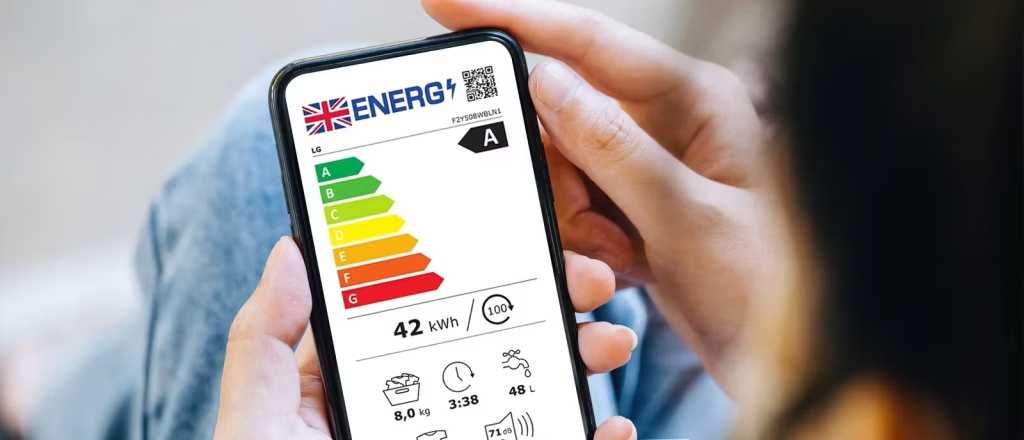

The highest energy rating is worth having, but only if the machine is also reliable and well-built. A cheap machine with a good energy rating that fails after three years will cost far more overall than a slightly less efficient but much longer-lasting machine. Never buy on energy rating alone.
A higher energy rating does not automatically mean lower long-term costs. Before choosing a washing machine based primarily on its energy label, it is worth understanding what the rating does – and does not – tell you.

The EU introduced a revised A-G energy label for washing machines in 2021, replacing the older A+ to A+++ system. Under the new scale, the top available rating is currently A, with most machines rating B, C, or D. Always check which scale a rating refers to when comparing appliances. See: what do energy labels on washing machines mean?
Why a Better Energy Rating Does Not Always Mean Lower Costs
A poor quality brand with a high energy rating is not necessarily a better buy than a higher quality, longer-lasting machine with a slightly lower rating. If a cheap, efficient machine fails after three or four years, the cost of replacement – plus the energy and resources used to manufacture a new appliance – easily outweighs any energy savings made during its short life.
The total cost of ownership over ten years tells a very different story from the annual running cost figure on the label. A machine that lasts ten years at moderate efficiency will almost always be cheaper overall than two machines of five years each at high efficiency.
Limitations of Energy Label Comparisons
Energy labels are a useful starting point, but they have several limitations worth understanding before using them to make a buying decision:
- Drum size and spin speed affect the rating. A machine with a larger drum or faster spin may achieve a better energy rating simply because of its specification, not because it is fundamentally more efficient. Always compare machines with the same drum size and spin speed.
- The monetary cost shown is not your cost. Energy labels quote running costs in monetary terms, but electricity tariffs change constantly and vary between households. The figure shown is unlikely to reflect actual costs.
- Labels assume four wash loads a week. Households that do more or fewer loads, or that use different wash cycles, will see different actual costs regardless of what the label states.
- Figures are typically based on eco-mode cycles. Real-world usage involves a range of cycles at different temperatures and spin speeds. The label figure is not a reliable guide to overall running costs under normal use.
How Small the Difference Can Be – An Illustrative Example
The gap between energy ratings is often smaller than it appears. As an illustration from outside the appliance world: a purchase of double glazing was made for around £8,000. When the paperwork arrived, the windows were rated C rather than A. An alternative supplier offered A-rated windows for over £1,000 more. On investigation, the projected annual energy saving difference between C-rated and A-rated double glazing was approximately £40 per year.
Paying an extra £1,000 to save £40 a year represents a payback period of 25 years – rarely a worthwhile investment. The same principle applies when comparing washing machines: always check what the actual projected saving is in pounds, not just the letter on the label, before deciding whether a premium for a higher rating makes financial sense.
What Actually Matters When Buying an Energy-Efficient Washing Machine
- Choose a machine from a brand with a good reliability track record – longevity contributes more to total cost than marginal efficiency differences.
- Compare only machines with the same drum size and spin speed when using energy labels.
- Look at the actual kWh per cycle figure rather than the letter rating alone.
- Factor in the purchase price and expected lifespan, not just the annual running cost.
Further reading
Frequently Asked Questions
Should I buy the highest energy-rated washing machine?
Not automatically. A high energy rating is one factor among many. A cheap machine with a good rating that fails early will cost more in total than a reliable mid-range machine with a slightly lower rating. Always factor in brand reliability and expected lifespan alongside the energy rating.
Can I trust the running cost figures on energy labels?
As a comparison tool between equivalent machines, yes. As a guide to actual costs, no. Label figures are based on four wash loads per week on eco-mode cycles, at a standardised electricity tariff. Actual costs depend on usage patterns, the cycles chosen, and the current electricity tariff – all of which vary.
What energy rating should I look for on a washing machine?
Under the current EU label system (introduced in 2021), most machines are rated B to D. The top rating is A, which is rare and commands a premium. A B-rated machine from a reliable brand will typically offer an excellent balance of efficiency and longevity. See: what do energy labels on washing machines mean?
Ask the repair forum
Post the make, model and symptoms and get help from the Whitegoods Help community.
4 Comments
Grouped into 3 comment threads.
1 reply It matters not what the price of electricity you are paying the difference between a C grade and a A××× grade they should be marked as :- A××× 50% A×× 60% A× 70% A 80% B 90% C 100% with lower % being better. So an A××× only costs 50% of what a C costs to run over a 5 year period
0 replies The good old days when electricity costs were 9.6p per KWh. With prices to hit around 70p per KWh in Jan 2023 I wonder how much it’s worth worrying about appliance energy ratings now. The point is still valid, don’t just assume that an A+++ appliance is going to save you lots. However with families possibly having to spend 20% of their disposable income on energy, every little difference across all our appliances could now amount to a significant difference.
The good old days when electricity costs were 9.6p per KWh. With prices to hit around 70p per KWh in Jan 2023 I wonder how much it’s worth worrying about appliance energy ratings now.
The point is still valid, don’t just assume that an A+++ appliance is going to save you lots. However with families possibly having to spend 20% of their disposable income on energy, every little difference across all our appliances could now amount to a significant difference.
0 replies Nice article. Wish you had done this for an electric oven too! We bought a showroom kitchen which came with an over rated at "A". I would have liked to know the difference in consumption between this and one that is rated "A+++".
Nice article. Wish you had done this for an electric oven too!
We bought a showroom kitchen which came with an over rated at “A”.
I would have liked to know the difference in consumption between this and one that is rated “A+++”.
It matters not what the price of electricity you are paying the difference between a C grade and a A××× grade they should be marked as :-
A××× 50%
A×× 60%
A× 70%
A 80%
B 90%
C 100%
with lower % being better. So an A××× only costs 50% of what a C costs to run over a 5 year period
Thanks for your thoughts. Percentage figures without context are not helpful, though. For example, to determine whether it is worth paying £100 more for an A+++ appliance you need to know how much that 50% less energy is going to equate to. And therefore how long it will take to recoup the extra purchasing costs.
Things are changing at the moment with the ludicrously high electricity costs. When I first wrote this article for example, 50% less electricity may have only equated to 4 or 5p.
50% may or may not be significant. As a percentage figure, it is significant in the sense that it is half, but of course the problem is, half of what?. I would say that the price of electricity makes a massive difference in what these percentages mean in real terms.
For example, I remember seeing advertisements on TV for detergent that you can wash with at 30 degrees, which they claimed would, “Save on average an astounding 41% on energy consumption “.
I did the maths for an article about washing at low temperatures, and at the time of writing, that 41% equated to 2p, which is a long way from astounding. So I honestly believe that any percentage figures are totally useless without proper context.
This is why in my article I try to steer people away from getting too obsessed about these labels. Another point would be, what if one washing machine used 50% less energy, but it was a budget brand with a very poor reputation and lasted on average 2 to 4 years? What if one that used 50% more energy was a high quality brand, with an excellent reputation for reliability and longevity? My thoughts are that the 2nd one could easily prove to be a much better buy than the first.