
Can you extend a tumble dryer vent hose?
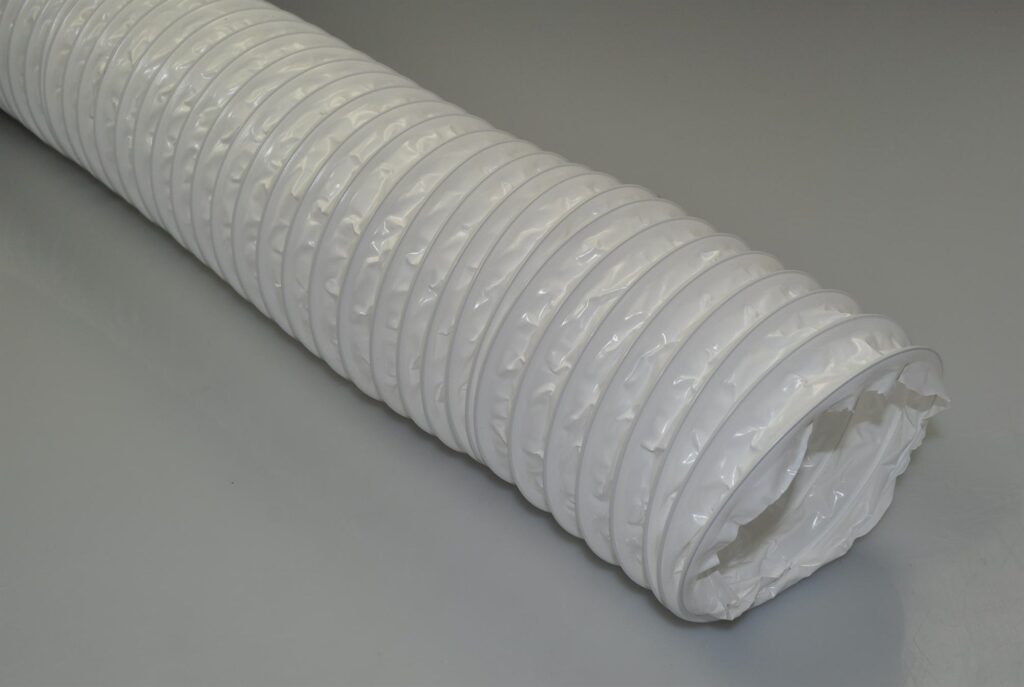

Extending a tumble dryer vent hose beyond the manufacturer’s specified maximum length risks the dryer being unable to push hot moist air fully through the extended run – leading to poor drying efficiency, condensation building up inside the hose, and potentially overheating. Manufacturers do not produce extension kits for this reason. If a longer run is unavoidable, a vent booster fan may help. If venting is not possible at all, a condenser dryer is the practical alternative.
Why Vent Hose Length Matters
The vent hose on a tumble dryer is designed by the manufacturer to be a specific maximum length. This length is determined by how much air pressure the dryer’s exhaust fan can generate – the fan must be able to push hot moist air the full length of the hose and out through the external vent point. The fan is not particularly powerful; it is designed to clear the hose efficiently at the intended length, not to work against significantly greater resistance.
 What happens when a vent hose is too long
- The exhaust fan cannot push moist air fully through the extended hose – efficiency drops and drying times increase
- Hot moist air that is not cleared quickly enough can cause the machine to overheat and trigger the thermal cut-out
- Condensation forms inside the hose as the moist air cools before reaching the exit point – water accumulates inside the hose
- Wet fluff and lint stick to the inside of the hose, progressively reducing its internal diameter and making the problem worse
- Bends and kinks in the hose compound all of the above – each bend or kink significantly increases resistance to airflow
Can You Extend the Hose at All?
Manufacturers do not produce official extension kits for tumble dryer vent hoses. It may be physically possible to join two hoses, but this does not resolve the underlying airflow and condensation problems – it makes them worse.
A very minor extension – a few centimetres to reach a nearby vent point – may work without significant problems. Any substantial extension beyond the manufacturer’s specified maximum is likely to cause issues. Check the instruction manual for the specified maximum hose length for your machine before attempting any extension.
Possible Solutions for a Difficult Installation

Vent booster fan
In North America, inline vent booster fans are available as accessories for tumble dryer installations where a longer vent run is unavoidable. These are installed mid-hose and provide additional powered airflow to compensate for the greater resistance of a longer or more complex run. Availability in the UK is more limited but they do exist – search for “tumble dryer vent booster fan” or “inline vent fan.” Contact the dryer manufacturer to ask whether they have a recommended solution for longer vent runs on your specific model.

Switch to a condenser dryer
If a vent hose run is not feasible at the installation location, a condenser tumble dryer is the practical alternative. Condenser dryers do not require a vent hose – they condense moisture internally into water that collects in a drawer. See our guide on condenser vs vented tumble dryers for a full comparison.

Using a vented dryer without a hose (not recommended)
It is technically possible to use some vented dryers without a vent hose, but this exhausts hot moist air directly into the room – causing significant condensation on walls, windows, and any nearby cold surfaces. See our guide on using a tumble dryer without a vent hose for the specific considerations.

Even within the manufacturer’s maximum length, bends and kinks significantly reduce airflow. Route the hose with as few bends as possible and ensure no section is kinked or compressed. Regularly check the inside of the hose for fluff and lint accumulation – a blocked vent hose is a fire risk. See our guide on tumble dryer fire risks from blocked filters and vents.
Related Guides
Condenser vs Vented Tumble DryerThe pros and cons of each type – installation differences, running costs, and which suits different households.
Can You Use a Tumble Dryer Without a Vent Hose?What happens when a vented dryer is used without its vent hose and whether it is ever acceptable.
 Tumble Dryer Fire Risk From Blocked Filters and Vents
Why lint accumulation in filters and vent hoses is a fire risk – and how often to clean them.
 Condenser Tumble Dryer Causing Condensation
Why condenser dryers still cause condensation in the room even without a vent hose – and how to manage it.
Frequently Asked Questions
Can I extend a tumble dryer vent hose?
Not reliably beyond the manufacturer’s specified maximum length. The dryer’s exhaust fan is designed to clear the hose at a specific length and is not powerful enough to push air efficiently through a significantly longer run. An extended hose causes poor drying performance, condensation build-up inside the hose, lint blockage, and potential overheating. Manufacturers do not produce extension kits for this reason.
What can I do if my tumble dryer needs to be far from an outside wall?
A vent booster fan installed inline in the hose can increase airflow through a longer run – these are available as accessories though more common in North America than the UK. Alternatively, a condenser tumble dryer eliminates the need for a vent hose entirely. Contact the dryer manufacturer for their recommended approach for the specific installation.
How does a blocked vent hose affect the dryer?
A blocked or restricted vent hose prevents hot moist air from being cleared from the drum. The dryer overheats and the thermal cut-out trips, stopping the cycle. The dryer will either not heat at all or will stop and restart repeatedly. Regular cleaning of both the lint filter and the vent hose is essential maintenance – lint accumulation in vents is also a significant fire risk.
Ask the repair forum
Post the make, model and symptoms and get help from the Whitegoods Help community.
2 Comments
Grouped into 2 comment threads.
0 replies Can you tie a exhaust vent into a dryer vent?
0 replies I have had a dryer with a 7 metre extra pipe ( rigid plastic 4" pipe) approx 2 metre up then 5 metre gradual slope in roof space to external wall. The flexi pipe does accumulate additional fluff but quite easily cleaned. In 14 years I have "swept" the fixed pipework once, when the initial dryer gave up after 10 years. I simply pulled a large duster through the pipe. There was remarkably little accumulation. Have to say that the creeper on the outside wall seems to thrive with the moist warm air that it receives!
I have had a dryer with a 7 metre extra pipe ( rigid plastic 4″ pipe) approx 2 metre up then 5 metre gradual slope in roof space to external wall. The flexi pipe does accumulate additional fluff but quite easily cleaned. In 14 years I have “swept” the fixed pipework once, when the initial dryer gave up after 10 years. I simply pulled a large duster through the pipe. There was remarkably little accumulation. Have to say that the creeper on the outside wall seems to thrive with the moist warm air that it receives!
Can you tie a exhaust vent into a dryer vent?