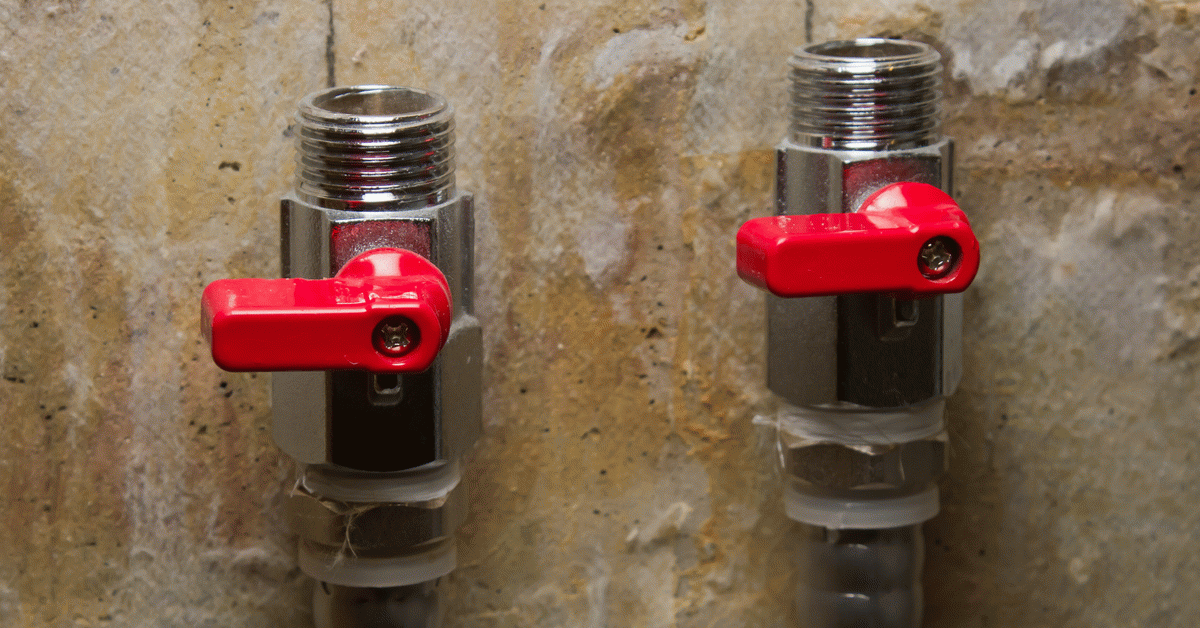
For the last 20 years or so, most people in the UK have not needed a hot water tap for their washing machine. So what should you do with yours? Just ignore it – or blank it off?
What should you do with the unused hot tap?
There are 4 options. Some may seem inconvenient, but there could be good reasons to consider them –
- Just forget about it and leave it where it is
- Cap it off with a blanking cap
- Remove tap and all pipework branching off from the main pipe
- Leave hot hose attached and regularly flush hot water through the unused pipework (my personal choice)
Leave everything as it is and do nothing
1: This is the easiest option, already taken by most people, who just stopped using the hot tap and forgot about it. For most people, it’s probably OK to do this…
However, when I found out that dangerous bacteria could build up inside the unused pipes, and contaminate the water supply, I became concerned (explained later…)
Fit a blanking cap to cap it off
2: If leaving everything as it is, but just no longer using the hot tap, you might want to fit a blanking cap to ensure no water can escape from it as it’s not connected to anything. You may be concerned that someone could inadvertently turn it on, causing water damage.
Or, depending on where the tap is situated, you might worry that it could get slightly knocked, and start dribbling water. This is especially true if the tap is inside a cupboard and has plastic levers to turn it on.

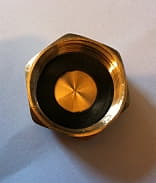
Don’t fit a blanking cap without understanding this entire article first
Buying a blanking cap for the old hot tap
If you decide to cap off the unused tap, you need a specific size of blanking cap. The size you require if you want to source one from a shop is – 3/4″ (which is around 19 mm). You could also buy it from Amazon (paid link) – Buy 3/4″ Brass blanking cap and washer
You should also be able to buy one from any plumbers merchant or DIY store. The cap should come with a rubber seal. If it doesn’t, try using the old seal from the hot water pipe.
You should consider removing the unused tap and pipework
3: When a water tap is not used any more, water ceases to flow through all the pipework that branches off from the main pipe to the tap. The water trapped inside becomes stagnant.
If conditions allow, bacteria and other microorganisms can grow inside that can break off and get into the rest of the water supply.
I did a lot of research about this issue, and became convinced that there could be a potential health issue for some people. (There’s a link at the bottom of this article to fully explain this).
Leave hot hose attached – and flush regularly
4: This is a solution if you are concerned about the potential growth of microorganisms and bacteria described in my companion article (link at end of this article) – but you don’t want to have unused pipework removed. It doesn’t need a plumber, and the hot tap is retained in case it’s ever needed again. You never know if hot and cold fill washing machines might return.
I’ve left my hot fill hose connected to the hot tap, but just hung up out of the way. I have a monthly reminder set up on my phone to run the hot water tap until piping hot water flows through it. This kills bacteria and replaces the stagnant water.
You could flush the hot water into a sink, a bucket, or the washing machine’s standpipe. The point is to have (60 degrees) hot water flowing through all the dead pipework. This should flush away stagnant water, and kill off and remove any microorganisms, or bacteria.
By the way, this option is easy for me. My washing machine is in the garage. It’s easy to access the hoses and standpipe. But it may not be practical for everyone. If it isn’t for you, then you’ll need to choose one of the other options.
How long do I run the hot water for? I usually do it for 30 seconds of hot water flow, but I’ve seen advice saying run for longer – and once a week! We all need to make an informed decision, which should be based on a proper understanding of the issue, and the configuration of our own plumbing setup.
If you believe there is a potential health risk, you should have the dead leg pipework removed properly. Read on for a much better understanding of how real this risk is for you, and your circumstances.
Is the dead leg health risk a genuinely serious issue?
Read my follow-up article, which explains the issue in full detail, so that you will be able to make an informed choice – potential health risks in not using old hot water tap.
Repairs
Fixed-price repairs, Pay monthly options, Repair & protect your whole appliance..
Save Money Now
Subscribe to Which? today and start saving money now. Subscription offers often available.
Spares
Spares4Appliances is a spares company run by repair engineers who understand all about spare parts for appliances.
I am about to order a new washing machine and have disconnected the old one. My new one is cold fill only – old one had both hot and cold fill. I have ordered the blanking wash cap as suggested by you for the hot top.. However, the existing blue plastic cap to the cold tap has unscrewed and is missing/lost, Is it possible to buy the plastic lever which screws into the cold pipe – rest of the pipework does not need replacement.?
Thank you for your help.
Sorry Mavis: Use the one from the hot valve.
When my new washing machine was delivered the installers noted that I could cap the hot water tap, but that I might need new washing machine tap valves. The blue and red plastic switches were missing and were failing to stem the flow of water. I successfully capped the hot, but now two weeks later there is a slow, but steady drip and I cannot remove the valves to replace them. I have the parts but whatever way I turn the existing valve they never become significantly tighter or looser. So far I also can’t find a plumber to come out on a Saturday. Any advice you may have would be most appreciated. Thanks.
Did you sort it Chris? I would think you’d need to cut it off with a hacksaw and start again.
Just wanted to say thanks for this post – I purchased said blanking cap and it was fitted with no problem, was a little worried about the size not being right but you were spot. I also had an issue with the valves so blocked off hot water and replaced the cold water valve as it had a slow drip (well my plumber chap did it and he came out on a Saturday!)
I was able to sort it myself in the end. Many thanks, the forum offered helpful advice. I was ultimately able to get one off by hand and purchased a small pipe cutter for the other. I installed new valves and re-capped the hot and everything had been working great so far.
Nice one Chris. Thanks for the update.
Thanks MK :)
My washer has been plumbed in with the hot and cold water pipes by the company i bought it from, i have now been informed that the washer is a cold fill only,can i not just turn the hot water tap off rather than having to change all the fittings
Barbara: If your washing machine has two valves it should either be hot and cold fill, or should have come with a y-piece connector to connect both up to the cold tap if it’s a cold fill only machine. If it has 2 water valves I would expect it needs them both connecting up. What does it say in the instruction book?