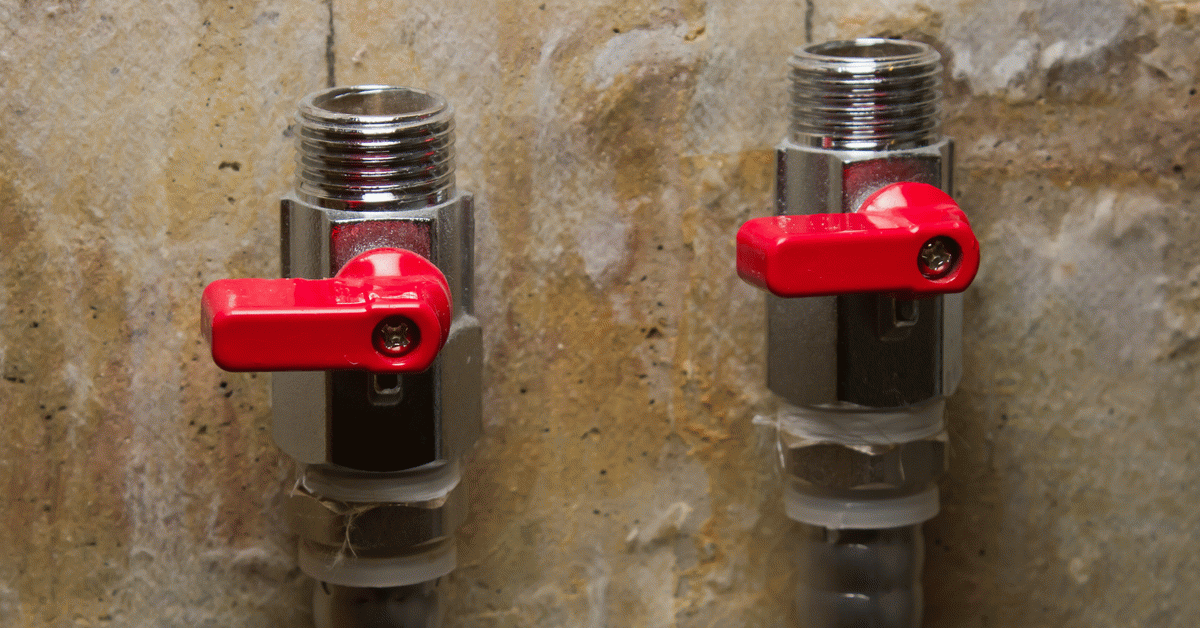
For the last 20 years or so, most people in the UK have not needed a hot water tap for their washing machine. So what should you do with yours? Just ignore it – or blank it off?
What should you do with the unused hot tap?
There are 4 options. Some may seem inconvenient, but there could be good reasons to consider them –
- Just forget about it and leave it where it is
- Cap it off with a blanking cap
- Remove tap and all pipework branching off from the main pipe
- Leave hot hose attached and regularly flush hot water through the unused pipework (my personal choice)
Leave everything as it is and do nothing
1: This is the easiest option, already taken by most people, who just stopped using the hot tap and forgot about it. For most people, it’s probably OK to do this…
However, when I found out that dangerous bacteria could build up inside the unused pipes, and contaminate the water supply, I became concerned (explained later…)
Fit a blanking cap to cap it off
2: If leaving everything as it is, but just no longer using the hot tap, you might want to fit a blanking cap to ensure no water can escape from it as it’s not connected to anything. You may be concerned that someone could inadvertently turn it on, causing water damage.
Or, depending on where the tap is situated, you might worry that it could get slightly knocked, and start dribbling water. This is especially true if the tap is inside a cupboard and has plastic levers to turn it on.

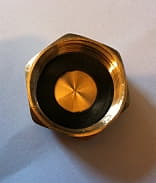
Don’t fit a blanking cap without understanding this entire article first
Buying a blanking cap for the old hot tap
If you decide to cap off the unused tap, you need a specific size of blanking cap. The size you require if you want to source one from a shop is – 3/4″ (which is around 19 mm). You could also buy it from Amazon (paid link) – Buy 3/4″ Brass blanking cap and washer
You should also be able to buy one from any plumbers merchant or DIY store. The cap should come with a rubber seal. If it doesn’t, try using the old seal from the hot water pipe.
You should consider removing the unused tap and pipework
3: When a water tap is not used any more, water ceases to flow through all the pipework that branches off from the main pipe to the tap. The water trapped inside becomes stagnant.
If conditions allow, bacteria and other microorganisms can grow inside that can break off and get into the rest of the water supply.
I did a lot of research about this issue, and became convinced that there could be a potential health issue for some people. (There’s a link at the bottom of this article to fully explain this).
Leave hot hose attached – and flush regularly
4: This is a solution if you are concerned about the potential growth of microorganisms and bacteria described in my companion article (link at end of this article) – but you don’t want to have unused pipework removed. It doesn’t need a plumber, and the hot tap is retained in case it’s ever needed again. You never know if hot and cold fill washing machines might return.
I’ve left my hot fill hose connected to the hot tap, but just hung up out of the way. I have a monthly reminder set up on my phone to run the hot water tap until piping hot water flows through it. This kills bacteria and replaces the stagnant water.
You could flush the hot water into a sink, a bucket, or the washing machine’s standpipe. The point is to have (60 degrees) hot water flowing through all the dead pipework. This should flush away stagnant water, and kill off and remove any microorganisms, or bacteria.
By the way, this option is easy for me. My washing machine is in the garage. It’s easy to access the hoses and standpipe. But it may not be practical for everyone. If it isn’t for you, then you’ll need to choose one of the other options.
How long do I run the hot water for? I usually do it for 30 seconds of hot water flow, but I’ve seen advice saying run for longer – and once a week! We all need to make an informed decision, which should be based on a proper understanding of the issue, and the configuration of our own plumbing setup.
If you believe there is a potential health risk, you should have the dead leg pipework removed properly. Read on for a much better understanding of how real this risk is for you, and your circumstances.
Is the dead leg health risk a genuinely serious issue?
Read my follow-up article, which explains the issue in full detail, so that you will be able to make an informed choice – potential health risks in not using old hot water tap.
Repairs
Fixed-price repairs, Pay monthly options, Repair & protect your whole appliance..
Save Money Now
Subscribe to Which? today and start saving money now. Subscription offers often available.
Spares
Spares4Appliances is a spares company run by repair engineers who understand all about spare parts for appliances.
B&Q Leatherhead had a 3/4 inch blanking cap in stock.
Plumb Sure compression brass cap 3/4″ female
Bar code 05272068
great advice i started to get stressed when i saw water under my sink cupboard then i realised it was the hot water pipe for the washing machine. Your article was a life saver I have ordered my blanking cap and am waiting for it. My only concern is once I put that on won’t water start building up in the pipe?
Great advice, thanks. Popped to my local Plumb Centre and picked up the blanking cap for £3.60 this morning. Easy job to remove the pipes and place the cap. Wouldn’t have had a clue without reading this first.
This is what the internet is all about! Thanks again.
horray it works thanks to everyone who gave advice .
Hi i have just got a new washing machine and have to disconnect the old one. My new one is cold fill only where my old one had both hot an cold water pipes. I have ordered the wash cap as suggested here, however my concern is turning of the water supply off. To turn the water supply off i have too switch off hot and cold water supply separately is this normal as i live in a flat? or am i doing it wrong? Also once the new washing machine is installed and the wash cap attached to the hot water pipe, can i use it straight away or do i need to do a test drive? Any help is welcome.
Thanks for the info…. I was aware of what I wanted but not the size and the assistants in the DIY barns do not have a clue what I want. Thanks as well for the link I have ordered the part. They must sell dozens on your recomendation.
Hi,
I hope you can help me with my problem please? My problem has started since the fitting of a new washing machine and it relates to the pressure banging of pipes whenever I open and close the normal hot/cold water taps.
I had a new washing machine intalled a few days ago, and I blanked off the hot water connector as you suggested (the new machine only has cold water fill), however, since then whenever I turn the taps on or off (hot and cold taps) there is a loud pressure bang/knocking noise.
I have turned the water stop tap off and have got rid of the air on a couple of occasions, and this does stop the pressure bang for a few hours – although it comes back as loud as before! I would add that the stop tap is marked and I was careful to ensure that the flow of water was exactly the same when turned back on again.
I never had this problem before the new machine was installed. Can you give me some advice please before I have to resort to the expense of a plumber?
Many thanks, Tony
Tony: If pipes bang when the washing machine valve shuts off it’s usually too high water pressure although I just had a knocking noise when my washer stopped filling after turning the stop tap off whilst away and not turning it back on as high as it was before.
Try adjusting the stop tap a bit at a time to see if you can stop it. It can also be caused or made worse if some of the pipework is loose and unsecured somewhere in the house.
Many thanks for your advice Washerhelp. I’ve tried turning the pressure down but it then causes problems with flow to the upstairs shower jet. I guess it looks like we’re going to have to put up with the banging LOL.
Thanks again,
Tony
I would turn it down until the noise stops and then up a little at a time until the noise re-appears, even if it’s done slowly over several days. Then try turning it back a bit at a time until it stops again and hopefully it will be at an acceptable level. A plumber may be able to advise