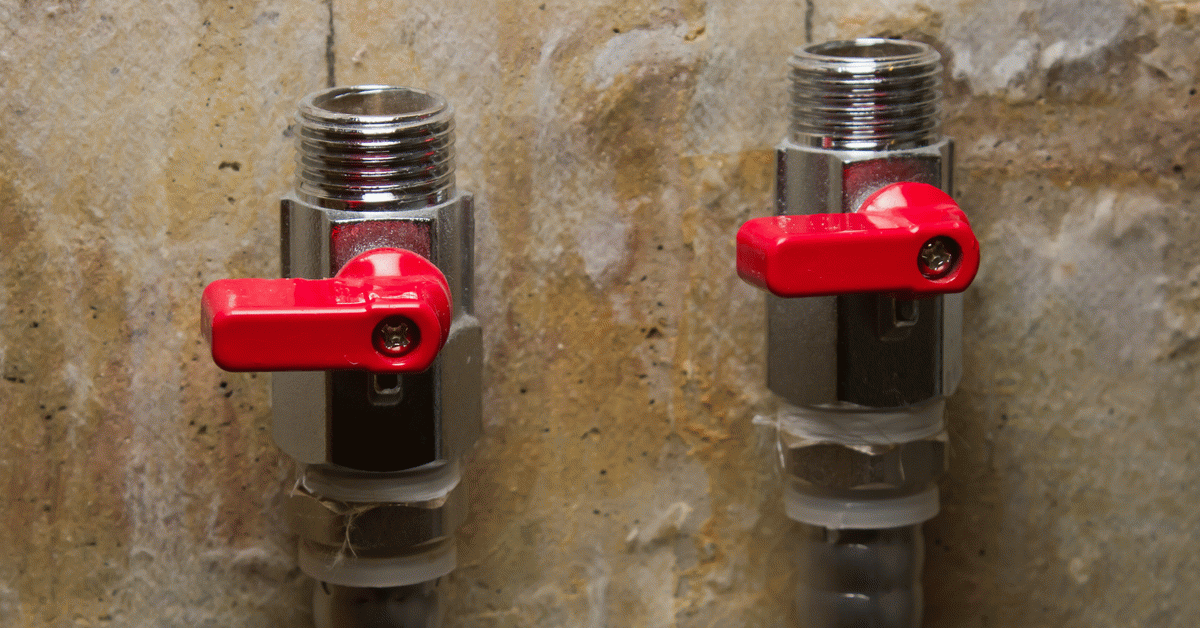
For the last 20 years or so, most people in the UK have not needed a hot water tap for their washing machine. So what should you do with yours? Just ignore it – or blank it off?
What should you do with the unused hot tap?
There are 4 options. Some may seem inconvenient, but there could be good reasons to consider them –
- Just forget about it and leave it where it is
- Cap it off with a blanking cap
- Remove tap and all pipework branching off from the main pipe
- Leave hot hose attached and regularly flush hot water through the unused pipework (my personal choice)
Leave everything as it is and do nothing
1: This is the easiest option, already taken by most people, who just stopped using the hot tap and forgot about it. For most people, it’s probably OK to do this…
However, when I found out that dangerous bacteria could build up inside the unused pipes, and contaminate the water supply, I became concerned (explained later…)
Fit a blanking cap to cap it off
2: If leaving everything as it is, but just no longer using the hot tap, you might want to fit a blanking cap to ensure no water can escape from it as it’s not connected to anything. You may be concerned that someone could inadvertently turn it on, causing water damage.
Or, depending on where the tap is situated, you might worry that it could get slightly knocked, and start dribbling water. This is especially true if the tap is inside a cupboard and has plastic levers to turn it on.

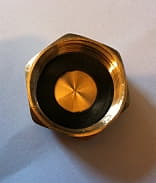
Don’t fit a blanking cap without understanding this entire article first
Buying a blanking cap for the old hot tap
If you decide to cap off the unused tap, you need a specific size of blanking cap. The size you require if you want to source one from a shop is – 3/4″ (which is around 19 mm). You could also buy it from Amazon (paid link) – Buy 3/4″ Brass blanking cap and washer
You should also be able to buy one from any plumbers merchant or DIY store. The cap should come with a rubber seal. If it doesn’t, try using the old seal from the hot water pipe.
You should consider removing the unused tap and pipework
3: When a water tap is not used any more, water ceases to flow through all the pipework that branches off from the main pipe to the tap. The water trapped inside becomes stagnant.
If conditions allow, bacteria and other microorganisms can grow inside that can break off and get into the rest of the water supply.
I did a lot of research about this issue, and became convinced that there could be a potential health issue for some people. (There’s a link at the bottom of this article to fully explain this).
Leave hot hose attached – and flush regularly
4: This is a solution if you are concerned about the potential growth of microorganisms and bacteria described in my companion article (link at end of this article) – but you don’t want to have unused pipework removed. It doesn’t need a plumber, and the hot tap is retained in case it’s ever needed again. You never know if hot and cold fill washing machines might return.
I’ve left my hot fill hose connected to the hot tap, but just hung up out of the way. I have a monthly reminder set up on my phone to run the hot water tap until piping hot water flows through it. This kills bacteria and replaces the stagnant water.
You could flush the hot water into a sink, a bucket, or the washing machine’s standpipe. The point is to have (60 degrees) hot water flowing through all the dead pipework. This should flush away stagnant water, and kill off and remove any microorganisms, or bacteria.
By the way, this option is easy for me. My washing machine is in the garage. It’s easy to access the hoses and standpipe. But it may not be practical for everyone. If it isn’t for you, then you’ll need to choose one of the other options.
How long do I run the hot water for? I usually do it for 30 seconds of hot water flow, but I’ve seen advice saying run for longer – and once a week! We all need to make an informed decision, which should be based on a proper understanding of the issue, and the configuration of our own plumbing setup.
If you believe there is a potential health risk, you should have the dead leg pipework removed properly. Read on for a much better understanding of how real this risk is for you, and your circumstances.
Is the dead leg health risk a genuinely serious issue?
Read my follow-up article, which explains the issue in full detail, so that you will be able to make an informed choice – potential health risks in not using old hot water tap.
Repairs
Fixed-price repairs, Pay monthly options, Repair & protect your whole appliance..
Save Money Now
Subscribe to Which? today and start saving money now. Subscription offers often available.
Spares
Spares4Appliances is a spares company run by repair engineers who understand all about spare parts for appliances.
Thank you so much-this has helped so much (just got a new washing machine and its single valve…)
I would be lost if it wasnt for this guide!
I cannot thank you enough for your advice here which I found via Google. I recently got a new washer with just a cold fill behind it instead of the old hot & cold. I recently noticed the floor getting wet around it and found the red plastic lever causing a drip. Getting to a DIY store is difficult at the best of times as I don’t drive so your warning there was timely. I followed your link to e-lctricalshop.co.uk – blanking cap (£2.99) came 2 days later and fits brilliantly.
I’m not exaggerating to say you’re my hero for providing this valuable advice. Thanks to you this non-DIYer woman got this sorted out with little fuss. I have whitegoodshelp on my bookmarks list now!
Thanks very much Gavin and Carol: This is proving to be my most popular bit of advice. I’m really pleased it’s helped so many people.
Thanks for the excellent tip.
Ordered Friday arrived Monday morning via Royal Mail.
As a temporary measure you could use the old red or blue, round, plastic connector that came off the old hoses.
By inserting a 10p piece into it,covering the hole, and then add the washer.
This is what I did until the correct blanking cap arrived.
You’re a star. That’s exactly the advice i was after, just bought the blanking cap from the link you gave. Brilliant! Thanks
Hi,
I bought a brass blanking cap this morning from a local hardware store for the very same reason as everyone on this thread. The cap did,nt come supplied with a washer though so was wondering will any type of rubber washer suffice?
I would try the rubber seal from the hot fill hose Derek.
I notice I have a plastic Y-piece attaching the red and blue hoses to my now broken down 10-year old washing machine. The Y-piece is connected to a copper pipe with switch, which switches off the water to both hoses. In anticipation of a new cold-fill machine what do I use to isolate the hot water outlet of the Y-piece when the water is switched on? Would a plastic blanking 3/4″cap be sufficient on the red hose outlet? Are they sold?
Cliff: The set up you describe sounds like you are already running your washing machine (which is presumably a hot and cold fill) as a cold fill washing machine. If your red and blue hoses are attached to a y-piece they must both be being supplied by the same water tap as described here – Washing machine is a hot and cold fill, but I only have a cold water supply
If this is the case I would just remove the y-piece from the tap as you would no longer need it and just connect the cold water hose for the new washing machine directly to the cold tap.
Thanks for your advice on the y-piece connection. It was just the information I needed.
Cliff Stewart